

World Birds IUCN statusLC · Least ConcernGlobal IUCN. BirdLife v10 (2025); taxon matching AviList 2026 / IOC 15.2; checked: 29.10.2026. The list year is not the species’ assessment date. Source and method · BirdLife OrderApodiformesSwifts and hummingbirds FamilyTrochilidaeTrochilidae
White-chinned Sapphire
Chlorestes cyanus
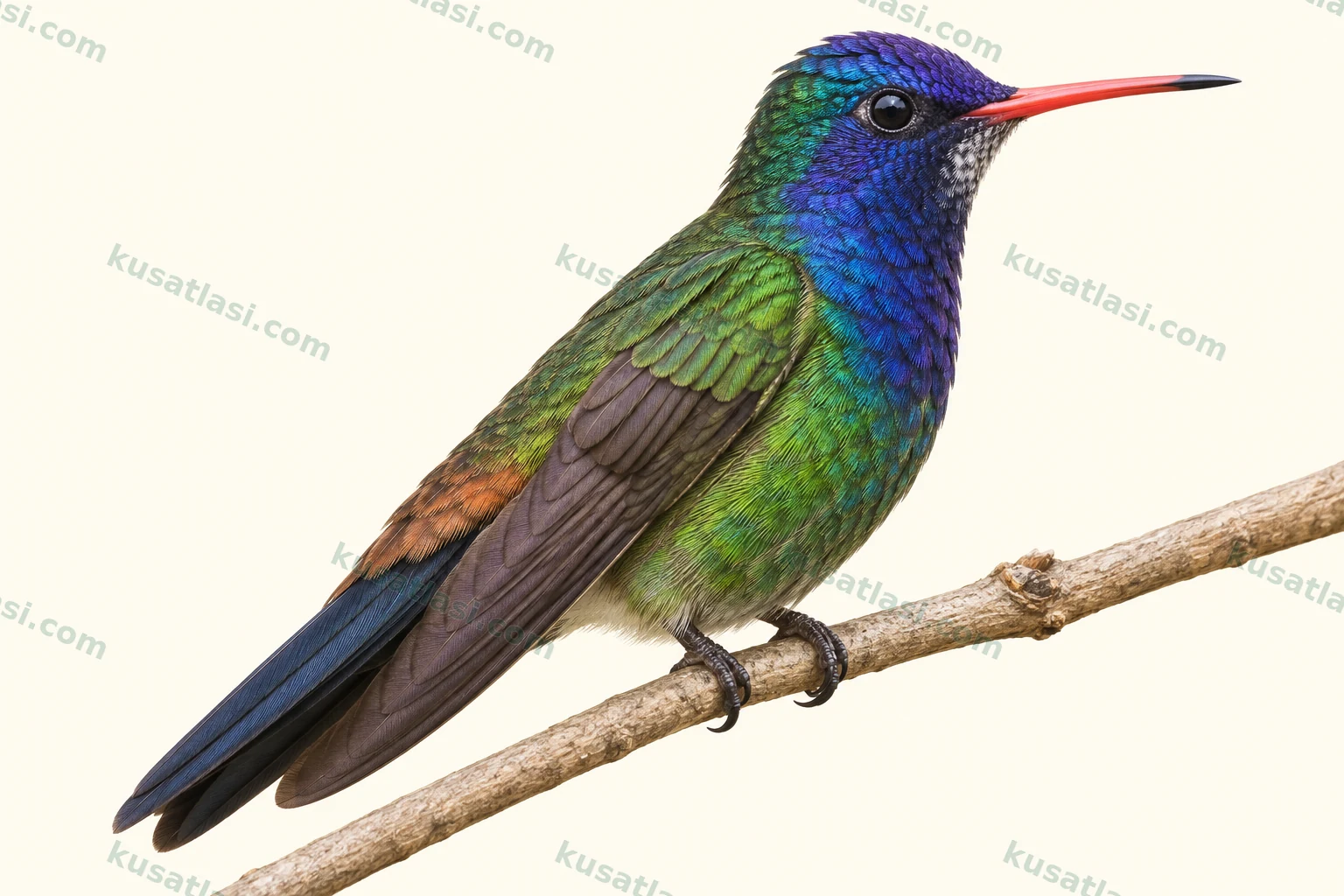
Small sapphire with a red bill tipped black; male with violet-blue head, female with spotted throat.
Biometrics
Length
Male8–9 cm
Female8–9 cm
Shared species value
Wing length
Male4.78 cm
Female4.78 cm
Shared species value
Weight
Male2.7–4 g
Female2.7–4 g
Shared species value
White-chinned Sapphire
South AmericaObservation guide in its natural range
Look for three features together
Do not rely on a single featureRed with black tip; a young male may have a dark upper bill.
Violet-blue head and green underparts in suitable light.
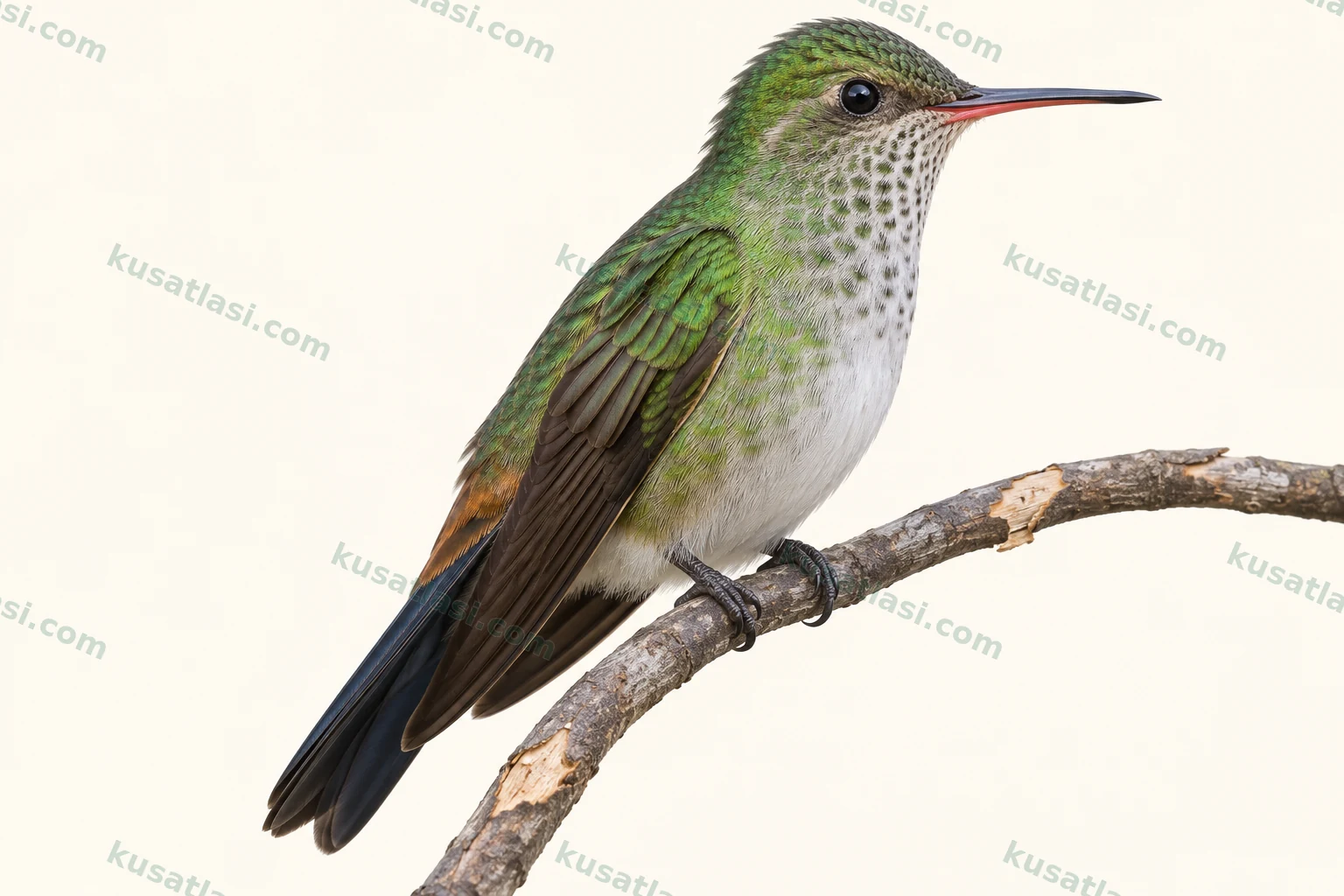
Green head, spotted throat and pale belly.
Compare male and female
 FemaleMale
Adult sexes differ; the single young male record from Peru provides limited age evidence.
Where to look in its natural range?
Humid forest, streamside woodland and flowering secondary growth.
Resident; regional breeding calendar insufficiently verified.
All months: Data unavailable
January
February
March
April
May
June
July
August
September
October
November
December
Nest, egg and incubation
Argentine specialist account: small cup and two white eggs; developmental periods unavailable.
A reliable detailed voice identification key was not found.
Do not play recordings to attract birds; observe quietly, especially near nests.
Species information
Quick identification
The White-chinned Sapphire Chlorestes cyanus is a small hummingbird with a red bill tipped black. In suitable light the adult male shows a violet-blue head and green underparts; in many field views he can look very dark. The white chin is small and inconspicuous. White-chinned Sapphire denotes the same species; older publications may use Hylocharis cyanus.
General appearance and posture
The nape and back are green, the rump coppery and the tail dark. The bill is straight.
Males, females and young birds
The female has a green head, spotted throat and off-white belly. A 2018 study at Cocha Cashu in Peru's Manu National Park examined one first-year male with incomplete, patchy blue iridescence on the head and throat and a dark upper bill rather than the adult male's red one. The researchers discuss this as evidence of delayed completion of adult male appearance. That single bird is not a general key for every juvenile stage. An exact age in months cannot be determined from one individual.
Appearance in flight
It can hover while visiting flowers. The white chin easily disappears in a small dark bird in flight. Green, copper and violet-blue reflections change with viewing angle, so a momentary colour impression does not establish identification.
Voice and behaviour
It occurs inside humid forest, at edges and in secondary growth. Sources contain call and song recordings; this research found no reliable identification account separating all their functions.
Similar species
Compare bill, head, chin and underparts together with Blue-chinned Sapphire Chlorestes notata. A green back alone is insufficient for females; look for the spotted throat and pale belly. The single young male from Peru warns against assigning a dark-billed bird to another species on that feature alone.
World distribution
It has a broad but habitat-fragmented distribution in northern and eastern South America. Current taxonomy accepts five geographic forms extending through Colombia, Venezuela, the Guianas, Peru, Bolivia and Brazil, south to Paraguay and northern Argentina. Their ranges are not one uninterrupted forest patch.
Status in its natural range
The global category is Least Concern. Besides Amazonian forests it is reported from some open forest-edge and coastal vegetation areas in Brazil. Observations in the Argentine National Parks account are local records, not evidence of breeding across the continent.
Movements
Specialist ecological sources classify it as resident. Distances of local movements following flower resources were not verified.
Breeding habitat
It uses humid forest interiors and edges, streamside woodland, secondary vegetation and clearings with scattered trees. The specialist compilation also includes Brazilian white-sand forests and coastal vegetation. Vegetation layers containing flowers matter.
Nest site
The Argentine National Parks specialist account reports a small cup of plant fibres bound with spider silk, covered outside with lichen and bark, and two white eggs. This is regional expert information. Incubation and fledging periods were not verified. Dates of the Peruvian moult study were not used as breeding months.
Daily use of space
It feeds by reaching flowers in forest and at its edge. The Cocha Cashu study captured it in humid Amazonian forest; one capture site does not show that it uses the same vegetation layer everywhere. Daily area size was not verified.
What does it eat?
Nectar is the verified basic food. Sources classify it in the nectar-feeding ecological group. Regional or seasonal plant lists, invertebrate prey proportions and total daily consumption were not verified in this research.
How does it feed?
It takes nectar from flowers. Visiting flowers with a straight bill does not establish equal efficiency or pollination success for every flower. An obligatory flower relationship is not claimed without species-specific experimental results.
The small white chin is easily hidden
The violet-blue head shines in suitable light while the little white chin may remain inconspicuous. The species' name therefore does not guarantee the first visible field mark. Assess it with the red, black-tipped bill and the whole plumage pattern.