

World Birds IUCN statusLC · Least ConcernGlobal IUCN category. BirdLife v10 (2025); taxon matching: AviList 2026 / IOC 15.2; checked: 29.10.2026. The list year is not the species assessment date. Source and method · BirdLife OrderColumbiformesPigeons and doves FamilyColumbidaeColumbidae
Eastern Bronze-naped Pigeon
Columba delegorguei
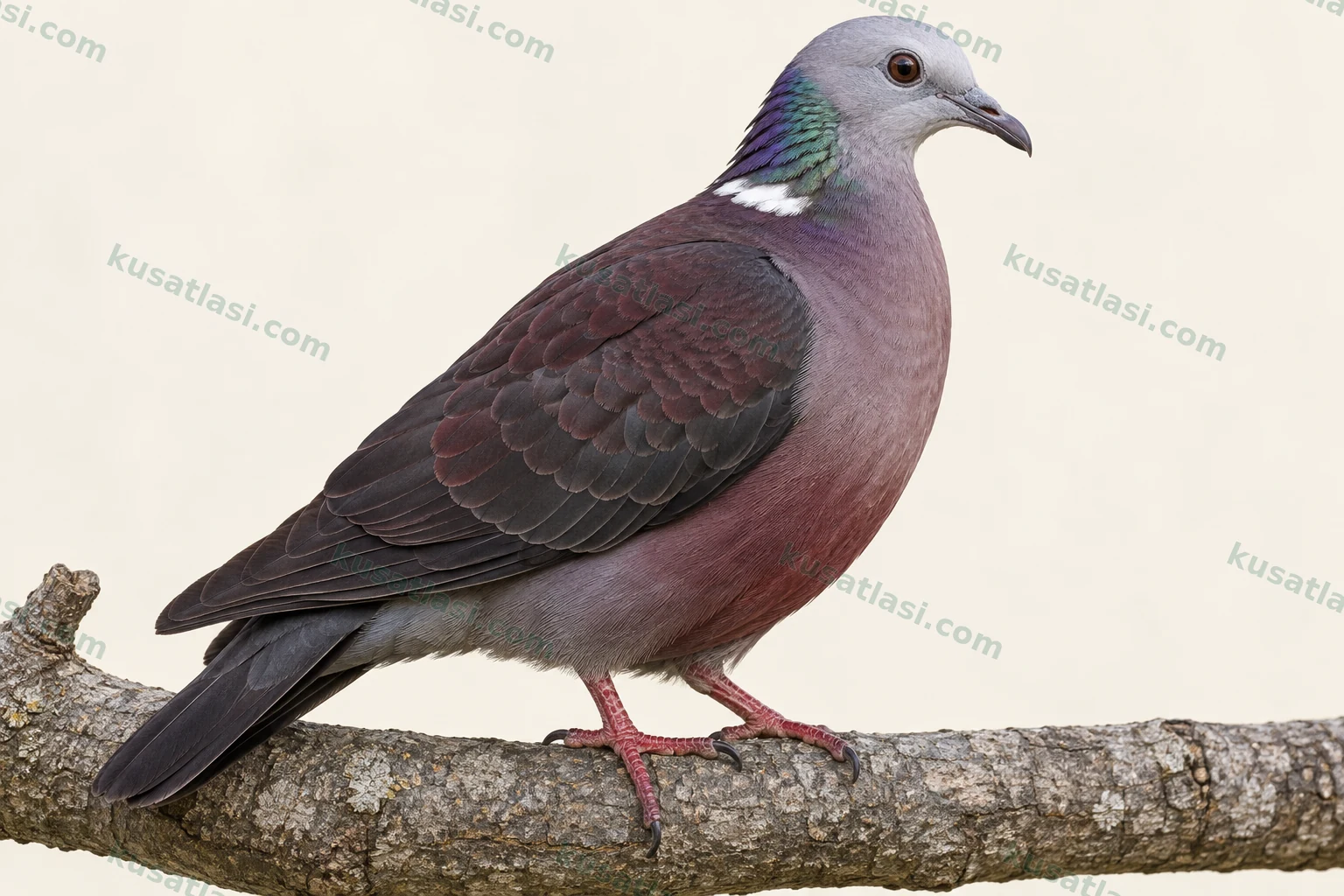
Dark pigeon of eastern and southern African forests. The male’s white neck mark may be absent in females.
Biometrics
Length
Male33 cm
Female33 cm
Shared species value
Wing length
Male17.33 cm
Female17.33 cm
Shared species value
Weight
Male136–175 g
Female133–154 g
Eastern Bronze-naped Pigeon
Eastern and southern African forestsObservation guide in its natural range
Look for three features together
Do not rely on a single featureCheck the male’s white rear-neck mark.
Assess dark face and upper-branch use together.
Compare male and female
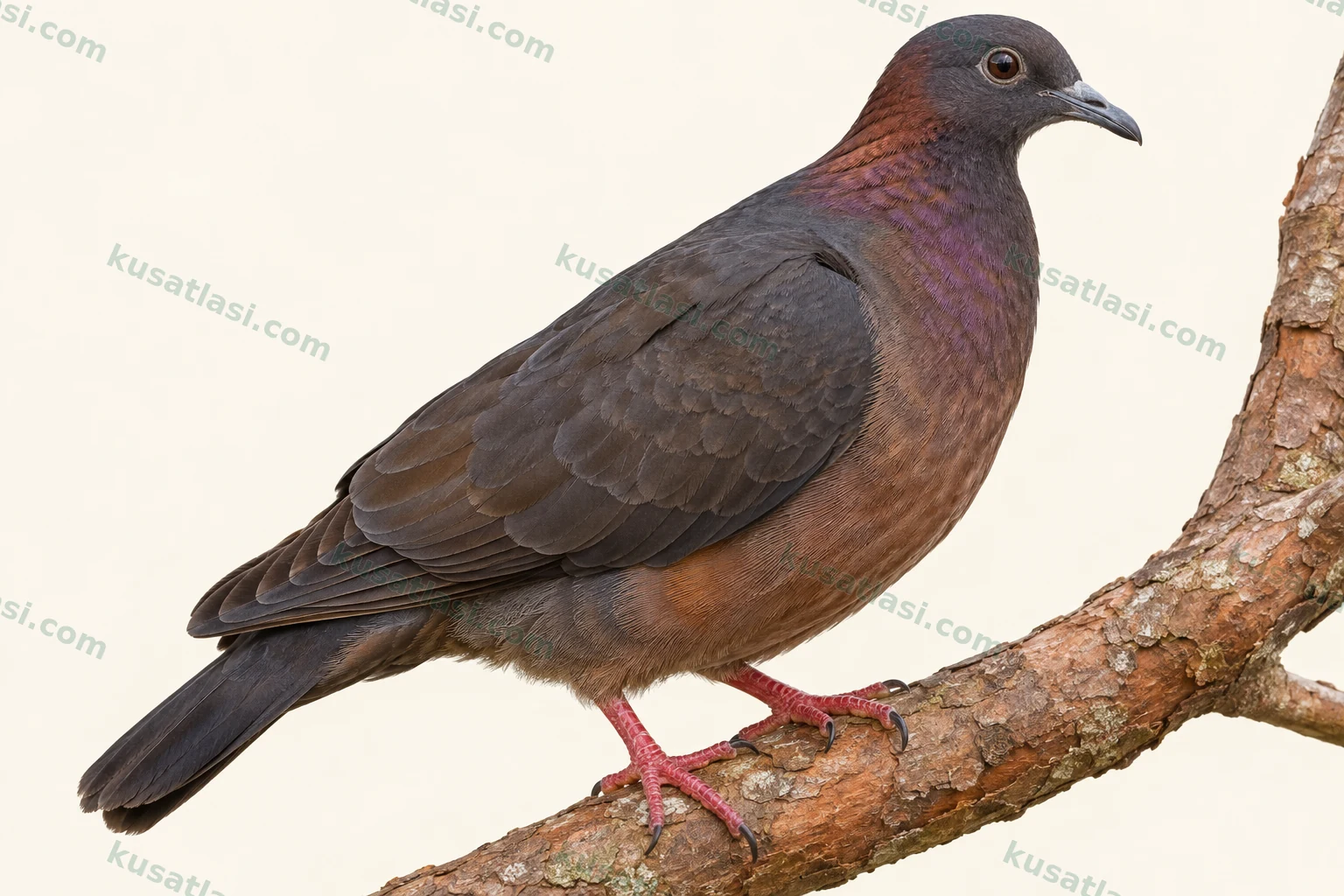 FemaleMale
The female lacks the male’s white neck mark. A hidden mark is not treated as absent.
Where to look in its natural range?
Upper branches and fruiting trees in humid mountain and coastal forest.
December in the southern African account; November, January and April in SABAP. These are regional examples.
January
Generally resident, with local fruit-related wandering. Southern African atlas: regional breeding records.
February
Generally resident, with local fruit-related wandering. No verified regional date is given for this month. This does not imply local absence.
March
Generally resident, with local fruit-related wandering. No verified regional date is given for this month. This does not imply local absence.
April
Generally resident, with local fruit-related wandering. Southern African atlas: regional breeding records.
May
Generally resident, with local fruit-related wandering. No verified regional date is given for this month. This does not imply local absence.
June
Generally resident, with local fruit-related wandering. No verified regional date is given for this month. This does not imply local absence.
July
Generally resident, with local fruit-related wandering. No verified regional date is given for this month. This does not imply local absence.
August
Generally resident, with local fruit-related wandering. No verified regional date is given for this month. This does not imply local absence.
September
Generally resident, with local fruit-related wandering. No verified regional date is given for this month. This does not imply local absence.
October
Generally resident, with local fruit-related wandering. No verified regional date is given for this month. This does not imply local absence.
November
Generally resident, with local fruit-related wandering. Southern African atlas: regional breeding records.
December
Generally resident, with local fruit-related wandering. South Africa: a two-egg nest example.
Nest, egg and incubation
Loose twig platform high in trees. Two eggs in the documented southern nest, with shared care. Full durations unverified.
Low-pitched cooing sequences accelerating in rhythm, not necessarily heard at each feeding visit.
Do not play recordings to attract birds; observe quietly, especially near nests.
Species information
Quick identification
The Eastern Bronze-naped Pigeon Columba delegorguei is a dark woodland pigeon of eastern and southern Africa. The adult male's white rear-neck mark matters. Short tail, dark body and use of upper forest branches are assessed together. Females are plainer; missing white alone does not make another species.
General appearance and posture
The male has a dark grey head, pink-brown breast and dark brown back. Purple, pink or green head–neck sheen varies with light. Weak sheen in shade is not a different population or sex. Watch the dark tail and short-bodied perched silhouette together.
A plainer female is not automatically smaller or lighter.
Upper-branch birds can remain hidden among leaves. A frontal breast view may hide the white behind the head. Wait for a turn or use another clear viewpoint without flushing it. A nearby big leaf is not a reliable size ruler.
Males, females and young birds
The typical female lacks the adult male's white neck mark and may have warm brown behind the nape. Back and underparts are plainer. Leaves may also hide a male's white. Distinguish visible and covered areas: unseen white is not absent.
Young can be duller and less vinous above. This is not a complete monthly plumage calendar. Neither female nor young is assigned from dullness alone. Light, wear and angle alter appearance. Natural behaviour is assessed with the view.
The southern African account gives female nest construction and male material delivery. One carried twig is not a sole sex key without the full behaviour. Known pairs' care differs from a brief bird's guessed identity.
Appearance in flight
A dark flying pigeon's short tail and body proportions help, but nape white can hide behind wings, leaves or head position. A dark bird leaving a tree alone does not establish delegorguei. Recheck head, neck and actual forest level when it perches naturally.
No range-wide certain single-wing-surface key was provided. Upperwing and underwing differ, and a lit edge becoming white in a photograph is not automatically real plumage. A short flight direction is not automatically migration.
Voice and behaviour
Song is described as low-pitched cooing sequences gradually accelerating. A hidden male may be detected by voice. Silence does not prove absence. In a specialist observation, fruit-tree visitors were watched for days without song. Not every feeding visit is vocal.
SABAP notes that higher summer reporting can coincide with song activity. Greater audibility is not greater immigration. This matters in sound counts and monthly charts. Counting repeated visits as different individuals can also inflate local numbers.
Similar species
Aplopelia larvata has a paler face and is often seen in lower forest or on ground. Against female delegorguei, dark face and upper-branch use count together. Forest level alone is no certain key; the face must really be seen.
Columba arquatrix is a larger forest pigeon that can share a fruit tree. Tree identity or body darkness does not distinguish them. Compare head–neck, size at equal distances and tail. Do not expect the male-specific white mark in every female.
Global range
Its forests occur discontinuously from eastern to southern Africa. The northern form occurs around southeastern South Sudan, Uganda, Kenya and Tanzania; the southern around eastern Zimbabwe, Mozambique and South Africa. This is not every forest in every country. Suitable woodland patches have gaps.
Status within its natural range
Global status is Least Concern, while South Africa's current regional list gives Endangered. Different geographic assessment scopes explain this. Loss and fragmentation of small southern forests are serious. Old local estimates are not today's world total. A reserve record does not establish security or abundance everywhere.
Movements and migration
Generally resident, it can wander locally with fruit availability. Seasonal elevation changes are possible in some populations, without confirmed range-wide routes. An old Kenyan coastal study also describes temporary fruit-tree visits. Song-related reporting increases are not migration proof. Occurrence and real breeding evidence have distinct map scopes.
Breeding habitat
Humid mountain forests and, regionally, coastal and lowland forests are used. Upper branches and fruit resources matter. Southern African coastal-slope and mistbelt forests are especially valuable in the south. Not every plantation has natural forest's biological function.
Nest site
A loose fine-twig platform is placed on upper branches. A December record in the southern African account gives two eggs and incubation by both sexes; both feed young. Full incubation and fledging durations were not verified. Regional dates do not create one east-African calendar.
Daily habitat use
It mostly hides in the upper forest. Ongoye research recorded it at edges during planned sampling and inside during incidental observations. This is not edge-only use: sampling and total habitat use differ.
What does it eat?
Mainly fruit, with seed and flower records too. The southern African account names Podocarpus, Trema, Macaranga, Halleria and Ficus fruits. These are verified examples, not each bird's daily use of all plants. Fruit availability and an actual observed take are recorded separately.
How does it feed?
It mostly gathers fruit high in trees, sometimes using fallen fruit. Repeated tree visits over days can indicate food-related movement, not a certain seasonal route without tracking. Oatley noted shared feeding with Columba arquatrix. Every fruit suitable for the larger bird is not assumed suitable here. Do not prune the tree or bait the bird to alter natural visits.
Global category is not local security
Global Least Concern and regional South African Endangered do not conflict. One considers the species, the other populations in a narrower area. Southern forest protection must not depend on reassurance from a wide continental range.
Silent birds can be present
Oatley's fruit-tree birds visited repeatedly without singing. Lack of sound can mislead as absence. Count method and current behaviour are read with the results.
More summer records do not mean migration
SABAP links summer reporting increase to song activity. Easier hearing alone does not show more arrivals. Monthly graphs require other evidence before becoming breeding or migration calendars.
An edge record does not exclude forest interior
Ongoye's planned edge record and incidental interior view show sampling limits. A small sample missing it does not show no interior use. Method limits are not actual habitat boundaries.
A plain female is not a separate species
Females may lack male white. Counting only male-like birds excludes them. Dark face, body and forest level count together; shining nape alone is not certain identity.
Old English names do not change identity
The current name is Eastern Bronze-naped Pigeon. Older Delegorgue's Pigeon can mean the same taxon; Western Bronze-naped Pigeon is different. Match Columba delegorguei and study region rather than similar titles. Old Turturoena placements are compared with the current record too.