

World Birds IUCN statusLC · Least ConcernGlobal IUCN category. BirdLife v10 (2025); taxon matching: AviList 2026 / IOC 15.2; checked: 29.10.2026. The list year is not the species assessment date. Source and method · BirdLife OrderColumbiformesPigeons and doves FamilyColumbidaeColumbidae
White-throated Quail-Dove
Zentrygon frenata
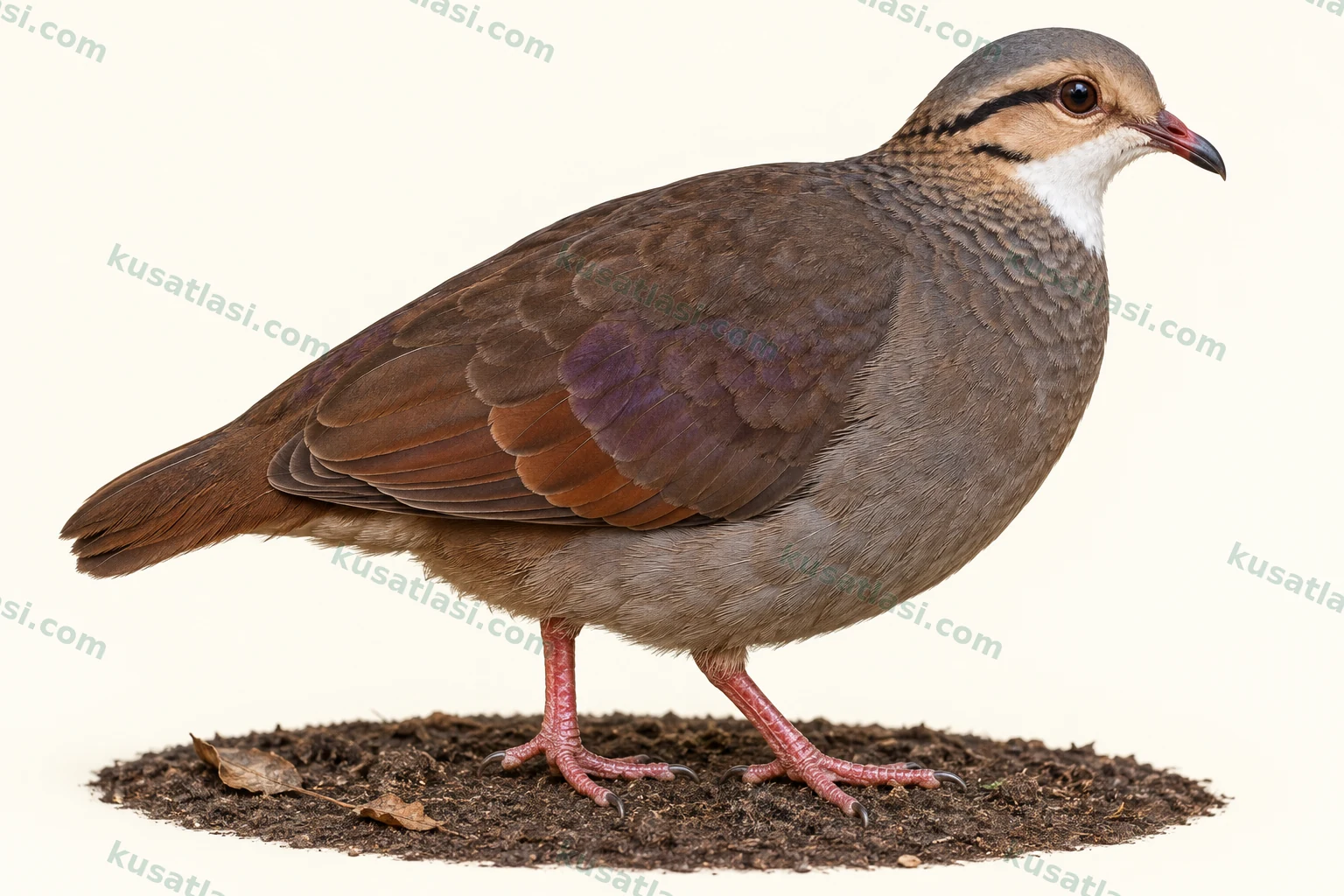
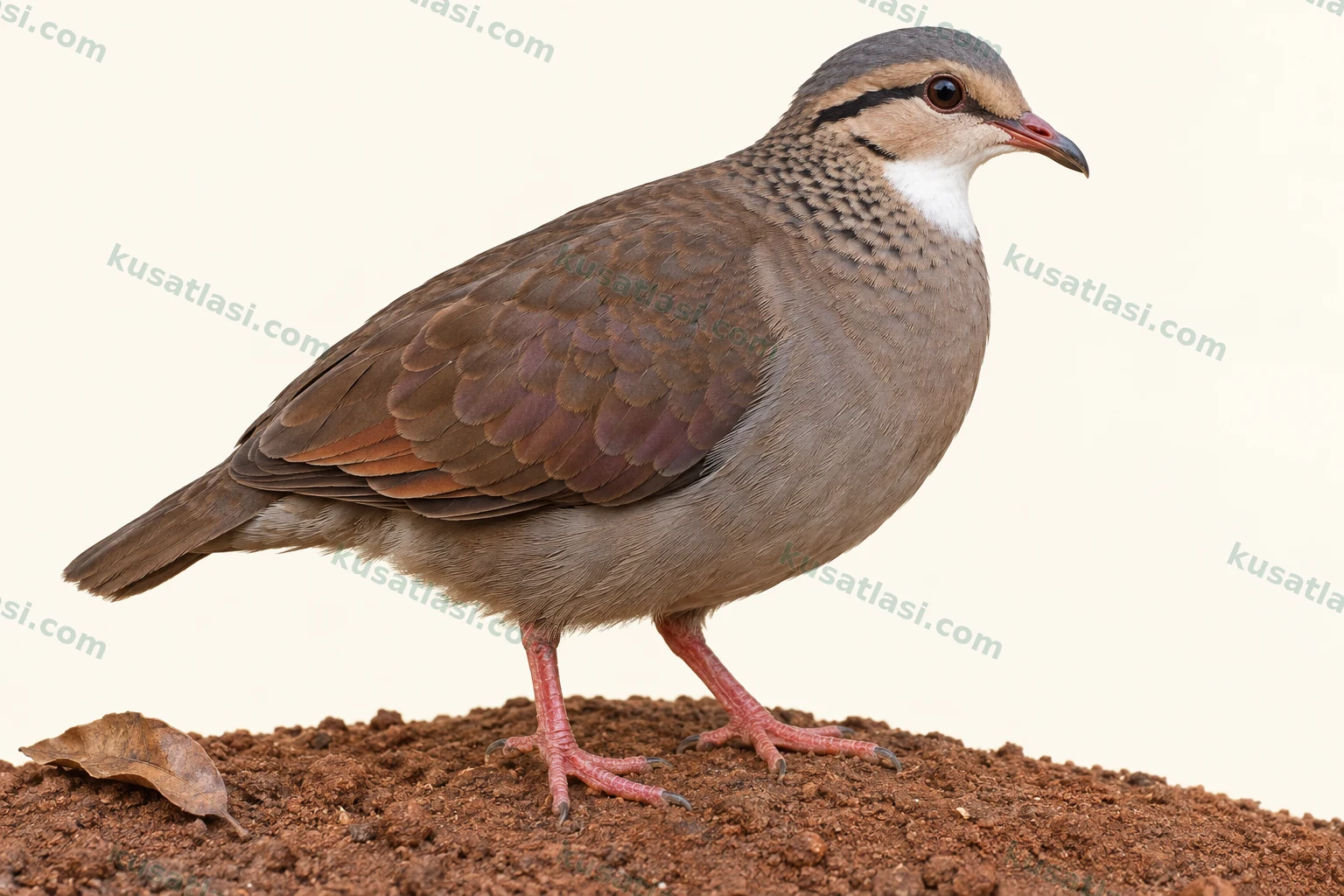
A large ground-dwelling dove of Andean forests. Look for the white throat, striped head and neck, and crown colour that varies by region.
Biometrics
Length
Male30–34 cm
Female30–34 cm
Shared species value
Wing length
Male15.58 cm
Female15.58 cm
Shared species value
Weight
Male265–325 g
Female265–325 g
Shared species value
White-throated Quail-Dove
Andean forests from Colombia to northwestern ArgentinaObservation guide in its natural range
Look for three features together
Do not rely on a single featureLook for the white throat and dark head stripes together.
The crown can look grey in Peru and more reddish in the southern form margaritae.
Look for a large bird feeding on the humid forest floor. Check its head pattern when it perches.
Compare male and female
 FemaleMale
A reliable key to adult sex and details of the juvenile stages were not found. Regional crown differences do not indicate sex.
Where to look in its natural range?
Quietly watch trails in humid mountain forest and the edge of dense undergrowth.
The species is resident, with local changes in elevation reported in the south. Common breeding months are unknown.
All months: The species is resident, with local movements in some southern areas. Individual nest records do not establish a common calendar. No verified regional date is given for this month. This does not indicate local absence.
January
February
March
April
May
June
July
August
September
October
November
December
Nest, egg and incubation
It builds a platform nest in dense vegetation. Adults were documented taking turns at the nest in Calilegua. Breeding success and development durations were not verified.
A drawn-out, low-pitched sound is repeated at intervals. A less frequent two-part call is also reported.
Do not play recordings to attract birds; observe quietly, especially near nests.
Species information
Quick identification
The White-throated Quail-Dove Zentrygon frenata is a large forest dove usually seen on the ground in humid Andean forests. Look for the white throat, striped head pattern and brown body together. The specialist account from Peru highlights the grey crown, pale yellow eye and dark bill of adults there. The crown of the southern subspecies margaritae can be more reddish brown. A head colour described for one region is not required across the entire range.
When a bird crosses a forest trail quickly, you may first notice its rounded body and the way it walks on the ground. Other doves share these traits. When the bird pauses, check the white throat, stripes around the eye and crown. The shade of brown changes with lighting in dense cover. The same bird can look redder or greyer simply because the light changes, and subspecies in different regions also have genuine plumage differences. Note the region along with the bird’s appearance.
General appearance and posture
A full body, small head and low walking posture make up the basic appearance of this forest dove. The back and tail are described as brown and the underparts as greyer brown. Lines around the head and neck frame the pale throat. Argentina’s national parks account mentions a narrow dark line through the eye and another running from the lower face towards the nape. If only the back of the bird is visible, those identification marks are hidden.
The Peruvian account highlights the stepped appearance of the neck pattern and the pale yellow eye. The Argentine account describes a redder bill in the southern subspecies, while the Peruvian adult account gives a dark bill. Match each regional description to the form it concerns within the species. Do not expect one photograph to show all the bill tones in the sources. Support the identification with the white throat, head lines, body proportions and natural range instead of relying on one bill colour.
Males, females and young birds
This review did not confirm a visual key that reliably separates adult males and females across the entire range. A grey-crowned bird in the north and a reddish-crowned bird in the south may differ by subspecies rather than sex. Nor does a difference in darkness between birds in shade and in the open establish sex. The adult illustrations show examples of the species. Different perches or postures do not show sex-specific habitats.
Details of every juvenile plumage stage have also not been adequately verified. Duller colour, smaller apparent size or shyer behaviour alone does not make a bird young. Record any directly observed feeding of young separately. Do not assume two birds crossing the same trail are a parent and its young. Keep age and sex no more certain than the observation allows. Start with the throat and head pattern that support the species identification.
Appearance in flight
The dove is usually noticed feeding on the forest floor. If disturbed, it may make a short flight to a low perch. Brown wings and tail may show briefly before the bird disappears behind vegetation again. It is normal not to see the white throat in that brief view. The direction of flight, the head’s orientation and branches between the bird and the camera can hide the front. Seeing the perched bird again is more useful for identification.
Walking on the ground does not mean it cannot fly. It flies to reach the nest or a low branch. A brief hop or escape flight on a trail is not evidence of seasonal movement. A regional account from Argentina says it may occur lower in winter. This local finding does not establish the same migration line along the entire Andes. Walking towards the dove to flush it interrupts its natural behaviour and produces an artificial escape view.
Voice and behaviour
Because of its secretive behaviour, the bird is often heard before it is seen. The original nest paper describes a low-pitched, drawn-out sound and a less frequent two-part vocalisation. The Argentine park account also describes a soft but audible song repeated at intervals. The source of a sound in the forest can be hard to see, and echoes can mislead about the bird’s direction. After hearing it, quietly watch the trail or edge of cover without using playback to draw it out.
It moves along the forest floor mostly alone, sometimes with a few other birds. Dense undergrowth, fallen plant material and forest structure form part of its daily habitat. The Peruvian account says it may be uncommon or rare in humid mountain forest. Consider that assessment alongside its secretive behaviour. Few sightings do not establish equally low numbers across the entire population. Adults were directly observed taking turns at a nest, but that observation did not measure incubation duration or all care of the young.
Similar species
1. The Peruvian specialist account compares the Ruddy Quail-Dove Geotrygon montana. Consider the White-throated Quail-Dove’s larger appearance, white throat and head and neck pattern together. A brown body alone is insufficient for similar birds reported in lower forest. Elevation is a useful clue but does not replace a visible plumage feature.
2. Other Andean forest doves can show the same rounded body on a trail. Do not settle the identification from the movements of a large bird on the ground without seeing the head lines and the edge of the pale throat. Nor does moving up onto a branch automatically put it in another group.
3. Northern and southern forms of the species can have different head colours. A reddish-brown crown in the south does not establish a new species or a sex difference when compared with the grey-crowned Peruvian account. Check the scientific name, subspecies and geography together.
Global range
Its natural range lies in Andean forests from Colombia through Ecuador, Peru and Bolivia to northwestern Argentina. Current taxonomy recognises regional subspecies. Slopes with humid mountain forest are important, and country borders do not turn entire areas into suitable habitat. The different Andean slopes of Colombia and Ecuador, the Peruvian sites and the areas farther south should not be treated as a uniform block under one geographic name.
Status within its natural range
The Peruvian specialist account describes it as locally uncommon or rare on the floor of humid mountain forest. The stated range of 1,000–3,300 metres is the regional observation context of that account. The Yungas forests of northwestern Argentina are natural habitat at the southern limit. A nest documented at 960 metres in Calilegua National Park is a real example in suitable transitional forest, not a single breeding elevation for the entire species.
Movements and migration
It is generally considered resident. The Argentine park account reports that it occurs at lower elevations in winter, interpreted as local elevational movement. No calendar in which all subspecies move on the same dates or verified migration route linking countries was found. A bird appearing on a forest trail or a record on another slope does not by itself show regular migration. The map shows licensed examples of records in the natural Andean range. Forests without records should not all be treated as empty.
Breeding habitat
It uses humid mountain forest with dense undergrowth and suitable transitional forest on slopes. The original Calilegua record was between lower slope forest and mountain forest, in an area covered by climbers and dense plants. That plant community is not the same throughout the broad Andean range. Forest floor and sheltered support for a nest together matter for local habitat use.
Nest site
The nest found in Argentina on 14 November 2019 was a dense platform of dry twigs about 3.5 metres above the ground in thick vegetation. Two adults were seen using the nest in turns. Breeding success could not be verified. The earlier Colombian nest cited in the paper held one egg. That single example does not establish a fixed clutch size for the species. Incubation duration and the time until the young leave the nest remain insufficiently known.
Daily use of habitat
It walks on the forest floor to feed and flies to low branches when needed. Opening the cover around a nest can expose it. Do not remove climbers to count nests or interrupt the adult’s return. Record nesting behaviour that is seen directly without guessing how many eggs or young are hidden.
What does it eat?
The species’ detailed food list and the proportions of different foods are not adequately documented. AVONET places it in a broad mixed-diet category, which does not directly establish that it eats a particular fruit, seed or insect. Feeding on the ground does not mean it eats only seeds. This account does not transfer the known diets of other doves to this species.
How does it forage?
The specialist field account and the original paper describe it feeding mainly alone on the forest floor. The bill and small items it takes can be hard to see in dense cover. Separate walking on the ground from actually taking food. Record the prey or plant fragment when it can be identified. Scattering food on the trail to make observation easier changes its natural search. Following its own path without clearing the forest floor allows a better interpretation of the behaviour. Lack of detailed diet data does not lessen the value of the observed feeding habitat.
Head colour in the south
The northern form with its grey or slate-coloured crown differs from the reddish-brown crown of margaritae in northwestern Argentina. The original nest paper states this distinction explicitly. Features from the two regions should not be combined on one bird. Record the area and, if known, the subspecies along with the species name.
Two adults, one nest
At Calilegua, two adults were observed coming to the same nest in turns. That is direct evidence of behaviour. Researchers saw signs suggesting there were young inside but could not confirm the final breeding outcome. Observing the nest over a 15-day interval does not mean incubation lasted 15 days. An event whose beginning and end were not measured cannot be timed from the observation schedule.
The reason for the difference in nest material is unknown
The Argentine nest was made of fine dry twigs, while the older Colombian nest discussed in the paper was described as using leafy, softer material. The authors do not know whether the difference reflects subspecies behaviour or local material availability. These are possible explanations rather than established results. Different nests can help researchers study the effects of environment within a species.
Seeing a secretive forest bird
As it moves on the forest floor, the bird may be noticed more often by sound. A quick crossing of a trail may not show its head clearly. Waiting for it to reappear on its own gives more identification information than flushing it to see a brief brown silhouette. Clearing dense cover to make a seldom-seen bird easier to see changes its habitat and removes the natural context of the observation.