

World Birds IUCN statusLC · Least ConcernGlobal IUCN. BirdLife v10 (2025); taxon matching AviList 2026 / IOC 15.2; checked: 29.10.2026. The list year is not the species’ assessment date. Source and method · BirdLife OrderColumbiformesPigeons and doves FamilyColumbidaeColumbidae
White-bibbed Fruit Dove
Ptilinopus rivoli
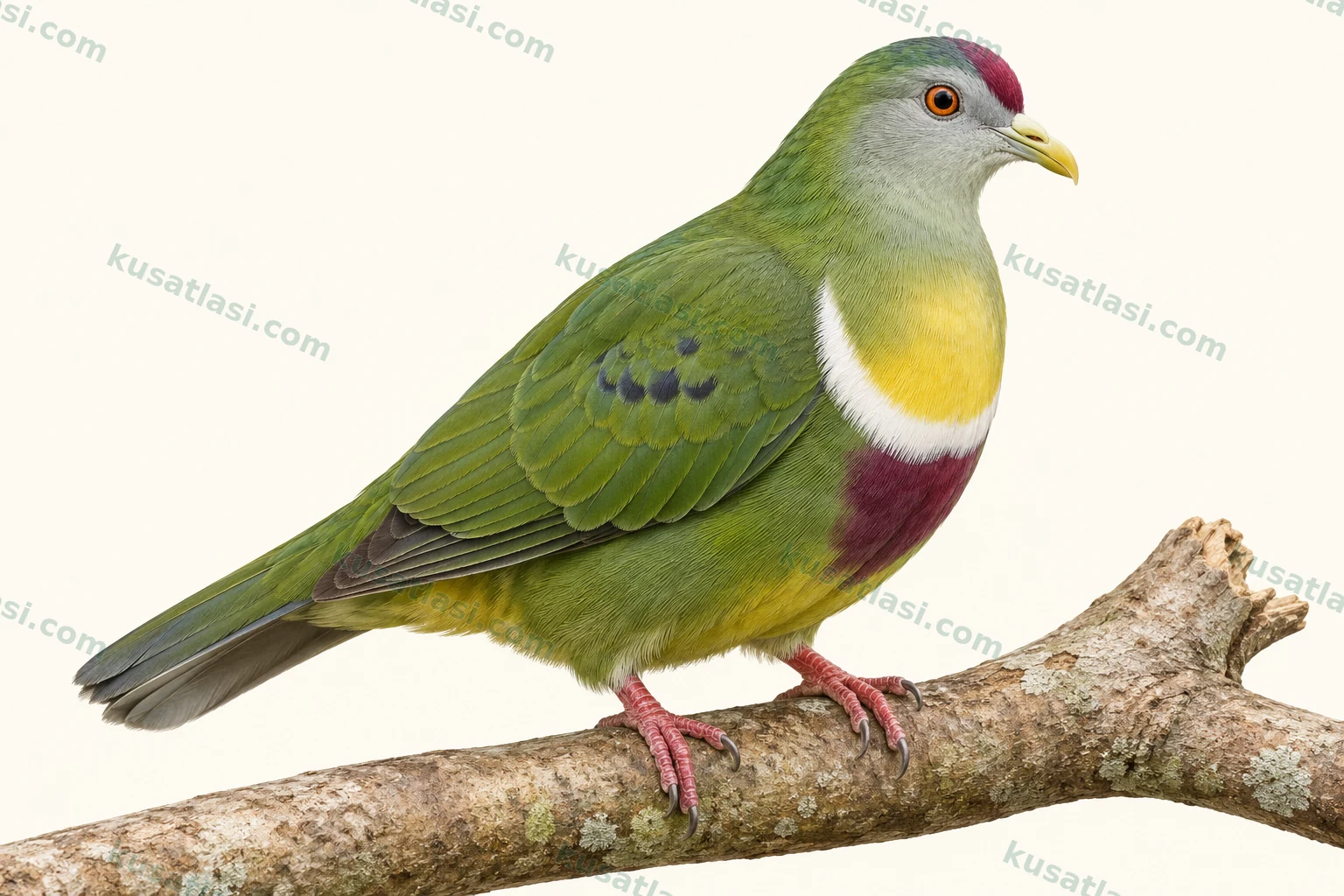
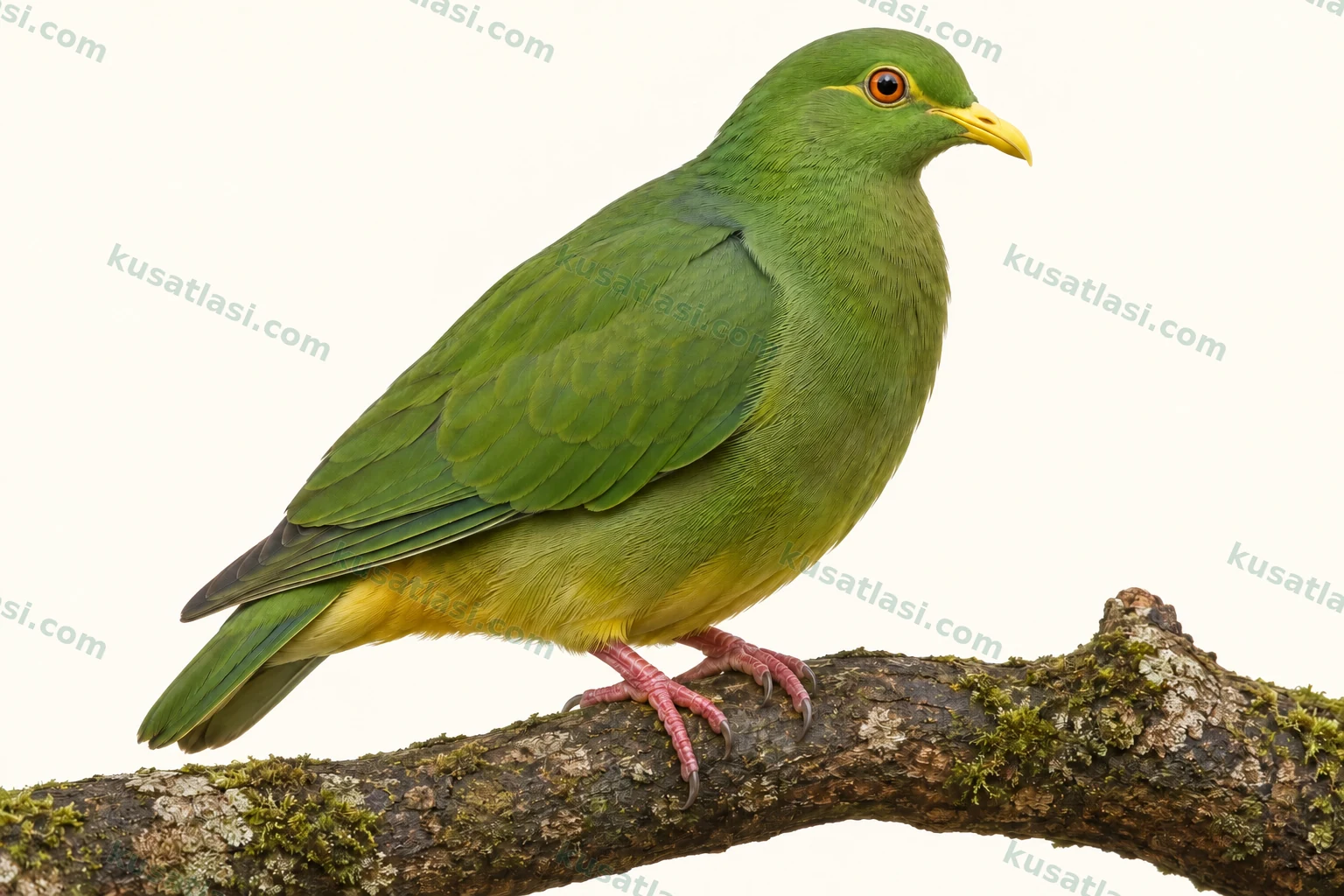
Green fruit dove; male with pale breast band, female with yellow bill-to-eye line.
Biometrics
Length
Male22–26 cm
Female22–26 cm
Shared species value
Wing length
Male12.6 cm
Female12.6 cm
Shared species value
Weight
Male132–188 g
Female132–188 g
Shared species value
White-bibbed Fruit Dove
New Guinea and surrounding archipelagosObservation guide in its natural range
Look for three features together
Do not rely on a single featureRed-purple forehead and white/yellowish breast band.
Green body; yellow bill and facial line.
Yellow edges to wing and underpart feathers.
Compare male and female
 FemaleMale
Female lacks the breast band; subspecies colour differences are considered separately.
Where to look in its natural range?
Fruiting trees in mountain and island forests.
Resident; no single breeding calendar without island context.
All months: Data unavailable
January
February
March
April
May
June
July
August
September
October
November
December
Nest, egg and incubation
Flimsy twig platform; usually one egg, two in some records; developmental periods unavailable.
Deep hooO, one note or an accelerating sequence dropping at the end.
Do not play recordings to attract birds; observe quietly, especially near nests.
Species information
Quick identification
The White-bibbed Fruit Dove Ptilinopus rivoli is a green fruit dove of New Guinea and neighbouring islands. The male has a striking red-purple forehead, pale breast band and, in some geographic forms, a purple belly patch. White-bibbed Fruit Dove and White-breasted Fruit-Dove are English names in use. Both refer to this scientific taxon.
General appearance and posture
The male's body is dark green with a slight golden sheen. The pale breast crescent may be white or yellowish. The bill is yellow or yellow-green and the legs reddish.
Males, females and young birds
The female is generally bright green and lacks the male's pale breast band. A yellow line between bill and eye and a pale yellow bill matter. Young have yellow edges to wing and underpart feathers; young males may begin to show adult colour patches. The bellus form has a yellower breast; strophium lacks the purple belly patch. These geographic differences are not equivalent to being female or young.
Appearance in flight
A bird moving between trees may show a green body and yellow bill. Male breast and forehead marks help in good views. A fleeting green flight image does not safely separate similar female fruit doves.
Voice and behaviour
It occurs alone or in pairs; more may gather in a fruiting tree. The call may be a deep “hooO” note or a sequence accelerating and dropping at the end. The specialist account describes the mountain New Guinea bellus form's voice as distinctive. Even the colourful male may hide in canopy leaves.
Similar species
Females of Superb Fruit-Dove and Black-naped Fruit-Dove may resemble it in general green appearance. Assess the female's yellow bill and bill-to-eye line together. Compare geographic breast or belly differences with the current taxon before deciding that it is another species.
World distribution
Current taxonomy accepts five geographic forms. The Moluccas, Raja Ampat, Aru and Cenderawasih region; New Guinea mountains and some neighbouring islands; the Bismarck Archipelago and southeastern Egum and Louisiade areas are parts of the range. Island names are matched with the exact current subspecies account.
Status in its natural range
The global category is Least Concern. Mountain forests on mainland New Guinea and low coastal forests on some small islands show that it does not use the same elevations on every island. Total population was not verified.
Movements
The specialist ecological compilation classifies it as resident. Gathering at fruiting trees does not demonstrate intercontinental migration. A regular seasonal route between islands was not verified.
Breeding habitat
It occurs especially in primary mountain forest and less often in developing secondary forest. The specialist New Guinea account mainly gives 1000–3200 metres; lowland forest use on small islands is a separate context.
Nest site
The specialist account reports a flimsy twig platform on a horizontal branch fork in the middle forest layer. There is usually one white egg, with two in some records; observations of males participating in incubation are mentioned. Incubation and fledging periods were not verified. Nest records in different months lack sufficient island and sample detail for a single global breeding calendar.
Daily use of space
It mainly gathers fruit in the canopy. Fruiting trees may be temporary gathering sites. Colour and bill may be easier to see when it rests lower down; this does not make it exclusively an understory bird.
What does it eat?
It eats fruit and berries. The specialist account reports palm fruits 0.4–1.6 cm in diameter on Karkar Island. This local observation is not generalized to all fruit on other islands.
How does it feed?
It usually takes fruit from branches and rarely descends to feed on the ground. Food on canopy branches can conceal the green bird among leaves. Percentages of particular plant species in the diet were not verified.
The breast band can differ within one species
The bellus form of New Guinea's mountains has a yellower breast area; some other forms show a white crescent. Current AviList treats bellus as a rivoli subspecies rather than a separate species, retaining the taxonomic note that voice and ecological differences alone do not establish a definite species boundary.
Fruit size is a regional observation
It is not claimed that this means obligatory dependence on the same plants on every island or measured seed-dispersal efficiency.