

World Birds IUCN statusLC · Least ConcernGlobal IUCN category. BirdLife v10 (2025); taxon matching: AviList 2026 / IOC 15.2; checked: 29.10.2026. The list year is not the species assessment date. Source and method · BirdLife OrderCharadriiformesShorebirds and allies FamilyScolopacidaeScolopacidae
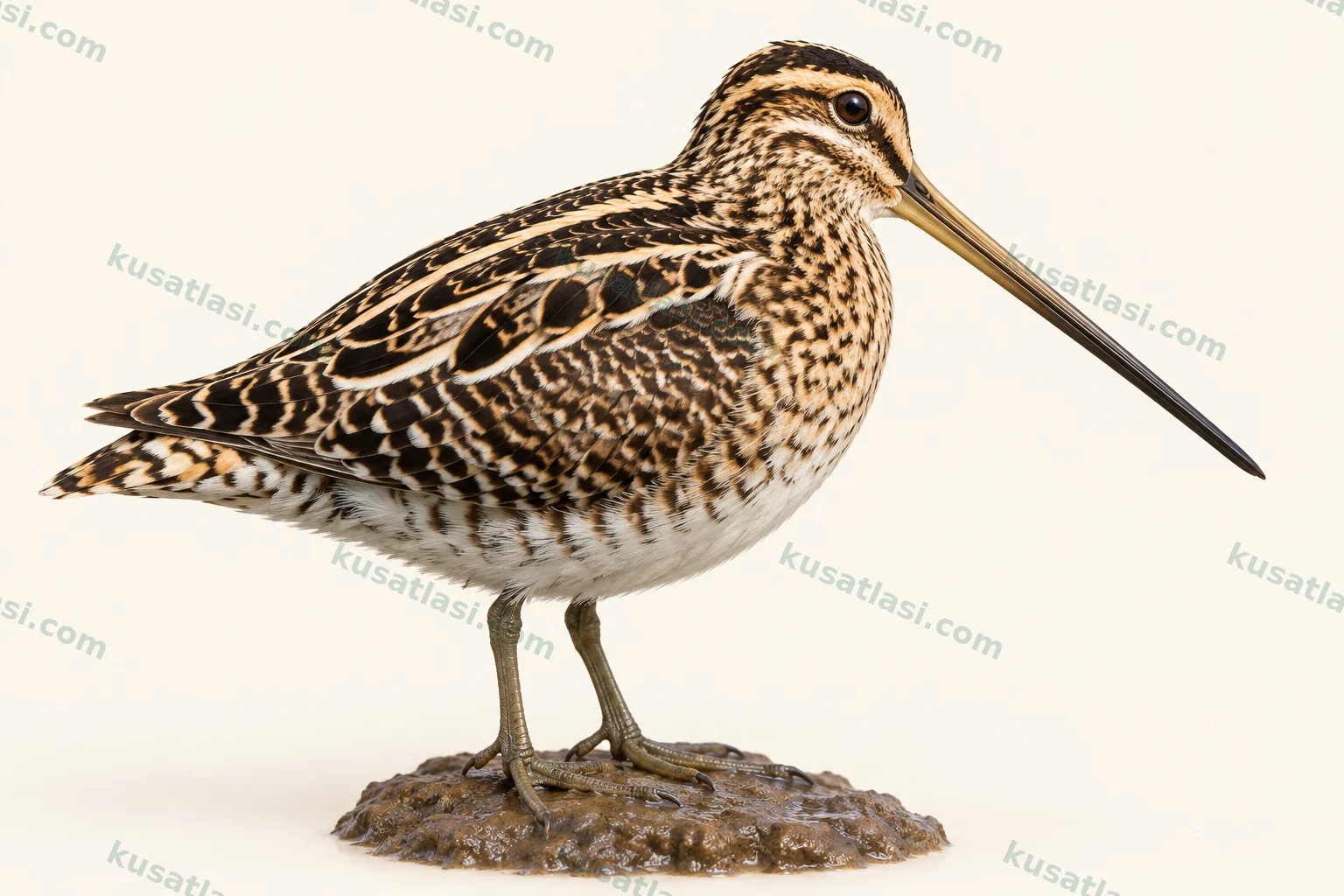
African Snipe
Gallinago nigripennis
The long bill, concealing dark-and-pale pattern and white on the outer tail and underwing in flight are assessed together.
Biometrics
Length
Male25–29 cm
Female25–29 cm
Shared species value
Wing length
Male12.56 cm
Female12.56 cm
Shared species value
Weight
Male115 g
Female128 g
African Snipe
Separate wetlands in eastern and southern AfricaObservation guide in its natural range
Look for three features together
Do not rely on a single featureVery long; compare it with the head in a complete side view.
The outer tail and underwing are pale; the pattern can vary between individuals.
Examine the white upperwing rows and bill proportions as well.
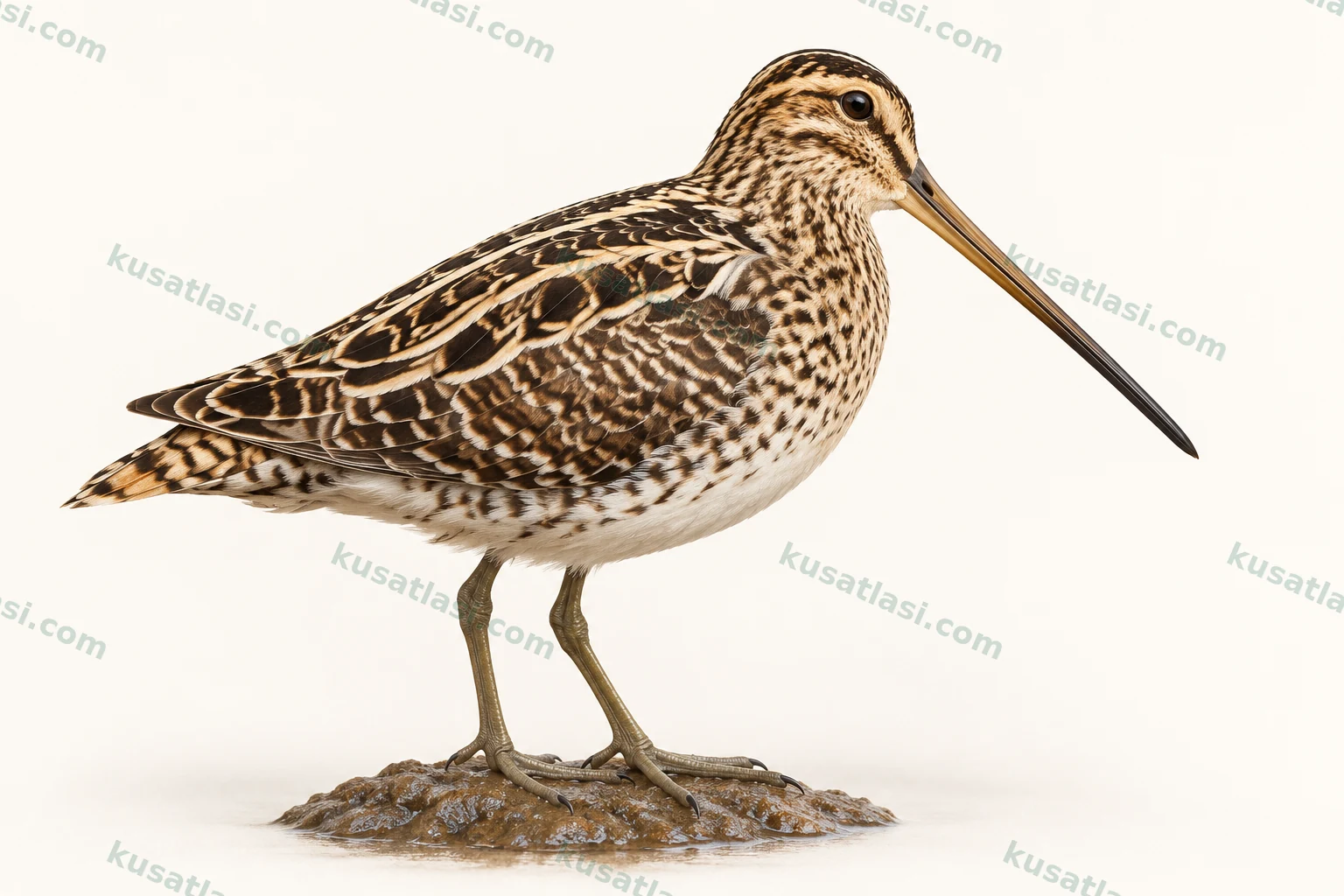
Compare male and female
 FemaleMale
No certain sexing key based on plumage colour at a distance is given; the Kenyan study confirmed sex through scientific examination and DNA.
Where to look in its natural range?
Watch areas where wet grass clumps and open soft mud lie side by side.
In the southern African account, egg-laying extends over much of the year; peak months differ regionally. The local population followed in Kenya bred throughout the year.
January
There are resident populations and local or altitudinal movements linked to water conditions. No verified regional date specific to this month was given; this does not mean local absence.
February
There are resident populations and local or altitudinal movements linked to water conditions. No verified regional date specific to this month was given; this does not mean local absence.
March
There are resident populations and local or altitudinal movements linked to water conditions. Zimbabwe, regional egg-laying account: this is a period with concentrated egg-laying records.
April
There are resident populations and local or altitudinal movements linked to water conditions. Zimbabwe, regional egg-laying account: this is a period with concentrated egg-laying records.
May
There are resident populations and local or altitudinal movements linked to water conditions. Zimbabwe, regional egg-laying account: this is a period with concentrated egg-laying records.
June
There are resident populations and local or altitudinal movements linked to water conditions. Zimbabwe, regional egg-laying account: this is a period with concentrated egg-laying records.
July
There are resident populations and local or altitudinal movements linked to water conditions. Zimbabwe, regional egg-laying account: this is a period with concentrated egg-laying records. Limpopo and Western Cape, regional account: this is a period with concentrated egg-laying records.
August
There are resident populations and local or altitudinal movements linked to water conditions. Zimbabwe, regional egg-laying account: this is a period with concentrated egg-laying records. Limpopo and Western Cape, regional account: this is a period with concentrated egg-laying records.
September
There are resident populations and local or altitudinal movements linked to water conditions. Limpopo and Western Cape, regional account: this is a period with concentrated egg-laying records.
October
There are resident populations and local or altitudinal movements linked to water conditions. No verified regional date specific to this month was given; this does not mean local absence.
November
There are resident populations and local or altitudinal movements linked to water conditions. No verified regional date specific to this month was given; this does not mean local absence.
December
There are resident populations and local or altitudinal movements linked to water conditions. No verified regional date specific to this month was given; this does not mean local absence.
Nest, egg and incubation
A shallow plant nest is built among grass clumps. In the Kenyan study, clutches contained 2–4 eggs, most often three; the female incubated for 19–21 days. The southern African account gives 1–3 eggs, usually two. The time to first flight has not been verified.
The harsh take-off call, accelerating display notes and mechanical drumming made with the outer tail feathers are assessed separately.
Do not play recordings to attract birds; observe quietly, especially near nests.
Species information
Quick identification
African Snipe Gallinago nigripennis is a heavily patterned wader with a very long bill and short legs. A bird standing among wet grasses can blend into its surroundings; many observations are made when it suddenly flushes. White on the outer tail and broad pale areas beneath the wings are useful in flight. Neither feature, however, excludes every similar species on its own. Bill proportions, body pattern, upperwing and take-off call are assessed together. Failing to see white does not establish a different species: viewing angle and a brief observation may matter.
The name African Snipe matches Gallinago nigripennis in the current taxonomic list. Older southern African sources also use Ethiopian Snipe; this does not mean that the bird occurs only in Ethiopia. Separate wetland populations in eastern and southern Africa form parts of the same species account. Similar long-billed migrants should not be recorded as this resident or locally moving bird simply because they are in Africa.
General appearance and posture
The body is compact and the bill conspicuously long relative to the head. Its brown appearance, with dark and pale stripes, makes it difficult to pick out among grass stems and muddy ground. Head stripes and dark scapular feathers on the back also appear in verified descriptions of individuals in South Africa. The breast and flank pattern should be examined together with the pale belly. When wet grass hides the underparts, the full arrangement from breast to belly may not be visible.
The angle at which the bird stands can seem to alter bill length. In a full side view, head and bill are assessed in the same plane; a bill pointing towards the camera can appear shorter than it is. The short legs may be hidden in deeper water. This can mislead when comparing only the visible part of a photograph with another, long-legged wader. Recording posture, whether the feet are visible and the feeding movements together makes the appearance easier to interpret.
Males, females and young birds
No certain distinction between males and females that everyone can apply from plumage colour is offered here. In the detailed Kenyan breeding study, adult sex was not determined merely from distant appearance; scientific examination and DNA methods were used. A darker bird, or one that looks slightly larger than another, is therefore not assigned a certain sex. Shared species marks on the male and female plates are not a key dividing every wild individual into two different plumage patterns.
There is insufficient evidence to give a young bird’s precise age in days or months from one image. Pale feather tips, light, wear and age must be distinguished. The Kenyan study assessed relative age by following both moult and body development. The developmental sequence of a chick followed in that study is not a single colour rule applicable to a random photograph. Not every small snipe near a nest is a chick; body sizes also differ between species.
In direct observations in the Kenyan study, chicks walked away from the nest two–three hours after hatching. This early movement does not mean that they could fly or were independent of family care. A chick moving through cover with an adult should not be understood as following the same developmental pattern as a young songbird that remains in the nest awaiting food from its parents.
Observing breeding behaviour can make roles clearer. In Kenya, females were recorded choosing the nest site, building the nest and incubating the eggs; males defended territories and displayed. Even so, the role an adult near a nest is performing at that moment must be observed directly. Opening up grasses to search for nests and concealed chicks is not a harmless way of identifying a bird.
Appearance in flight
A sudden flush may reveal the long bill, rapid changes of direction and a harsh call together. The outer part of the tail usually shows conspicuous white. Pale areas on the underwing also help; the specialist comparison notes that some African Snipes can have more heavily barred underwings. Thus, assigning every bird with underwing bars to another species would be wrong. Upperwing coverts and the underside should not be described as if they carried the same pattern.
The muffled, drum-like sound produced in the display flight differs from the normal call. Outer tail feathers contribute to this mechanical sound. It is wrong to assume that the bill opens for every sound; flight sequence and sound quality are watched together. Changes of direction in an escape flight are not a migration route either. Rather than repeatedly flushing the bird, an observer should wait for its natural display from the wetland edge.
Voice and behaviour
The take-off call is harsh and short, whereas display sounds follow a different sequence. Accelerating repeated notes and the muffled mechanical sound heard in flight help in understanding breeding behaviour. When listening, establish that the flying bird really is African Snipe; other snipes may occur in the same place. Hearing only a distant sound does not confirm a nest location or the presence of eggs.
When feeding, it inserts its long bill into soft mud. Places combining wet grass clumps with open muddy areas are important. Single birds or a few individuals are seen in some regions, while larger gatherings can be recorded on floodplain grasslands. These gatherings are not all breeding families. The few recoveries in South African ringing records also show how difficult it is to detect the bird and follow its movements; a few recoveries do not reveal journeys across the whole continent.
Similar species
Gallinago gallinago, Common Snipe, is a migrant that can look very similar. The Cornell specialist account distinguishes African Snipe as darker and showing more white in the outer tail. A standing bird may conceal its tail; general darkness alone is unreliable. Head, back, wing and tail should be seen together in suitable light.
Gallinago media, Great Snipe, is another possibility during migration in Africa. Conspicuous white tips to the wing coverts can form strong rows; the bill appears shorter relative to the body. These white upperwing rows are weaker in African Snipe. Underwing pattern and outer tail help but show individual variation. A pale belly alone in a body photograph does not justify a certain species identification.
World distribution
African Snipe occurs in separate wetland populations extending from Ethiopia through eastern and southern Africa. Suitable areas in Angola, Zambia, Zimbabwe and the South African region are also included. Occurrence in a country does not mean that the entire country is occupied. A lake, floodplain or highland marsh amid dry land offers conditions very different from its surroundings. The regional atlas shows separate concentrations in the Okavango, the Zimbabwe high plateau and the wetter parts of South Africa.
Status within the natural range
It is regular in some places and occurs in small or variable numbers at other wetlands. Dense cover and concealing plumage make counting difficult; undetected birds also affect the result. The population followed over a long period in Kenya’s Ol’ Bolossat basin fed and bred throughout the year. This local finding does not show that populations across Africa are in the same state every month. Wetland drying and damage to vegetation can affect feeding and nesting places together.
Movements and migration
One label of migrant or immobile bird is inappropriate for the entire species. Residency, altitudinal movements and local movements linked to suitable water areas all occur. Of five recoveries in the 1999 ringing compilation, the most distant was 48 km away; this small sample does not set a maximum distance the bird can travel. The Kenyan study followed movements between the lake basin and surrounding higher wetlands. Records in different countries are not automatically consecutive stops or the route of the same individual.
Breeding habitat
Wet grasslands, marshes, grassy lake margins and river-associated wetlands are used. Soft mud alongside grass clumps suitable for concealment is important. Highland wetlands are prominent in East Africa; the same elevation limit is not applied throughout the range. In the Kenyan study, nests were found in river and lake marshes, tall wet grasses and former farmland with mixed vegetation.
Nest site
A shallow cup-shaped structure is prepared among grasses. In the Kenyan field study, the female selected the site, built the nest and incubated for 19–21 days; 2–4 eggs were seen, with three-egg nests recorded most frequently. The southern African specialist compilation gives 1–3 eggs, usually two. These different regional findings are not converted into an average. Nest position relative to water and the surrounding grass cover matter; a study mean is not the exact height of every nest. The age at first flight in days has not been verified clearly enough.
Daily use of space
A bird feeding in mud may take refuge in nearby cover. Rain flooding grassy ground creates new feeding areas, whereas drying reduces the available area. Capture and scientific examination methods used in studies are not recommendations for everyday birdwatching. Watching from an existing path at a distance protects concealed birds and chicks.
What does it eat?
Invertebrates in mud and shallow water are important foods. Annelid worms, crustaceans, insect larvae and molluscs were recorded in the Kenyan research. That study examined food through scientific sampling methods as well as prey seen from a distance. The proportion of a food group in the study should not be treated as constant for every region or season. The southern African specialist account also reports seeds; this does not imply that plants form most of the diet.
How does it feed?
It searches by inserting its long bill into soft ground. The water condition of the mud can affect which prey are accessible and where the bird can search. Not every bill movement seen at the surface shows a successful capture; searching and swallowing are observed separately. Grass beside open mud allows concealment and feeding to be used together. Stirring mud or placing food before the bird for observation changes natural foraging; watching its own movements from a distance is more appropriate.
Sound does not always come from the bill
The drum-like sound heard during African Snipe’s display flight is mechanical. The particular shape of the outer tail feathers is associated with it. Repeated calls and flight sounds can be separate events; watching the bird helps in interpreting an audio record more accurately. Hearing the mechanical sound does not mean that the nest on the ground has been found.
A pale underwing is part of a combination
Although broad pale underwing areas are helpful in many birds, the specialist field comparison also notes more heavily barred African Snipes. In such an individual, white feather tips on the upperwing, bill proportions and the outer tail should be assessed. Treating a single mark as an unchanging rule for every individual can cause mistakes when separating similar species.
Nests of one species do not all contain the same number of eggs
Three eggs were most frequent in the long-term Kenyan field study; the southern African compilation gives two as the usual number. Regional differences, sampling and source context must be retained. Calculating a new average from the numbers in the two accounts produces an unobserved clutch size. A fractional egg mean is not written as the actual number of eggs in a nest either.
Few recoveries do not prove a short migration
The 1999 ringing compilation contains only five recoveries from 862 ringed birds. These valuable records do not show all the species’ movements. The distance of the most distant individual found by that date does not mean that no bird can travel farther. A record being present, a record being absent and the true movement of an untracked individual are different things; changes in local space use with water conditions are assessed separately.
The sample is limited to records available when the compilation was prepared.