

World Birds IUCN statusLC · Least ConcernGlobal IUCN category. BirdLife v10 (2025); taxon matching: AviList 2026 / IOC 15.2; checked: 29.10.2026. The list year is not the species assessment date. Source and method · BirdLife OrderProcellariiformesPetrels and allies FamilyProcellariidaeProcellariidae
Snow Petrel
Pagodroma nivea
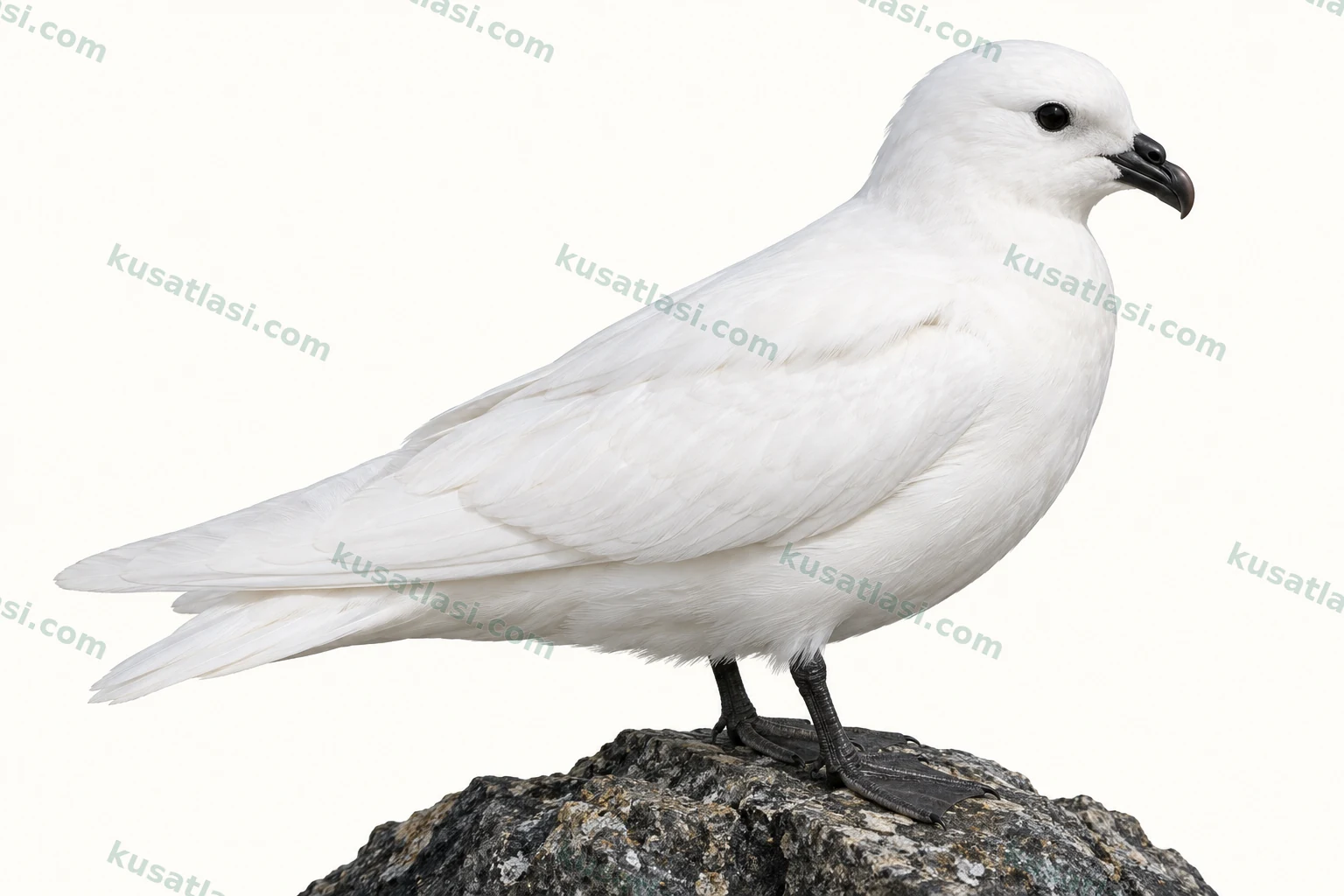
Antarctica’s white petrel, identified by dark eyes, a short black bill and bluish-grey feet together.
Biometrics
Length
Male30–40 cm
Female30–40 cm
Shared species value
Wingspan
Male75–95 cm
Female75–95 cm
Shared species value
Weight
Male202–570 g
Female202–570 g
Shared species value
Snow Petrel
Antarctica and southern islandsObservation guide in its natural range
Look for three features together
Do not rely on a single featureCheck the continuous white of head, body and wings.
The small black bill and dark eyes contrast with white plumage.
Icy seas and suitable rocky nesting sites; one marine sighting does not prove a colony.
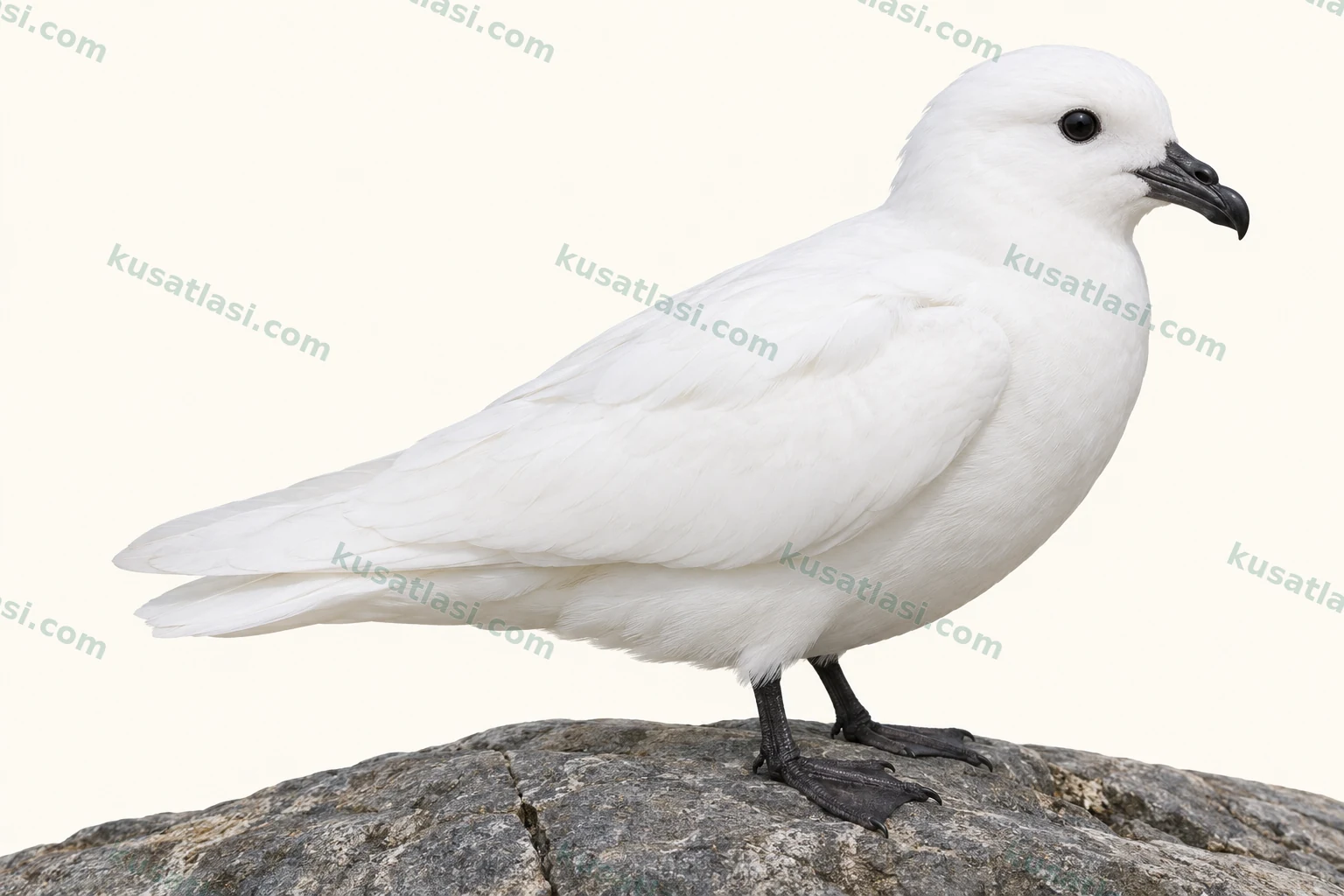
Compare male and female
 FemaleMale
Separate adult plumage colours are not invented; there are two size forms. A detailed independent sexing/juvenile key was not found.
Where to look in its natural range?
Icy Antarctic waters, ice floes and sheltered rocky nesting sites.
Southern Hemisphere colony calendar: main arrivals September–November, eggs November–December; departure varies regionally. Marine feeding and return to colonies; some birds stay in the colony area all year.
January
Data unavailable
February
Antarctica and the Southern Ocean: some young may start leaving nests in late February.
March
Antarctica and the Southern Ocean: fledging may continue, depending on region.
April
Antarctica and the Southern Ocean: fledging may continue, depending on region.
May
Antarctica and the Southern Ocean: fledging is reported up to mid-May.
June
Data unavailable
July
Data unavailable
August
Data unavailable
September
Antarctica and the Southern Ocean: main colony arrivals may begin from mid-September.
October
Antarctica and the Southern Ocean: within the colony-arrival period in the specialist account.
November
Antarctica and the Southern Ocean: main arrivals end in early November; laying may begin late in the month.
December
Antarctica and the Southern Ocean: laying is reported up to mid-December.
Nest, egg and incubation
A pebble hollow in a sheltered rock crevice; one white egg, 41–49 days’ incubation. The chick is guarded for eight days and then stays about seven more weeks in the nest.
No independently verified definitive syllable key was found here; colony calls are assessed separately from actual nest evidence.
Do not play recordings to attract birds; observe quietly, especially near nests.
Species information
Quick identification
The Snow Petrel Pagodroma nivea is a small, entirely white-looking seabird associated with Antarctic ice-filled seas. Dark eyes, a short black bill and bluish-grey feet contrast strongly with the plumage. Identification also considers petrel shape, bill and wings rather than whiteness alone.
The species has two size forms sharing the same white pattern. A larger-looking bird is not automatically a different species or a male. Distance, posture and the form observed affect that impression.
General appearance and posture
White head, back, body and wings create an uninterrupted white appearance. Eyes and bill are dark, but the black bill is not a dark mask covering the head. Facing light can brighten wing edges and reduce detail.
Resting birds on ice can resemble patches of snow at a distance. Head turns, the dark bill's position and each bird's movement distinguish them from the background. Establish that the white area really belongs to the bird without approaching the ice surface to see it closely.
Males, females and young birds
Different plumage colours are not invented for adult males and females. White body, dark eye and bill are basic marks. The accessible specialist account did not provide reliable distant sexing. Calling the larger bird male ignores size forms and perspective.
A nestling does not yet show the flight and posture of a sea-going adult. Detailed chick colour stages and a separate key to recently fledged birds were insufficiently verified here. Breeding durations are not a ruler for assigning an exact age to a chick photograph. Watch colonies without opening nests or removing young.
Appearance in flight
White wings and the small dark bill help in suitable light. The Australian Antarctic account describes low flight over sea and higher flight over land associated with avoiding predators. Not every pass must occur at the same height.
A distant pale silhouette does not exclude gulls or other pale seabirds. Try to see wing colour, body proportions and bill on the same bird. White wings looking grey in shade can be mistaken for another species' fixed grey pattern.
Voice and behaviour
Its life connects marine food areas with rocky nests. Resting ice groups and rocky breeding colonies occur, but not every group seen during a brief observation at sea is a breeding colony.
It can regurgitate stomach oil in defence. This is not a display justifying close human approach but is interpreted in disturbance context. A detailed syllable key reliably separating it from every similar seabird was not verified.
Similar species
The Antarctic Petrel Thalassoica antarctica is brown and white in the same general region. Look for the Snow Petrel's continuous white plumage. When distant colours cannot be seen, geography alone does not give certainty.
The Southern Fulmar Fulmarus glacialoides is silvery grey with a black-tipped pink bill. Here small black bill, white wings and body matter together. Sharing feeding areas does not mean all species follow ships equally.
Global range
Antarctic coasts, the peninsula and certain southern islands form its range. The Australian account names South Georgia, South Sandwich, South Orkney, Bouvet, Balleny and Scott islands and continental sites. At sea it is strongly linked to cold Antarctic waters and ice. A marine record is not the same evidence as a confirmed rocky nest.
Status within its natural range
The current global list gives Least Concern. The 2025 review shows breeding locations still incompletely known in remote geography. Confirmed nests and sightings without confirmed breeding were separated. Do not colour all points as certain colonies or treat old counts as today's full population.
Movements and migration
It feeds at sea and breeds on suitable rocks. The specialist account notes some individuals staying in the colony area all year, with main arrivals from mid-September to early November. These are Southern Hemisphere seasons. The calendar concerns return and breeding, not one equal route and distance for every bird. The sea-ice boundary is not a fixed national border.
Breeding habitat
Suitable snow- and ice-free rock is needed for nesting, while feeding is associated with icy seas. The 2025 review includes near-coastal and far-inland nests. An inland record does not mean terrestrial feeding. Rock nests and marine food are separate requirements.
Nest site
The nest is generally a simple pebble-lined hollow in a deep overhead-sheltered rock crevice. One white egg is laid from late November to mid-December; incubation is 41–49 days in the specialist account. The chick is closely guarded for its first eight days, then remains about seven more weeks. Departure is reported from late February to mid-May, not all colonies progressing on one day.
Daily habitat use
Ice floes and icebergs provide rest. Preserve sea-going parents' nest access. Heavy snow can block entrances and affect breeding; snow accumulation alone does not prove abandonment. Do not touch entrances or approach enough to trigger defence.
What does it eat?
Fish, krill and squid are important, varying with feeding location. The Australian Antarctic account also mentions other molluscs and opportunistic feeding associated with dead marine animals. Occasional resources do not replace the main marine diet entirely. No universal fish or krill percentage was verified.
How does it forage?
Sea ice and open water form an important setting. At an ice edge, presence does not mean a capture or swallowing was seen. Surface approach, actual food taking and ice resting are recorded separately. The specialist account says it does not normally follow ships. Other petrels' ship attendance is not assigned automatically. Do not offer food; watch natural marine movements at a suitable distance.
White plumage does not mean one size
The species has two size forms, as described by the Australian Antarctic account. Larger or smaller appearance alone does not sex a bird. White plumage, dark eyes and black bill form the diagnosis together. Differences in apparent size in photographs taken at different distances are not necessarily real differences in body size.
Oil deposits can preserve the past
Defensive stomach oil can solidify and accumulate near nests in the cold dry Antarctic environment. Researchers date old deposits to study colony history. Evidence in the Prince Charles Mountains reaches at least 3,680 years. That is not one bird's lifespan but the deposit's age showing past presence. Layers were dated by radiocarbon.
A sighting does not prove breeding
The new range review separates verified and suspected sites. In remote Antarctica, a bird flying over rocks is not the same evidence as an egg or chick. Keep each map point's meaning to avoid treating a broad coloured area as certain breeding limits.
Weather affects the nest door
A crevice gives shelter but heavy snow can block it. Eggs, young and sea-going parents depend on access. White birds in snow do not benefit from every snow condition. An unseen nest need not be empty or abandoned. Do not open rocks or snow to observe.