

World Birds IUCN statusLC · Least ConcernGlobal IUCN category. BirdLife v10 (2025); taxon matching: AviList 2026 / IOC 15.2; checked: 29.10.2026. The list year is not the species assessment date. Source and method · BirdLife OrderAccipitriformesDiurnal raptors FamilyAccipitridaeAccipitridae
African Cuckoo-Hawk
Aviceda cuculoides
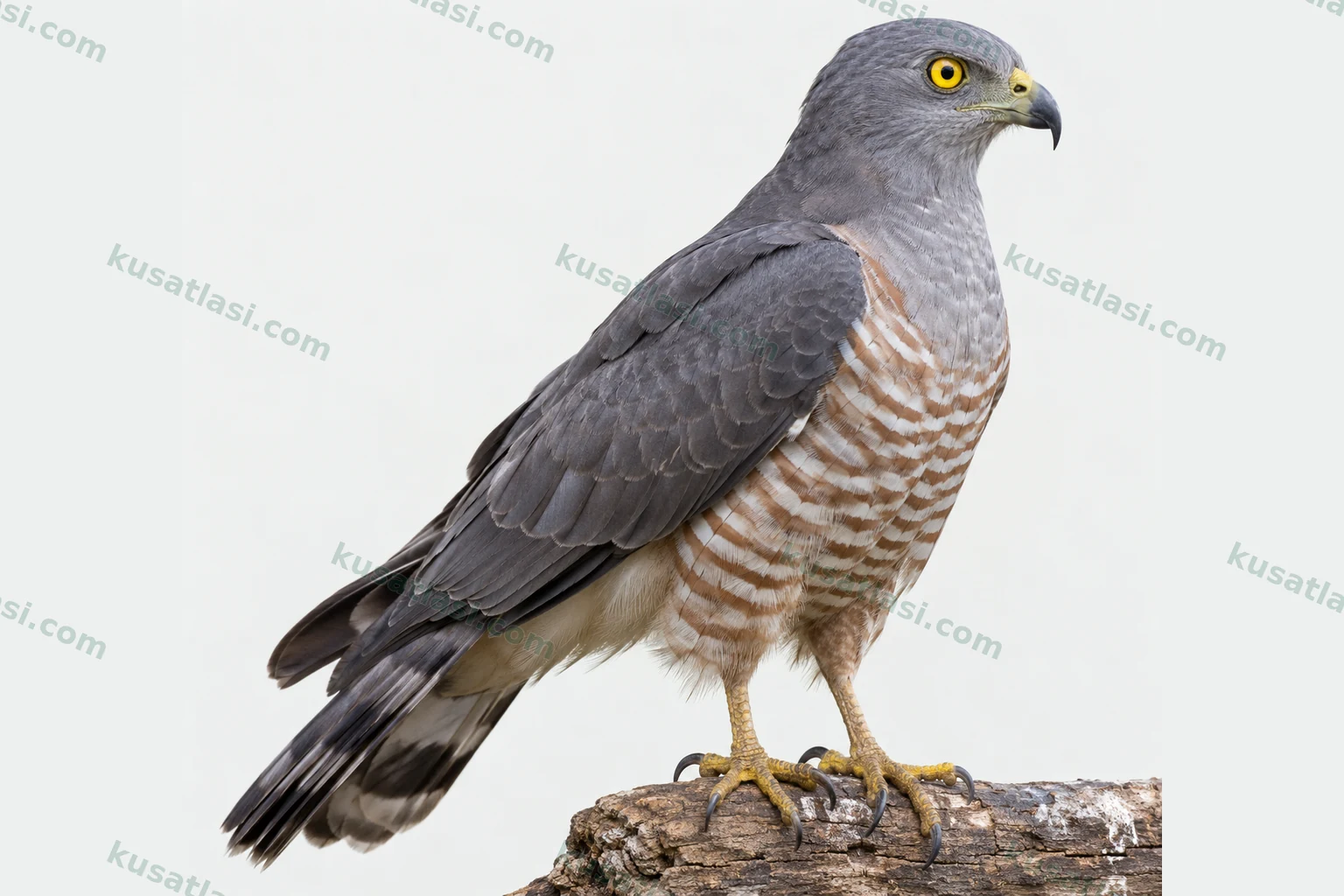
It is a long-tailed raptor that hunts from concealment among trees. In adults, compare the grey head and upper breast, chestnut belly bars and banded tail together.
Biometrics
Length
Male40 cm
Female40 cm
Shared species value
Wingspan
Male85–95 cm
Female85–95 cm
Shared species value
Weight
Male220–302 g
Female220–302 g
Shared species value
African Cuckoo-Hawk
Wooded areas of sub-Saharan AfricaObservation guide in its natural range
Look for three features together
Do not rely on a single featureA few elongated feathers form it; the head angle can hide it.
Do not confuse irregular juvenile marks with adult pattern.
Assess chestnut underwing areas only in a suitable view from below.
Compare male and female
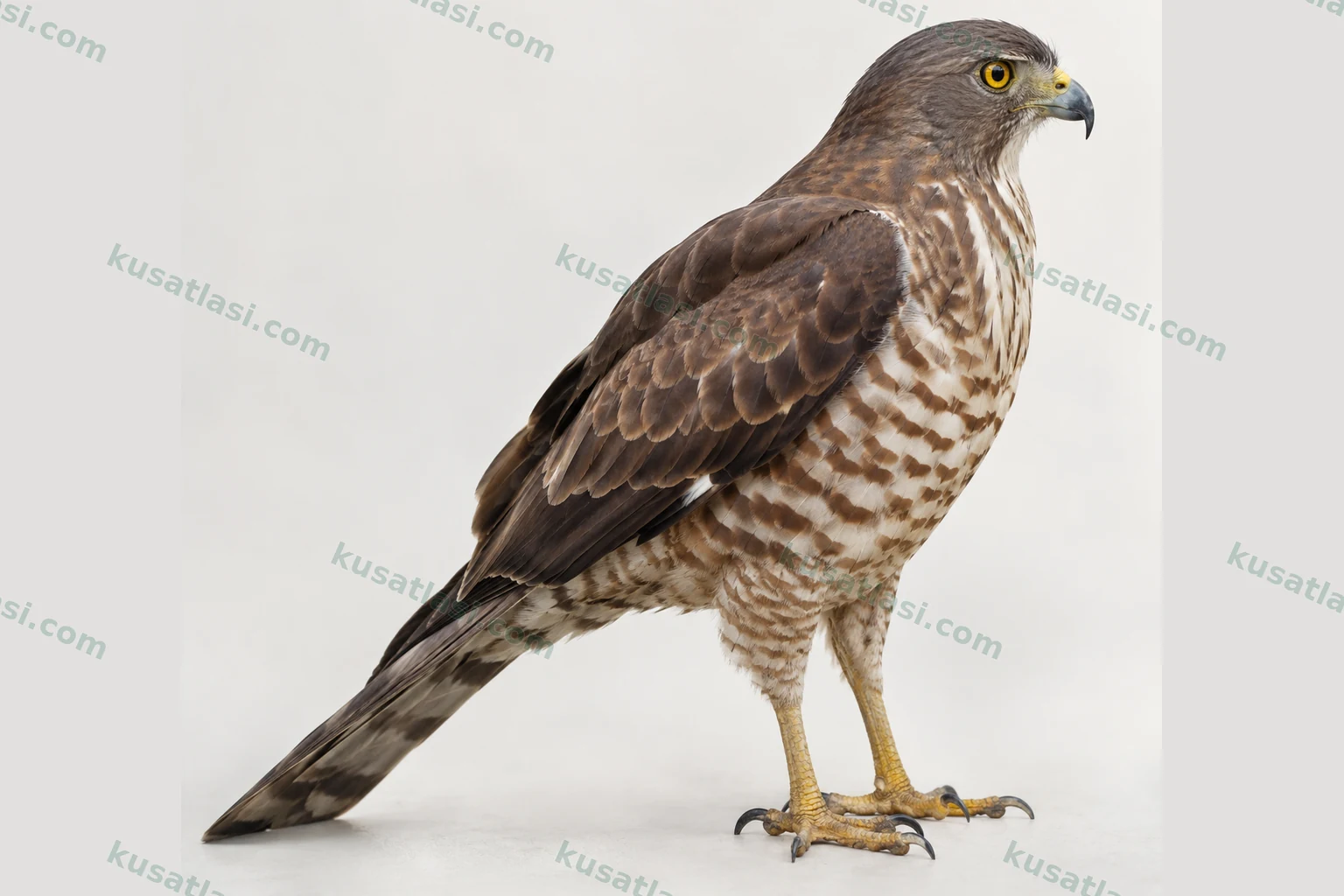 FemaleMale
The female may appear browner and the male greyer and darker. Light, age and regional forms matter; the overall colour warmth of one photograph does not establish sex with certainty.
Where to look in its natural range?
Scan lower and middle branches in dense woodland and forest edges. After a short low flight the bird may hide again. Move away if an adult carrying food to a nest hesitates.
The species is basically resident; local seasonal movements may occur. The South African account gives egg-laying September–March, peaking October–December. Old Kenyan nest observations concern another local rainfall pattern; no single breeding month or migration route is given for all Africa.
January
The species is generally resident. In the South African regional breeding example, this month is within the egg-laying period.
February
The species is generally resident. In the South African regional breeding example, this month is within the egg-laying period.
March
The species is generally resident. In the South African regional breeding example, this month is within the egg-laying period.
April
The species is generally resident. In the South African regional breeding example, this month is outside the stated main egg-laying period; this does not mean local absence or absence of breeding.
May
The species is generally resident. In the South African regional breeding example, this month is outside the stated main egg-laying period; this does not mean local absence or absence of breeding.
June
The species is generally resident. In the South African regional breeding example, this month is outside the stated main egg-laying period; this does not mean local absence or absence of breeding.
July
The species is generally resident. In the South African regional breeding example, this month is outside the stated main egg-laying period; this does not mean local absence or absence of breeding.
August
The species is generally resident. In the South African regional breeding example, this month is outside the stated main egg-laying period; this does not mean local absence or absence of breeding.
September
The species is generally resident. In the South African regional breeding example, this month is within the egg-laying period.
October
The species is generally resident. In the South African regional breeding example, this is a reported peak egg-laying month.
November
The species is generally resident. In the South African regional breeding example, this is a reported peak egg-laying month.
December
The species is generally resident. In the South African regional breeding example, this is a reported peak egg-laying month.
Nest, egg and incubation
A platform nest of branches and leaves sits in tall-tree cover. Both partners may participate in building and caring for the young. The South African account gives usually 1–2 eggs, rarely 3. The compilation’s 32.5-day incubation is not presented as a definite measurement applicable to every nest: the original sample context is insufficiently verified. A regional account gives nest departure at about 28 days and first flight a few days later. Reuse of a previous year’s nest in an old Kenyan observation limits claims of obligatory annual rebuilding. Do not approach nests or fly drones there.
Whistle-like calls may come from branches or display flight. Adult display and juvenile begging are not assigned the same function. A lone forest whistle without seeing its source does not establish identity.
Do not play recordings to attract birds; observe quietly, especially near nests.
Species information
Quick Identification
African Cuckoo-Hawk Aviceda cuculoides is a long-tailed raptor hunting concealed among trees. In adults, seek a grey head and upper breast, broad chestnut crossbars on pale underparts and pale bands on the dark tail together. A few elongated nape feathers form a small crest, not a tall upright plume. Perched it may look slender and long; relatively broad wings alter the flight silhouette. Long tail or barred belly alone does not confirm a baza.
General Appearance and Posture
Adult upperparts are dark brown to nearly black. Head, cheek, throat and upper breast look greyer; broad reddish-brown bars cross a pale lower body. Transverse bands rather than longitudinal streaks matter. Pale grey bands on a dark tail add evidence. A paler terminal edge may show, but wear or bright sky can make it seem broader in a photograph.
The small nape crest can appear to disappear as the head turns; its invisibility does not alone exclude the species. Compare hooked bill tip, relatively small head and long tail with other raptors. Dark bill and yellowish legs help when perched, although bare-part colours are difficult at a distance. Assess pale colours under comparable light: a sunlit leg and shaded eye can differ through photography.
It may search from a branch then move to another tree, so one sighting does not promise a long stay. Short movements within cover can escape observers accustomed to scanning open-flying raptors. At forest edges watch lower and middle branches as well as crowns. Wait for movement to reveal a partly leaf-covered breast rather than assume unseen feathers.
Males, Females and Young Birds
Adult females may look browner, males greyer with darker upperparts. Use this with feather distribution; a photograph's overall warm or cool tint does not establish sex. A directly watched Kenyan pair likewise had a browner female. Shade, colour settings and regional form can mislead. Leave sex uncertain without adequate views of the same bird's head, back and underparts.
Young upperparts are brown, with pale feather tips sometimes producing a spotted look. Underparts should show less regular dark marks rather than adult chestnut bands. Consider age before assigning another species from belly pattern alone. A youngster near a nest does not make every nearby brown adult female. Age and sex are separate questions.
Regional forms differ in pattern and size. Current taxonomy recognises three subspecies; an older two-form account need not cover today's diversity. Pale lines within chestnut underwing areas can vary especially. Do not require every individual in every country to show all marks of one plate. Subspecies assignment needs current taxon limits and sufficient visible evidence, not country alone.
Appearance in Flight
Relatively broad wings and a long banded tail stand out together. From below, chestnut coverts near the body contrast with paler dark-barred outer areas. The upper surface does not share that distribution; darkness and tail bands may be more useful there. Do not seek an underwing mark on the upper surface without establishing which view a photo shows.
It may make short low tree-to-tree flights. Pre-breeding display also includes higher gliding, descending and banking, illustrating varied flight modes. Banking briefly exposes underwings; the small perched crest usually cannot be seen at that distance. Assess silhouette, lower body, tail and wing surface together. One movement is not automatically labelled hunting or mating.
Voice and Behaviour
Whistle-like calls may be given from a branch or in flight during breeding. Chick calls and adult display calls are not assumed to function identically. Short written imitations represent pitch and rhythm only roughly. See the whistling bird or verify through strong independent evidence; other similar callers may share the forest.
It is usually noticed singly or in pairs. Concealment and infrequent sightings do not alone establish low numbers everywhere. It may watch prey from a branch and take it among plants or on the ground. Insect and reptile hunting make a purely bird-chasing-falcon image incomplete. If a food-carrying adult hesitates near the nest, move away. Do not sustain proximity preventing entry for a photograph.
Similar Species
European Honey Buzzard Pernis apivorus may be a candidate through long tail and barred underparts. Compare head shape, wing proportions, tail-band arrangement and the baza's small nape crest. Season and country help but do not establish identity by calendar alone without morphological separation.
African Goshawk Aerospiza tachiro also makes short tree-cover flights with a long tail. Check African Cuckoo-Hawk grey head and upper breast against chestnut underbody bars, especially allowing for young birds lacking the adult pattern. Do not choose from one barred-belly image without sufficient crest, underwing and tail views.
Madagascar Cuckoo-Hawk Aviceda madagascariensis is closely related but geographically separate. Its name is not transferred to this mainland species.
Global Range
African Cuckoo-Hawk occupies wooded sub-Saharan Africa, from western and central regions to suitable eastern and southern forests and woodlands. Breadth is not continuous occupation. Dry open country and humid forest patches are not equally suitable. Mainland range is not merged with its Madagascar relative; scientific-name matching matters as much as the map.
The South African specialist account notes Mozambique, Zimbabwe, northern Botswana, northeastern Namibia and eastern South Africa, plus a separate population in eastern Western Cape. Older blanket absence statements for Namibia and Botswana conflict with these regional records. Do not treat an entire country as a single definite colour; distinguish particular woodland and verified records.
Regional Status
Dense cover impedes detection. Low atlas-record frequency does not directly measure actual density; effort and visibility affect it. A brief edge sighting does not prove breeding. Direct evidence such as the older Kenyan nest research differs from a lone seen or heard bird. Assess nests without unnecessarily publishing sensitive disturbance-related locations.
Movements
It is generally resident, with some seasonal or local movements; the South African account mentions possible local winter movements. No single continental route or start month applies to all. Differences between older accounts cannot be resolved by joining monthly records into a route. Maps, points and models must distinguish evidence types; a date does not become whole-population arrival that month.
Breeding Habitat
It may occupy forest, dense woodland, secondary cover and suitably wooded farmland. South African sources include exotic plantations; this does not mean natural forest can everywhere be replaced with equal ecological value. Tree height, cover continuity and prey matter together. Crossing an open field does not prove nesting in it.
Nest Site
A platform of branches, climber pieces and leaves usually sits concealed in a tall tree. Both partners may build and care for young. The South African account gives usually 1–2 eggs, rarely 3. A literature compilation gives 32.5 days of incubation, but insufficient original context prevents applying it definitely to every nest. The older Kenyan study did not follow a complete cycle. A regional account gives nest departure around 28 days and flight a few days later: these are separate events.
Daily Space Use
Short movements link branches, understorey and ground during foraging. A food-carrying adult waiting near its nest may indicate excessive observer proximity; do not force continued hesitation. A high nest does not justify climbing or drone approach. Watch quietly from a permitted forest-edge path. One hunting branch does not prove use at a fixed hour daily or an exact surrounding territory.
What Does It Eat?
Insects and small reptiles form an important verified part of the diet: grasshoppers, mantises, other large insects, lizards and chameleons are recorded. South African accounts list other small vertebrates too. Not every record is an equally frequent staple; do not infer main prey from an unusual entry. Without direct proportions, no African insect-versus-reptile percentage is given.
How Does It Hunt?
It may scan from a branch and move between trees, taking prey in foliage or on the ground. A low flight is only part of hunting. Do not call a carried object food before separating it from nesting material: green branch carrying was directly observed. Not all carrying means feeding chicks. Record capture, transport and any eating separately. Shaking trees to expose leaves alters foraging and cover and is not observation of natural feeding.
An Old Nest Can Be Reused
Despite accounts of annual new nests, a watched Kenyan pair refurbished the previous year's structure. Brown and Bursell's observation published in 1968 directly demonstrates multi-year use. It does not prove every pair returns annually either. Rather than two opposing absolutes, state observed reuse.
Two Nest-building Tasks
In the same study the male brought green branches and the female rearranged them. One carrying and one staying at the nest does not mean the latter has no building role. The authors' suggestion that bill shape might help cut branches differs from observed carrying; it is not experimental proof of function. Observers should not mistake every carried object for prey.
Two Sides of an Open Wing
Chestnut coverts below do not substitute for the dark upperwing. Display banking can reveal both surfaces in quick succession. Knowing which side a photograph shows prevents assuming a mark is missing.
Sightings and Actual Numbers
Brief views among trees affect records. An observer scanning open sky can miss a concealed baza. Few photographs do not equal a small population. Repeated counts, habitat quality and methods are needed for status. One visit or atlas-cell record is not presented as a local increase or decline.