

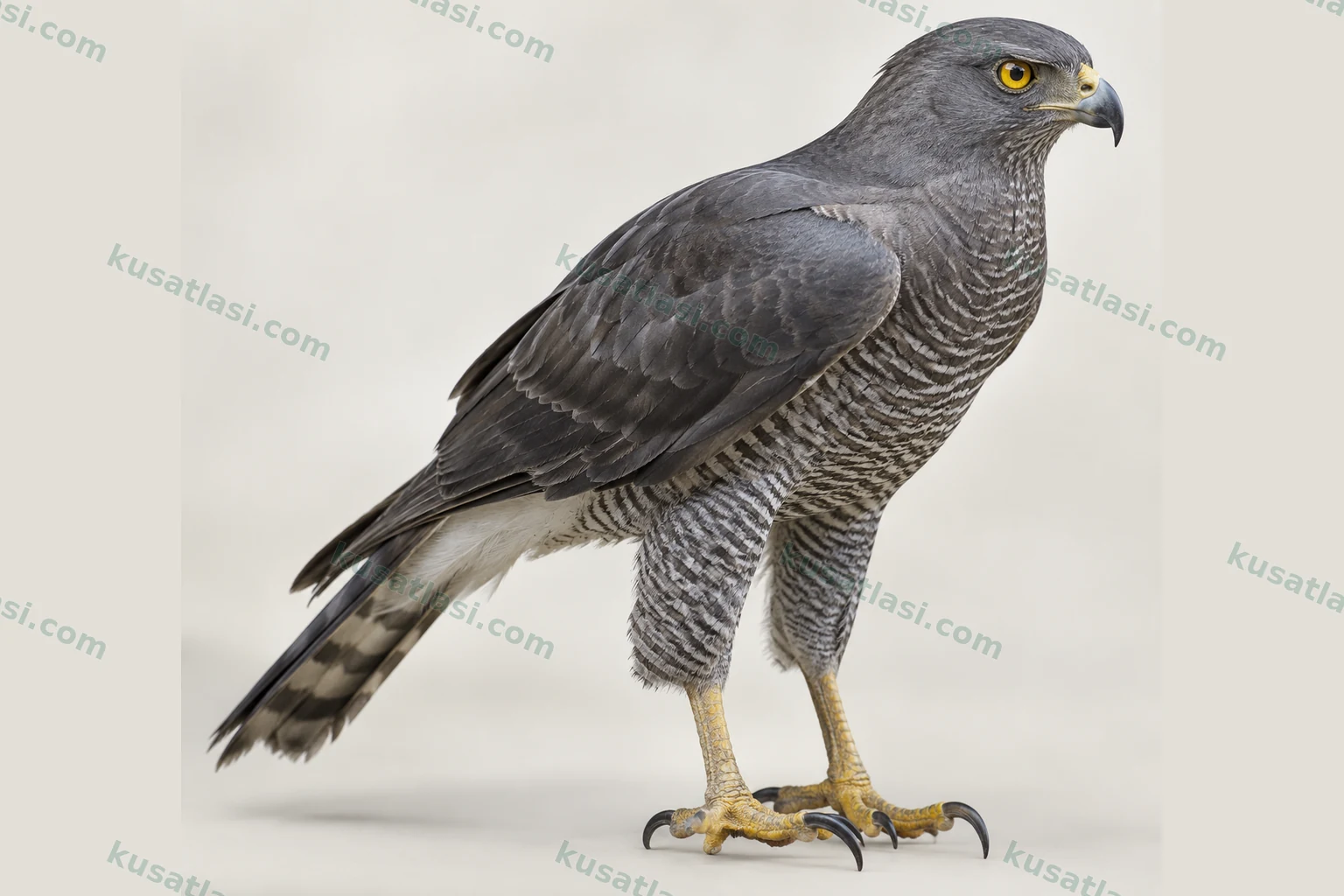
World Birds IUCN statusAccording to the source taxonGlobal IUCN. BirdLife v10 (2025); taxon matching: AviList 2026 / IOC 15.2; checked: 29.10.2026. The list year is not the species assessment date. Related IUCN assessment: Accipiter tachiro — African Goshawk: LC · Least Concern. These categories belong to the named source taxa. An exact match with the scope of the species on this page has not been verified, so they are not transferred as an independent species category. Source and scope OrderAccipitriformesDiurnal raptors FamilyAccipitridaeAccipitridae
African Goshawk
Aerospiza tachiro
It hunts with sudden dashes from trees. Rounded wings, a long banded tail and age-appropriate underpart pattern are examined together; appearance varies regionally.
Biometrics
Length
Male35–40 cm
Female35–40 cm
Shared species value
Wingspan
Male70 cm
Female70 cm
Shared species value
Weight
Male160–248 g
Female227–510 g
African Goshawk
Forests and woodlands of sub-Saharan AfricaObservation guide in its natural range
Look for three features together
Do not rely on a single featureSeen in short forest crossings; proportions alone are not diagnostic.
Do not confuse prominent juvenile dark spots with adult pattern.
Cere may be greenish. Account for geography, age and light.
Compare male and female
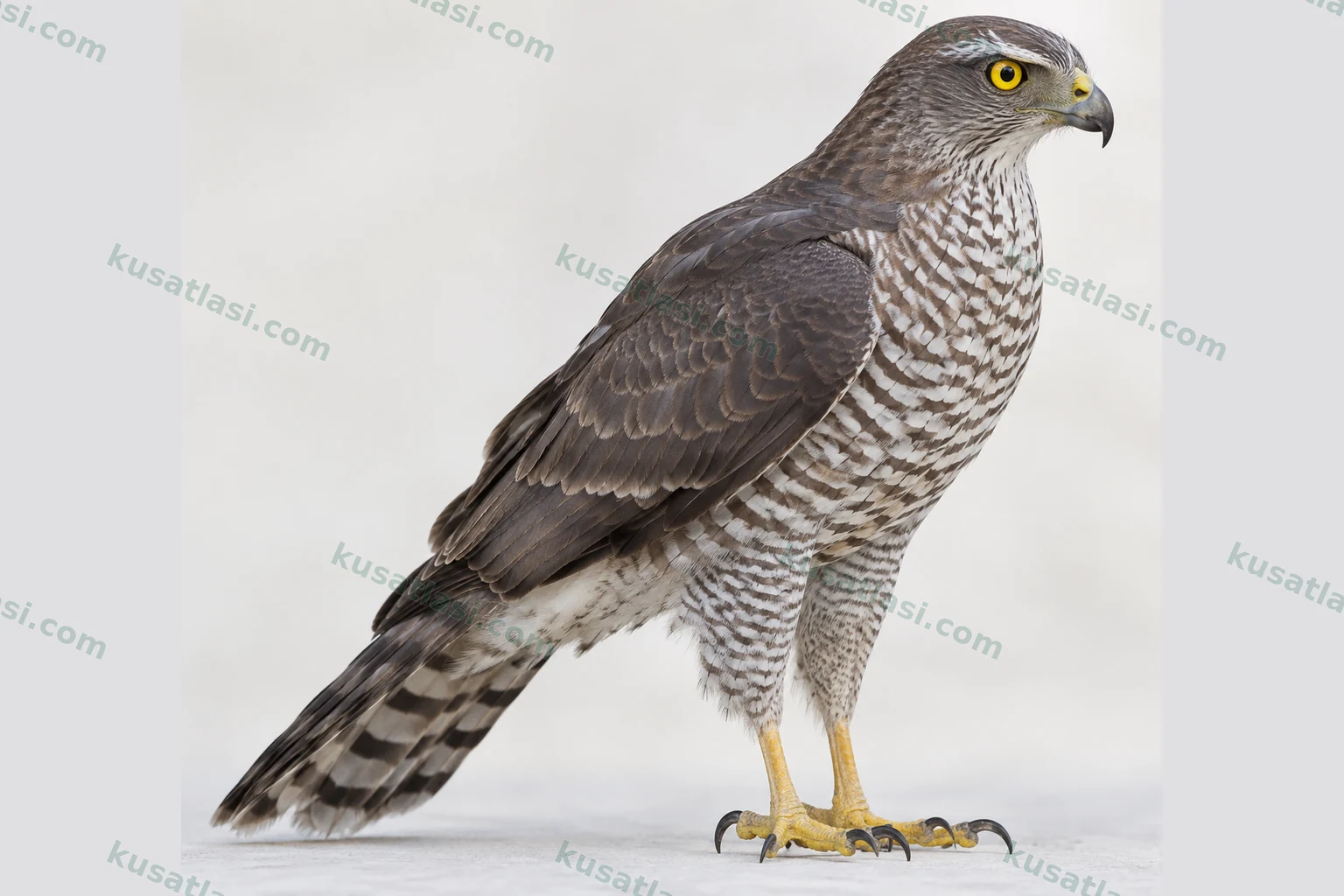 FemaleMale
In typical eastern and southern African adults the female may be larger and browner. Young and regional forms must be considered; the overall colour warmth of one photo does not establish sex with certainty.
Where to look in its natural range?
Scan forest gaps and concealed branches from afar. Morning vocal display may occur above trees. Do not enter dense cover to approach nests or hunting sites.
The species is basically resident; juvenile dispersal is not regular long-distance migration. The South African account gives egg-laying July–December, peaking September–November. This regional calendar does not automatically apply to birds in West Africa or Pemba.
January
The species is generally resident. In the South African regional breeding example, this month is outside the stated main egg-laying period; this does not mean local absence or absence of breeding.
February
The species is generally resident. In the South African regional breeding example, this month is outside the stated main egg-laying period; this does not mean local absence or absence of breeding.
March
The species is generally resident. In the South African regional breeding example, this month is outside the stated main egg-laying period; this does not mean local absence or absence of breeding.
April
The species is generally resident. In the South African regional breeding example, this month is outside the stated main egg-laying period; this does not mean local absence or absence of breeding.
May
The species is generally resident. In the South African regional breeding example, this month is outside the stated main egg-laying period; this does not mean local absence or absence of breeding.
June
The species is generally resident. In the South African regional breeding example, this month is outside the stated main egg-laying period; this does not mean local absence or absence of breeding.
July
The species is generally resident. In the South African regional breeding example, this month is within the egg-laying period.
August
The species is generally resident. In the South African regional breeding example, this month is within the egg-laying period.
September
The species is generally resident. In the South African regional breeding example, this is a reported peak egg-laying month.
October
The species is generally resident. In the South African regional breeding example, this is a reported peak egg-laying month.
November
The species is generally resident. In the South African regional breeding example, this is a reported peak egg-laying month.
December
The species is generally resident. In the South African regional breeding example, this month is within the egg-laying period.
Nest, egg and incubation
It may build a stick platform in dense leaves on a branch away from the trunk; green leaves are used, and sometimes another bird’s old nest is used. The South African account gives 1–3 eggs, 35–37 days of incubation carried out mainly by the female and nest departure after 30–35 days. Both parents feed the young; departure is not independence. Move away if an adult waiting or carrying food hesitates near the nest.
Morning display may include spaced short clicking calls. The regional account gives two–three-second intervals, not an obligatory measurement for every call. Verify with the visible caller.
Do not play recordings to attract birds; observe quietly, especially near nests.
Species information
Quick Identification
African Goshawk Aerospiza tachiro is a long-tailed raptor with short rounded wings, hunting by sudden sorties among trees. Typical eastern and southern adults combine grey or grey-brown upperparts, fine transverse bars on pale underparts and dark tail bands. Yellow eyes and legs help in close views. The bare skin at the bill base may be greenish or grey-green; do not require another raptor's bright yellow cere. Forest shade can turn grey feathers brown, so examine head, breast, wings and tail together rather than one colour.
Accipiter tachiro in older publications is its previous generic placement. Genus change and species-boundary change are different. Cornell's broad classification includes the western and central toussenelii group, treated separately by some older work. A southern bird is therefore not an invariant template for all African forest goshawks. Rufous underparts, bar fineness and size vary regionally. Locality guides comparisons but does not replace identification.
General Appearance and Posture
On a branch, folded wings below the shoulders and a tail projecting well beyond the body stand out. Posture is upright or slightly forward; head-turning scans occur while watching for prey. The bill is short, powerful and downcurved. Grasping legs and feet may be leaf-hidden. If only a dark back on a thick branch shows, wait for head and underparts rather than naming it from size or pose.
Adult underparts are generally pale and barred; bars range from grey-brown to rufous. Tail-band spacing and wing proportions also matter. A barred body alone is insufficient among similar African woodland raptors. Wear, shade, distance and concealment change appearance. Distinguishing bars confined to mid-belly from those starting on the breast is more useful than just calling it barred.
Males, Females and Young Birds
Typical eastern and southern adult males may look greyer, females browner and larger, with heavier-looking underpart bars. Photo colour temperature does not establish sex. A pair in the same regional conditions is more informative than images from different days and light.
Young upperparts are brown; prominent dark spots and longitudinal marks on pale underparts differ from regular adult crossbars. Eyes may be browner than adult yellow, but distant shaded eyes are not always read correctly. Mixed fresh and old feathers may tempt premature adult or female assignment. Assess pattern direction, upperparts and eye colour together.
Geography adds importance. Pemba birds may be smaller and more rufous below; western forest forms and Ethiopian birds also differ. Morphological work reports weaker sex differences in some groups. One beautiful subspecies photo need not represent every male or female. Do not assume unseen marks when choosing between young, female and regional form.
Appearance in Flight
Rounded wings and a long tail give first clues in short tree-cover crossings. A few strong beats may take it through a gap into cover. Quiet perching and sudden movement are stages of the same hunting method. A brief flight may hide age-specific underpart markings; do not age from silhouette alone. A branch hiding part of the tail also changes apparent proportions.
From below, compare bars or spots on pale body, underwing pattern and banded tail. Above, see back and covert colours; angles offer different features. Very dark individuals can contrast pale flight feathers with dark coverts. This is not a separate species or definite sex mark. Against bright sky, record silhouette and continuous flight rather than interpreting darkened colours.
An early-morning bird may circle above trees with spaced clicking calls, explaining why searches need not remain below the canopy. Not every circling raptor is African Goshawk. Confirm wing shape, tail bands, body pattern and that the voice belongs to the visible bird. Adult display and a young bird crossing a gap are not the same behaviour.
Voice and Behaviour
Morning display can include short clicking calls at regular intervals. The South African account describes two–three-second gaps (regional behaviour, not the obligatory duration of every call). Forest acoustics may shift perceived direction away from the visible bird. Recording sound and image together strengthens identification. Repeated playback in breeding habitat can disrupt behaviour; watch briefly from afar.
It usually attacks from a concealed perch, taking small birds, mammals and reptiles. Specialist accounts include rare joint-hunting pairs, not a rule for every hunt. Young can disperse after independence. Absence from yesterday's branch does not prove long-distance migration; woodland movements, prey and concealment affect sighting frequency.
Similar Species
Adult Micronisus gabar shows a useful white rump, reddish cere and red legs, contrasting with typical adult African Goshawk yellow legs and greenish cere. Juvenile gabar should not be expected to show those adult red parts. Both may have dark individuals, so overall blackness does not decide. Record the angle actually revealing the white rump.
African Cuckoo-Hawk Aviceda cuculoides may confuse on a short forest crossing through long tail and barred underparts. Compare small nape crest, adult grey head and upper breast and chestnut belly bands. Failing to see a concealed crest does not by itself rule out African Cuckoo-Hawk. Wing-tail proportions, underpart bars and age-appropriate appearance work together.
An older book treating western toussenelii separately may use another heading. It reflects different taxon limits for the same geographic form. Check scope before transferring its measurements or range directly to southern tachiro. Identification concerns both bird marks and which group the name includes.
Global Range
African Goshawk is tied to sub-Saharan forests and woodland. This page follows Cornell's broad scope: western and central humid-forest birds and the eastern and southern tachiro group share one species heading. A southern-only range would therefore be incomplete. The entire continent is not continuous habitat either: forest belts, riverside woodland, montane forests and connecting cover matter.
Status within Its Native Range
Eastern and southern accounts include forests, dense woodland and wooded gardens. It occurs from Angola and Zambia into suitable southern African woodland, not equally across all dry open country. Pemba's island form and Ethiopian montane forms illustrate diversity. A national occurrence does not mean equal coverage nationwide.
Old sources giving western birds another name may have narrower continental scope. Read geography and subspecies alongside scientific names. A sparse point is not automatically breeding range, nor dense points a census. Concealment and different observer routes shape records.
Migration
The eastern and southern regional account calls it basically resident. Post-independence juvenile dispersal is not regular intercontinental migration. Local prey and cover may alter use, but isolated sightings do not create country-to-country routes or monthly boundaries. Points and modelled range are distinct evidence; sparse records do not prove empty intervening areas.
Breeding Habitat
It breeds with tree cover. In east and south it may use natural forest, dense woodland, riverside vegetation and gardens with suitable large trees. Not every plantation supplies all forest functions; a hidden nest branch must accompany prey and safe passages. Western humid-forest requirements are not generalised from one southern garden.
Nest Site
The South African account describes a stick platform in dense leaves on a branch away from the trunk. It may have green leaves or reuse another bird's nest. Females have an important building role. Regional values are 1–3 eggs, 35–37 days of mostly female incubation and nest departure after 30–35 days. They are not identical calendars for all subspecies. Young leaving the nest remain fed and are not immediately independent.
Daily Space Use
It watches from hidden perches and crosses woodland gaps briefly, sometimes displaying above trees in the morning. Do not enter dense cover seeking nests or prey sites. Move away if a food carrier hesitates, alarms or cannot return. Brief observation from roads and existing gaps reduces interference with rest and care.
What Does It Eat?
It especially hunts birds, also taking small mammals and reptiles. South African examples include doves, finch-like small birds, mice and lizards. Listed prey need not be equally frequent everywhere. Forest structure and available animals vary, so local proportions are not extended across sub-Saharan Africa. Nest deliveries may not represent the adult's whole annual diet.
How Does It Hunt?
From a concealed woodland branch it can make a short rapid sortie. Long tail and rounded wings stand out. Baiting a hunting site is not natural feeding observation. Do not enter the approach route of a successful hunter or chick-food carrier. Rare joint hunts do not make every capture cooperative. When prey is unclear, record visible size and features without a species name.
The Geographic Scope of One Name
African Goshawk illustrates changing name scope. Old Accipiter tachiro and new Aerospiza tachiro use different genera; some studies also treated western toussenelii separately. Cornell's broad classification includes both. An old paper's 'species range' may therefore omit parts of today's page. Use original specimen locality, not name alone.
Colour Is Not Always Sex
Morphology studies report eastern and southern woodland differences from equatorial forest forms. Smaller Pemba birds and weaker sex differences in some groups belong to this discussion. A typical browner-female regional description does not make every African brown bird female. Age and geography together prevent one plate specimen becoming the entire species.
Genetics and Classification
A study of a short mitochondrial-gene segment in museum specimens found northwestern–southeastern structure. Proposed splits are interpretations and classification proposals, not automatic adoption by every institution. Broader raptor phylogenies also showed old Accipiter was not one natural lineage and supported revived Aerospiza. A genus change does not mean the bird newly appeared.
Below and above Trees
A bird watching from cover may circle above trees during morning display without contradiction. Vocal flight offers a view missed by silent understorey scanning. Voice, wing proportions and body pattern still combine. Forest sighting rates depend on time and behaviour sought; few sightings are not directly low numbers.