

World Birds IUCN statusLC · Least ConcernGlobal IUCN. BirdLife v10 (2025); taxon matching AviList 2026 / IOC 15.2; checked: 29.10.2026. The list year is not the species’ assessment date. Source and method · BirdLife OrderAccipitriformesDiurnal raptors FamilyAccipitridaeAccipitridae
White-throated Hawk
Buteo albigula
Small white-throated raptor breeding in southern Andean forests and wintering in the northern Andes.
Biometrics
Length
Male38–48 cm
Female38–48 cm
Shared species value
Wingspan
Male84–102 cm
Female84–102 cm
Shared species value
Weight
Male420–445 g
FemaleData unavailable
White-throated Hawk
AndesObservation guide in its natural range
Look for three features together
Do not rely on a single featureDark head, white throat and dark armpits.
Fairly level wings; tips slightly raised.
Northward migration in austral autumn.
Compare male and female
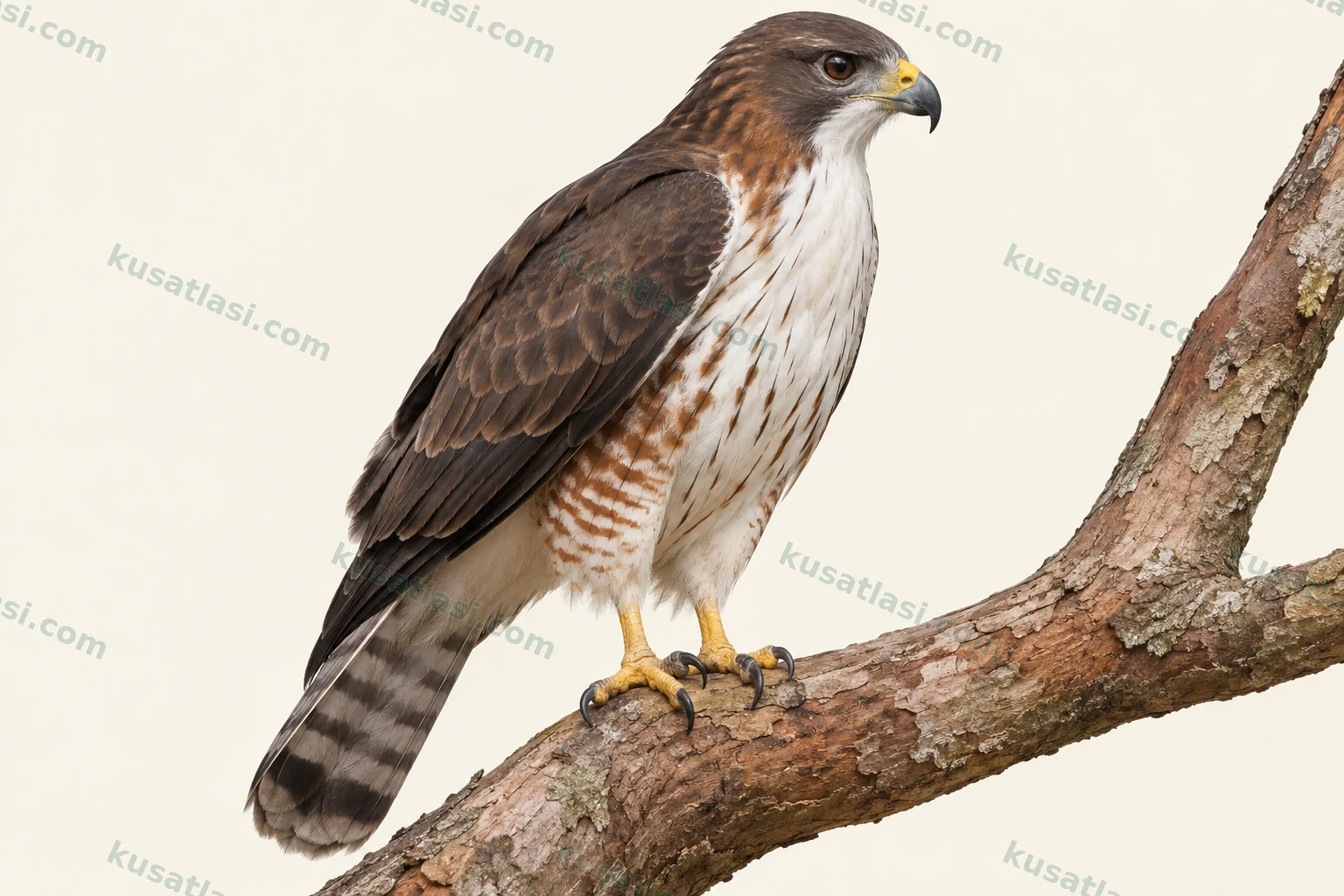 FemaleMale
Adult sexes are not reliably separated by plumage colour; young may have warmer tones and heavy streaking.
Where to look in its natural range?
Chilean–Argentine temperate breeding forests; northern Andean winter forests.
Migratory; southern breeding and northern wintering periods distinguished. Local field dates, not fixed limits at every latitude.
January
Argentine Patagonia study area: Laying, incubation and nestling period.
February
Argentine Patagonia study area: Laying, incubation and nestling period.
March
Central Chilean Andes: Period of concentrated northward passage.
April
Central Chilean Andes: Period of concentrated northward passage.
May
Data unavailable
June
Data unavailable
July
Data unavailable
August
Data unavailable
September
Southern Andes: Return to breeding forests.
October
Southern Andes: Return to breeding forests.
November
Argentine Patagonia study area: Laying, incubation and nestling period.
December
Argentine Patagonia study area: Laying, incubation and nestling period.
Nest, egg and incubation
Tree stick platform; compilation records two eggs. In Patagonia about one month of incubation and six weeks as nestlings.
Vocal exchanges at nests and food transfers documented; detailed voice key unverified.
Do not play recordings to attract birds; observe quietly, especially near nests.
Species information
Quick identification
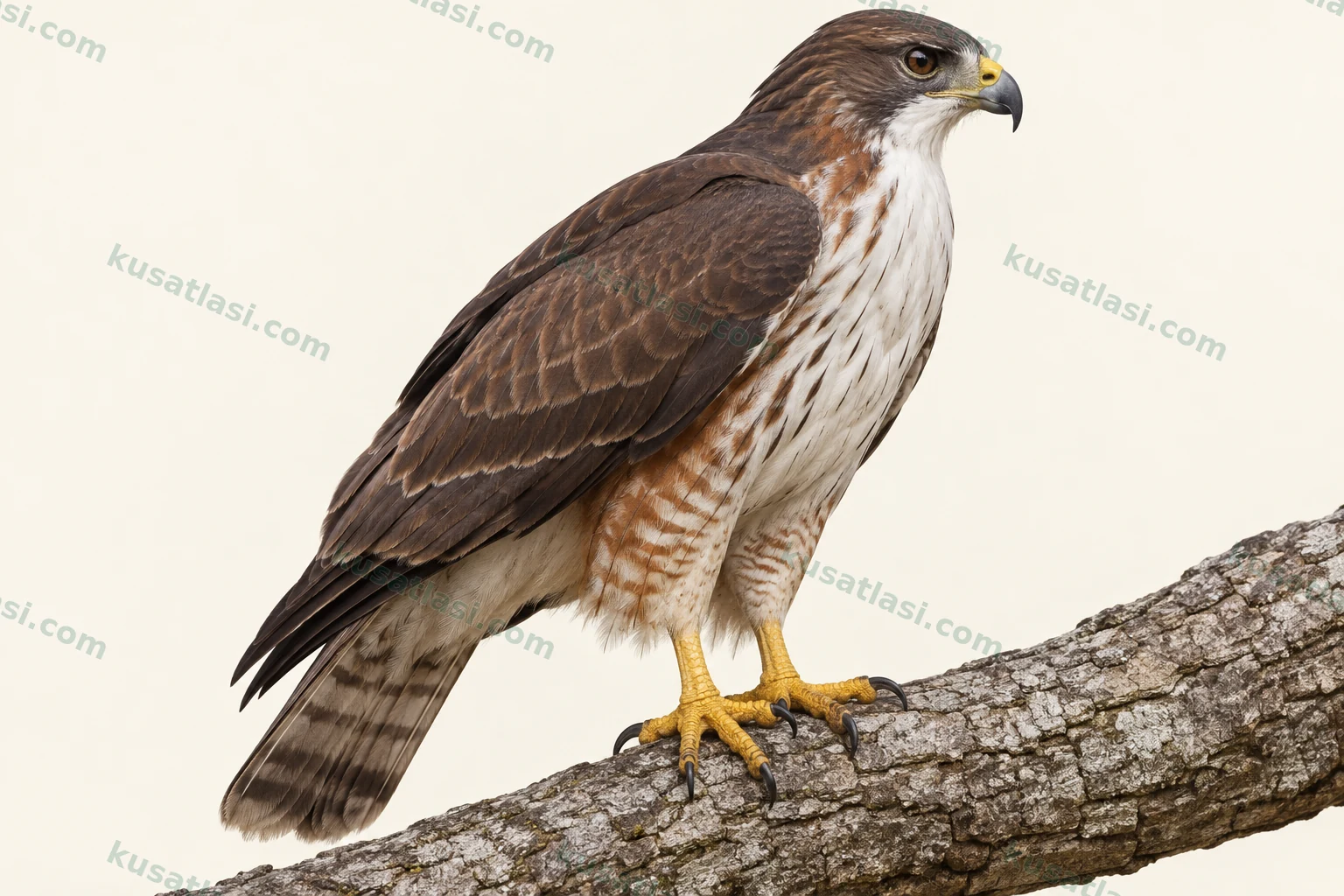
White-throated Hawk Buteo albigula is a small forest raptor moving seasonally along the Andes. In adults, assess the dark head contrasting with a clean white throat, dark streaks on pale underparts and conspicuous dark armpits in flight together. Soaring birds hold the wings fairly level, with tips sometimes slightly raised. White-throated Hawk is the English name for the same current taxon.
General appearance and posture
A white throat lies below the dark brown head and upperparts. The underparts are dark-streaked, with denser darkness on the sides. Identification does not rely on throat whiteness alone: wing shape, armpit patches, size and location matter too. Colour alone may not distinguish a bird above the forest from larger hawks in the same area.
Males, females and young birds
No distinct adult male–female plumage-colour difference has been shown. Some measurement series suggest females tend to be larger. Size or breast streaks alone are not a certain sexing key.
Young birds may differ from the adult's clean white-throated appearance. One Patagonian juvenile examined in detail was dark brown above, with warm feather edges giving a scaled look. Its underparts had yellowish-cinnamon tones and dark streaks, while the chin remained relatively pale. This describes one particular juvenile; not every age is assumed to show the same colours simultaneously.
Observed nestlings changed from the first pale fine down to a second grey-white coat. In subsequent weeks dark body feathers with warm edges developed. Thus the pale young chick became the darker streaked bird nearing departure. Age assessment must consider the growth stage.
Appearance in flight
Cornell's identification account emphasises circling upward and holding position against the wind. Wings usually look level, tips directed slightly upward. Dark armpits and pale throat support identification. None of these alone ensures identification when only a distant silhouette is visible.
Voice and behaviour
Breeding studies record adults and young vocalising during food transfers, especially around fledging. No detailed comparative syllable key was verified. A juvenile flying with a parent near the nest is not treated as an independently hunting adult.
Undulating display flights and nest-area defence were observed before laying. Non-breeding migration differs: birds may fly north in Chile in single-species or mixed hawk groups. Territorial behaviour of breeding pairs and migrant-flock behaviour are distinguished.
Similar species
Young Geranoaetus polyosoma can have similar pale-and-dark underparts but are generally larger. The species can migrate in the same flock, so a neighbour's identity does not establish the focal bird's. Compare wing shape, throat and armpit patterns together.
Young Buteo ventralis may also cause confusion in the same southern forests. Larger structure and the complete underwing pattern matter. Historical confusion with Buteo brachyurus is known too; white underparts or similar scientific names alone do not separate them.
World distribution
The natural range follows the Andes from Venezuela to northwestern Argentina and Chile. This broad belt is not one continuous occupied breeding area in the same season. Current migration research distinguishes southern temperate Chilean–Argentine breeding forests from the Andes of Venezuela, Colombia, Ecuador, Peru and Bolivia where the austral winter is spent.
Status within its natural range
The current list gives the global category Least Concern. Forest breeding habitat and seasonal passage corridors have separate conservation needs. Nest studies around Bariloche document particular Patagonian forests, not equal breeding densities throughout the Andes.
Migration
It is migratory. It returns to southern breeding forests in spring, September–October, and heads north in austral autumn. Long-term Chilean counts show northward passage concentrated in March–April. Farellones observations gave a shorter passage pattern centred on late March; these dates are not fixed limits for every year and latitude.
Pavez recorded no year-round resident White-throated Hawks at three Andean sites. This supports the contrast with partially migratory Geranoaetus polyosoma in the same work. Precise northern wintering boundaries and individual flight paths are less fully known, so no assumed route is drawn on the map.
Breeding habitat
Temperate forests of southern Chile and Argentina, especially those with Nothofagus, are confirmed breeding habitat. Forested Andean slopes are used in northern wintering areas. The two seasonally used areas are not forced into the same habitat and elevation range.
Nest site
In the Patagonian study, a stick platform stood in a fork in the middle or upper part of a large tree. Green branches were added to dry sticks; the canopy could hide the nest from below. A compilation reports two eggs. Direct fieldwork followed incubation for about a month and nestlings for about six weeks; no calculated single incubation day is given when its exact start is unknown. Mid-November laying and late-January flight are the studied southern forests' example calendar.
Daily use of space
Forest canopy, nearby perches and open sky serve different functions. Some nest areas reused a nest in later years and some pairs had multiple alternative nests. Observe from a distance instead of approaching the nest tree or forcing a young bird to fly.
What does it eat?
Food research in southern Argentine temperate forests confirmed small mammals, birds and lizards. Pellets also contained insect remains; researchers noted that some may have come indirectly from prey stomachs. Each insect fragment therefore does not prove the hawk caught the insect directly.
How does it hunt?
During breeding, prey is carried to the nest or perches near young. At closely monitored nests, males played a major provisioning role and females cared at the nest particularly early in the nestling period. This local observation is not a fixed division-of-labour percentage for all pairs.
Remains beneath nests, pellets and direct deliveries capture different information. Large bird remains were underrepresented in pellets, and some small prey in ground remains. A menu based on one method or only the easiest prey to see below the nest can therefore mislead.
A forest raptor's long seasonal journey
Breeding in southern temperate forests and wintering farther north in the Andes shows why one country's forest alone cannot conserve the species. Chilean migration counts also documented mixed hawk groups during passage. Individual birds' complete annual routes nevertheless remain less fully known.
First flight does not mean an instant break from the nest
In their last nestling week, Patagonian young first moved on nest-tree branches, flapped and made short hops. Flights away from the tree followed. Adults continued leaving prey on nearby perches after first flights. Calling an active youngster near the nest abandoned can misinterpret this natural stage.
What a pellet reveals and misses
Using several methods revealed prey that pellet examination alone could miss. Large prey remains and small digested fragments are not preserved alike. Reliable dietary conclusions for this species come from combining different evidence types.