

World Birds IUCN statusLC · Least ConcernGlobal IUCN category. BirdLife v10 (2025); taxon matching: AviList 2026 / IOC 15.2; checked: 29.10.2026. The list year is not the species assessment date. Source and method · BirdLife OrderStrigiformesOwls FamilyTytonidaeTytonidae
African Grass Owl
Tyto capensis
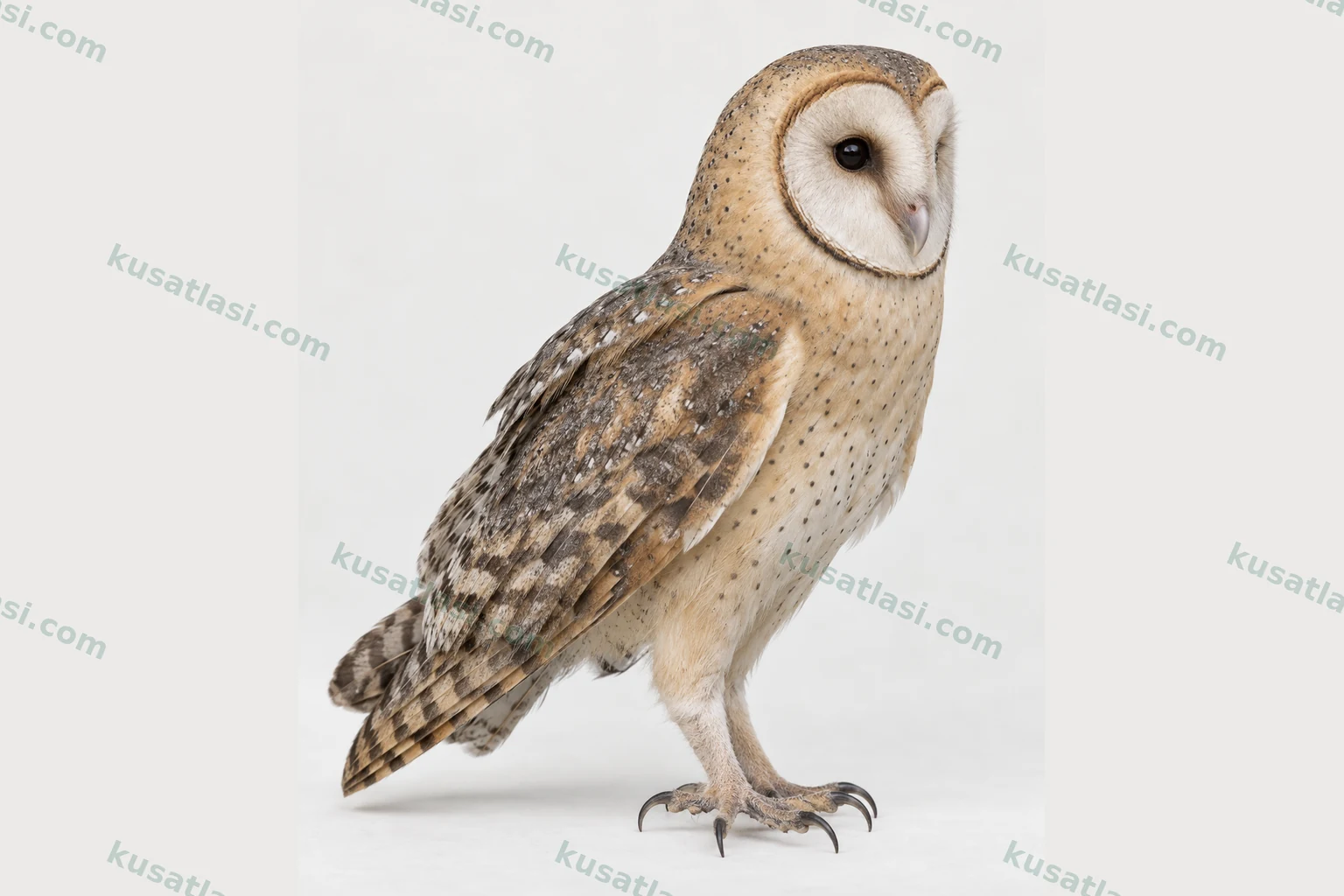
It hides by day in tall dense grass and usually hunts at night in low flight. The pale heart-shaped face and dark upperparts with small white spots are examined together.
Biometrics
Length
Male34–37 cm
Female34–37 cm
Shared species value
Wing length
Male29.95 cm
Female29.95 cm
Shared species value
Weight
Male266–488 g
Female419–536 g
African Grass Owl
Suitable tall-grass grasslands of sub-Saharan AfricaObservation guide in its natural range
Look for three features together
Do not rely on a single featureAssess with dark eyes and pale bill; face tone alone does not determine age.
Young may lack adult back spots; shade may hide marks.
Do not part grass or flush a bird from its roost to see it.
Compare male and female
 FemaleMale
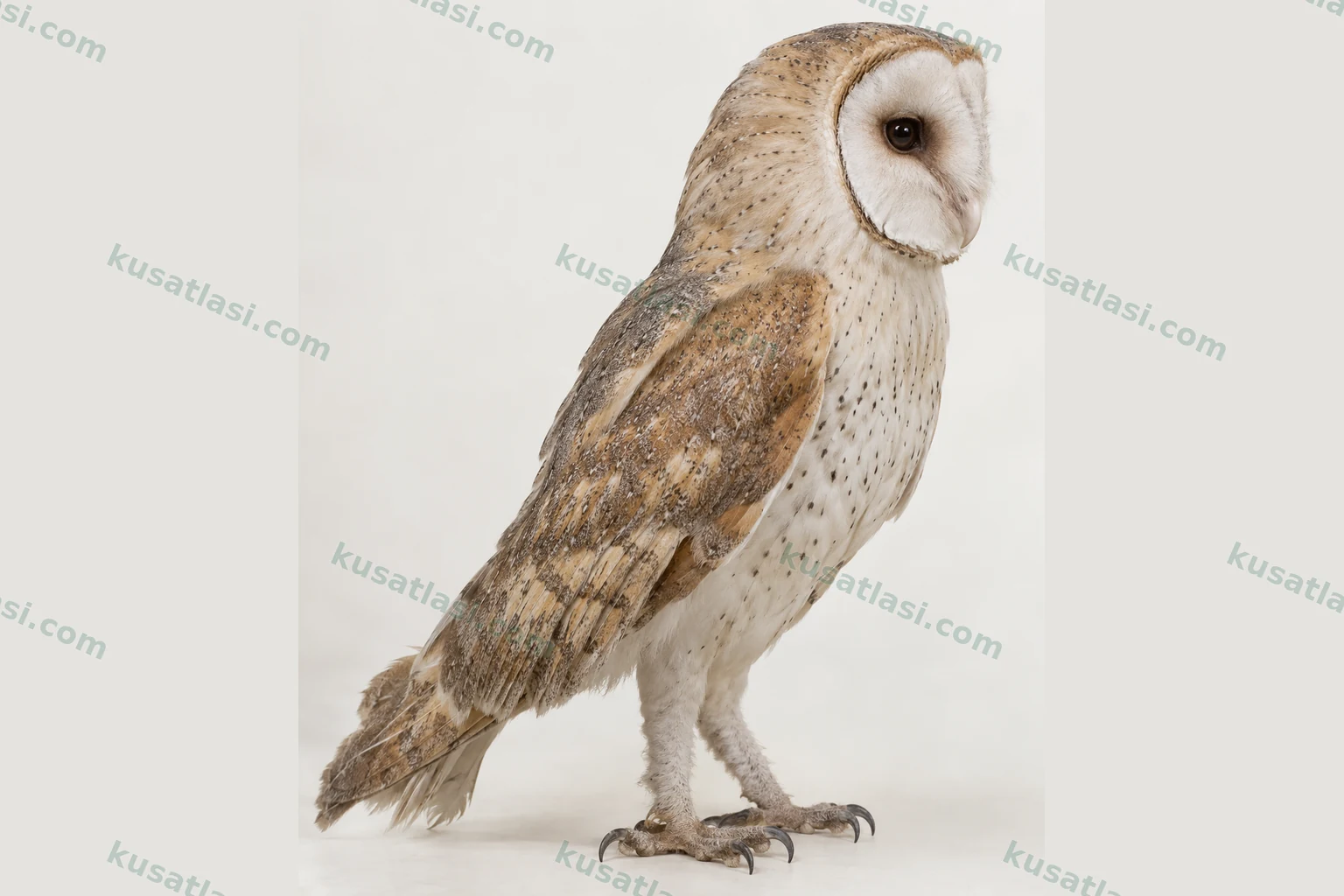
Adult basic plumage is similar; the female may be larger. Framing, facial colour or lighting in one photograph does not allow definite sexing. In young birds, back spots and feather development are considered together.
Where to look in its natural range?
Watch suitable grassland and wetland edges from existing paths at a distance after sunset. Do not enter daytime hiding grass. Preserve nest and roost cover.
Regular long-distance migration has not been verified. The regional atlas gives March–May egg-laying peaks in some southern African areas and wider local record periods. Different rainfall patterns prevent one continental breeding calendar.
January
The species is generally resident. In the South African regional breeding example, this month is within the egg-laying period.
February
The species is generally resident. In the South African regional breeding example, this month is within the egg-laying period.
March
The species is generally resident. In the South African regional breeding example, this is a reported peak egg-laying month.
April
The species is generally resident. In the South African regional breeding example, this is a reported peak egg-laying month.
May
The species is generally resident. In the South African regional breeding example, this is a reported peak egg-laying month.
June
The species is generally resident. In the South African regional breeding example, this month is within the egg-laying period.
July
The species is generally resident. In the South African regional breeding example, this month is outside the stated main egg-laying period; this does not mean local absence or absence of breeding.
August
The species is generally resident. In the South African regional breeding example, this month is outside the stated main egg-laying period; this does not mean local absence or absence of breeding.
September
The species is generally resident. In the South African regional breeding example, this month is outside the stated main egg-laying period; this does not mean local absence or absence of breeding.
October
The species is generally resident. In the South African regional breeding example, this month is outside the stated main egg-laying period; this does not mean local absence or absence of breeding.
November
The species is generally resident. In the South African regional breeding example, this month is within the egg-laying period.
December
The species is generally resident. In the South African regional breeding example, this month is within the egg-laying period.
Nest, egg and incubation
A shallow grass-lined hollow lies on the ground under dense cover, possibly at the end of a grass passage. Specialist accounts give usually 2–4 white eggs and 32–42 days of incubation by the female; the male brings food. Movement in grass at around five weeks is distinguished from first flight at around seven weeks. Parental care continues. Do not enter nest or roost cover or flush birds.
It may give a prolonged screech resembling Western Barn Owl. The suggestion of a thin trembling sound as male song is not a definite sexing rule. One night call without visual verification of the bird does not establish identity.
Do not play recordings to attract birds; observe quietly, especially near nests.
Species information
Quick Identification
African Grass Owl Tyto capensis hides by day in tall dense grass and hunts mostly at night. Assess the pale heart-shaped face, dark eyes, whitish bill and very dark upperparts with small pale spots together. Ear tufts are absent. Underparts can be whitish, cream or pale brownish, with dark spots. The dark-back/pale-underparts contrast stands out particularly in flight, but torchlight can make pale areas excessively white or yellow.
Long legs, ground-associated life and the heart-shaped face belong together. Not every pale-faced grassland owl is this species: compare coexisting Asio capensis and Western Barn Owl Tyto alba. Start with face shape, upperbody colour and pattern, then examine wings, tail and legs. Do not part or walk through grass to flush a hidden bird for identification. Wait for natural emergence from an existing path or opening.
General Appearance and Posture
Pale facial feathers form a heart-shaped frame, with a thin yellowish-cream rim that may have small dark marks. Very dark brown eyes contrast with the pale bill and face. Crown, back and wing coverts are dark brown to sooty blackish. Small white dots matter as much as overall darkness. Failure to see them in shade does not prove absence.
The tail is relatively short. Central feathers may be browner and outer ones paler; bars need suitable light and angle. Flight feathers are not as uniformly dark as the upperbody, showing dark bars on pale grey-brown. Upper legs have pale feathers; lower legs and toes are sparsely feathered. Grass usually hides some leg detail. A bird forced into short grass is not presented as the usual daytime posture.
Males, Females and Young Birds
Adult sexes share basic plumage. Females may be larger, but photo distance, posture and framing hinder comparison. One pale face or dark back does not determine sex. Adult size differences in equal conditions can help, while age and identity are assessed separately.
Young approaching nest departure can look darker and lack the adult's small white back spots. A yellowish or rufous face alone, however, does not prove youth. The South African assessment specifically records rufous-faced breeding adults. Do not make 'white face adult, rufous face young' an absolute. Use back spotting, feather development and behaviour together.
Chicks can move in grass near the nest before flying. This is not an independently hunting adult stage. Parents of an exposed chick may be distant or concealed. Removing it without injury or direct danger can interrupt care. Watch briefly without opening grass to expose it.
Appearance in Flight
At night it may quarter low in an undulating line over grass, sometimes watching from a perch. Underbody and underwings look pale; above, dark back and coverts dominate. The two surfaces can look very different. Do not compare a pale wing seen below with another dark wing seen above as equal views. Evaluate flight-feather bars and tail only with sufficient detail.
Headlights, blur and backlighting hide roadside details. Wing shape, pale underparts and long legs help, yet one blurred frame may not suffice. Do not follow by vehicle or shine strong lights nearby; record area and behaviour. Mainly nocturnal does not mean never seen by day: disturbance and food conditions can affect hours.
Nor does daytime flight establish this species. Asio capensis may appear more often at twilight and seasonally by day in the same grasslands. Time supports behaviour, not morphological identity. Record which bird actually shows face shape, pale upperwing area, dark wrist and body pattern.
Voice and Behaviour
It can give a harsh prolonged screech resembling Western Barn Owl, described as less sharp by the specialist account. A thin tremulous short sound has been suggested as male song, not a definite sexing rule. Writing cannot convey every pitch and rhythm. Do not identify from one grassland screech without face and flight confirmation. Repeated playback is especially inappropriate near nests.
By day it rests on the ground in tall grass or reed-like plants. Flattened-grass passages can lead to roost and nest, explaining concealment even in apparently open grassland. Distant greenness is insufficient: height, density and intact cover matter. Do not approach and leave the bird exposed for long.
Similar Species
Asio capensis may share grassland. Compare its rounder head and face, dark bill, pale outer upperwing area and prominent dark wrist. Its small ear tufts are often hidden; 'no ear tufts' does not exclude it. Combine African Grass Owl's pale heart face, pale bill and very dark white-dotted upperparts. Hour alone does not separate them.
Western Barn Owl Tyto alba also has a pale heart-shaped face and dark eyes. Compare very dark spotted upperparts, long legs and dense-grass roosting in African Grass Owl. Individual Barn Owl colour variation prevents selection by white underparts alone. A sighting near a building is not identity either; see the bird sufficiently.
Eastern Grass Owl Tyto longimembris is a similar close relative native to Asia and Australia. Old treatment as one species does not permit transferring Australian breeding or measurements automatically to Africa. Check the source specimens' continent. This page concerns Tyto capensis.
Global Range
African Grass Owl occurs patchily in sub-Saharan Africa where tall cover suits it. Specialist accounts include birds southwards from Ethiopian highlands, southern Congo and northern Angola, with an isolated Cameroon population. An intervening country name does not mean every grassland occupied. Cover, local water regime and land use matter at finer scales.
Status within Its Native Range
Suitable tall-grass areas associated with wetlands matter particularly in South Africa. The regional assessment notes fragmented high-plateau and eastern habitat. Nocturnal activity and concealment can cause gaps, but do not justify filling every gap by assumption. Verified records, general range descriptions and models are different evidence.
The 2025 South Africa, Lesotho and Eswatini assessment lists Vulnerable, while its reported global category is Least Concern. Different scales do not invalidate each other. Broad continental range does not make local nest-cover loss unimportant. Uncertainty about older Namibian records must also precede colouring that whole country as native range.
Migration
No regular intercontinental route is verified. The regional atlas distinguishes local wandering with suitable conditions from regular seasonal migration. More records in some months do not prove arrival; observation hours and grass alter detection. Do not connect points into an invented journey. Read the map within supported general range and verified records.
Breeding Habitat
Tall dense grass, reed-like plants and intact grassland cover are used. Moist wetland-edge grassland matters, but the species is not restricted to open water; East African high-elevation grasslands also hold it. South African plateau research went beyond a grassland label, assessing patch age, size and surrounding land use together.
Nest Site
A shallow grass-lined ground hollow, protected by cover, may lie at a passage end. Specialist accounts give usually 2–4 white eggs and 32–42 days of incubation. Females incubate; males carry food. Young moving through grass around five weeks and first flight attempts around seven weeks are different stages (approximate species-account development times). Care does not stop immediately at first flight.
Daily Space Use
It rests concealed by day and hunts low at night. Intensive mowing, heavy grazing and unsuitable burning can affect ground nests or cover. Do not enter grass, open passages or publish sensitive nest positions. Use existing paths and distance; do not block provisioning.
What Does It Eat?
Rodents and other small mammals dominate. South African specialists emphasise grassland and wetland Otomys rodents; local abundance can change diet composition. Small birds, bats and large insects are less frequent. One prey list does not give equal proportions everywhere. Nest remains are not the continent's annual diet; retain study locality and time.
How Does It Hunt?
It mostly flies low and undulating over grass, using sight and hearing, also hunting from a suitable perch. Dense daytime cover and more open hunting ground need not match. Do not assume nightly use of one hollow. Do not enter grass to follow roadside birds or offer prey. If prey is unclear, note visible size, form and behaviour. Remains of a day-active rodent do not alone prove daytime hunting.
Life within Grass Cover
It uses dense ground cover rather than tree hollow or building. Grass passages leading to roost and nest create hidden habitat within seemingly open land. Parting it for a better view changes shelter. Broad greenness is insufficient: structure and time left intact matter.
Leaving the Nest and Flying
Moving through grass around five weeks differs from first flight attempts around seven. A flightless young bird can remain nearby and receive food, so not every ground youngster is abandoned. These are approximate account observations, not identical behavioural dates for all. Staggered hatching can also create differing stages in one nest.
Limits of a Nest Study
A study of 41 nests monitored in Gauteng and Mpumalanga during 2009–2017 found used grass patches larger and older than random comparisons. Space use of seven nesting females was also tracked. More developed land cover was negatively associated with daily nest survival. This South African result does not require an identical patch everywhere in Africa. A model association and the direct cause of every nest loss are different evidence.
Face Colour Does Not Fix Age
Whitish face helps identification, but cream or rufous is not exclusive to young. Regional specialists also note rufous-faced breeders. Combine back dots, feather development and behaviour for age. Light alters facial tone, making one colour unsuitable for definite age or sex.