

World Birds IUCN statusLC · Least ConcernGlobal IUCN category. BirdLife v10 (2025); taxon matching: AviList 2026 / IOC 15.2; checked: 29.10.2026. The list year is not the species assessment date. Source and method · BirdLife OrderColiiformesMousebirds FamilyColiidaeColiidae
White-headed Mousebird
Colius leucocephalus
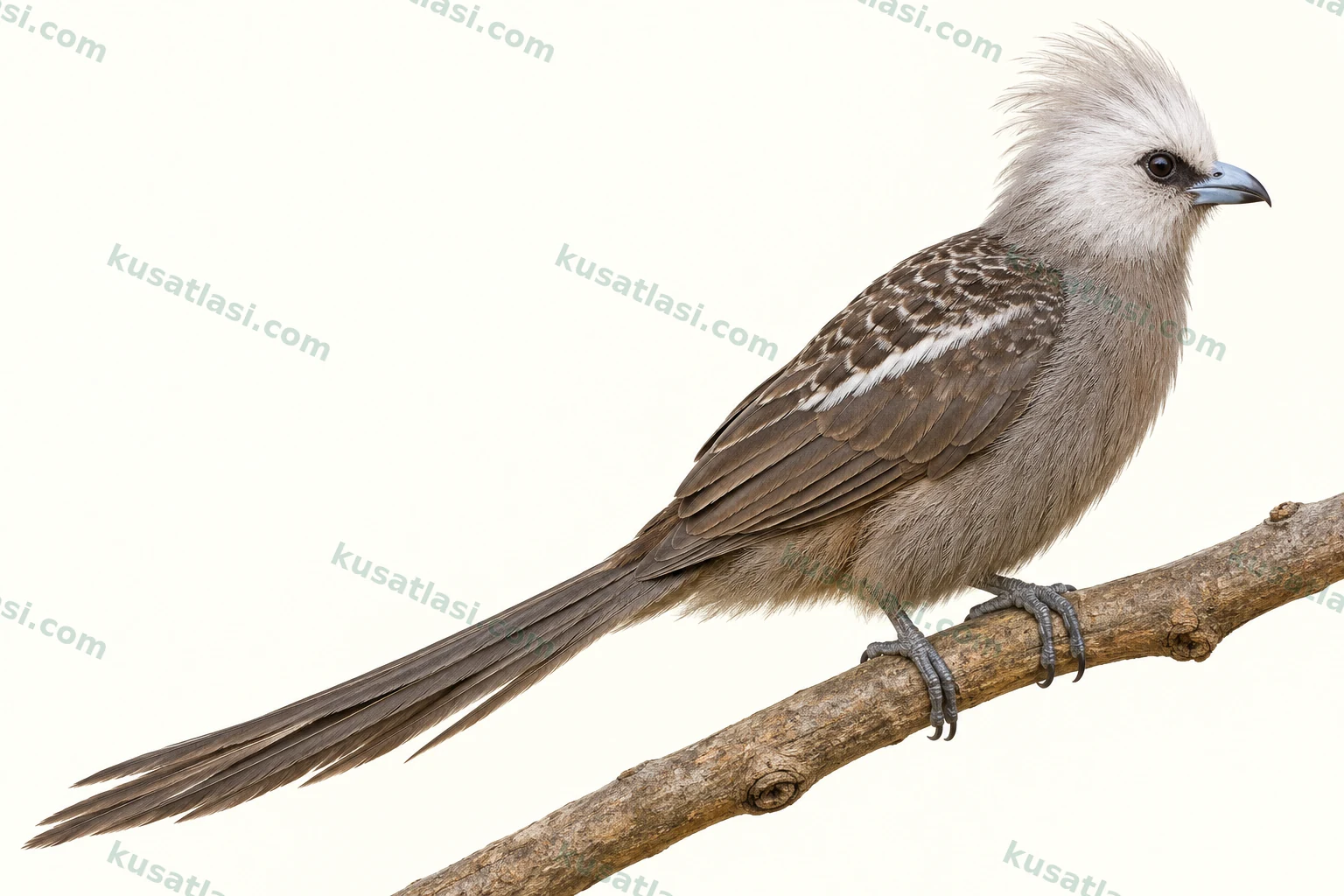
A social mousebird of East Africa’s dry thorn vegetation, combining pale crest and bill with a barred body and very long tail.
Biometrics
Length
Male29–31 cm
Female29–31 cm
Shared species value
Wing length
Male8.8 cm
Female8.8 cm
Shared species value
Weight
Male31–42 g
Female28–39 g
White-headed Mousebird
Southern Somalia, Kenya, southern Ethiopia and northeastern TanzaniaObservation guide in its natural range
Look for three features together
Do not rely on a single featureSilvery pale crest; dark eye surround and pale blue-grey bill with a dark tip.
Grey-brown and cross-barred, with colour differences between geographic forms.
Very long relative to the body; a white back line may be seen in flight.
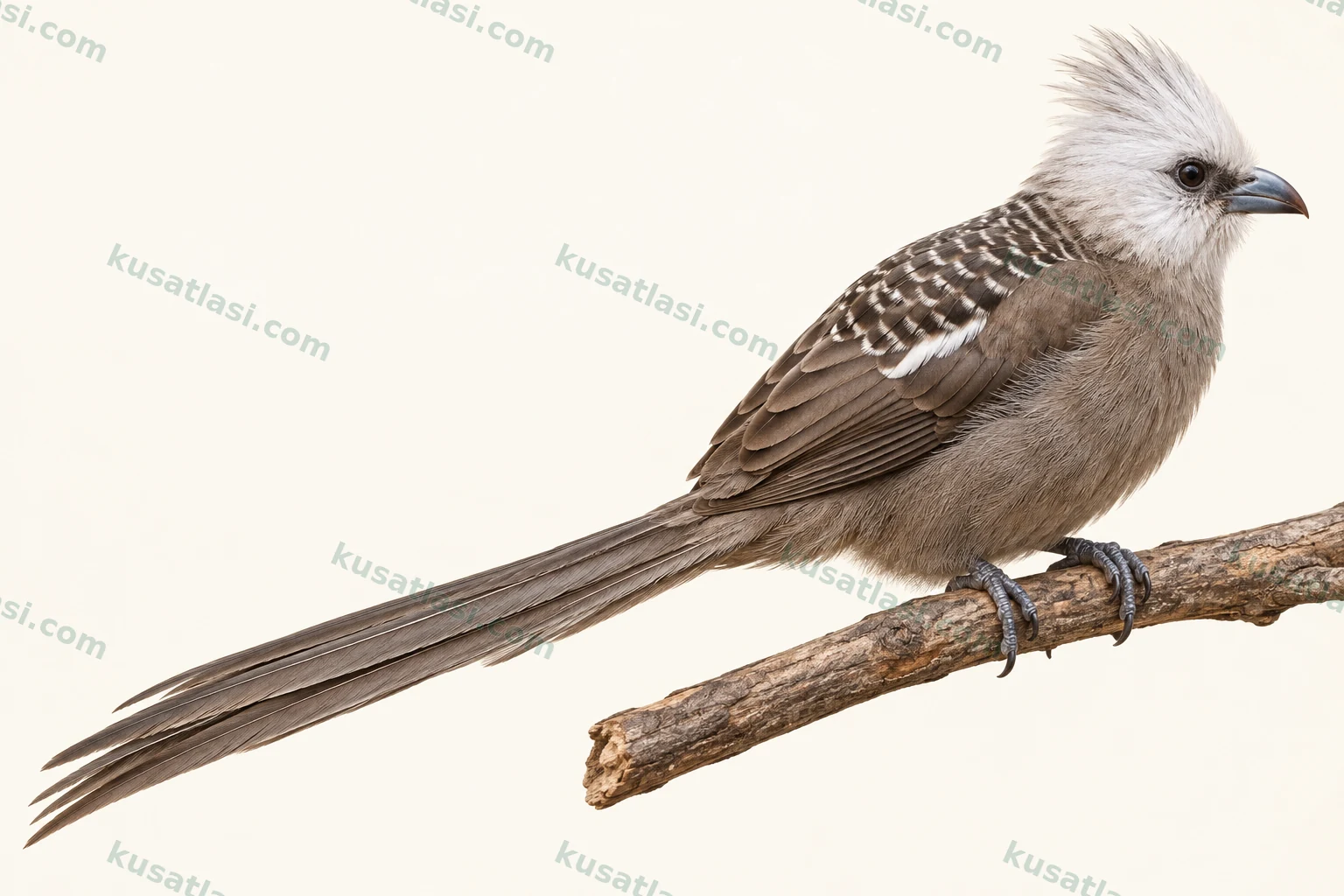
Compare male and female
 FemaleMale
A certain field distinction between male and female plumage was not verified. The greyer northern form and warmer-toned coastal form are not sex differences.
Where to look in its natural range?
Dry thorn bushes and woody vegetation remaining green near rivers.
The calendar shows dated juvenile and breeding records in their regional contexts; the month a young bird was seen is not a certain egg-laying month.
January
Resident; no shared long-distance migration route was verified. No verified regional date specific to this month was given; this does not mean local absence.
February
Resident; no shared long-distance migration route was verified. No verified regional date specific to this month was given; this does not mean local absence.
March
Resident; no shared long-distance migration route was verified. No verified regional date specific to this month was given; this does not mean local absence.
April
Resident; no shared long-distance migration route was verified. No verified regional date specific to this month was given; this does not mean local absence.
May
Resident; no shared long-distance migration route was verified. No verified regional date specific to this month was given; this does not mean local absence.
June
Resident; no shared long-distance migration route was verified. No verified regional date specific to this month was given; this does not mean local absence.
July
Resident; no shared long-distance migration route was verified. Kenya, Samburu: 22 July 1973: a young bird begging from adults was directly observed.
August
Resident; no shared long-distance migration route was verified. Kenya, Teita: old egg and juvenile records dated 1918 were assessed in the museum study.
September
Resident; no shared long-distance migration route was verified. No verified regional date specific to this month was given; this does not mean local absence.
October
Resident; no shared long-distance migration route was verified. No verified regional date specific to this month was given; this does not mean local absence.
November
Resident; no shared long-distance migration route was verified. No verified regional date specific to this month was given; this does not mean local absence.
December
Resident; no shared long-distance migration route was verified. No verified regional date specific to this month was given; this does not mean local absence.
Nest, egg and incubation
Egg and juvenile records exist. Detailed nest structure, typical egg number, incubation duration and total time in the nest were not verified in the species-specific sources examined.
The voice includes short quiet notes and high squeaky sequences, with group contact calls.
Do not play recordings to attract birds; observe quietly, especially near nests.
Species information
Quick identification
The White-headed Mousebird Colius leucocephalus is a long-tailed bird of dry thorn vegetation in East Africa. Its plump body, fluffy pale crest and very long tail attract attention together. The head usually looks silvery white; the bill is pale blue-grey with a dark tip. A white line visible on the back helps identification, especially in flight. The body is grey-brown, and fine cross-markings on the neck and back vary.
When identifying a bird among leaves covering a branch, check the tail and head on the same individual. Do not confuse its tail with another bird’s: small groups may use the same dense bush. Pale crest, pale bill and dark barred body are considered together. A long tail alone does not reliably separate all mousebird species.
General appearance and posture
The tail, very long in relation to the body, shapes the perched bird’s silhouette. The crest feathers may be held fluffed, and their position changes the apparent size of the head. The bill is strong but not as thickly conical as a weaver’s. There is a dark, bare area around the eye. The pale upper bill and dark tip are useful features seen closely in suitable light.
The northern Kenyan form turneri is greyer and more strongly barred. The nominate form leucocephalus, closer to the coast, may have cream, yellowish or slightly warm tones on the crown. Herbert Schifter’s museum comparison showed that these differences must be assessed alongside age and the condition of preserved specimens. The two geographic appearances within the same species are not separated as male and female.
The tail helps balance as the bird moves between branches in dense vegetation. It may lean the underside of its body against a branch or cling with its tail hanging down. A photograph showing an upright posture alone does not represent all its normal movements. Feeding, resting and mutual preening can involve different postures.
Males, females and young birds
A single reliable field distinction between adult male and female plumage has not been verified. Differences in measurements and colour among dated museum specimens do not mean sex can be determined from one distant photograph. Geographic form, age and feather wear are considered together.
Young birds may be paler overall, with weaker neck barring. An original northern Kenya record described a short-tailed young bird with duller pink feet and a greenish upper bill. This differs from the fully developed pale crown and long tail of an adult. Darkening of the young bird’s upper bill from the tip is described as an age-related change.
In July 1973 a young bird begging from adults was directly observed at Samburu. The researcher’s interpretation of an age of about four weeks is not an exact duration from a nest watched since hatching. Wing trembling during begging indicates juvenile behaviour; it does not establish an unvarying number of days for all individuals.
Appearance in flight
The long tail projects conspicuously behind the body in the air as well. The white back line, partly concealed on a branch, may appear in flight. Recording this together with the pale head is more useful than watching wingbeat speed alone. After a brief passage, watch again the bush where the bird lands.
Original Samburu observations describe groups moving together and entering dense plants. This does not mean the birds follow one regular flight line. Tail angle in a short movement between branches is not a measure of long-distance flight ability. The distribution map does not show each group’s daily flight route.
Voice and behaviour
Calls include quiet short notes and higher, squeaky sequences. The original field study observed a bird separated from its group giving repeated contact calls. The sound’s function is understood with the group movements at that moment. Not every high call is labelled an alarm or breeding song.
Small social groups use dense bushes. While foraging, birds may climb to branch tips and take plant foods from different positions. Mutual preening of the head and underpart feathers has been directly observed. This social care does not prove that all members of the same group are offspring of the same pair.
At Samburu, birds were recorded forming close clusters around sunset, then separating again to feed. Because they dispersed before the observation was completed, this record does not directly show that they spent the entire night in the same cluster. Gathering before rest and the arrangement throughout a whole night are different kinds of information.
Similar species
Speckled Mousebird Colius striatus may occur in the same surroundings. Cornell’s comparison highlights its darker face, grey-brown crest and different bill. In White-headed Mousebird, check the pale crest, usually pale bill and conspicuously barred back together. Drier habitat may help, but two species using the same fruiting bush cannot be separated by surroundings alone.
Blue-naped Mousebird Urocolius macrourus is another long-tailed neighbour. A blue nape area, red bill and red bare facial skin help identify it. In Schifter’s original record these birds and White-headed Mousebirds were seen around the same plants. Before recording a distant group as one species, examine the head and bill patterns of different individuals separately.
World distribution
Its East African range covers dry surroundings in southern Somalia, Kenya and northeastern Tanzania; the current conservation assessment also includes Ethiopia among its native resident countries. The populations around Ewaso Nyiro in northern Kenya and those closer to the coast in the east and south are not described as the same geographic form. Country boundaries do not show that the species fills all intervening dry areas.
Status within its natural range
BirdLife International’s global assessment of 2024 places it in Least Concern and gives a stable trend. No verified exact total of mature individuals is available. The assessment names savanna and scrub environments. These facts do not mean that sightings in one local area represent the whole population.
The museum study of 1976 showed that older sources had sometimes assigned the two geographic forms to the wrong countries and regions. Changes in place names and colour loss in preserved specimens also affect interpretations of old records. Current map estimates are restricted to the supported East African surroundings; colouring a cell is not certain proof of continual presence or a nest there.
Migration and movements
The current assessment considers it resident. Local shifts related to rainfall and food conditions may occur; a shared long-distance route for all individuals has not been verified. A group moving among bushes is making a daily feeding movement. Drawing that short flight as seasonal migration goes beyond what the observation supports.
Breeding habitat
Dry thorn scrub and open woody vegetation are the main surroundings. Original observations also recorded the use of vegetation remaining green along the Tana and Ewaso Nyiro. Living in dry country does not mean avoiding every strip of woody vegetation near water. A nest or juvenile record is considered within the small locality where it was observed.
Nest site
Older breeding records confirm eggs and young; the direct species sources examined here did not reliably provide detailed nest structure, typical egg number, full incubation duration and total nestling period together. These gaps are not filled with another mousebird’s information. The value of three eggs in specialist data tables was not used as a certain number without verification of the underlying species-specific record.
Daily use of space
Dense bushes provide feeding and shelter; birds may also reach branch tips. Fruit, flowers and resting places occur in the same surroundings. An adult feeding a young bird can be recorded from afar. Entering the bush used by the birds or trying to draw them onto an exposed branch to see this movement changes the natural conditions of observation.
What does it eat?
Fruits and flowers are directly documented foods. The original northern Kenya study observed birds using ripe yellow fruits of a thorny Solanum plant and acacia flowers. These local examples describe its plant-based feeding; they do not establish that it eats only two plants throughout its range or uses all Solanum species in the same way.
How does it obtain food?
It takes food by climbing between branches in bushes and small trees. The long tail helps balance. It has been observed holding flowers with a foot while feeding; that detailed action is stronger evidence than merely seeing a shadow among branches. For this bird, foraging mainly involves taking plant parts from where they grow on a branch.
Other mousebirds may occur in the same fruiting bush. The bird’s identity and the food it actually takes must be followed separately; not every individual perched on a plant is eating fruit at that moment. A few minutes of feeding by one group do not yield an annual dietary percentage. Flower use is not presented as a certain pollination effect without measured pollination success.
A pale crest varies geographically
The white head is not one unvarying colour template. The museum comparison distinguishes the greyer, strongly barred form in northern Kenya from the warmer-toned appearance nearer the coast. Youth and feather preservation conditions affect the assessment. A faded colour on an old specimen is not proof of a new form in living birds.
Water-side vegetation may matter in dry country too
White-headed Mousebird is associated with dry thorny surroundings, but original records also show green vegetation near rivers. The broad geographic environment and a small feeding spot used during the day are different scales. A savanna map does not explain which branch has fruit; field observation supplies that detail.
Close clustering is not a record of the whole night
Researchers at Samburu saw birds standing close around sunset and later separating. This direct observation documents social gathering. Saying that a group not watched through the night remained in the same arrangement all night would be an extra assumption. Distinguishing the observed interval from the total duration of behaviour helps describe daily life accurately.
The long tail
The mousebird’s conspicuous tail accounts for much of its general appearance.
More than one mousebird in a bush
The original observation around the Tana recorded three different mousebirds using the same fruiting plants. A shared feeding spot does not mean shared species identity. Checking every individual’s head and bill pattern while counting groups can reveal that an apparently single-species gathering is actually mixed.