

World Birds IUCN statusLC · Least ConcernGlobal IUCN category. BirdLife v10 (2025); taxon matching: AviList 2026 / IOC 15.2; checked: 29.10.2026. The list year is not the species assessment date. Source and method · BirdLife OrderCoraciiformesRollers, kingfishers and allies FamilyAlcedinidaeAlcedinidae
African Pygmy Kingfisher
Ispidina picta
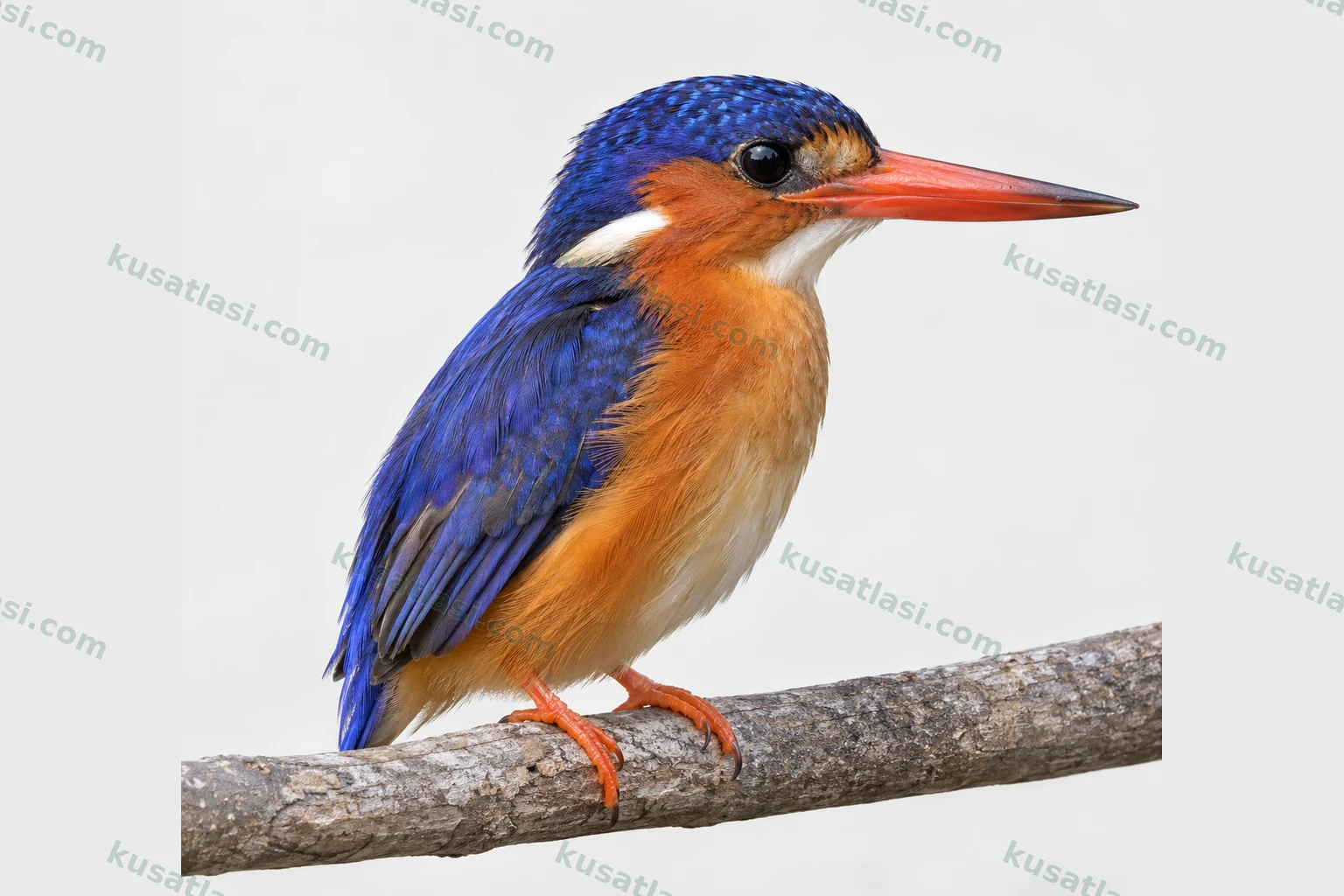
A dark crown streaked blue, warm colour above the eye and a purple ear patch; it mostly catches small terrestrial prey.
Biometrics
Length
Male12 cm
Female12 cm
Shared species value
Wing length
Male5.23 cm
Female5.23 cm
Shared species value
Weight
Male11–16 g
Female9–15 g
African Pygmy Kingfisher
Woodlands and savanna surroundings of sub-Saharan AfricaObservation guide in its natural range
Look for three features together
Do not rely on a single featureSee the blue-streaked crown and warm area above the eye together.
Young birds may have a dark bill and more spotted feathers.
Watch its movement from a low branch to the ground; a waterside location does not establish a fish diet.
Compare male and female
 FemaleMale
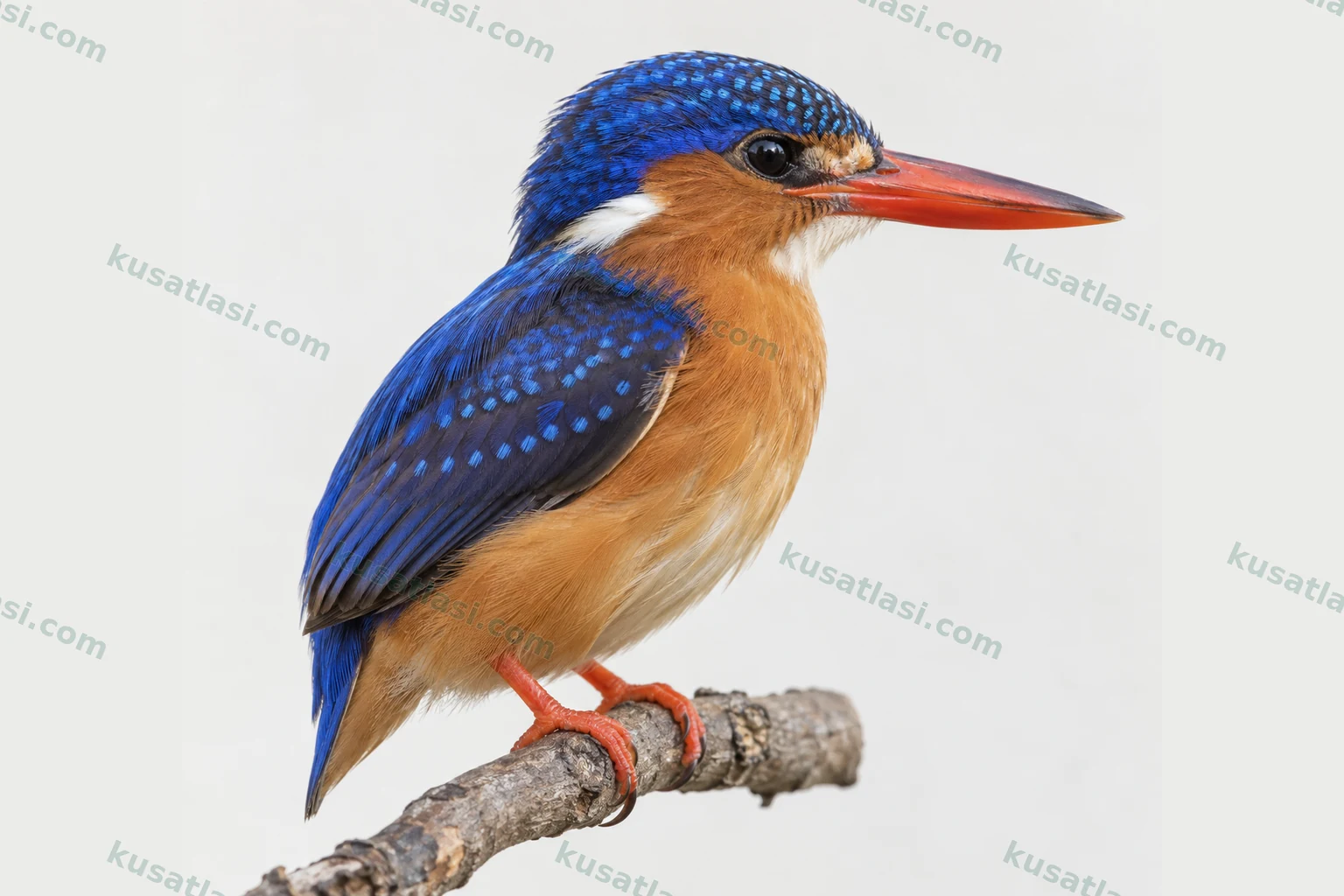
Adult males and females are similar; young may have a dark bill and a paler, spotted appearance.
Where to look in its natural range?
Watch low branches, scrub edges and surroundings with excavatable soil from a distance.
Seasonal presence in the south and individual nest observations in Nigeria are shown separately.
January
Some populations are resident; southern natalensis migrates within Africa. Southern breeding areas: seasonal presence period in the atlas; arrivals may begin in late September.
February
Some populations are resident; southern natalensis migrates within Africa. Southern breeding areas: seasonal presence period in the atlas; arrivals may begin in late September.
March
Some populations are resident; southern natalensis migrates within Africa. Southern breeding areas: seasonal presence period in the atlas; arrivals may begin in late September.
April
Some populations are resident; southern natalensis migrates within Africa. Southern breeding areas: seasonal presence period in the atlas; arrivals may begin in late September. Ibadan, Nigeria, 2020: excavation and nest observations; two young flew in June.
May
Some populations are resident; southern natalensis migrates within Africa. Ibadan, Nigeria, 2020: excavation and nest observations; two young flew in June.
June
Some populations are resident; southern natalensis migrates within Africa. Ibadan, Nigeria, 2020: excavation and nest observations; two young flew in June.
July
Some populations are resident; southern natalensis migrates within Africa. No verified regional date specific to this month was provided; this does not mean local absence.
August
Some populations are resident; southern natalensis migrates within Africa. No verified regional date specific to this month was provided; this does not mean local absence.
September
Some populations are resident; southern natalensis migrates within Africa. No verified regional date specific to this month was provided; this does not mean local absence.
October
Some populations are resident; southern natalensis migrates within Africa. Southern breeding areas: seasonal presence period in the atlas; arrivals may begin in late September. Southern African region: concentration of egg-laying in the Roberts account.
November
Some populations are resident; southern natalensis migrates within Africa. Southern breeding areas: seasonal presence period in the atlas; arrivals may begin in late September. Southern African region: concentration of egg-laying in the Roberts account.
December
Some populations are resident; southern natalensis migrates within Africa. Southern breeding areas: seasonal presence period in the atlas; arrivals may begin in late September. Southern African region: concentration of egg-laying in the Roberts account.
Nest, egg and incubation
The nest is an excavated soil tunnel. The southern African account gives 3–6 eggs; about 18 days of incubation and about 18 days in the nest are specifically records under human care. Two young flew from the wild Nigerian nest; the egg count and complete incubation duration remain uncertain.
Calls are thin, high and short; confirm the calling bird by seeing it.
Do not play recordings to attract birds; observe quietly, especially near nests.
Species information
Quick identification
African Pygmy Kingfisher Ispidina picta attracts attention with its small size, blue-purple upperparts and orange-toned underparts. Assess the dark, blue-streaked crown, warm-coloured facial area extending above the eye and purple patch around the ear together. A white throat and pale patch at the side of the neck complete the appearance. The adult bill is red. Although it resembles Malachite Kingfisher, the crown does not form a conspicuous long crest and the orange on the face extends higher. A single blue flash does not identify the species.
The English name African Pygmy Kingfisher applies to this taxon. African Dwarf Kingfisher is Ispidina lecontei. As both pygmy and dwarf suggest a small bird, nest records can easily become confused. Older sources may use Ceyx pictus; its use as a synonym of current Ispidina picta should be checked. Being called a kingfisher does not establish a mainly fish-based diet either; this species mostly takes small terrestrial prey.
General appearance and posture
Bright blue feather tips give the adult's dark crown a streaked appearance. The back and upper tail are dark blue-purple, and visible wing edges may also be purplish. Beneath the purple cheek area is the pale neck patch, with the white throat in front. Breast and belly appear warm orange or yellowish-rufous. Seeing the boundaries of these areas provides more identification information than calling the whole bird simply blue and orange. Purple in shade may shift towards blue or brown, so hue alone is not a criterion.
The short tail and prominent bill relative to the body shape its outline. While waiting on a low branch, it may move its head and make short tail movements. This posture may resemble other kingfishers diving into water, so also follow where the prey is actually taken. Small feet do not mean it cannot perch. If the red-orange feet remain behind feathers or the branch, record that they were not seen rather than trying to force their colour into view.
Males, females and young birds
Adult males and females look similar. A brighter-looking bird or an apparently longer bill does not provide reliable sexing. Direction of light, feather condition and the bird's angle alter contrasts. In the Nigerian nest study, the sex of the attending adult could not therefore be determined. An adult carrying prey is not thereby male or female; nest excavation, incubation and feeding duties are recorded as separate events.
Young birds may be paler; their bills look dark instead of adult red, with a pale tip potentially visible. Dark tips on back and breast feathers may produce a more spotted appearance. A dark bill alone, however, does not exclude another species such as a young Malachite Kingfisher. Check head shape, the warm area above the eye and the purple ear patch together. Do not change a bird to the wrong species simply because it does not exactly match an adult illustration.
A young bird that has left the nest may remain for a while in nearby cover. Closing its eyes or sitting still on a branch on which it has just perched does not alone establish illness; development and rest must be understood in context. Nor is it appropriate to approach a bird on the ground to test its flight. Where adults carry food, quiet observation from afar is safer than following young and moving them into an exposed position. An exact age in days is not assigned without relating developmental stage to observed behaviour.
Appearance in flight
A small blue flash and warm underparts may be visible as it crosses between patches of cover. Dark flight feathers on the upperwing and bright edges can counter an impression that the whole bird is uniformly pale blue. Warm underwing colour accompanies the underside of the body. A very brief flight may hide head details. Instead of confirming an encounter from colour alone, following the landing branch and waiting for another view helps.
The southern natalensis form moves from breeding areas towards more central and eastern parts of Africa. Not every low crossing of cover is migration, however. Daily hunting flights and seasonal movement to distant regions occur at different scales. The atlas describes southern movements that may occur at night and collisions with buildings. This does not imply that every population follows the same route on the same night.
Voice and behaviour
Thin, high, short calls may reveal the bird in cover. Other small kingfishers in similar surroundings also have high voices, so one short note without a view is not certain identification. Follow the direction and check that the bird on the same branch really is calling. A food-carrying adult calling may have a mate or young nearby, but this alone does not explain the entire nest location or care arrangement. Recordings are not played to alter its behaviour.
It is mostly seen alone or in pairs. Watching from a low perch and returning to a branch after taking prey offers a useful sequence for observation. Frequent returns around the same perch may suggest a nearby nest, but it may also be a regular feeding site. Not every return becomes a nest visit. Keeping research observations separate from an observer's inference is especially necessary to avoid guessing events inside an unseen soil tunnel.
Similar species
Malachite Kingfisher Corythornis cristatus is generally larger, has longer crown feathers and a more restricted orange facial area. Water-associated feeding also helps. African Pygmy Kingfisher near water, however, does not automatically become Malachite Kingfisher. In the smaller bird, crown and face pattern, the purple ear area and body proportions are assessed together. Both species' young can have dark bills, so bill colour alone is insufficient.
African Dwarf Kingfisher Ispidina lecontei has an orange crown; African Pygmy Kingfisher's dark crown with blue streaks is one of the most useful comparisons. Both can hunt small invertebrates around forest and show a purple ear patch. Purple around the ear is not an unchanging privilege of one species. Separating a small bird seen only from the back can be difficult without seeing the whole head. If crown colour and forehead pattern remain unseen, uncertainty is retained.
World distribution
The species has a broad natural range in suitable woodland and savanna settings across sub-Saharan Africa. Different local forms extend from western and central Africa eastwards and south to Angola, Mozambique and eastern South Africa. Not every part of each region is used equally often. Wooded shores, forest edges and scrubby savanna patches provide favourable sections within the range. The genus, or another kingfisher, occurring on an island does not establish that this species belongs there too.
Status within the natural range
The southern African atlas particularly highlights the eastern coast and northeastern wooded parts of South Africa. It also provides records from northern Botswana and Caprivi. A broad country's omission in an older account should not outweigh such detailed records. A museum specimen from Ethiopia's Didessa region likewise shows that an older countrywide absence statement was too broad; one specimen does not prove widespread occurrence throughout Ethiopia. A small bird remaining unseen in cover makes local absence hard to establish from one short visit.
Movements and migration
Southern natalensis populations move northwards after breeding, whereas some equatorial populations are more resident. Clancey's atlas account places arrival in southern breeding areas in late September–October and departure mostly around March–April; some Mozambique records are later. These periods are not a migration calendar shared by the entire species. Residents of central Africa and visitors from the south can occur in the same surroundings, showing that one site can support both local use and seasonal visits. Without individual tracking, such records do not trace a continuous route.
Breeding habitat
Trees in savanna, coastal scrub, streamside woodland and some gardens may be used. The species is not dependent only on feeding over water; it also hunts on dry wooded ground. Excavatable soil surfaces matter in breeding surroundings as well as low watching branches. A garden sighting does not show that every maintained garden is adequate breeding habitat. The effects of frequent passers-by and continual soil disturbance around a nest require separate consideration.
Nest site
A soil tunnel, which both adults may excavate, is opened in a steep earth bank or similar surface; some nests are in termite structures. The southern African specialist account reports 3–6 eggs. Incubation of about 18 days and a nest period of about 18 days are given here specifically as records under human care, not precise durations for all wild nests. Two young flew from the nest in the 2020 Nigerian study; the original egg count was not established because the eggs were not fully seen.
Daily use of space
A prey-watching branch and the soil surface containing a nest meet different needs. Protecting one while removing the other does not conserve the entire setting. In the Nigerian study, the first tunnel excavated in a construction-sand heap was abandoned; a wall of a pit in the same garden was later used. Disturbance is a possible explanation for leaving the first site, not a directly demonstrated sole cause. Do not approach the occupied tunnel entrance or open it up; forcing an inspection because the interior cannot be seen is unsafe.
What does it eat?
Insects and spiders are important prey; species accounts list grasshoppers, beetles, flies, butterflies and larvae. Other prey, including small lizards and frogs, are also recorded. This variety shows why the kingfisher name must not lead to a fish-only description. In the Nigerian nest study, larvae were brought to young first, followed by winged insects and small lizards. This is an observed sequence at one nest, not a universal feeding schedule in which every chick receives the same prey on the same day in every region.
How does it hunt?
It moves from a low perch towards prey seen on the ground; captured prey may be brought to a branch and prepared. Crushing it in the bill or beating it on a branch may ease swallowing. Pursuit of flying insects is also recorded. Do not call a dive fishing without seeing what was actually taken. Movement towards the ground and movement towards the water surface are distinct; a branch over a stream does not explain this on its own.
Carrying prey may serve consumption or chick feeding. Seeing food in an adult's bill as it enters a tunnel does not directly reveal the number of chicks inside. Nor can one nest's daily food proportions be calculated from a short visit. Do not block the route while waiting for the adult's return. If it waits on a branch with prey and cannot approach the nest, the observation distance may be inadequate. Withdrawing protects both natural feeding and the reliability of the observation.
What eleven observed days at a nest mean
The researchers at Ibadan may have found the second nest after incubation had begun. Eleven days between the first watch and the appearance of chicks does not show that the species' entire incubation lasted eleven days. The authors explain that the early part was unobserved. A complete duration is therefore not calculated from an unknown starting date. Rather than average it with the previous approximately eighteen-day figure, the apparent difference is assessed through when observation began.
A nest where one adult was seen
In the 2020 Nigerian record, two adults were not seen simultaneously caring for the successful second nest. The authors could not determine the attending bird's sex; they did not declare it female from appearance. This shows that individual events may differ even though general accounts describe care by two parents. The research does not conclude that the whole species is single-parented or that the other mate definitely died. No story is added about an unseen bird's fate.
Waterside location and a fish diet
A steep soil face suitable for a nest may stand on a streambank, while surrounding insects provide prey. Proximity to water and a meal being fish are thus not the same evidence. This distinction particularly helps explain small kingfishers' lives. Recording where the bird actually moves and what it carries is more informative than noting water beneath the branch. Choosing an unseen prey solely from the family name is misleading.
Head pattern and observation conditions
Seeing crown pattern, the warm area on the head and natural hunting behaviour together is more useful for identifying this small bird than body size. An adult looking smaller in shade is not thereby a different taxon; comparisons are made at the same distance and viewing angle.