

World Birds IUCN statusLC · Least ConcernGlobal IUCN. BirdLife v10 (2025); taxon matching AviList 2026 / IOC 15.2; checked: 29.10.2026. The list year is not the species’ assessment date. Source and method · BirdLife OrderGalbuliformesJacamars and puffbirds FamilyGalbulidaeGalbulidae
White-chinned Jacamar
Galbula tombacea
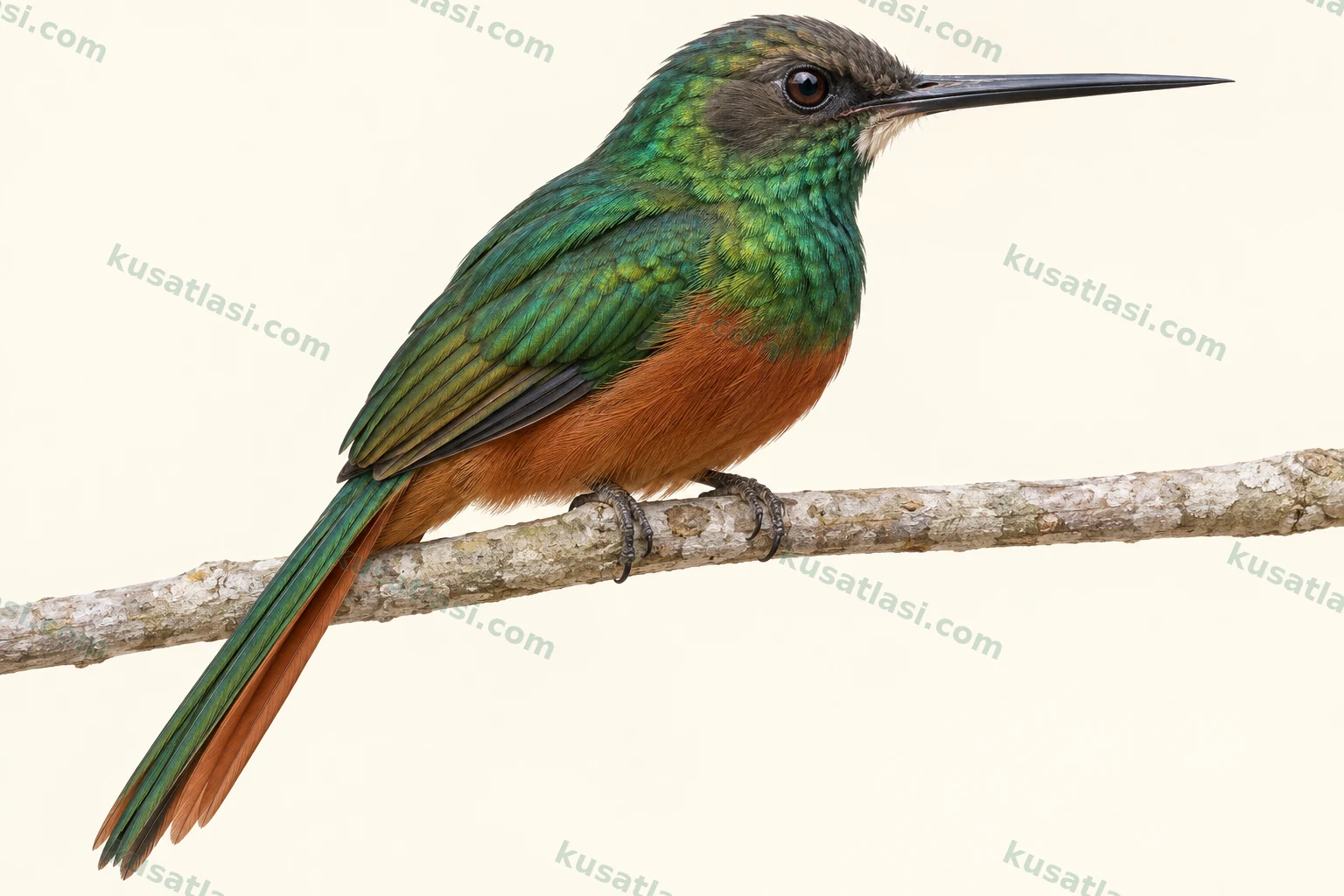
Amazon-basin jacamar with a slender black bill, small white chin, green breast and chestnut-rufous belly.
Biometrics
Length
Male19–24 cm
Female19–24 cm
Shared species value
Wing length
Male7.7 cm
Female7.7 cm
Shared species value
Weight
Male20.1 g
FemaleData unavailable
White-chinned Jacamar
Amazon basinObservation guide in its natural range
Look for three features together
Do not rely on a single featureSmall white patch; the whole throat is not white.
Long, slender and black.
Chestnut-rufous in the male, paler in the female.
Compare male and female
 FemaleMale
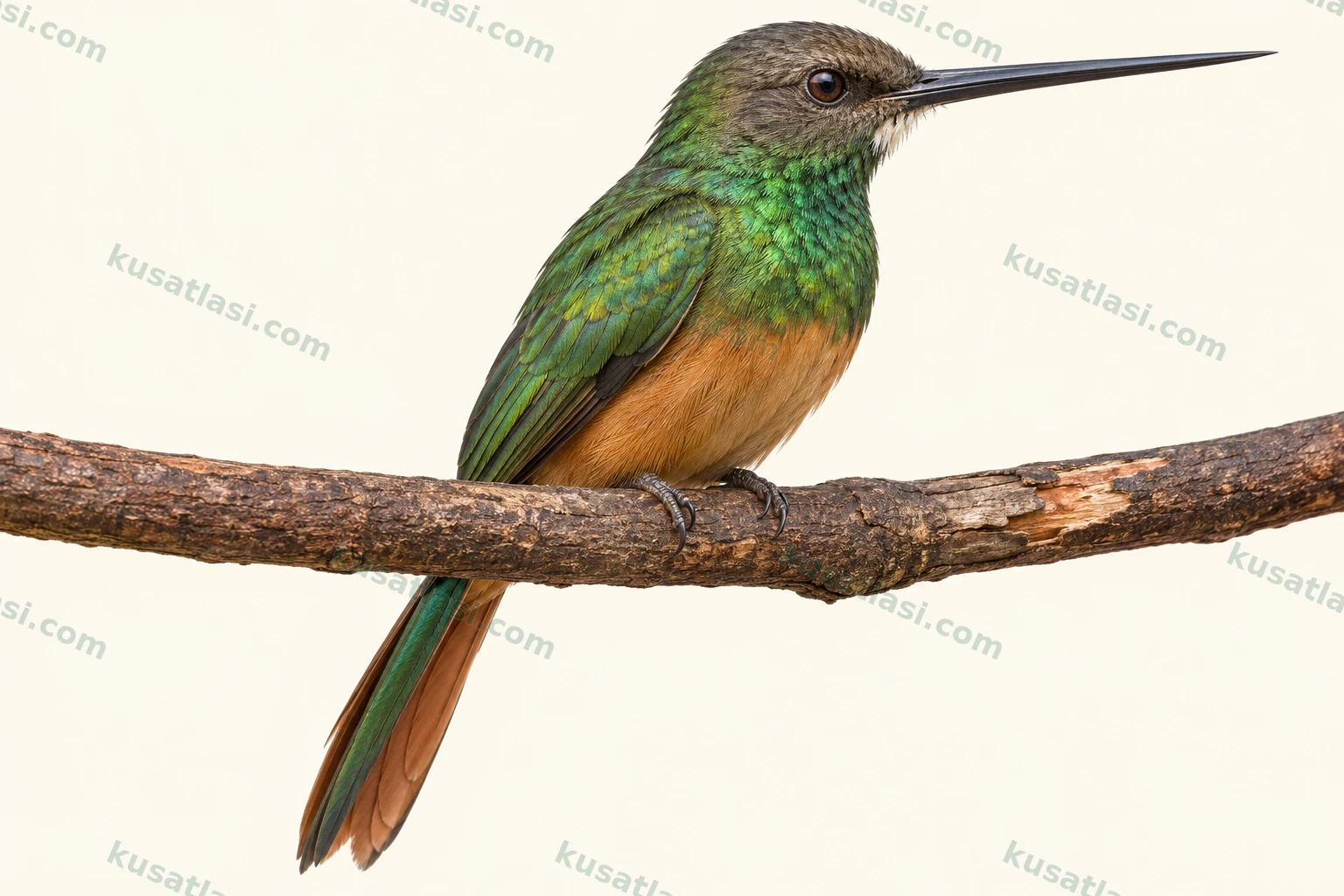
The female has a paler belly; the geographic differences of mentalis are not sex differences.
Where to look in its natural range?
Riverbanks, floodplain-forest edges and openings suitable for hunting from a branch.
Resident in the Amazon basin. Breeding months verified for this species were not found.
All months: Data unavailable
January
February
March
April
May
June
July
August
September
October
November
December
Nest, egg and incubation
Nest, clutch size, incubation and fledging period unverified; the old Pastaza record belongs to the related species.
Accelerating fine notes and a trilled ending; voice resembles that of close relatives.
Do not play recordings to attract birds; observe quietly, especially near nests.
Species information
Quick identification
The White-chinned Jacamar Galbula tombacea lives in the Amazon basin and has a long slender black bill and metallic green breast. Its white chin patch is very small; the whole throat should not be imagined white. The male's chestnut-rufous belly contrasts with the green upperparts. White-chinned Jacamar is its English name.
General appearance and posture
The male has an ash-brown crown and may show a bluish nape. The back and wing-coverts are dark green with bronze reflections. The flight feathers are black. The central tail feathers are green, the others reddish, with green at the tips of the outer feathers. The chestnut-rufous belly begins below the green throat and breast. The slender pointed bill is black; the iris is dark brown and the legs brownish grey.
Males, females and young birds
The female's belly is paler and more yellowish brown than the male's. Of the two currently recognized subspecies, mentalis can differ in its larger white chin patch, more coppery upperparts and more pronounced blue reflections on the head. These geographic traits should not be confused with sex differences. A reliable detailed description of juvenile plumage was not found.
Appearance in flight
It usually darts from a branch towards a flying insect. Seeing the long bill, body and tail together reveals the jacamar shape. The small white chin should not be expected to show during a brief capture flight. The direction of light can make the metallic green look dark or bronze.
Voice and behaviour
It waits alone or in pairs, usually on a conspicuous branch. The specialist account reports hunting flights from perches 1–8 metres high. Its song may begin with fine notes that accelerate towards a trilled ending; repeated short calls also occur. Similar sounds occur in other Galbula species, so a rough vocal resemblance alone does not provide certain identification.
Similar species
Compare bill, throat, breast and belly colours together with those of the Rufous-tailed Jacamar Galbula ruficauda. The Coppery-chested Jacamar Galbula pastazae is particularly important when interpreting old records: some historical nest records were first published under tombacea and later assigned to pastazae. The scientific identity and geography of both species must be matched before using nest data.
World distribution
Current taxonomy recognizes two subspecies. tombacea ranges from Amazonian Colombia through eastern Ecuador and northeastern Peru to western Brazil. mentalis occurs in central and western Amazonian Brazil. The species' distribution is associated with Amazonian geography east of the Andes; an old foothill nest record is not added to the map without verifying its current species identity.
Status within its natural range
The checked global category is Least Concern. Local encounters are reported along rivers and in floodplain-forest openings. The sources accessed did not provide a current total population or reliable densities for every region.
Migration
The species is considered resident. No regular long-distance migration route or regionally tracked seasonal movement was found. Observation points are not joined to manufacture a travel route.
Breeding habitat
It uses riverside areas, bankside scrub, floodplain-forest edges and gaps made by fallen trees in the Amazon basin. The specialist account reports occurrence up to about 1200 metres. Openings from which it can make hunting flights from branches matter alongside nearby vegetation.
Nest site
Verified nest structure, clutch size, incubation and fledging periods were not found for this species. A two-egg nest reported in 1939 from Ecuador's Pastaza Valley was formerly assigned to Galbula tombacea. A 2017 scientific study of the Colombian Amazonian foothills explains that the record is now considered to belong to Galbula pastazae. The same paper's new cavity-nest observations also concern pastazae; they are not used here as breeding information for the White-chinned Jacamar.
Daily habitat use
A single bird or a pair watches its surroundings from an exposed branch in the lower and middle vegetation layers. Capture flights take place around these waiting points. Daily home-range size and hunting distance from the nest could not be verified.
What does it eat?
It feeds on flying insects. Current ecological data classify it as an aerial insect catcher. Some prey-group descriptions in the specialist account are based on possible similarities to better-known close relatives; no verified species-specific insect proportions are therefore given here.
How does it hunt?
It waits on an exposed branch and catches an insect in a short flight when prey is seen. It thus does not need to remain continuously airborne. The height of its waiting perch and the surrounding clear flight space help explain the behaviour; these observations do not mean that all prey occur at the same height.
The white patch occupies only a small part of the chin
The whiteness emphasized by the name is a small chin patch just a few millimetres across. The throat and breast are metallic green. Drawing a jacamar with an entirely white throat, or describing the appearance of another white-breasted species, would not match this taxon.
The species assigned to a nest record can change
The historical nest in Ecuador's Pastaza Valley was first recorded under tombacea. Its later reassignment to pastazae shows why using the name in an old publication alone is insufficient. The 2017 Colombian study explicitly maintains this distinction. The two eggs and cavity length have therefore not been transferred into this page's confirmed breeding data.
Geographic colour differences are not sex differences
The more coppery upperparts and larger white chin of mentalis are not the same kind of variation as the female's paler belly. The observed bird's geography, lighting and belly colour should be considered together. Juvenile appearance is insufficiently known, so adult subspecies traits are not turned into an invented juvenile key.