

World Birds IUCN statusLC · Least ConcernGlobal IUCN. BirdLife v10 (2025); taxon matching AviList 2026 / IOC 15.2; checked: 29.10.2026. The list year is not the species’ assessment date. Source and method · BirdLife OrderGalbuliformesJacamars and puffbirds FamilyBucconidaeBucconidae
White-chested Puffbird
Malacoptila fusca
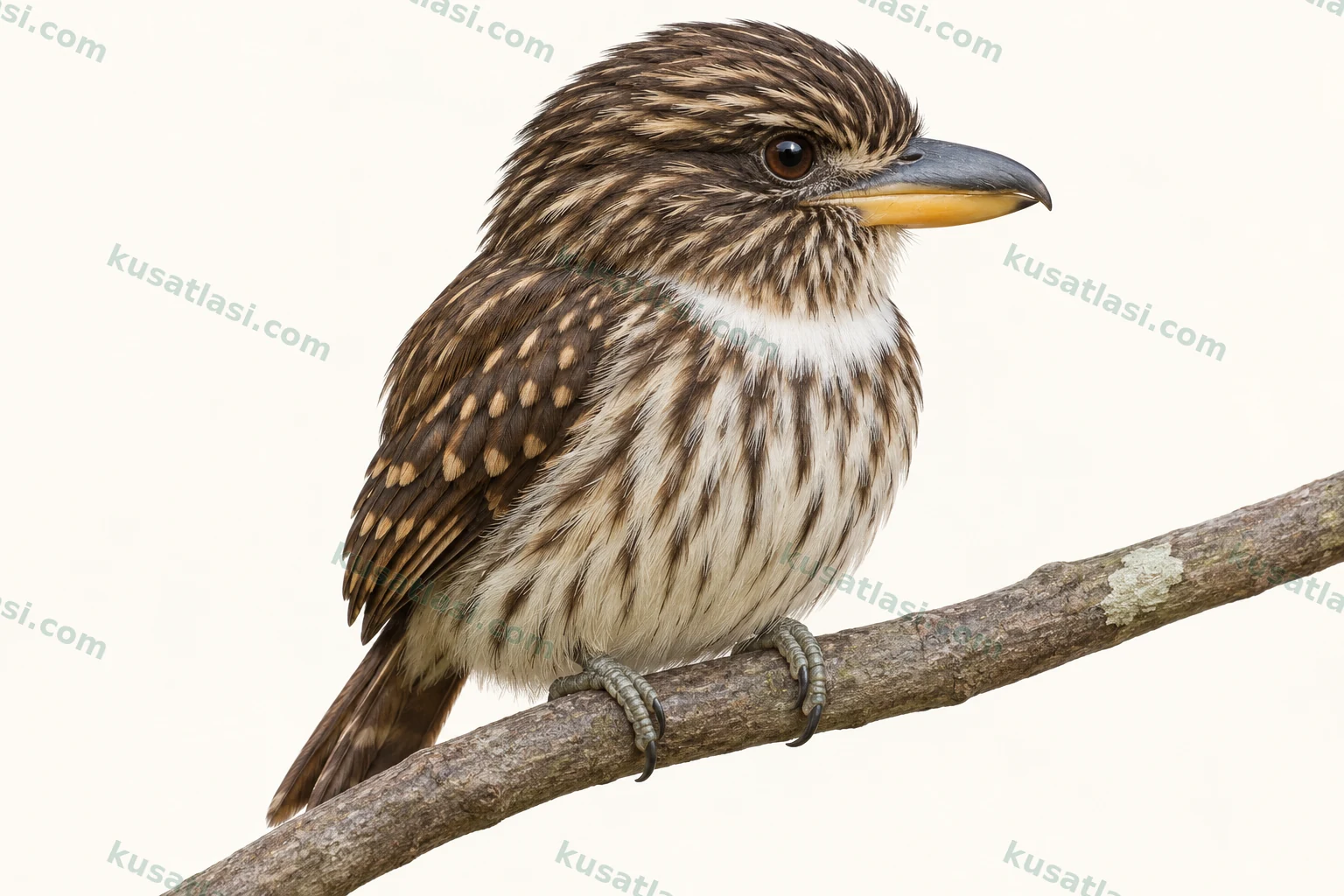
Large-headed, streaked brown Amazonian forest bird with a white breast crescent.
Biometrics
Length
Male18–19 cm
Female18–19 cm
Shared species value
Wing length
Male8.74 cm
Female8.74 cm
Shared species value
Weight
Male39–53 g
Female39–53 g
Shared species value
White-chested Puffbird
Northern Amazonia and the GuianasObservation guide in its natural range
Look for three features together
Do not rely on a single featureStreaked back and white upper-breast crescent.
Yellowish, with certain parts dark.
Long motionless waits and sudden hunting sallies.
Compare male and female
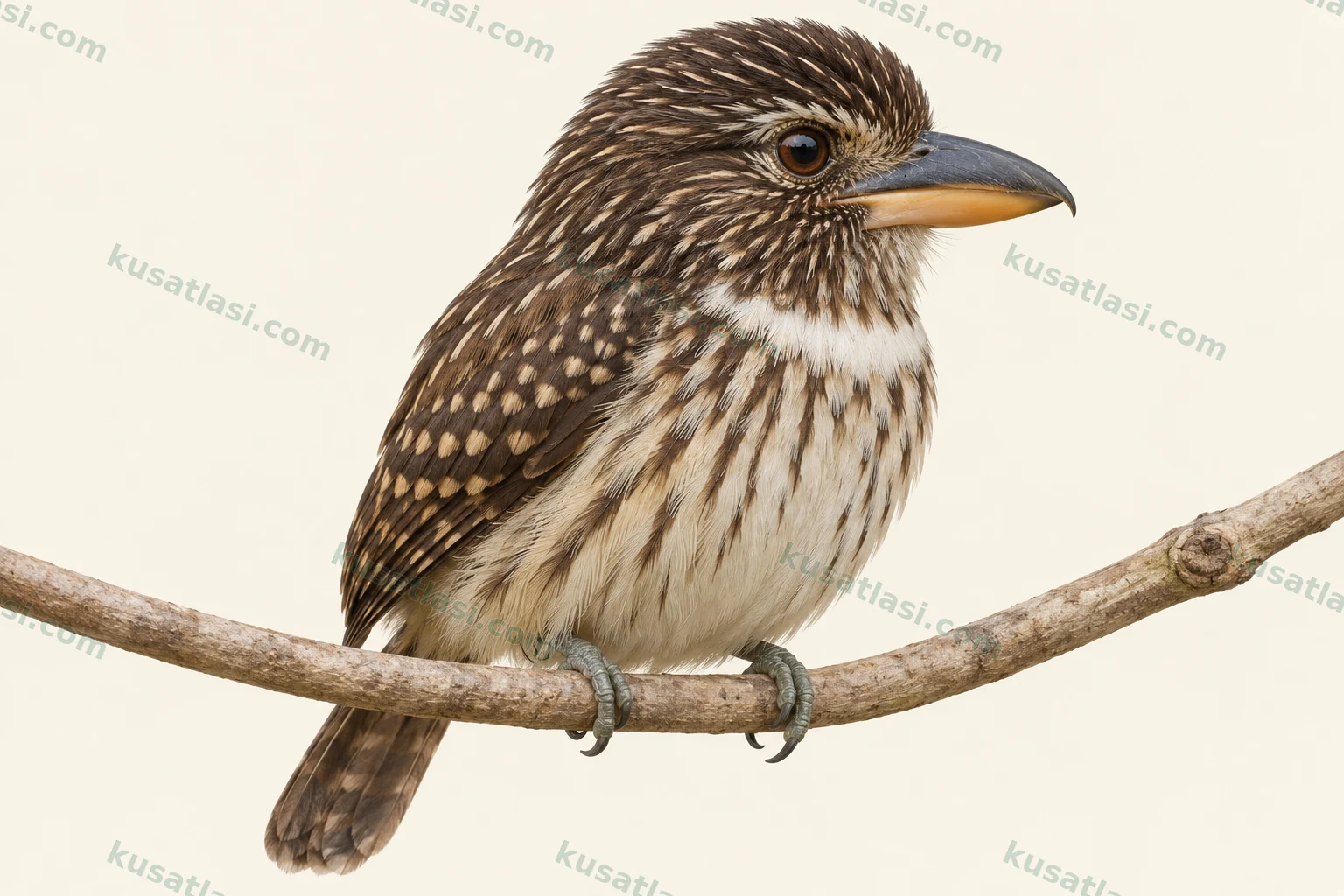 FemaleMale
Young: dark brown eyes and a yellower bill. An adult field sexing key was not verified.
Where to look in its natural range?
Lower and middle levels of humid lowland forest; well-drained woodland.
Resident. Breeding months throughout the range were not verified. January tunnel excavation in Ecuador is not a complete breeding calendar.
January
Tiputini, Ecuador: A tunnel being excavated in an earthen bank was observed.
February
Data unavailable
March
Data unavailable
April
Data unavailable
May
Data unavailable
June
Data unavailable
July
Data unavailable
August
Data unavailable
September
Data unavailable
October
Data unavailable
November
Data unavailable
December
Data unavailable
Nest, egg and incubation
A ground tunnel is directly documented. Egg number, incubation and fledging duration were not verified.
Soft, rapid descending note series and intermittent thin whistles.
Do not play recordings to attract birds; observe quietly, especially near nests.
Species information
Quick identification
The White-chested Puffbird Malacoptila fusca is a large-headed bird of humid forests in and around northern Amazonia. Pale streaks on the brown body, yellowish bill and white upper-breast crescent are key marks. Posture and cover can hide the crescent. Long motionless periods make the bird hard to find in forest.
General appearance and posture
Adults have a dark brown head and upperparts with conspicuous pale buff streaks. The crown ground colour can look almost blackish brown. The area between eye and bill, whisker-like feathers and chin are whiter. Below the upper-breast crescent, streaks become fainter cross-marks and spots. Flanks, central belly and undertail look whiter. The warm brown tail is medium-length and graduated.
The base of the upper bill and tip of the lower bill are dark, with the rest yellowish or pinkish. The specialist description gives yellow-to-red irides and pale olive feet. This variability prevents imposing one eye colour on all individuals from one photograph.
Males, females and young birds
Young birds are described with dark brown eyes and a yellower bill. No detailed reliable field key to adult sex was found. The apparent size of the white crescent does not establish male or female.
Appearance in flight
After a motionless forest wait, it may make short sudden hunting sallies. Movements towards trunks, leaves or the ground can help locate it. A separate underwing colour key was not verified. Streaked back and breast crescent complete identification when it perches again.
Voice and behaviour
The call is described as a thin high descending whistle, sometimes separated by long intervals. Song is an extended series of soft very rapid notes gradually falling in pitch. It is easier to notice nearby. Similar songs in Malacoptila mean voice alone may not give certain identification.
Usually alone, sometimes paired, it can wait for long periods on perches about 1–6 m above ground according to specialist accounts. It sometimes joins mixed feeding flocks or movements associated with army ants. Constant dependence on ant swarms has not been established.
Similar species
Against other Malacoptila, the streaked back and white upper-breast crescent matter. Malacoptila rufa and Malacoptila semicincta may sound similar. Check geography and plumage together. Not every white-faced or white-breasted puffbird is the same species. A pale mark lost in shade does not make it uniformly dark.
Global range
The natural range extends from southeastern Colombia, eastern Ecuador and northeastern Peru to southern Venezuela, the Guianas and Brazilian forests of northern Amazonia. It is currently treated as monotypic. Much of the range concerns humid Amazonian lowland forest, not all South America.
Status within its natural range
The global category is Least Concern. Cornell notes that it is not generally considered abundant and is usually encountered singly. Quiet immobility reduces detection. Missing it on one visit does not establish its disappearance from a forest patch. The tunnel-excavation record near Tiputini, Ecuador, is a direct identified field observation.
Movements and migration
It is classified as resident. Regular long-distance migration or a changing monthly route was not verified. Short hunting sallies are daily behaviour. Verified map points do not make all intervening forest breeding habitat or continuously occupied territory.
Breeding habitat
It uses the lower and middle levels of humid tall forest. Specialist accounts particularly mention well-drained land without constant flooding. Edges, regrowth and wooded clearings can also hold records. Forest structure combining trees and low cover is central to the habitat.
Nest site
The direct Ecuador study found an excavated tunnel in the upper part of an earthen bank about 1 m high near a small watercourse. It was at least 45 cm long, with an entrance 10 cm wide and 12 cm high. The final chamber was not yet confirmed. This prevents treating the arboreal termite-nest claim as certain. Egg number, incubation and fledging time were not determined by that observation.
Daily habitat use
Low and middle forest perches are waiting and hunting places, with sudden movements after long silent waits. No measured values were found for the area around a perch or pairs' daily travel distances.
What does it eat?
Large insects are important foods. The specialist review mentions grasshoppers and caterpillars; Cornell also includes small vertebrates. Plant food remained uncertain in the older review. Fruit or seeds are therefore not described as regular important foods. Diet proportions and a complete prey-species list were not verified.
How does it hunt?
After scanning from one place for a long time, it suddenly moves towards prey on trunks, leaves or ground. Occasional ant-following concerns small animals disturbed by the swarm, not ants as the main food. Motionlessness alone does not show that the bird is not feeding or is ill.
A nest record corrects an old claim
An earlier guide linked the species doubtfully with an arboreal termite nest. Greeney and Port's Ecuador observation directly showed that at least some individuals excavate ground tunnels. Observed during construction, it did not establish egg or young durations. This small concrete record is more valuable than substituting another puffbird's nest type.
The named white mark is not always visible
The upper-breast crescent explains the name and helps identification, yet feather posture and cover can conceal it. As Cornell notes, this difficulty requires combining the streaked back, large head and bill rather than searching for one patch alone.
Quiet waiting is part of the hunting strategy
Long immobility followed by a sudden sally explains why it is overlooked. An observer expecting a constantly moving insect eater may pass without seeing it. Soft sounds often audible only nearby add to the difficulty.