

World Birds IUCN statusLC · Least ConcernGlobal IUCN category. BirdLife v10 (2025); taxon matching: AviList 2026 / IOC 15.2; checked: 29.10.2026. The list year is not the species assessment date. Source and method · BirdLife OrderPiciformesWoodpeckers and allies FamilyPicidaePicidae
White-fronted Woodpecker
Melanerpes cactorum
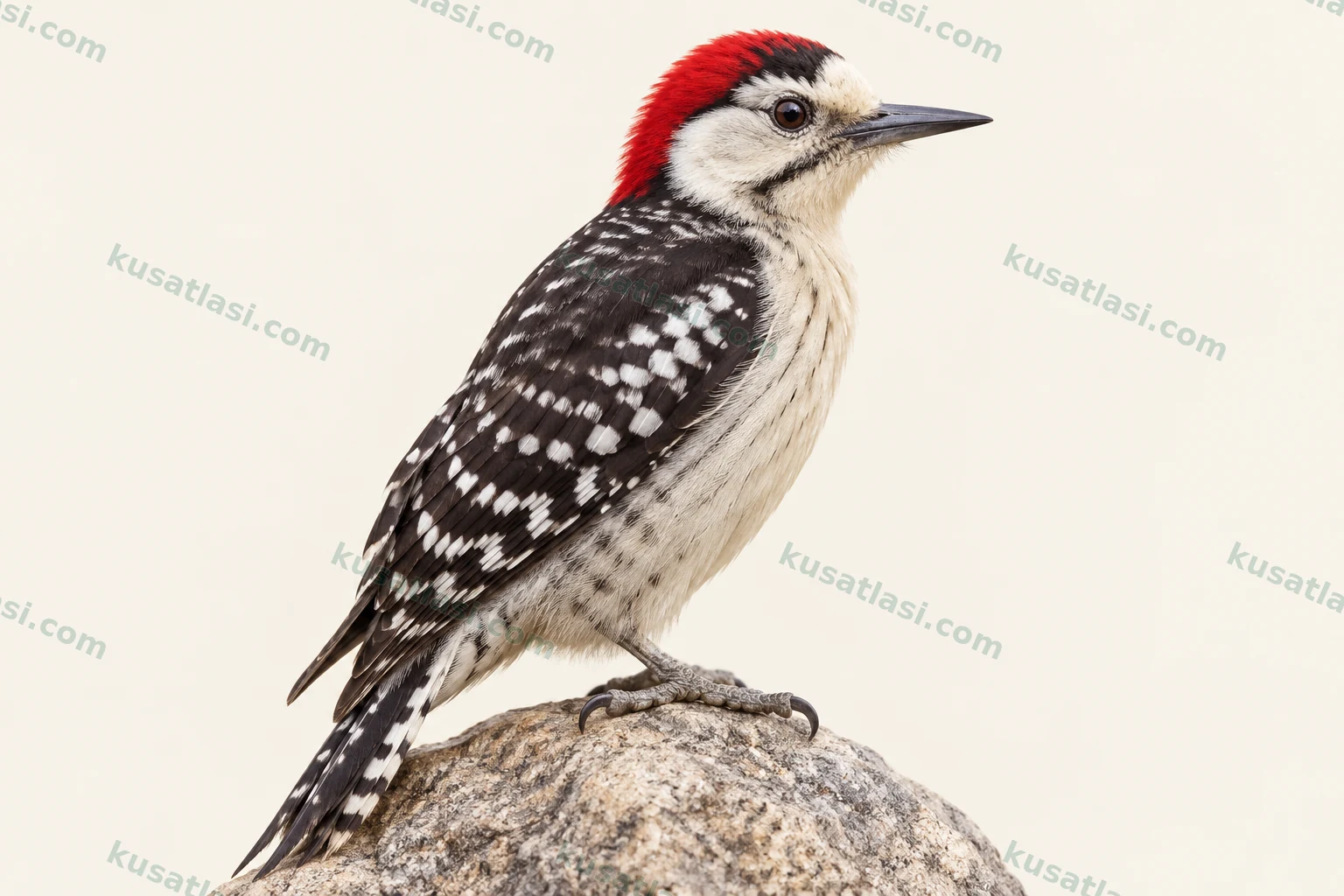
A small woodpecker of dry South American woodland, with a white forehead, dark eye surround and finely pale-lined back.
Biometrics
Length
Male16–18 cm
Female16–18 cm
Shared species value
Wing length
Male10.6 cm
Female10.6 cm
Shared species value
Weight
Male31–42 g
Female26.4–35.2 g
White-fronted Woodpecker
South American Chaco and dry woodland environmentsObservation guide in its natural range
Look for three features together
Do not rely on a single featureWhite forehead, dark eye surround and creamy nape; the throat may be white or yellow.
Grey-cream underparts; dark back with pale lines, black-and-white wings and tail.
Small red crown patch in the adult male; young of both sexes may have orange-red there.
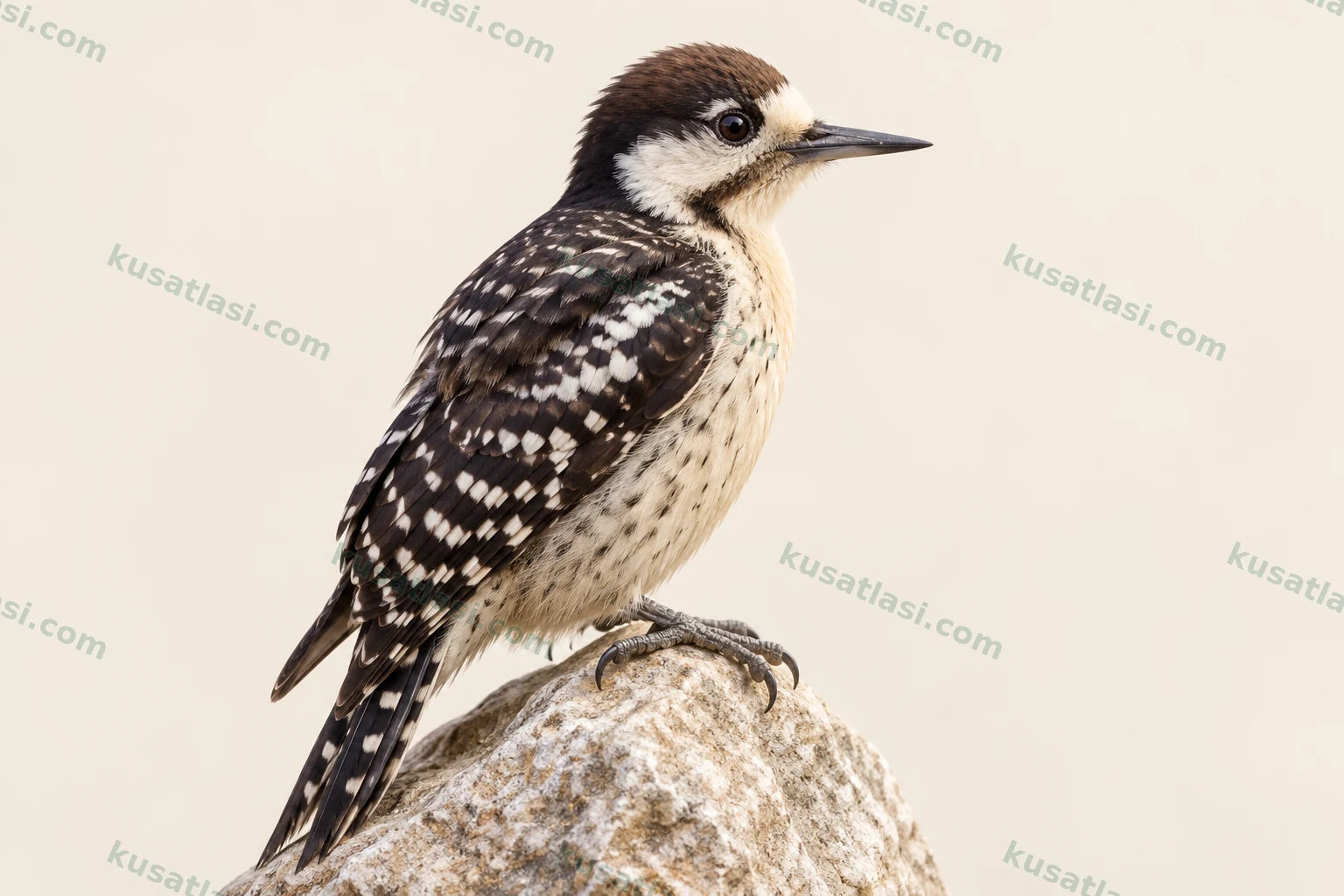
Compare male and female
 FemaleMale
The adult male has a small red crown patch; the female lacks it. Young of both sexes may have orange-red crowns; a yellow throat is not a sexing key.
Where to look in its natural range?
Look in dry woodland, around palms and columnar cacti, and on trees with used sap holes.
The species is resident. Older regional nesting records and the dated urban nest are shown separately.
January
Resident; inferences about possible seasonal movements are not a tracked migration route. La Plata, Argentina — one nest in 2008–2009: documented visits to a nest in a park tree, not the same developmental stage in every month.
February
Resident; inferences about possible seasonal movements are not a tracked migration route. No verified regional date specific to this month was provided; this does not mean local absence.
March
Resident; inferences about possible seasonal movements are not a tracked migration route. No verified regional date specific to this month was provided; this does not mean local absence.
April
Resident; inferences about possible seasonal movements are not a tracked migration route. No verified regional date specific to this month was provided; this does not mean local absence.
May
Resident; inferences about possible seasonal movements are not a tracked migration route. No verified regional date specific to this month was provided; this does not mean local absence.
June
Resident; inferences about possible seasonal movements are not a tracked migration route. No verified regional date specific to this month was provided; this does not mean local absence.
July
Resident; inferences about possible seasonal movements are not a tracked migration route. No verified regional date specific to this month was provided; this does not mean local absence.
August
Resident; inferences about possible seasonal movements are not a tracked migration route. No verified regional date specific to this month was provided; this does not mean local absence.
September
Resident; inferences about possible seasonal movements are not a tracked migration route. Argentina — older monograph: regional nesting records.
October
Resident; inferences about possible seasonal movements are not a tracked migration route. Argentina — older monograph: regional nesting records. Highland Bolivia — older monograph: regional nesting records. Paraguay — older monograph: regional nesting records.
November
Resident; inferences about possible seasonal movements are not a tracked migration route. Highland Bolivia — older monograph: regional nesting records. Paraguay — older monograph: regional nesting records. La Plata, Argentina — one nest in 2008–2009: documented visits to a nest in a park tree, not the same developmental stage in every month.
December
Resident; inferences about possible seasonal movements are not a tracked migration route. Paraguay — older monograph: regional nesting records. La Plata, Argentina — one nest in 2008–2009: documented visits to a nest in a park tree, not the same developmental stage in every month.
Nest, egg and incubation
The nest is a cavity in a tree, palm trunk or columnar cactus. A pair’s nest about 4 m above ground in a Tipuana tree was documented in La Plata. Typical clutch size and developmental durations were not verified.
Short, thin calls are given; short, relatively soft drumming series may be heard near the nest hole.
Do not play recordings to attract birds; observe quietly, especially near nests.
Species information
Quick identification
White-fronted Woodpecker Melanerpes cactorum is a small black-and-grey woodpecker of dry South American woodland and scrub landscapes. White on the forehead and front of the crown lies beside the dark eye region. The rear of the head is black and the nape pale cream. The throat may be white, yellow or a mixture; this variability alone is not a male–female difference. Pale lengthwise lines mark the dark back, while wings and tail show black-and-white crosswise patterns.
The underparts are generally grey-cream; fine dark lines may occur on the rear belly and flanks. The adult male has a small red crown patch, absent in the female. Sometimes surrounding black feathers largely conceal it. Reliable identification combines white forehead, dark eye region, pale nape, lined back and small body. Seeing yellow on one side of the head, or failing to see red in a brief flight, is insufficient.
General appearance and posture
The bill is relatively short, black and chisel-tipped. Feet may appear grey, dark grey or olive-grey. The eye ranges from brown to reddish brown; a broad bare yellow eye surround is not a distinguishing feature of this species. White on the front of the head may extend to the bill’s sides and throat. The dark rear of the head also surrounds the eye region along the sides of the white forehead. This is a more specific arrangement than random black stripes on a pale bird’s head.
Pale lines on the back and pale crosswise wing markings do not run in the same direction. Broad pale wing-covert marks may be clearer in fresh plumage and more fragmented when worn. The dark tail has white lines. Fine patterning below is most evident on the rear belly and undertail-coverts. Equally thick black lines over the whole body would exaggerate the pattern; the breast may look plainer.
Males, females and young birds
In the adult male, a small patch of red feathers lies within the black crown just behind the white forehead. The adult female lacks this crown red. The crown must be visible to examine the difference; pale nape and red crown are not moved into each other’s positions. Males may be larger in some samples, but apparent size of distant birds at different distances does not reliably establish sex.
Young birds resemble adults; their dark areas may be browner and less glossy and their belly lines broader. Both young sexes may have an orange-red crown patch. Not every red-marked head therefore belongs to an adult male. Red alone is not used to assign definite sex from a photograph when age is unclear. Feather wear and a turned head also change the little mark’s visibility.
White or yellow throat colour varies geographically and individually. Short’s monograph describes yellow in Bolivian and western Argentine specimens, white or little yellow in most Entre Ríos specimens, and mixed appearances in Paraguay and Argentine Chaco specimens. Doña Júlia specimens in the Paraguayan museum catalogue have yellow throats. These details call for explaining regional differences instead of drawing two uniformly coloured sexes; a yellow throat is not directly a male label.
Appearance in flight
It may make short, agile flights. Short describes rapidly directed crossings that do not closely resemble the marked undulation of other woodpeckers. The family’s general flight pattern is therefore not imposed as a compulsory rule. Pale wing lines, white pattern on a dark tail and small body are visible in suitable light. From below, the wings are brownish dark with pale lines; wing-coverts appear whiter.
The small red crown patch may be difficult to see in flight. Detailed identification is best completed when the bird lands on a trunk or branch again. A brief woodland flight may be a change of daily feeding area. Neither birds moving in the same direction nor high fat in a museum specimen alone establishes a verified seasonal migration route.
Voice and behaviour
Calls are short, thin and repeatable. Faster call series may accompany displays; up-and-down head movements have also been reported. Drumming may be relatively soft and in short series; it has often been heard near the nest hole early in breeding. Not every bill strike on a tree is display drumming: searching bark for food and making holes for plant sap produce different strikes too.
It feeds in small groups, and some studied populations share permanent areas. Direct Chaco research showed the importance of sap flowing from tree holes, especially in the dry period. Birds displaced some small species visiting these food points but did not attack in some encounters. Other birds using the same holes does not mean the woodpecker deliberately provides them with food. Social feeding, territorial defence and nest-care roles are different behaviours.
Similar species
1. White Woodpecker Melanerpes candidus is larger, with broadly white head and underparts. Its back is largely black, and broad bare yellow skin surrounds the eye. In White-fronted Woodpecker, white concentrates at the front of the head; the body is grey-cream and the back finely lined with pale marks. Both may occur in groups, so social behaviour alone does not make them the same species.
World distribution
The natural range extends through dry woodland and scrub in west-central South America. Southeastern Peru, Bolivia, southwestern Brazil, especially western Paraguay and suitable parts of northern and central Argentina are components. Chaco, Espinal and Monte environments matter; not all land within national boundaries is the same habitat. Argentine distribution reaches the Paraná region and some eastern areas; closed humid forests do not all count as natural habitat filling the intervening gaps.
Status within the natural range
The global category is Least Concern. Regional frequency in Paraguay varies with habitat and location. A pair breeding in a park tree in La Plata in 2008–2009 was documented and published as extending the breeding range known at that time southwards. This single nest does not prove regular abundant breeding throughout Buenos Aires Province. The 2026 Córdoba city research examines trees with excavated cavities; cavities do not equal the same number of successful breeding attempts.
Movements and migration
The species is generally resident. The Paraguayan museum catalogue discusses possible seasonal movements; two specimens with high spring fat scores are not presented as directly tracked migration. Daily movements may occur around food trees and sap holes. The map separates regional natural environments from verified sample records. Modelled areas or a bird seen in a park do not guarantee presence and breeding there in every month.
Breeding habitat
It uses dry scrub woodland, sparsely wooded Chaco environments, open woodland with palms and cactus landscapes. Trees or cacti suitable for cavity excavation matter. The monograph gives September–October breeding records for Argentina, October–November for highland Bolivia and October–December for Paraguay. These are older regional records; the whole range is not compressed into the same months.
Nest site
The nest is a cavity; palm trunks, columnar cacti and other trees may be used. In the direct La Plata record, the pair was seen at a Tipuana tipu cavity about 4 m above ground, and both adults visited the nest. A verified typical clutch size, incubation duration and time to first flight could not be established from these studies. Córdoba research also shows excavation in live soft-wooded trees; not every cavity necessarily holds eggs.
Daily habitat use
It searches trunks and branches for insects and may remain around sap holes for a long time. In the Chaco study, groups concentrated on a principal feeding tree while also using surrounding trees. Cactus flowers, fruit and cavities provide different requirements at different times. The species may be seen in a park, but this does not make the role of old or dead trees in natural woodland unnecessary.
What does it eat?
Foods include plant sap, insects, fruit, seeds, nectar and some flower parts. Chaco research in 2007–2011 showed pronounced seasonal change: sap was the main autumn and winter resource, while feeding was more diverse in the warm rainy period. This does not mean the same month provides the same food everywhere. Ants and other insects are sought on branches and bark; soft cactus fruit may be eaten with its seeds.
How does it forage?
It gathers small animals from bark surfaces and beneath loose bark and may use its bill to reach into dead wood. For sap it makes holes in live branches or trunks and works old holes again. Direct observation also shows it wedging seeds into bark cracks or dry cactus and piercing the hard coat to eat the contents. Other birds visiting the food point are sometimes displaced. Sap providing energy and water is a plausible explanation; the species’ sugar-digestion efficiency was not directly measured in that same study.
Throat colour tells more than sex
White-throated and yellow-throated birds belong to the same species. The old monograph describes different regional frequencies of these colours, while the museum catalogue records yellow throats in particular Paraguayan specimens. The small red crown patch used in adult sex distinction and variable throat colour are separate traits. Both young sexes potentially having orange-red crowns makes age assessment more important.
Holes provide food for other birds too
Other birds visited sap holes made in the Chaco. The woodpecker defends these small food points from some visitors; not all encounters end in attacks. This involves both opening a resource and competition. Feeding links among birds able to reach a tree’s sap are more complex than a relationship consisting only of one tree and one bird.
Suitable wood matters in the city
The 2026 Córdoba study compared cavity-excavated trees with comparison trees. Live trees with soft wood were especially selected; in hard-wooded species, use increased as decay advanced. The result describes excavation-site properties, not the number of young raised in every cavity. Even a single suitable urban tree may help conserve food and nesting resources.