

World Birds IUCN statusLC · Least ConcernGlobal IUCN. BirdLife v10 (2025); taxon matching AviList 2026 / IOC 15.2; checked: 29.10.2026. The list year is not the species’ assessment date. Source and method · BirdLife OrderPasseriformesPerching birds FamilyFurnariidaeFurnariidae
White-striped Woodcreeper
Lepidocolaptes leucogaster
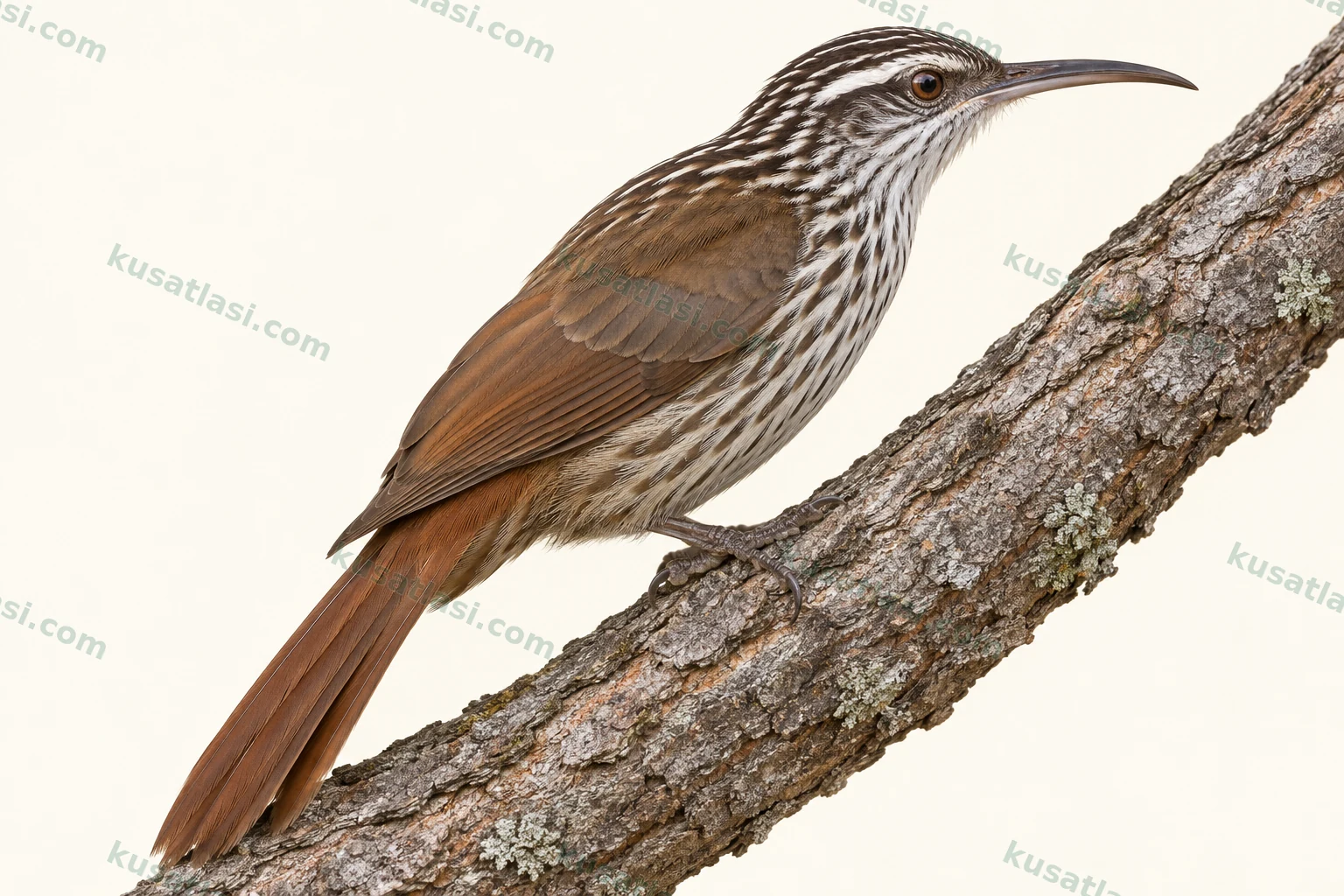
A streaked woodcreeper of Mexican mountain forests; a slender, slightly curved bill and prominent pale head and underpart pattern.
Biometrics
Length
Male21–24 cm
Female21–24 cm
Shared species value
Wing length
Male11.55 cm
Female11.55 cm
Shared species value
Weight
Male30–40 g
Female30–40 g
Shared species value
White-striped Woodcreeper
Mexico; suitable northwestern, central and southern forestsObservation guide in its natural range
Look for three features together
Do not rely on a single featureCompare the slender, slightly downcurved bill in profile.
See the pale head and underpart streaks together.
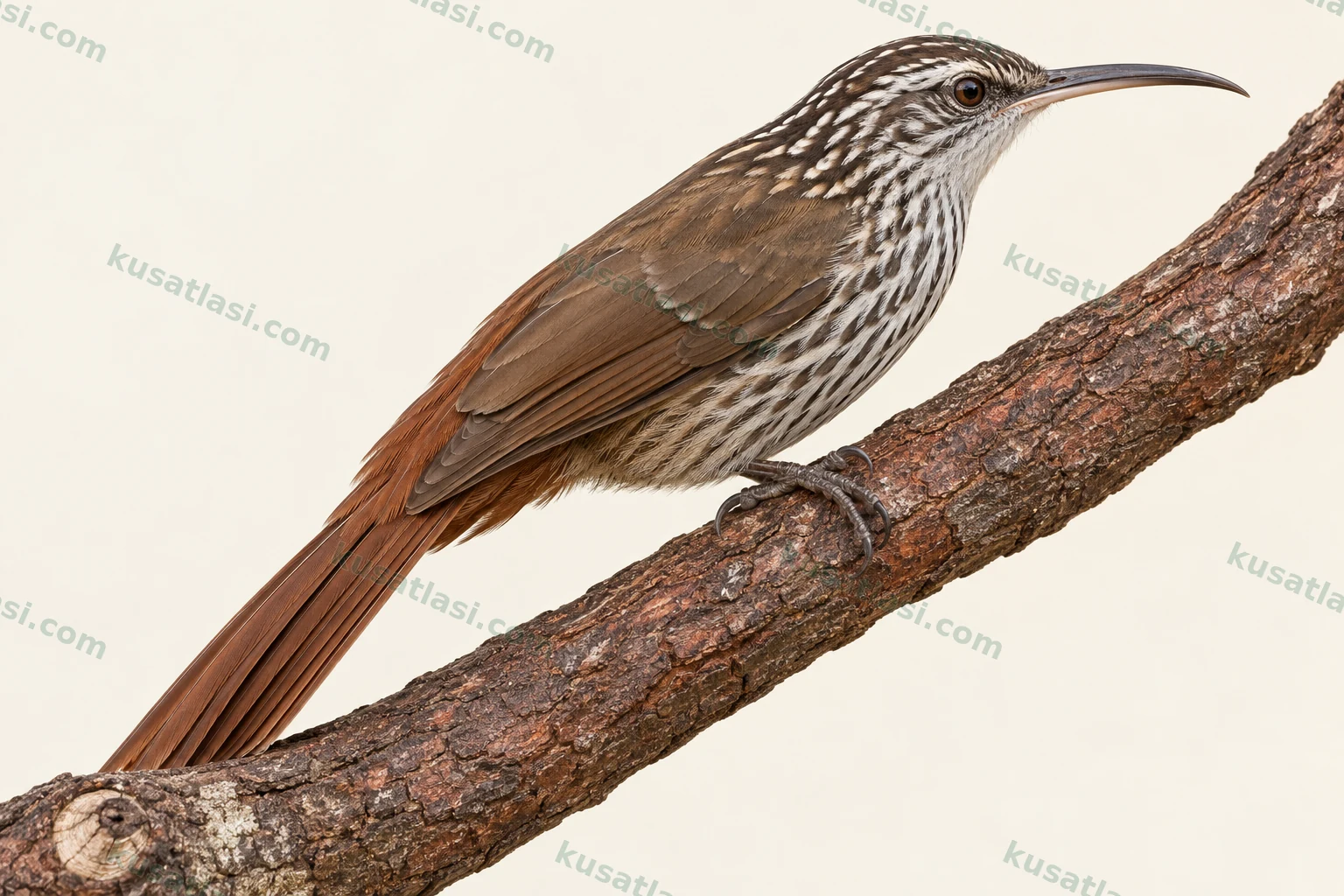
Compare male and female
 FemaleMale
The original umbrosus description gives similar adult male and female plumage; geographic colour variation is not a sex key.
Where to look in its natural range?
Pine and pine–oak forests; trunks and small branches.
Resident. A verified monthly breeding calendar for the entire range was not found.
All months: Monthly breeding information was not verified. No verified regional date is given for this month. This does not imply local absence.
January
February
March
April
May
June
July
August
September
October
November
December
Nest, egg and incubation
There is an adult record beside a tree hole; detailed nest structure, usual clutch size, incubation and nestling development were not verified.
A descending trilled song sequence that may be heard in the morning.
Do not play recordings to attract birds; observe quietly, especially near nests.
Species information
Quick Identification
The White-striped Woodcreeper Lepidocolaptes leucogaster is a Mexican endemic forest bird foraging on tree trunks. Prominent pale streaks on head and underparts combine with a slender, slightly downcurved bill to aid identification. Pale marks contrast with a dark background. Not every brown bird climbing a tree belongs to this species: bill structure and head pattern must also be visible.
Mountain pine and pine–oak forests are important habitats. A single glimpse behind a branch may not allow comparison of the whole pattern. Identification is firmer when head, underparts and bill are seen on the same individual. Do not strike trunks or strip plants from trees to reveal the bird.
General Appearance and Posture
Its slender bill helps distinguish it from some large, thick-billed relatives. A bill pointed straight at the camera can look short and thick. A natural profile makes curvature easier to compare.
The original description of northwestern umbrosus describes pale feather centres on an adult male's dark-brown head, pale cheeks and throat, and pale underpart markings with dark edges. Wings and tail have different brown shades. These details describe particular museum specimens; not all living birds show identical tones in the same light.
Males, Females and Young Birds
Moore's umbrosus account describes the adult female as resembling the male in plumage. Whiter streaks on one bird and yellower ones on another do not establish different sexes. The same paper discusses differences in paleness and size between two geographic forms. Regional variation cannot replace sex identification.
The single young male examined reportedly had more irregular pale body markings, with tail and bill still shorter than adults'. It is a developmental example, not a complete key to every juvenile stage. Appearance changes as bill and tail grow, so one measurement does not establish an exact age.
Umbrosus is recognised in northwestern Mexico and nominate leucogaster in central and southern Mexico. Administrative region alone does not establish the form, especially where forms approach and appearance can vary. Evidence for sex and subspecies must be stated separately; a darker photograph alone does not establish both.
Appearance in Flight
A bird leaving a trunk may show pale underparts and brown wings, but streaks can disappear in a short flight. No verified single bright wing edge identifies the species. Head streaks and bill seen on the trunk offer more reliable comparison than a brief silhouette.
The old umbrosus description gives pale warm tones for underwing coverts. This regional account does not make the entire wing white at every angle. Contrast changes between tree shade and open sky. Leave an unclear wing surface without a definite colour record; do not add another woodcreeper's pale flight mark to this species.
Voice and Behaviour
Cornell describes a lively descending trill, especially audible early in the morning. A one-syllable imitation does not replace listening to beginning and end together. If the trunk producing the sound is unseen, the first nearby bird is not automatically its source.
It occurs alone or in twos and joins mixed foraging groups. It moves along trunks and small branches and may probe among plants growing on trees. Several species on one branch do not prove it always leads them or depends on them. Follow the bird's actual movements.
Similar Species
Xiphorhynchus flavigaster is larger with a thick, largely pale bill, a useful difference. It too has pale head and underpart streaks, so streaking alone is insufficient. Without bill proportions, a pale-breasted woodcreeper photograph does not yield a definite identification.
Include geography and forest type when comparing other slender-billed Mexican woodcreepers. Mountain pine forest is useful context, not a bird's name on its own. Assess the same trunk-climbing individual's head, underparts, bill curve and natural voice together.
World Distribution
It is endemic to Mexico. It ranges from the Sonora, Chihuahua and Sinaloa area in the northwest to suitable forests of central and southern Mexico. Current classification recognises two geographic forms. Northwestern umbrosus and central/southern leucogaster together define the species; one form's appearance is not imposed as a single colour across the range. The native range is not extended to other woodcreepers' ranges outside Mexico.
Status within Its Natural Range
It is Least Concern. A Michoacán study recorded it in native pine, oak, fir and cloud-forest samples. The work compared forest use in particular places and years, rather than counting all Mexico. It supplies neither today's population of every forest patch nor a definite nationwide abundance.
Migration
It is classified as resident. No regular migration outside Mexico was verified. A foraging pair's movement between trees is not mapped as seasonal migration. Compare mountain records with place, elevation and observation effort retained together. A regional map does not colour all Mexican deserts, plains and cities as native habitat; one point alone does not prove a nest there.
Breeding Habitat
Mountain pine and pine–oak forests are appropriate places to search. The Michoacán community study recorded it in different native tree associations. Surveys in May–July do not mean every recorded individual had eggs then; a feeding adult and a verified nest are separate evidence.
Nest Site
An adult male was recorded beside a hole in a large tree in Sonora in 1933. The study describes no eggs or young in that record. Being beside a hole therefore gives no verified clutch size or incubation duration. Detailed nest structure, usual egg numbers and nestling development were not verified in the sources examined.
Daily Use of Space
It forages on trunks, small branches and plants on trees. Do not interfere with trunks or block a possible nest hole; wait at a distance without interrupting passage.
What Does It Eat?
It feeds on invertebrates around tree bark. AVONET supports this broad classification, not every prey name or percentage. The sources examined provided no complete seasonal food list. Seeing an insect on the same tree does not directly prove the bird ate it.
How Does It Feed?
It advances along trunks, explores small branches and may probe where other plants attach to trees. Record bill movements separately from actual visible prey. Returning to one trunk repeatedly does not prove finding the same prey each time. Other mixed-flock birds' catches do not become its menu. Observe without changing the substrate through bait, bark removal or stripping plants.
Two Geographic Forms Are Not Two Sexes
The 1934 study described northwestern Mexican umbrosus by comparison with more southerly birds. Differences in pale-marking tones and proportions relate to geographic sampling. Do not turn them into male and female colour templates. Recognition of two forms does not mean every photograph is easily assigned to subspecies.
One Young Specimen Offers a Clue
The original description found a young male's pale underpart pattern more irregular, and bill and tail still short. It offers a developmental glimpse; one individual does not establish all juveniles' growth time or daily appearance. If details are unseen, head streaks alone do not prove adulthood.
A Forest Study Is Not a Population Census
Garcia and colleagues compared Michoacán plant communities in 1994–1995. White-striped Woodcreeper appears among records in six native forest types. Community-level results are not a current total for this species throughout Mexico; place, period and count method matter together.
Compare Bill and Head Together
Many woodcreepers have pale streaks. Here the slender, slightly downcurved bill together with streaked head and underparts is useful. Pale streaks on another large thick-billed species do not give the same identification. A shaded head and sunlit breast photographed in different poses must also be confirmed as belonging to one individual.
Bill direction may change frequently while foraging on a trunk. Do not confuse its short appearance when facing the camera with the true curvature visible in profile.