

World Birds IUCN statusLC · Least ConcernGlobal IUCN. BirdLife v10 (2025); taxon matching AviList 2026 / IOC 15.2; checked: 29.10.2026. The list year is not the species’ assessment date. Source and method · BirdLife OrderPasseriformesPasserines FamilyFurnariidaeFurnariidae
White-throated Earthcreeper
Upucerthia albigula
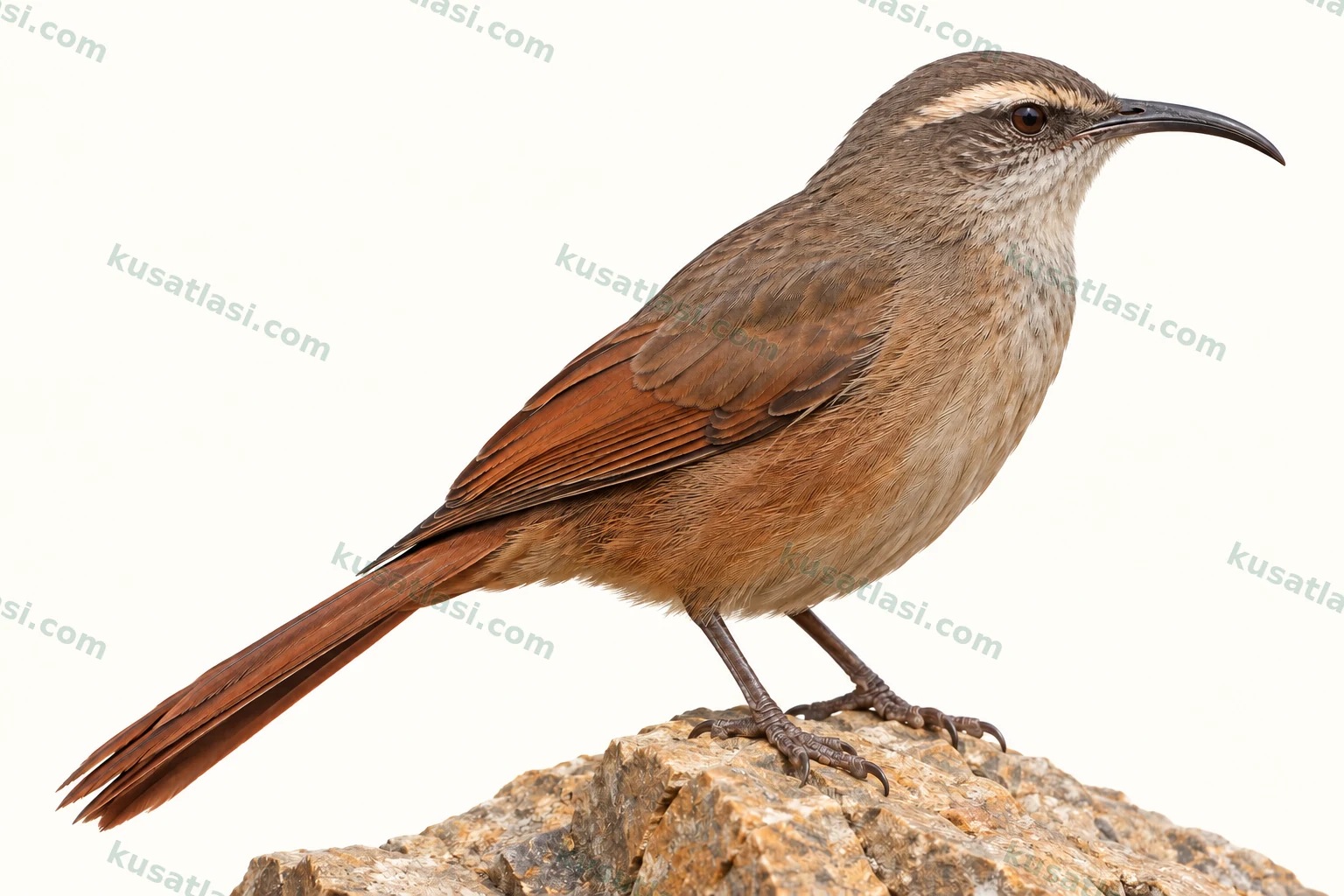
An earthcreeper of the Andean foothills with a long curved bill, pale eyebrow and whitish throat.
Biometrics
Length
Male18–19 cm
Female18–19 cm
Shared species value
Wing length
Male9.08 cm
Female9.08 cm
Shared species value
Weight
Male36–39.9 g
Female42 g
White-throated Earthcreeper
Peru and far northern Chile: western Andean slopeObservation guide in its natural range
Look for three features together
Do not rely on a single featureFull bill base, strong pale eyebrow and warm rufous wing and tail.
Dry scrub slopes and rocky valleys.
A hole in an earth bank; joint excavation documented.
Compare male and female
 FemaleMale
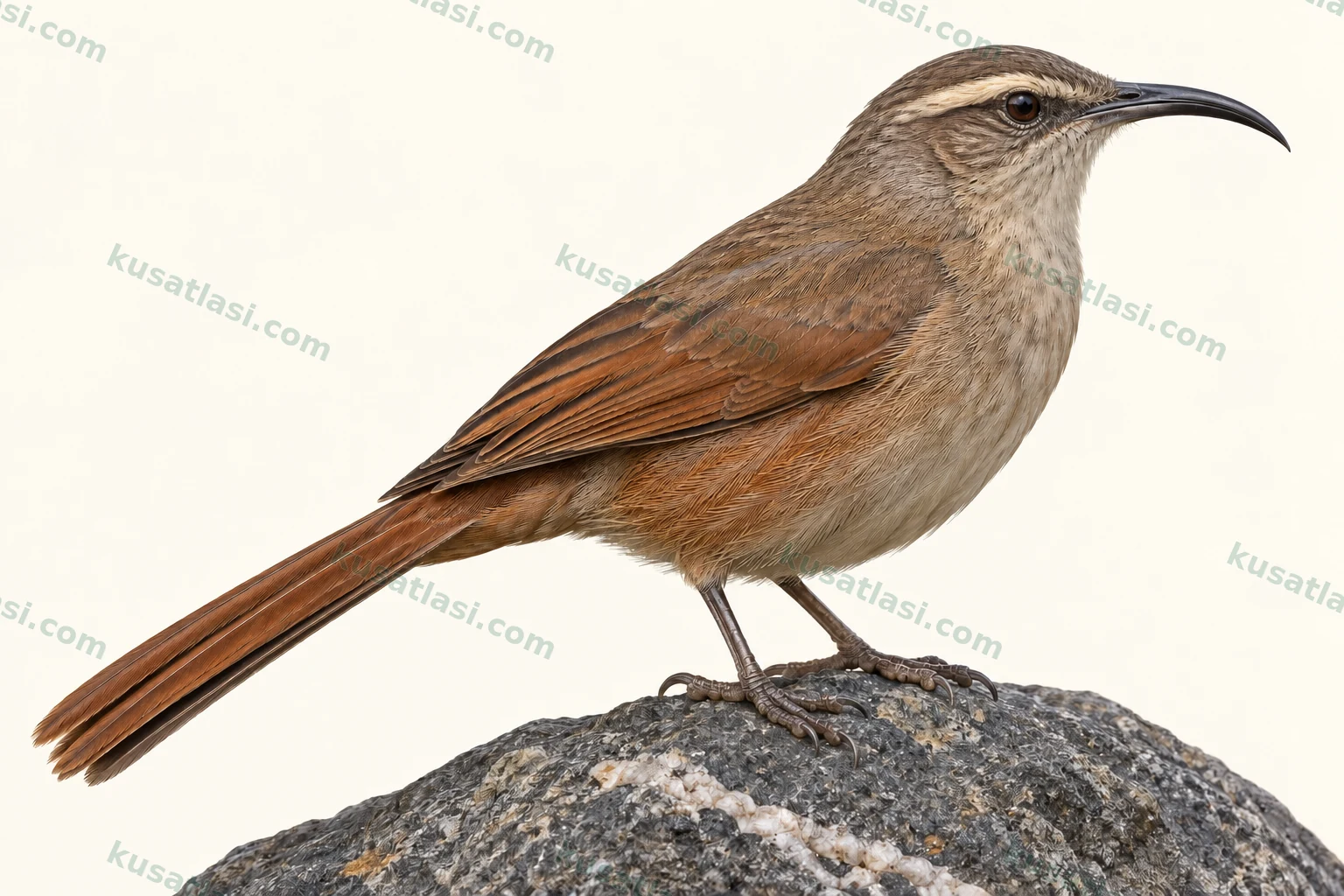
A reliable detailed visual sex key was not verified. Juveniles may have a shorter, less curved bill.
Where to look in its natural range?
Cactus scrub, valleys and agricultural terrace edges.
Resident. Nest-side and excavation activity at Tinajas was documented in January–March 2009. Examples from one study site, not a certain shared monthly calendar.
January
Peru: Tinajas, Peru: calling birds recorded in 2009.
February
Peru: Tinajas: an adult observed at an active hole entrance.
March
Peru: Tinajas: two adults documented taking turns excavating a hole.
April
Data unavailable
May
Data unavailable
June
Data unavailable
July
Data unavailable
August
Data unavailable
September
Data unavailable
October
Data unavailable
November
Data unavailable
December
Data unavailable
Nest, egg and incubation
A hole in an earth bank and two adults excavating in turns were directly recorded. Egg number, incubation and nestling period were not verified.
Prominent song from high rocks, posts or cacti; shorter, lower notes around nests.
Do not play recordings to attract birds; observe quietly, especially near nests.
Species information
Quick identification
White-throated Earthcreeper Upucerthia albigula is an ovenbird of the Andean foothills of Peru and Chile with a long downcurved bill. Read the whitish throat, prominent pale eyebrow, rufous wing coverts and tail together. The throat need not look as brilliantly and sharply white as the name suggests. It can be overlooked feeding on the ground among stones and scrub on dry slopes, but is easier to notice when calling from a high rock, post or cactus.
Bill curvature alone does not distinguish it from similar Upucerthia. A fuller bill base, strong pale eyebrow and warm rufous wing tones matter. In northern Chile a similar species may nest on the same slope, even in the same earth bank. Use face, bill, wing and voice together rather than identifying it certainly by location and nest form.
General appearance and posture
Overall plumage is brown and earthy. The throat area is paler and the flanks warmer yellowish brown. Rufous on the coverts and inner flight feathers may make a warm area on the closed wing against the body. Rufous tail and pale eyebrow can be seen together with bill shape on a bird standing before scrub. There is no conspicuous crest striking at a distance on its own.
When foraging on the ground it stays close to scrub cover; stony slopes and agricultural terrace edges may be used. Birds are usually seen alone or in pairs. High calling posts and ground feeding places differ. Calling in the open does not mean spending the whole day on exposed rocks; nearby sparse cover and gullies are part of daily space use.
Birds followed closely in Peru’s Tinajas valley used steep scrubby slopes dotted with columnar cacti. A first quietly feeding individual was followed on later visits by calling birds and activity around nests. Its appearance was therefore documented not just through a museum specimen but through ground foraging, calling from high points and entering earthen nests.
Males, females and young birds
A detailed male–female plumage key applicable at a distance was not verified in reliable sources. A bird showing a paler eyebrow or more rufous wings is therefore not automatically called male.
The Chilean specialist account describes juvenile bills as shorter and less curved. The Tinajas study observed a possible juvenile below a disused nest, with a paler yellowish face and indistinct pattern. Because the authors did not confirm its age, it remains a possible juvenile here. This does not establish that every young bird can be identified easily by the same appearance.
Two adults were directly observed taking turns excavating a nest. One worked while the other waited nearby, then they exchanged tasks. They first loosened earth with the bill, then threw it downhill with both feet. Birds could also take prey encountered during digging. This demonstrates joint excavation, not separate male and female tasks, since the two birds’ sexes were not confirmed.
Appearance in flight
Rufous areas occur in the wing coverts and inner flight feathers. Verified sources do not give their detailed diagnostic layout at every flight angle, so no certain underwing-specific mark is invented. The eyebrow, throat and bill shape on a grounded or perched bird provide a fuller identification than a brief flight view. Seeing the same bird’s face where it lands is useful.
A short flight into or out of a nest or across to another bush is not a seasonal migration record. No certain flight-colour sex distinction was verified either; unseen details are not completed with drawings or guesses.
Voice and behaviour
It is vocal, using high rocks, posts or cacti as calling places. At Tinajas some birds exchanged calls with distant individuals. Short low sounds near nests have a different behavioural context from prominent song in the open. The authors compared these nest-side notes with alarm calls, without claiming one fixed meaning for every sound.
No song was heard on the October Tinajas visit, whereas birds called more conspicuously in January and February. In March only a short weak series was heard. Visits were all at similar times of day, while the locality changed from a dry period to a wet green one. Researchers considered territorial song possibly more active in the rainy period. This local monitoring is not a definite monthly voice calendar for all Peruvian and Chilean birds.
Similar species
Upucerthia validirostris is especially important; older sources may treat similar northern birds separately as Upucerthia jelskii. In the current list that name corresponds to subspecies jelskii within validirostris. In White-throated Earthcreeper, look for the fuller bill base, stronger pale eyebrow, paler throat and more conspicuous warm rufous wing tones. Both species can occur locally, so elevation or a dry slope alone does not separate them.
The scientific study around Putre also assessed differences in their voices. These matter when visual separation is difficult; playback experiments done for research are not a recommendation for visitors to attract birds. Recording naturally heard voice, appearance and cover together is more informative than choosing a species just because its throat looks pale in a photograph.
World distribution
It lives in suitable valleys on the western Andean slope in Peru and far northern Chile. Current taxonomy recognises one species without listed subspecies. Its range is not the whole Andean chain or all South America. Local occurrence among dry scrub slopes, rocky valleys and suitable gullies matters.
Status within its natural range
Its current category is Least Concern. It may be locally common in the high Andean foothills, but being easy to find in one valley does not mean numbers have been measured throughout its range. Tinajas observations in 2008–2009 documented a population about 350 km north of the then-published northern limit. Birds occupied slopes near Lima at 2,300–2,600 m. Higher elevations in the northern Chilean account have a separate regional scope; no single elevation limit is imposed on the entire species.
Movements
It is treated as resident; no regular long-distance intercontinental route was verified. The new Tinajas record was assessed with several calling birds and nest activity, not as passage by a migrating flock. Researchers suggested suitable cover might occur in intervening valleys without confirming birds at every point. Such gaps are not painted as certain breeding areas: confirmed record cells and the natural region described in sources represent different levels of information.
Breeding habitat
It may use dry montane scrub, slopes with columnar cacti, rocky valleys and sparsely vegetated gullies. It can also occur near villages and agricultural terrace edges. Northern Chilean studies compared its use of Polylepis woodland with the drier open areas of some similar earthcreepers nearby. Not every occupied site is bare desert.
Nest site
At Tinajas, use of earth-bank holes and joint excavation of a new cavity by two adults were documented directly. A passage leads inward from the entrance. Nest sites there were in road cuts, in loose ground formed from weathered rock. Verified egg numbers, precise incubation and nestling periods were not found; other Upucerthia species do not fill these gaps.
Daily use of space
It stays near bushes and rocks while foraging on the ground, and moves to high exposed points to call. Nesting birds may rest nearby between turns digging and take occasional prey. An adult with food at the entrance supports breeding activity inside, but does not alone reveal egg or chick numbers.
What does it eat?
It feeds on ground invertebrates. The Chilean specialist account gives terrestrial invertebrates as its main food. In the Tinajas study an adult near a nest held worm-like prey. Its exact identity was not established, so the record is not made into a particular worm species or fixed food list. The reliable sources examined did not give detailed dietary proportions.
How does it forage?
It searches on the ground near scrub and gullies. It may take prey encountered while excavating, so nesting and feeding can appear in the same observation sequence. An adult carrying small prey near a nest may wait on the ground a few metres higher instead of immediately approaching the observer. Researchers recorded this in the context of nest return. Food opportunities are used, but this does not mean all food comes from a tunnel it has dug.
Two birds can excavate in turns
Joint cavity preparation by two adults was described in detail at Tinajas. Earth loosened with the bill was thrown downhill in hopping movements using both feet. One dug while the other waited quietly nearby, then they changed places. This division of work was recorded by following their movements, not assumed from the shape of a completed hole.
A new record can change an old boundary
The species identity of the first brief observation near Lima in 2008 was not confirmed immediately. Researchers revisited, verified appearance, collected photographs and sound documentation, and recorded eleven birds on one 2009 visit. Activity around nests strengthened the evidence for a new northern population. That count concerns the visit, not the region’s total population.
It can share a slope with a similar species
Upucerthia albigula and Upucerthia validirostris occur together around Putre in northern Chile. In six reciprocal playback trials in 2011, birds responded strongly to their own species’ voice and ignored the other’s. This small experimental series supports behavioural and vocal separation despite similar appearances; it does not require a claim that no cross-response ever occurs under any conditions.
An earthen nest hole and a rock crevice are not equal evidence
Some specialist accounts mention nesting in rock crevices as a possibility. The Tinajas research directly demonstrated occupied and excavated holes in earth banks. The two statements are not presented with equal certainty. Nest building seen at a particular site is stronger evidence than an unspecific general supposition, but that one site’s structure need not represent every nest of the species.