

World Birds IUCN statusLC · Least ConcernGlobal IUCN. BirdLife v10 (2025); taxon matching AviList 2026 / IOC 15.2; checked: 29.10.2026. The list year is not the species’ assessment date. Source and method · BirdLife OrderPasseriformesPerching birds FamilyFurnariidaeFurnariidae
Cream-winged Cinclodes
Cinclodes albiventris
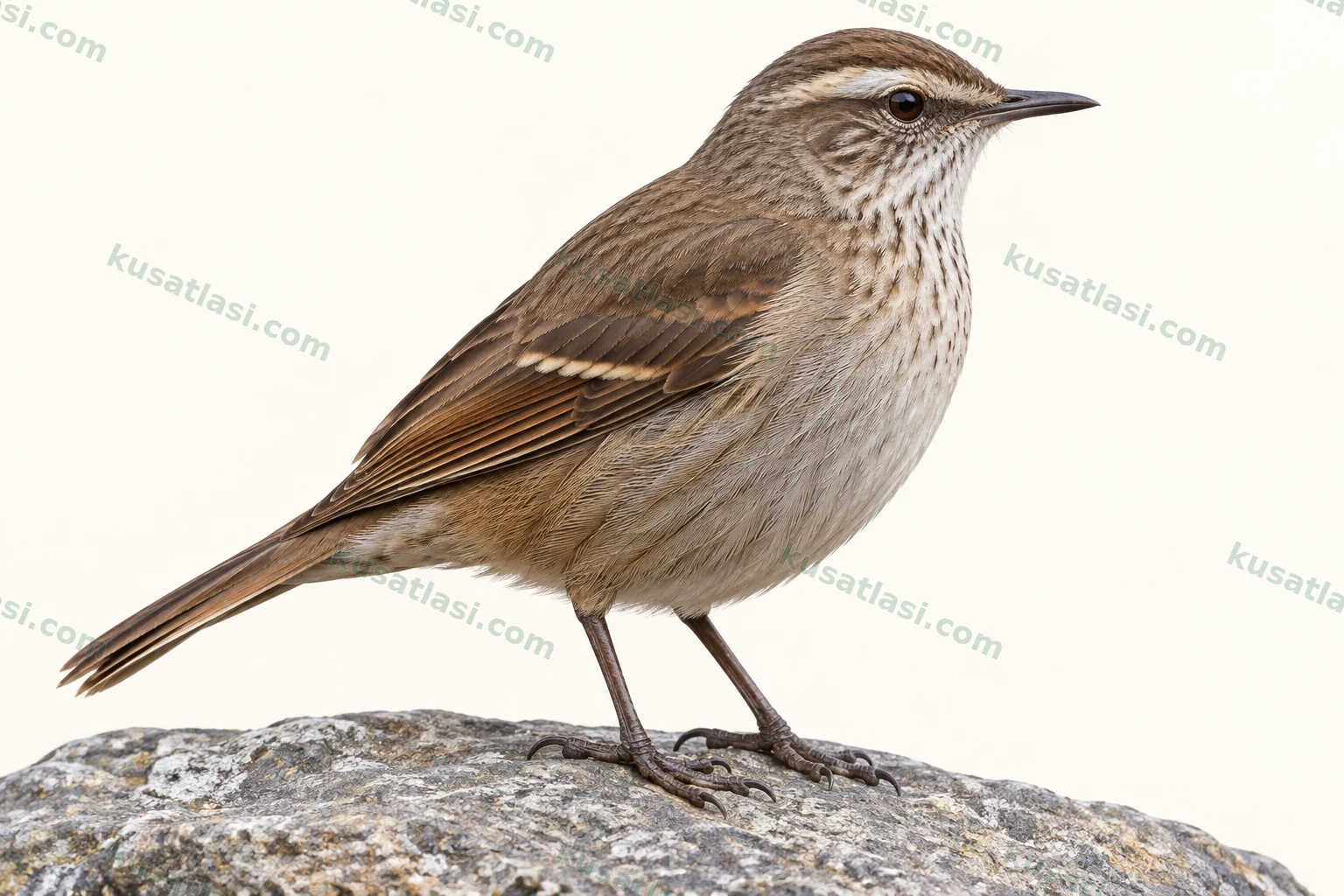
A brown ground bird of high-Andean watersides; pale eyebrow and throat, narrow pale wing band and pale tail corners.
Biometrics
Length
Male17 cm
Female17 cm
Shared species value
Wing length
Male9.42 cm
Female9.42 cm
Shared species value
Weight
Male20.5–33.8 g
Female20.5–33.8 g
Shared species value
Cream-winged Cinclodes
Peru–Bolivia, northern Chile and northwestern ArgentinaObservation guide in its natural range
Look for three features together
Do not rely on a single featureCheck the pale eyebrow, throat and pale tail corners together.
Compare the narrower band and dull upperparts against atacamensis.
Compare male and female
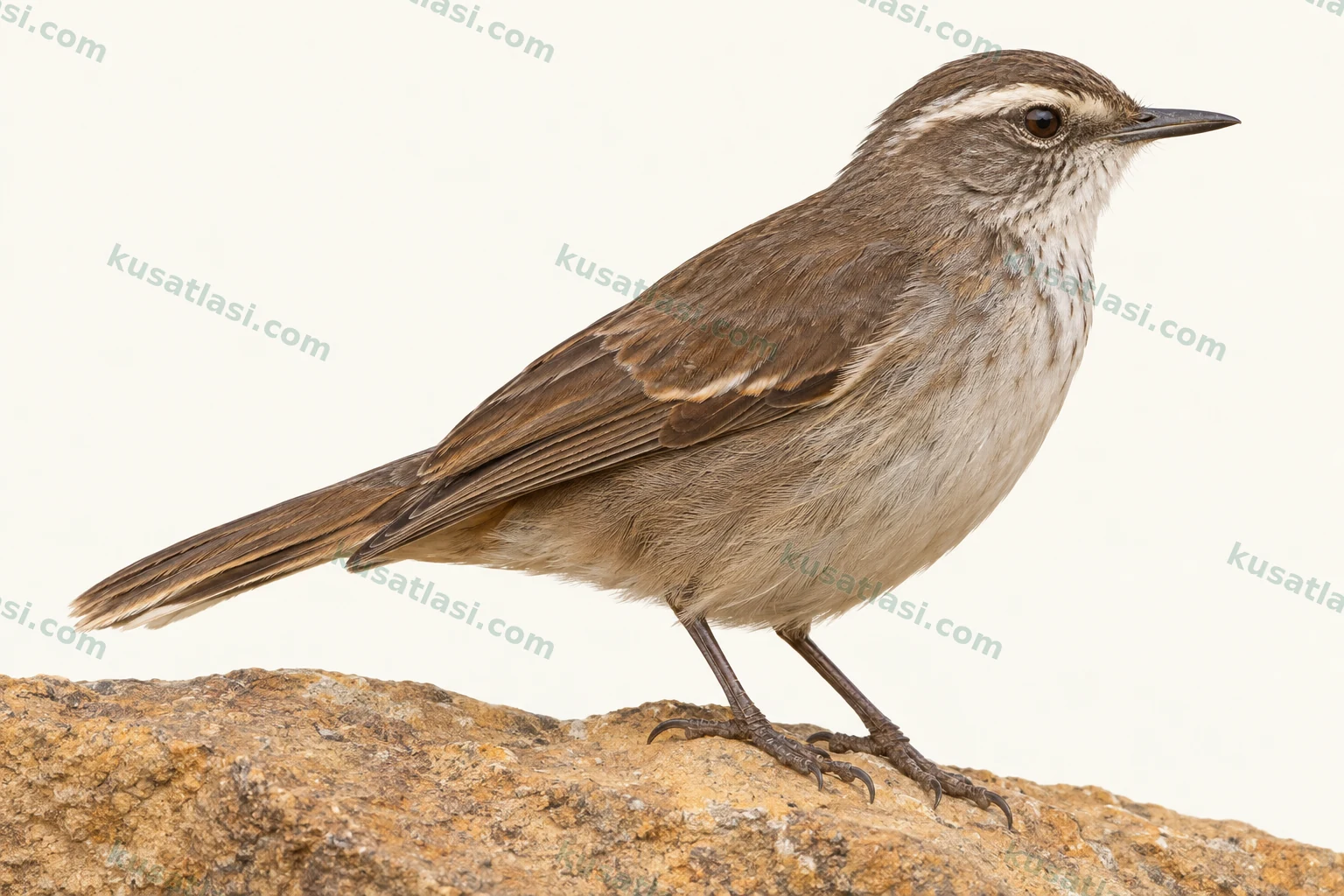 FemaleMale
No reliable universal male–female colour key or juvenile plumage calendar was verified.
Where to look in its natural range?
High-Andean stream and lake shores; short-grass openings near water.
Generally resident. Argentine nests with eggs in November and young in February are documented; dates are not made into a season for the entire range.
January
Dated regional nest examples. No verified regional date is given for this month. This does not imply local absence.
February
Dated regional nest examples. Jujuy: a nest with feathered young.
March
Dated regional nest examples. No verified regional date is given for this month. This does not imply local absence.
April
Dated regional nest examples. No verified regional date is given for this month. This does not imply local absence.
May
Dated regional nest examples. No verified regional date is given for this month. This does not imply local absence.
June
Dated regional nest examples. No verified regional date is given for this month. This does not imply local absence.
July
Dated regional nest examples. No verified regional date is given for this month. This does not imply local absence.
August
Dated regional nest examples. No verified regional date is given for this month. This does not imply local absence.
September
Dated regional nest examples. No verified regional date is given for this month. This does not imply local absence.
October
Dated regional nest examples. No verified regional date is given for this month. This does not imply local absence.
November
Dated regional nest examples. Salta and Tucumán: nests with eggs.
December
Dated regional nest examples. No verified regional date is given for this month. This does not imply local absence.
Nest, egg and incubation
A lined nest at the end of an earth tunnel. Documented nests contained 2 white eggs; the national-parks account also reports 3. Incubation and nestling development duration were not verified.
High spaced opening, a lower rapid middle, then a rising and slowing ending.
Do not play recordings to attract birds; observe quietly, especially near nests.
Species information
Quick Identification
The Cream-winged Cinclodes Cinclodes albiventris is a brown ground bird of open areas near water in the high Andes. Its pale eyebrow, whitish throat and pale wing band help identification. The underparts are light brown, the belly approaching whitish. The pale wing band alone is insufficient; assess head pattern, tail corners, overall proportions and natural voice together.
Cinclodes atacamensis, which can occur nearby, is larger with more rufous upperparts and clearer white tail corners. Cream-winged Cinclodes has pale light-brown corners and duller brown upperparts. Size can mislead at different distances; feather marks must actually be distinguished.
General Appearance and Posture
The pale eyebrow and throat stand out beside the dark head. Small brown marks may occur on the throat, becoming more visible when the bird lifts its head. Reflections from water or bright sky may whiten pale areas, so one bright throat photograph is not a reliable measure of true colour.
Cornell describes hopping and taking short steps on the ground, sometimes raising the tail. This posture alone does not separate species. Tail corners may show better when spread; failure to see them in a closed tail behind a branch does not establish absence.
Males, Females and Young Birds
The sources examined provided no separate colour key applicable to all adult males and females. There is no basis for calling the paler of two nearby brown birds female. Light, feather wear and angle can exaggerate small differences. Sex remains open without sufficient detail.
Nor was a reliable plumage calendar for every juvenile stage verified. Being near a nest alone does not prove youth; adults use the same shores and slopes. Carrying food does not directly reveal the carrier's age or sex. Actual transfer to young is recorded separately when seen.
Some older sources call the current taxon Cinclodes fuscus albiventris. This former subspecies name can be matched to accepted albiventris, but not every measurement or breeding record labelled only Cinclodes fuscus is automatically transferred. Present-day fuscus and albidiventris are separate species. The region and population treated matter when comparing information.
Appearance in Flight
The pale band appears when the wing opens; Cornell notes that on a raised wing during singing display it is narrower than in atacamensis. Display and a random escape flight may not give the same view. The wing surface must be exposed to judge the band; a few shining coverts are not interpreted as a broad stripe.
Lighting differs from above and below. If the boundary between dark flight feathers and pale band is unclear, identification is not left to silhouette alone. Reassess head and tail marks when the same bird naturally perches.
Voice and Behaviour
Boesman's vocal review describes very high, spaced notes in the albiventris group changing into a lower, rapid trill, then rising and slowing again. Song structure is more useful than a one-syllable imitation. The study compared recordings of some forms, without claiming to examine all call types.
Ground feeding near water is important in its use of open shores and grassland. A bird near a stream is not necessarily swimming or always hunting underwater. Other birds on the same shore do not alone establish a flock moving together. Track each individual's position and actual searching movements separately.
Similar Species
Compare duller upperparts, pale tail corners and narrower pale wing band together against Cinclodes atacamensis. If head and tail are hidden, a brown wing alone does not separate them with certainty. Their possible coexistence makes this comparison especially useful.
Cinclodes fuscus and Cinclodes albidiventris are other members of the former broad group. Assess their geography, songs and appearance separately. An old group map is not copied to all three current species. Describing migration of southern fuscus populations as this bird's movement would mix different biology despite similar names.
World Distribution
Its natural range is the middle and high Andes of Peru, Bolivia, northern Chile and northwestern Argentina's mountains. Some subspecies are associated with more restricted Argentine mountain areas. This range does not encompass all the lowlands of those countries. The old broad Cinclodes fuscus group's range from Colombia to Tierra del Fuego is not used for today's albiventris.
Status within Its Natural Range
It is Least Concern. Occurrence on suitable high-Andean watersides does not mean equal density in every valley. Drying shores, stream surroundings and openings at different elevations are assessed separately. Jujuy and Salta information in Argentina's national-parks account is not an elevation or population rule for the whole country.
Migration
The general data classification is resident. This does not say every individual stays at one shoreline point all year, but a regular route is not drawn without verified tracking. Seasonal movements of other old-group members are not assigned to this taxon. A mapped observation in one month is not necessarily that month's breeding or wintering area. Interpret mountain records with the actual taxon and context. A short move along a stream is not called migration across national borders.
Breeding Habitat
It uses high-Andean stream and lake shores, wet openings and short grass near water. It can also occur around village farmland. Waterside occurrence helps observation of natural shore movements, but breeding there requires actual nest or young-care evidence.
Nest Site
Lined nests of grass, hair and similar material at the end of a tunnel in an earth bank are documented. Records from Salta in November 1978 and Tucumán in November 2003 each contain two white eggs. Argentina's national-parks account also gives three eggs; explain the records together without averaging them. Two feathered young were found in Jujuy in February 1995. These records do not verify incubation or time to nest departure.
Daily Use of Space
It searches while moving on the ground; shoreline stones and short grass matter. Do not approach nest tunnels, block entrances or alter natural passageways to watch the bird.
What Does It Eat?
It is an invertebrate-feeding ground bird. AVONET's ecological classification agrees with shoreline and waterside searching observations. Classification alone does not identify every prey item or dietary percentage. If a tiny object in the bill is unclear, do not give it a definite insect name; walking round a stone does not prove the same prey is found every time.
How Does It Feed?
It searches by hopping and making short ground movements. At the water–land boundary, distinguish what the bird actually takes from animals visible nearby. Research on chemical signatures in feathers can help understand resource use, but is not a direct video of one meal. Do not leave bait or live prey to attract it. Quiet waiting on the shore and watching natural searches help record unchanged behaviour.
The Former Broad Group Was Split into Three Species
A 2009 genetic study reported three distinct lineages in the old Cinclodes fuscus group. Today's albiventris is the central-Andean group in this separation. The work relied largely on mitochondrial DNA and called for more genetic sampling. Check both name and geography in an old record.
Hear the Beginning and End Together
The vocal note describes a high opening, a lower rapid middle and a rising ending in albiventris. Excitement can alter note numbers and overall duration. One cut fragment is therefore not a substitute for the whole sequence, nor carelessly comparable with another species' short call.
A Nest Date Does Not Define a Whole Season
Egg nests in Salta and Tucumán were in November, the Jujuy nest with young in February. These are regional breeding examples, not by themselves laying boundaries in every country. Feathered young do not yield development time without a known hatching date. Averaging two eggs in reports and three in another expert account does not produce an actual clutch record either.
Chemical Signatures Offer Another View of Feeding
Rader and Matute's 2023 study compared stable isotopes in cinclodes feathers. Albiventris was treated among terrestrial species with broad elevation ranges. The approach helps investigate why similar appearance need not mean identical feeding environments. A chemical signature is not one individual's exact flight route or detailed prey list; retain the limits of the method.