

World Birds IUCN statusBy source taxonGlobal IUCN. BirdLife v10 (2025); taxon matching AviList 2026 / IOC 15.2; checked: 29.10.2026. The list year is not the species’ assessment date. Source and method OrderPasseriformesPerching birds FamilyFurnariidaeFurnariidae
White-throated Barbtail
Premnoplex tatei
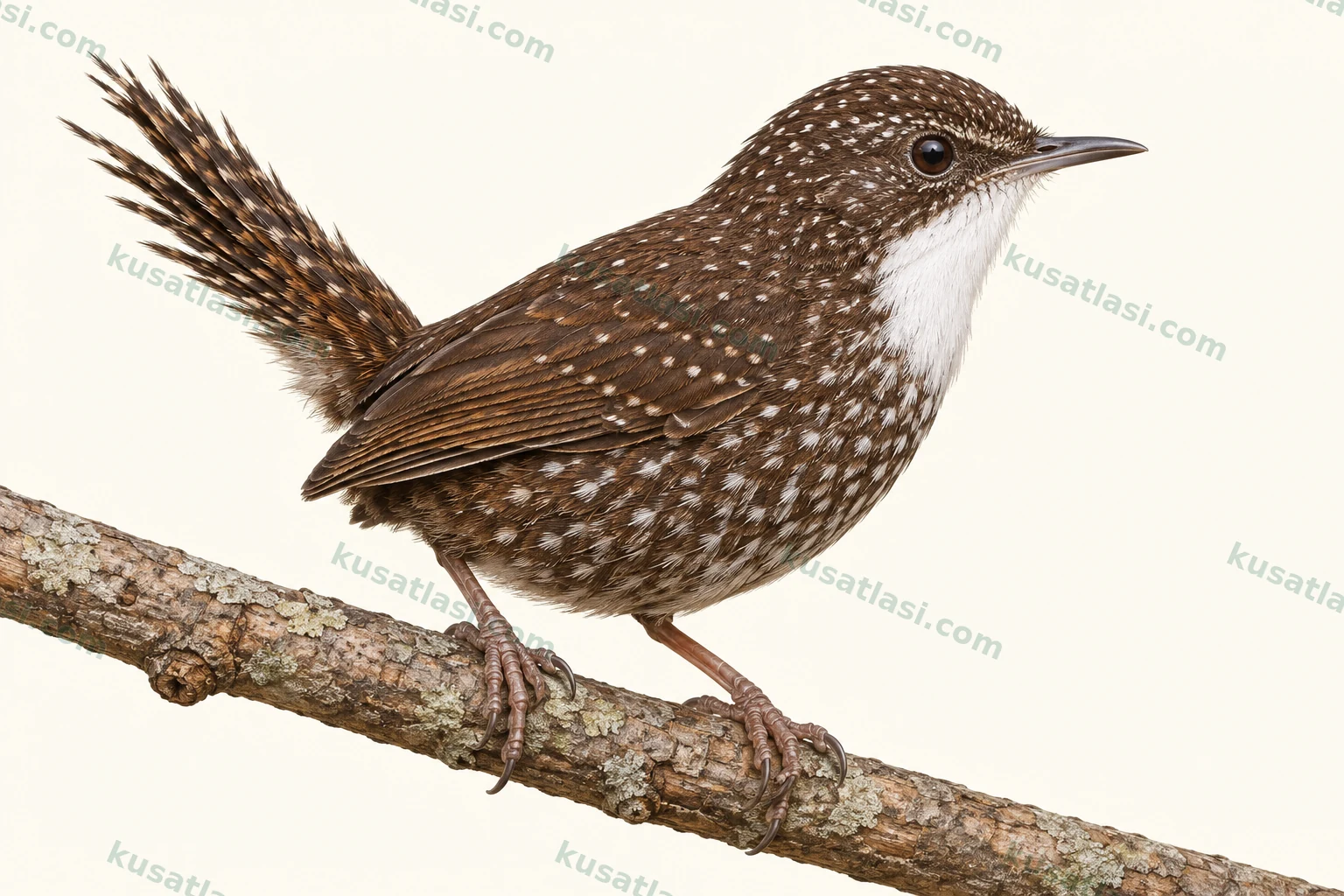
Dark brown upperparts, a pale throat, pale spots or streaks on the underparts and a pointed tail. This bird lives in the humid mountain forests of northeastern Venezuela.
Biometrics
Length
Male14–15 cm
Female14–15 cm
Shared species value
Wing length
Male5.82 cm
Female5.82 cm
Shared species value
Weight
MaleData unavailable
FemaleData unavailable
White-throated Barbtail
Turimiquire and Paria mountain regions, VenezuelaObservation guide in its natural range
Look for three features together
Do not rely on a single featureThe pale throat and nape streaks belong to separate areas of plumage.
Look in the Turimiquire and Paria mountains. The Andean range of a different related species is not added.
Adults look alike. Subspecies differences in pattern do not identify males or females.
Compare male and female
 FemaleMale
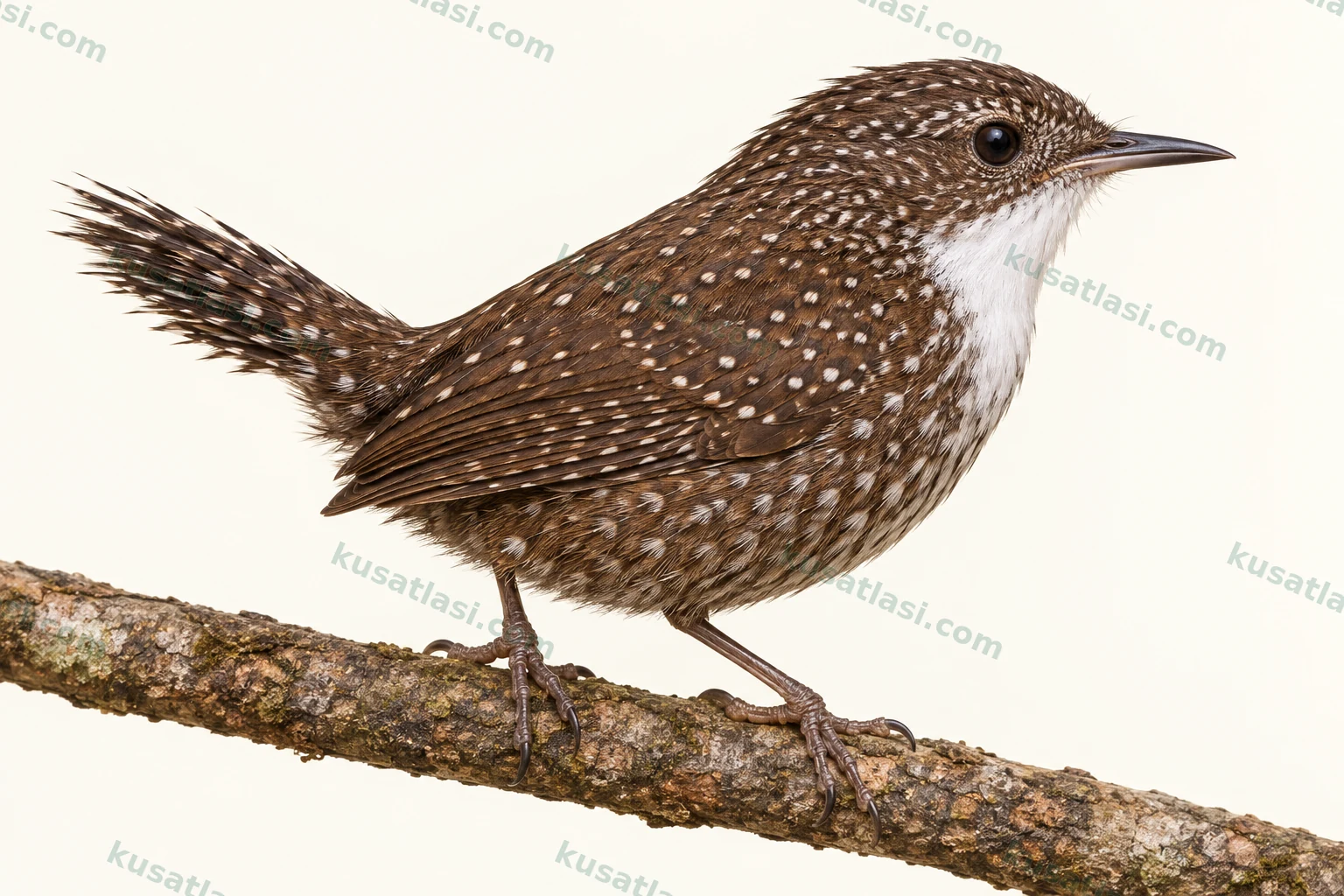
Adult males and females look alike. A detailed field key to juvenile plumage has not been verified.
Where to look in its natural range?
Look in the undergrowth and on the floor of humid, mossy mountain forest.
The direct record of a nest with chicks is from May–June. The August record of a night roost structure does not date egg laying. The full natural breeding season has not been verified.
January
The species is resident. No long-distance migration route has been verified. No verified regional date was provided for this month. This does not mean the species is locally absent.
February
The species is resident. No long-distance migration route has been verified. No verified regional date was provided for this month. This does not mean the species is locally absent.
March
The species is resident. No long-distance migration route has been verified. No verified regional date was provided for this month. This does not mean the species is locally absent.
April
The species is resident. No long-distance migration route has been verified. No verified regional date was provided for this month. This does not mean the species is locally absent.
May
The species is resident. No long-distance migration route has been verified. The published record of an active nest in Turimiquire describes a nest with chicks and observations of their departure. It does not give the full egg-laying season.
June
The species is resident. No long-distance migration route has been verified. The published record of an active nest in Turimiquire describes a nest with chicks and observations of their departure. It does not give the full egg-laying season.
July
The species is resident. No long-distance migration route has been verified. No verified regional date was provided for this month. This does not mean the species is locally absent.
August
The species is resident. No long-distance migration route has been verified. No verified regional date was provided for this month. This does not mean the species is locally absent.
September
The species is resident. No long-distance migration route has been verified. No verified regional date was provided for this month. This does not mean the species is locally absent.
October
The species is resident. No long-distance migration route has been verified. No verified regional date was provided for this month. This does not mean the species is locally absent.
November
The species is resident. No long-distance migration route has been verified. No verified regional date was provided for this month. This does not mean the species is locally absent.
December
The species is resident. No long-distance migration route has been verified. No verified regional date was provided for this month. This does not mean the species is locally absent.
Nest, egg and incubation
The mossy nest is in a cavity beneath an earthen overhang. Two chicks were seen in one nest. The clutch size and number of incubation days have not been verified. The estimated development period of 19–21 days depends entirely on the estimated initial age.
The voice is described as a succession of bubbling notes. The bird is active in the morning.
Do not play recordings to attract birds; observe quietly, especially near nests.
Species information
Quick identification
The White-throated Barbtail Premnoplex tatei is a small bird of the humid mountain forests of northeastern Venezuela. Consider the dark brown upperparts, pale throat, pale spotting or streaking on the underparts and pointed tail together. Its English name is White-throated Barbtail. A single white throat patch on a brown bird does not establish the identification without the location and other markings.
Current taxonomy treats tatei in Turimiquire and pariae on the Paria Peninsula as two subspecies of the same species. Some conservation sources assessed them as separate species. A category assigned to a narrower taxon in those sources is therefore not transferred to the combined species. The current checklist entry shown on this page is Not Evaluated. That designation does not mean that the bird faces no threat.
General appearance and posture
In Chapman's 1925 description of an adult male, the crown is brown with paler feather edges and the forehead has small whitish streaks. A narrow pale eyebrow is prominent from the bill to the nape. The feathers in front of the eye and around the ear are described as greyish. The top of the head is not all white. A visible pale eyebrow does not mean that the forehead and crown form one large patch of the same colour.
The nape has pale streaks. The first museum description of the nominate subspecies notes chestnut and dark borders along their outer edges. The pattern between the head and back is another pale area in the brown plumage and is anatomically distinct from the throat patch. From behind, the nape streaks can be visible while the throat is hidden. A difference in viewing angle does not indicate a different sex or species.
The back, rump and upper tail coverts have dark chestnut-brown tones. The tail is described as darker than the back. The flight feathers are dark brownish black, and the edges of the wing coverts are close to the colour of the back. Reflected green light in the forest can make the chestnut areas look more olive. Assess the colours by looking at feathered areas in light and shade together.
The throat is largely pale and only lightly marked. Below it, pale feather centres stand out within dark borders. On the breast and belly of the early male specimens, the pale centres form drop-shaped marks as the feather borders broaden. The sides look more streaked. The brown ground colour on the flanks and lower belly is not wholly white like the pale throat. The underparts show distinct areas of plumage rather than a plain white bib.
The first description gives a dark upper mandible and a paler horn-coloured lower mandible with a darker edge and tip. The feet were recorded as black. These observations belong to the context of the museum description. If the bill colour cannot be seen in detail in a photograph of a live bird in shade, that is no reason to rule it out. No eye colour or bare skin colour constant at all ages is added without evidence.
The tail feathers can appear pointed at their tips. When clearly visible, the tips contribute to the bird's appearance, although wear can make the detail less distinct. A tail tip outside the frame or a broken feather is not the same as the actual absence of an identification mark. Trace the feather back to the body to avoid confusing it with a slender twig. Do not determine a family or species from the tail tip alone.
Males, females and young birds
Adult males and females look alike. The white throat and dark upperparts are not exclusive to the male. Differences in the underpart pattern of Turimiquire and Paria birds are also not used to distinguish the sexes. In pariae the pale centres of the breast feathers can form longer streaks. Assess this geographical variation together with where the bird was found.
A reliable field key covering every area of juvenile plumage has not been verified. The two chicks in the nest study were feathered at the last observations, but this does not mean that all free-living young look like adults in every respect. A short tail, fluffed feathers or a paler appearance alone do not identify a female. Do not approach or capture a recently fledged bird in a way that would separate it from its family.
Appearance in flight
The dark flight feathers and small body can be noticeable in a short flight, but cover easily hides the head and underpart pattern. Describe the angle actually seen rather than assuming that both open wings have the same colour over their whole surface. Forcing the bird to fly changes both its natural behaviour and the interpretation of the image. A new natural view while it is on a branch or on the ground may help complete the identification.
Voice and behaviour
The voice is described as a series of notes resembling little bubbles forming in succession. Morning activity may help locate the bird. An individual can be found alone, in a pair or in a mixed group of birds. Its natural foraging on the ground and in low cover should not be reduced to an obligatory life on tree trunks simply because of the Turkish name. When possible, match the sound to the individual actually seen.
Similar species
The Spotted Barbtail Premnoplex brunnescens is a close relative. Compare the target species' paler underparts and nape streaking. Sharing a genus does not make them the same species. The location in northeastern Venezuela is also important. The range of the widespread relative is not copied to this bird. When comparing other forest birds with pointed tails, look at the head, throat and the whole underside.
Global range
It is endemic to Venezuela. Its natural areas are the northeastern Turimiquire massif and the mountains of the Paria Peninsula. The Turimiquire population is called tatei and the Paria population pariae. The intervening lowlands are not shown as the same humid mountain forest or as continuously occupied. The wider range of other Premnoplex species in Central America and the Andes does not belong to this species.
Status within its natural range
Conversion of natural forest to agricultural land is an important pressure. The taxonomic scope used in scientific classification matters when reading conservation assessments. If a source treats the Turimiquire and Paria birds as two species, their respective categories do not constitute a new assessment of the combined species. The page follows the current checklist and keeps this distinction clear while showing the risk categories for the narrower taxa. The map shows the small mountainous range rather than treating all of Venezuela as occupied.
Movements and migration
It is classified as resident. No verified annual long-distance migration or regular tracked route between mountains was found. Drawing a line between the two natural areas would treat geographical separation as evidence of movement. An individual record, evidence of breeding and a DNA sampling location provide different information. Without dates for the observation cells, do not assign a season or a nest-with-eggs label to them.
Breeding habitat
It naturally inhabits humid, mossy mountain forest and its undergrowth. It is also observed in palm-rich areas. Water and high humidity are important, but it has not been verified that all nests of this species lie over streams. Streamside nests of a close relative are not presented as an obligatory nest site for this bird. Direct species-specific records are considered separately.
Nest site
The 2020 publication describes a breeding nest with little moss in a cavity below an earthen overhang in Turimiquire, as well as separate night roost structures. Two chicks were seen in the active nest. That observation does not give the original number of eggs. The possibility that the chicks left at 19–21 days depends on an estimate of their initial age. It concerns one nest and does not establish a precise general development period. Incubation duration has not been verified.
Daily use of habitat
It can forage naturally in low cover and on the ground. Night roost structures and nests with chicks have different functions. A clump of moss with a visible entrance is not automatically a breeding record. Do not insert leaves, tools or lights into such structures to observe the bird. Do not remove humid cover or decaying wood for a clearer photograph.
What does it eat?
It feeds on small invertebrates. Direct field observations describe individuals reaching into cavities in rotten wood in search of arthropods and turning leaves aside. Seeing this behaviour does not mean individual prey items can always be identified. Food carried on a visit to a nest does not show that the species eats the same prey throughout the year or consumes it in a constant proportion.
How does it forage?
It can hop along the ground and probe under leaves with its bill. It can also move onto low branches and trunks. The ground-level foraging of the target bird in the study was compared with that of the Spotted Barbtail, which the same paper more often associated with searches on trunks and branches. Sampling effort differed between the two species. Two days of observations are not taken to show unchanging behaviour in all seasons. Putting food in natural foraging areas or opening up the leaf cover makes it harder to see what the bird chooses for itself.
The species is named for the collector of the first specimen
Chapman named the species for G. H. H. Tate, who worked in the region for the museum. The locality of the first male specimen and the year 1925 are retained in the scientific record. Naming a species for someone does not mean that person measured every part of its life. Later studies improved knowledge of behaviour and breeding.
The nape and throat are separate pale areas
The first museum description highlights the distinct nape streaks as well as the pale throat. The two areas are visible from different angles. Seeing the nape from behind does not verify the throat at the front. A natural turn of the head allows comparison of areas of plumage that may be hidden in one image.
A mossy structure need not be a nest with eggs
The nest study distinguished the breeding structure from structures observed in use only at night. An adult entering or moss outside the opening does not by itself indicate eggs. Understanding what the structure is used for depends on watching natural behaviour by day and night. Opening it is not an appropriate way to observe.
Chick count and egg count are separate records
Finding two chicks in one nest does not prove there were exactly two eggs at the start. Similarly, the day when chicks of estimated initial age left the nest does not give an exact duration of incubation. When data on a species are limited, these distinctions preserve the meaning of the scientific record. A measured duration from another species is not used to fill the gap.