

World Birds IUCN statusLC · Least ConcernGlobal IUCN. BirdLife v10 (2025); taxon matching AviList 2026 / IOC 15.2; checked: 29.10.2026. The list year is not the species’ assessment date. Source and method · BirdLife OrderPasseriformesPasserines FamilyFurnariidaeFurnariidae
White-throated Cacholote
Pseudoseisura gutturalis
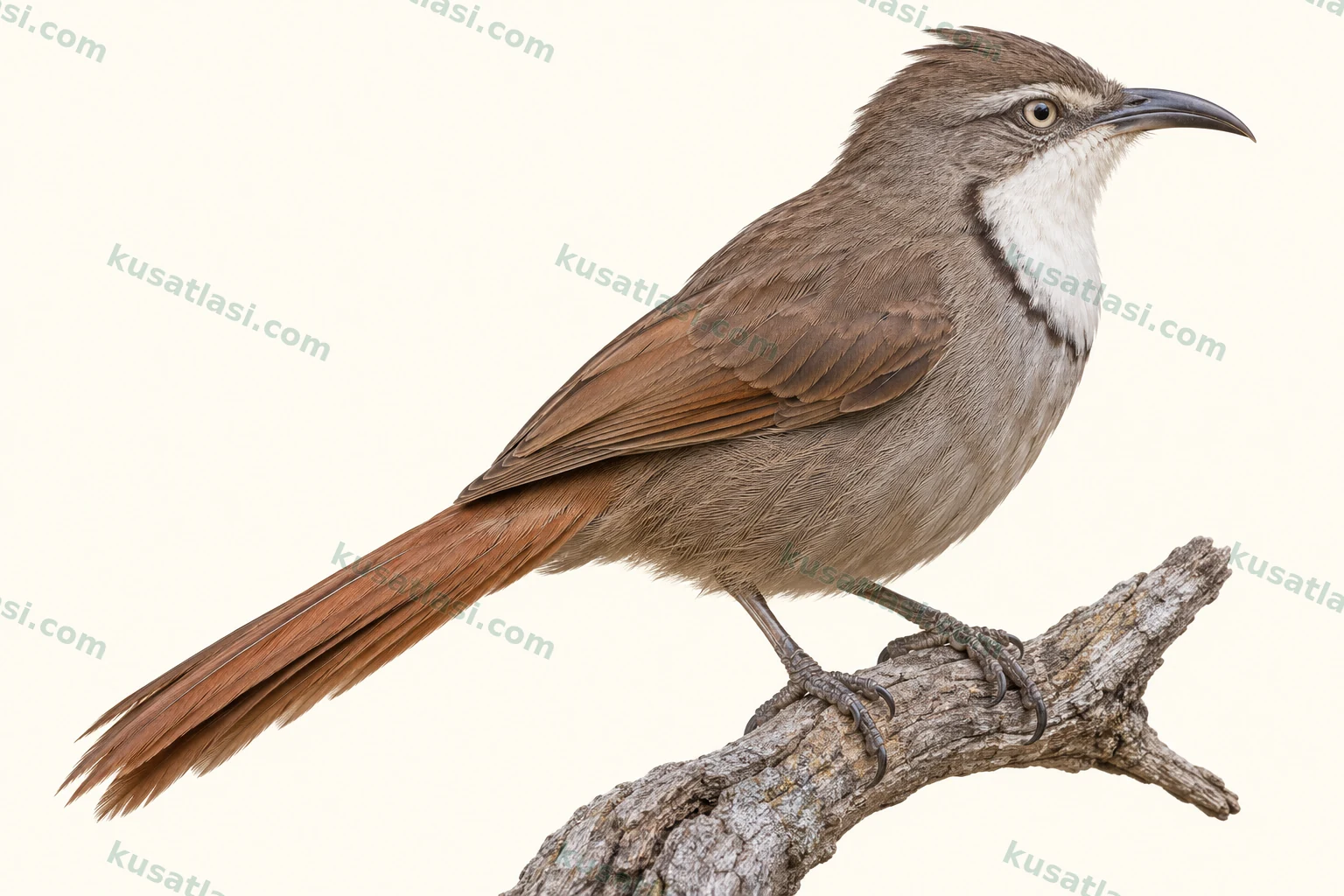
In Argentina’s dry scrub: a sturdy grey-brown body, small crest and whitish throat.
Biometrics
Length
Male22–23 cm
Female22–23 cm
Shared species value
Wing length
Male10.23 cm
Female10.23 cm
Shared species value
Weight
MaleData unavailable
Female66.6 g
White-throated Cacholote
Argentina: Monte and Patagonian scrubObservation guide in its natural range
Look for three features together
Do not rely on a single featureShort crest, greyish plumage and whitish throat together.
Forages on the ground; powerful duets from high exposed points.
Bulky enclosed stick structure with an entrance tunnel.
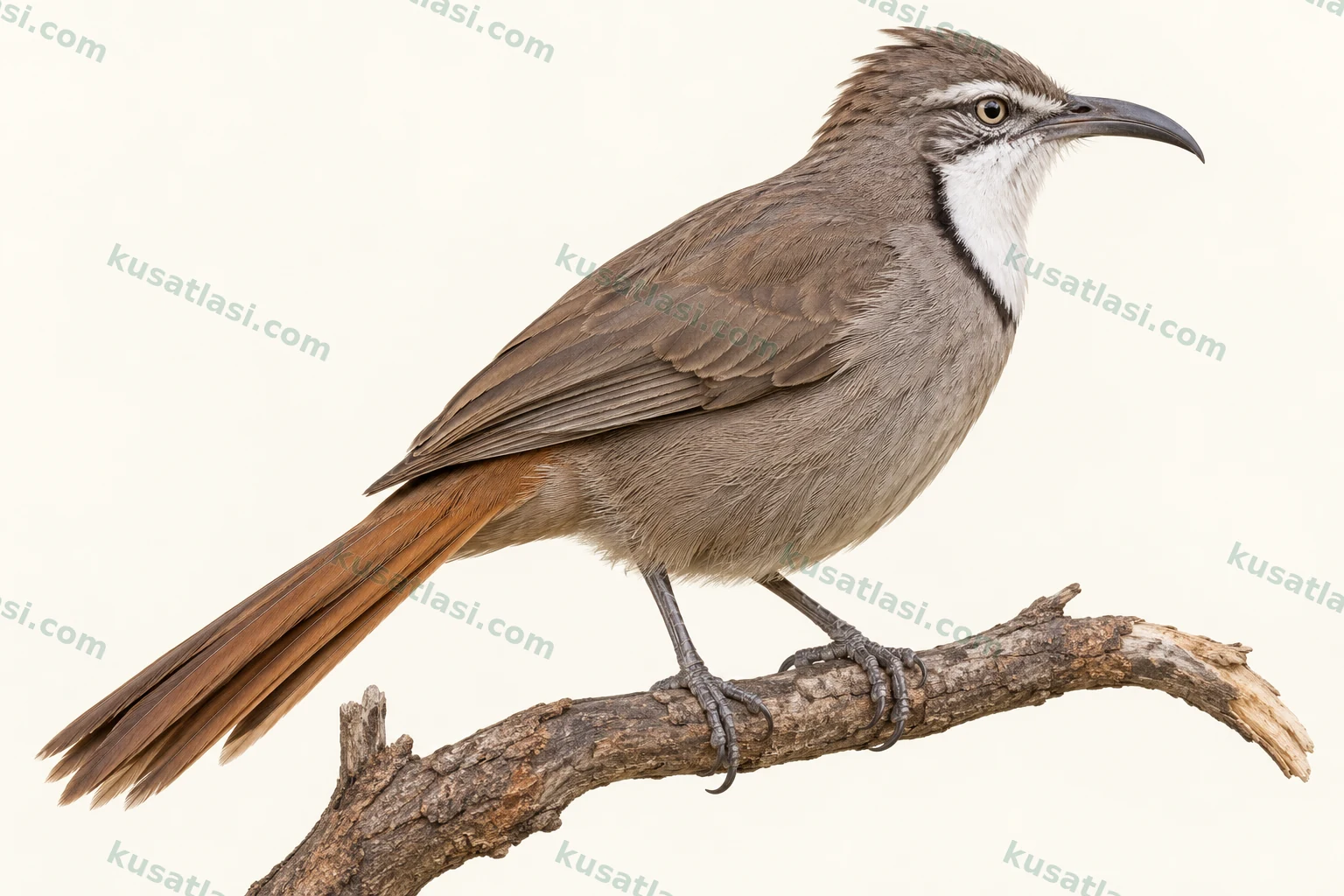
Compare male and female
 FemaleMale
No reliable detailed visual sex key was verified; the northern population may be paler.
Where to look in its natural range?
Dry stony scrub, cactus-rich Monte and Patagonian steppe.
Resident. Full-clutch nests at Cafayate were recorded from late October to early February; Patagonian records include other dates. Local breeding dates, not a regular migration calendar.
January
Data unavailable
February
Argentina: Cafayate: last full-clutch nests and new records of young in early February.
March
Data unavailable
April
Data unavailable
May
Data unavailable
June
Data unavailable
July
Data unavailable
August
Data unavailable
September
Argentina: Puerto Madryn: September eggs documented in 2007.
October
Argentina: Cafayate: local full-clutch nest records start in late October.
November
Data unavailable
December
Data unavailable
Nest, egg and incubation
Three or four white eggs. Studies report minimum incubation information of 18–20 days and, by locality, 24–26 days or at least 27 days in the nest.
Long, powerful, dry, creaking notes; frequent exchanged duets.
Do not play recordings to attract birds; observe quietly, especially near nests.
Species information
Quick identification
White-throated Cacholote Pseudoseisura gutturalis is a sturdy grey-brown ovenbird of Argentina's dry Monte and Patagonian scrub. A small crest, whitish throat and greyer overall plumage help distinguish it from more rufous cacholotes with longer crests. On a ground-foraging bird, read the compact body, powerful bill and tail together. It may climb to a high exposed branch, dead tree or post to sing or rest.
The pale throat matters, but a white patch alone does not identify it. Check where the pale area ends below the head, crest length and grey-brown body tone together. The northern ochroleuca population may be paler and sandier; southern gutturalis looks darker.
General appearance and posture
The body looks compact and strong; the crest is shorter than in Pseudoseisura lophotes. Raised feathers can change the head shape, so do not rely on a crest missing from one frame. The boundary between pale throat and greyish breast is easier to see when the bird naturally looks up or calls. The grey quality of its brown plumage is useful against rufous cacholotes.
On the ground it checks dry grasses and bush bases. Head and bill point down as it explores gaps among stones, branches and plants. Direct observations near Puerto Madryn document scratching the soil, turning some small objects and repeatedly pecking dry wood.
Males, females and young birds
The sources used provide no detailed adult male–female colour key that can be applied confidently in the field. A singing bird or one carrying nest material is therefore not called male on behaviour alone. Breeding studies directly recorded two adults caring for young. Food deliveries are watched without confusing sex identity with the visible plumage pattern.
The Cafayate study in northern Argentina describes chick development in detail. Hatchlings are largely naked, pink-skinned and closed-eyed, with fine grey down around head, wings and rump. Feather sheaths appear and eyes partly open on the sixth to seventh days. Around the ninth day the eyes were fully open and wing feathers began emerging from their sheaths. These are stages in the chicks followed in that study.
By about the twentieth to twenty-first day, appearance approaches the adult's; dark feathers may border the white throat below. Adult-like plumage does not establish readiness to fly or to find all food independently. Adults feeding young after nest departure was documented in both northern and Patagonian observations.
Appearance in flight
Daily feeding is mainly on the ground and in low cover; the bird may fly to a high song post or another bush. Grey-brown body and tail show in flight while the pale throat and small crest may disappear in a brief view. No single underwing mark was verified as a certain flight key.
First flights of young are not as skilled as normal adult flights. At one Cafayate nest, a youngster first flew after adults called and moved to a nearby bush, then was fed nearby in subsequent days. In other observations at Puerto Madryn, young first appeared in the entrance tunnel, then moved over the nest and supporting shrub into nearby cover.
Voice and behaviour
It has a strong song of creaking, dry notes that can continue a very long time. Two birds may duet in exchange. Cornell notes calls so dry they can recall blows on wood. The song post may be higher and more exposed than feeding sites; a bird calling from a post or bare tree can return to the ground.
Pairs may work together on nest building and care. Patagonian adults were seen replacing fallen sticks, adding new ones and carrying bark to the chamber floor. Food carrying and material carrying are different behaviours. Removal of faecal sacs as chicks grew was also recorded. These tasks show that the large stick structure does not remain unchanged once completed.
Defence and chasing may occur when another adult approaches a nest. One unusual attack is not presented as normal for every pair. Researchers distinguished individuals using moult and visible features; an unrecognised visitor was not assumed to be a parent. Matching voice and plumage to the actual bird's behaviour matters for accurate recording.
Similar species
Brown Cacholote Pseudoseisura lophotes is compared through its more rufous-brown plumage and prominent long crest. Cornell also stresses yellow eyes. In White-throated Cacholote, look for greyer plumage, short crest and whitish throat together.
Smaller Patagonian canasteros may also be long-tailed brown birds feeding on the ground. Pseudasthenes patagonica was studied for nesting in the same region, but must not be confused with the cacholote's large sturdy body. Incubation and development values of the small canastero in a shared paper are not transferred here; compare voice as well as head shape and body scale.
World distribution
It is endemic to Argentina. Dry Monte and central-southern Argentine and Patagonian scrub form the core range. Ochroleuca occupies northern and central Monte from western Salta towards La Rioja and San Juan; gutturalis is described in central-southern areas from Mendoza, La Pampa and southern Buenos Aires to northeastern Santa Cruz. The populations' pale–dark plumage difference is assessed with this geography.
Status within its natural range
The list snapshot places it in Least Concern. Cafayate in Salta and Puerto Madryn in Chubut are two different examples of detailed local studies. Cafayate's columnar cacti are not obligatory equivalents of the low shrub nest supports at Puerto Madryn. Argentine endemism does not mean it uses all the country's humid forests or every high Andean area; actual dry-habitat structure matters.
Movements
It is treated as resident, without a verified regular long-distance seasonal route. Full-clutch nests at Cafayate were found from late October to early February. Near Puerto Madryn, September eggs and, in a newer study, activity starting in late winter were documented. These are separate local breeding periods. An empty-looking nest after breeding does not mean the pair migrated to another country.
Breeding habitat
It uses stony, dry, scrubby Monte terrain and Patagonian steppe cover. Cafayate's breeding sites contain scattered trees, thorn bushes and columnar cacti. Dry shrubs such as Larrea and Condalia dominate the Puerto Madryn study sites. Nest support may change with local vegetation.
Nest site
A tunnel leads into the spacious chick chamber of the bulky enclosed stick nest. Fourteen of fifteen active Cafayate nests were in columnar cacti. Three or four white eggs were recorded. Intervals from finding a complete clutch to hatching reached 18–20 days; researchers interpreted them as minimum incubation information, not a duration measured from a known start. Northern young stayed 24–26 days; two more recent Patagonian nests gave at least 27 days.
Daily use of space
Food is sought on the ground and in low cover; song may come from high exposed points. Adults continue feeding departed young in nearby bushes. The working area around a nest supplies food, new sticks and bark; do not open the entrance tunnel for observation.
What does it eat?
Invertebrates such as insects, spiders and scorpions are principal foods; small lizards and other small vertebrates may also be taken. Among 902 prey items delivered to two nests near Puerto Madryn, insects accounted for about 86 per cent by number. Smaller shares included arachnids, reptiles, avian food items and one mammal record. These are counts of items brought to young, not proportions by weight in the entire adult diet.
How does it forage?
It searches actively on the ground, checking gaps under scrub and among grass, branches and stones, and may scratch soil. Large Agathemera insects and lizards were seen divided into smaller pieces suitable for chicks. Prey held by a foot on a hard stone or wood may be processed with forceful bill movements. Another study at Cafayate also recorded arthropods and small vertebrates brought to young; the two places' prey lists are not merged into one unchanging menu.
Materials from a large nest may be reused
Material for one watched Puerto Madryn nest was also taken from a nearby old nest. Cafayate likewise recorded reuse of sticks from inactive structures. Not every nesting attempt therefore uses entirely newly cut material. New sticks may repair the exterior during use. The 2007 Patagonian nest also had poplar bark on its floor, carried from a nearby waste site.
Objects resembling decorations may occur on nests
The northern study found other birds' feathers, fabric pieces and shiny artificial scraps outside some nests. Not every object is necessary material for the egg chamber. Researchers recorded them as external decorations but could not determine which sex placed them. The behaviour is therefore not declared a definite male display.
Entrance direction may relate to local wind
Cafayate entrances faced mostly northeast while prevailing winds came from the south-southeast. Researchers discussed wind avoidance as a possible explanation. Orientation is an observation; no experiment proved wind the sole cause. It does not follow that all Argentine nests must face northeast.
New studies refine the nestling period
The single Patagonian nest in 2007 confirmed at least 21 days in the nest; departure was not seen precisely, making this a lower bound. More detailed northern monitoring gave 24–26 days, and two newer Patagonian nests at least 27 days. No average is invented to select one fixed species duration. Observation intervals, locality and whether departure was actually seen explain the results together.