

World Birds IUCN statusLC · Least ConcernGlobal IUCN. BirdLife v10 (2025); taxon matching AviList 2026 / IOC 15.2; checked: 29.10.2026. The list year is not the species’ assessment date. Source and method · BirdLife OrderPasseriformesPasserines FamilyFurnariidaeFurnariidae
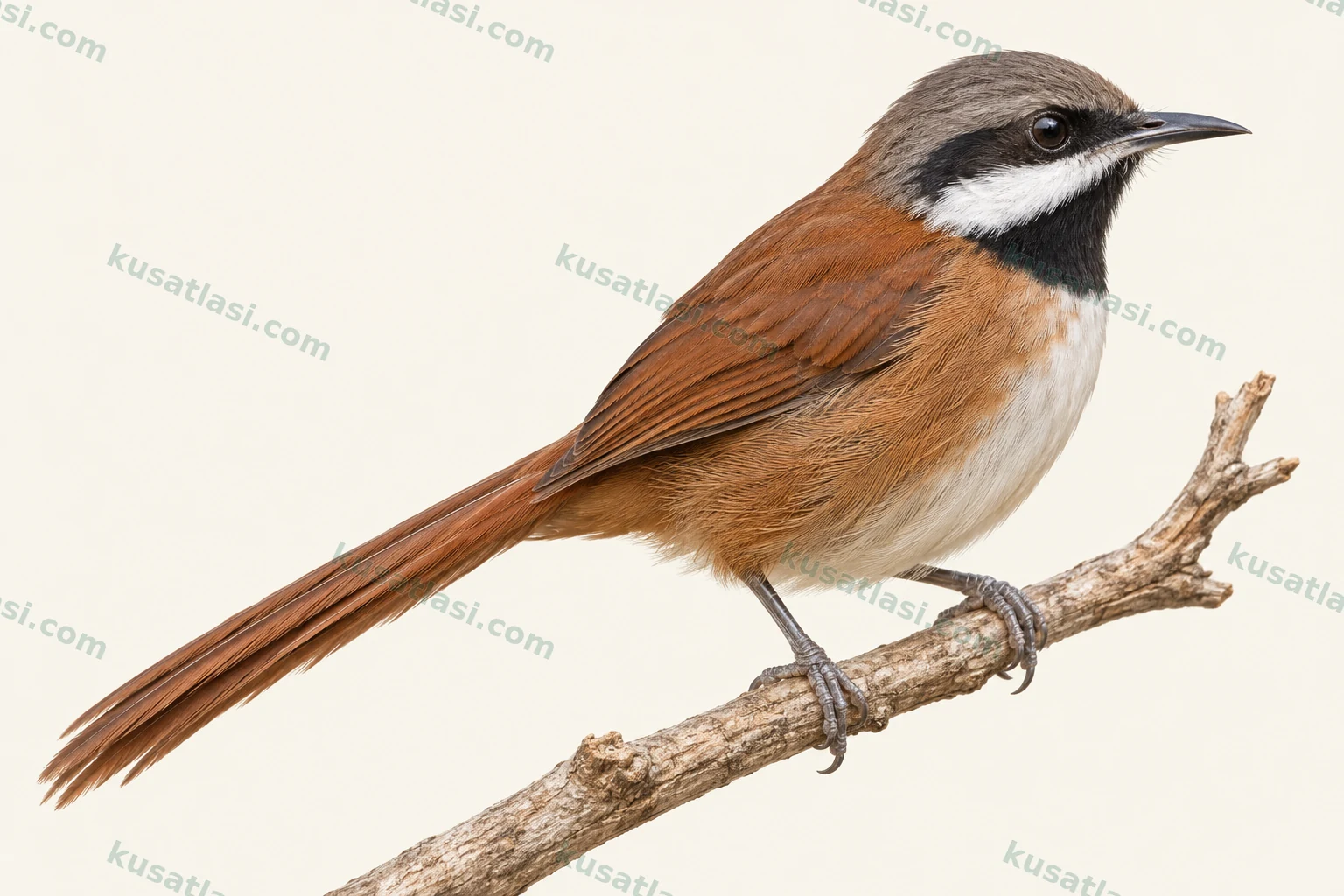
White-whiskered Spinetail
Synallaxis candei
Rufous body, grey crown, black face and throat with broad pale moustache in dry scrub.
Biometrics
Length
Male15–17 cm
Female15–17 cm
Shared species value
Wing length
Male5.84 cm
Female5.84 cm
Shared species value
Weight
Male14.5–16 g
FemaleData unavailable
White-whiskered Spinetail
Northern Colombia and northwestern VenezuelaObservation guide in its natural range
Look for three features together
Do not rely on a single featureGrey crown, black face and throat; broad whitish moustache.
Rufous body, long two-toned tail and pale belly centre.
Northern Colombian and arid northwestern Venezuelan scrub.
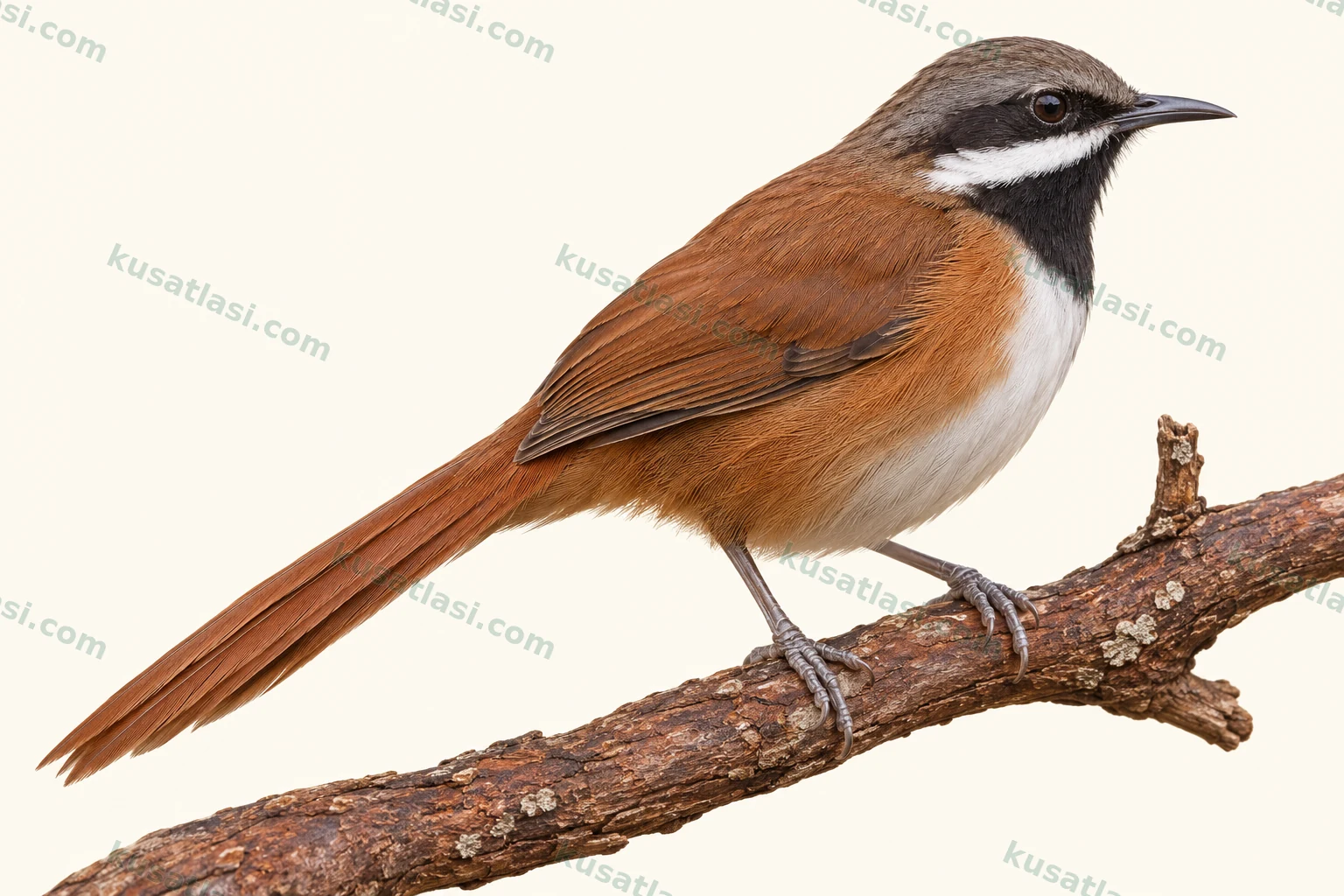
Compare male and female
 FemaleMale
Adult sexes are similar; regional paleness is not a sex difference. Detailed juvenile plumage was not verified.
Where to look in its natural range?
Thorny dry scrub, cactus cover and dry forest edges.
Resident. Northern Colombian March–August breeding records; months differ elsewhere. Resident pairs may defend areas outside breeding.
January
Data unavailable
February
Data unavailable
March
Northern Colombia: beginning of the expert guide’s March–August breeding records.
April
Data unavailable
May
Data unavailable
June
Data unavailable
July
Data unavailable
August
Data unavailable
September
Data unavailable
October
Data unavailable
November
Data unavailable
December
Venezuela: egg and young records in the expert account; regional information.
Nest, egg and incubation
Bulky thorn-stick nest with side tube entrance; three or four eggs. Incubation and nestling duration not verified.
Strong short nasal accented syllables; final note count may vary.
Do not play recordings to attract birds; observe quietly, especially near nests.
Species information
Quick identification
The White-whiskered Spinetail Synallaxis candei is a small long-tailed bird of arid northern Colombia and Venezuela. Rufous body, greyish crown, black face and throat, and a broad white moustache form its distinctive combination. The Turkish name must not suggest an entirely white throat: the pale mark is the moustache below the dark face; much of the throat is black. The pale belly centre contrasts with rufous breast and flanks.
In dry scrub, the long tail and rufous wings may appear first. Neither suffices alone. Check grey crown, dark face, white moustache and black throat when the bird naturally turns its head.
General appearance and posture
The dark face makes the pale moustache prominent. The local Colombian guide describes the moustache stripes meeting around the chin while the lower throat remains black. A rufous stripe lies behind the eye. Grey-brown crown and bright rufous back create distinct head and body colours. Breast and flanks are cinnamon, belly centre whitish or very pale.
The long tail has rufous and dark sections, with darkening towards the tip described in Colombia. Seeing only the base does not establish a uniformly coloured tail. It may partly cock and move the tail up and down while feeding. This accompanies its ground and low-vegetation posture. An upright tail among thin twigs may be seen before the body.
Eyes are dark brown and the bill mostly dark. Fine bill-colour details in the species account are not reliable distant keys. The complete head pattern is more useful than one tiny pale bill spot.
Males, females and young birds
Adult sexes look alike. The white moustache and rufous back are not male-only marks. Colour tone alone does not reliably sex a foraging pair. Regional variation must not become sex variation; photos from different areas can create an artificial male–female distinction.
The venezuelensis population can have greyer moustache, browner back and more olive flanks. Dullness does not automatically make a bird young or female. Current scope also includes candei and atrigularis.
Detailed juvenile appearance across all populations was insufficiently described in the consulted expert accounts. Not every rufous spinetail lacking the adult black face is this species' young. Proximity to a nest alone proves neither age nor species.
Appearance in flight
It usually forages on the ground or in low scrub. A short bush-to-bush flight may show long tail, rufous upperparts and compact body while fine face marks disappear. No single obligatory verified underwing pattern is used for identification.
The long-looking tail helps, but many Synallaxis have long tails. Tail and rufous wing together still do not confirm identity without black face and broad pale moustache. Daily dry-lowland bush passages are not evidence of regular north–south migration.
Voice and behaviour
It can be very vocal. Cornell describes a strong song with rising accented notes following the first syllable; the final note count varies. A French expert account describes short nasal triplets and nasal calls.
It occurs alone, in pairs or small noisy groups. The Colombian guide reports pairs defending local areas outside breeding, with both sexes participating. It hops on the ground, checks vegetation slowly and moves its tail while foraging.
Similar species
Pale-breasted Spinetail Synallaxis albescens has pale grey-brown body, rufous crown and wings. It lacks the combination of grey crown, black face and broad white moustache here. Cornell describes albescens song as repeated harsh sneeze-like sounds.
Other rufous Synallaxis can share back or wing colours. Here check how the pale moustache sits between black face and throat. Grey crown and pale belly centre complete that assessment.
Global range
It occurs in northern Colombia's Caribbean region and arid northwestern Venezuela. Current candei covers the dry coastal belt of northern Colombia and western Venezuela, atrigularis Colombia's Magdalena Valley, and venezuelensis Guajira and dry northwestern Venezuela. It is not a general humid-forest bird throughout both countries.
Status within its natural range
The list snapshot gives Least Concern. Local frequency in suitable dry scrub does not mean equal density everywhere. The Cartagena guide associates it with dry cover, thorn forest, cactus vegetation and mangrove edges. Near-mangrove presence does not prove use of every dense humid mangrove interior. Local gaps between arid vegetation affect distribution.
Movements and migration
It is resident with no verified regular long-distance seasonal route. Pair defence outside breeding can indicate use of the same surroundings through the year. Northern Colombian March–August breeding records and different Venezuelan months are not merged into a placeless calendar. Seasonal quietness does not prove migration to another country.
Breeding habitat
It lives in low cover of dry deciduous forest, thorn scrub and cacti. Regrown grassy-scrubby clearings, scrub patches on saline flats and some mangrove edges are also used. Dry scrub and forest boundaries matter more than dense humid interiors. The expert account gives sea-level to about 1,100 m records, not equal density everywhere.
Nest site
The nest is bulky, made of dry thorny sticks. An egg chamber and a side tube entrance are separate parts; added sticks and bark can disguise the shape. The lower interior is lined with green leaves. The Colombian guide reports three or four turquoise-blue to pale-green eggs. Incubation and nestling durations were not verified here.
Daily habitat use
Pairs search ground and low branches and may ascend scrub tops. Both adults reportedly defend local areas outside breeding. Do not open scrub to inspect the thorny nest exterior or passage; observe natural movements and feeding from a distance.
What does it eat?
Mainly small arthropods, especially insects. The accounts provide no detailed prey-species or quantity table, so the diet is not reduced to one insect group. The expert Cartagena guide describes insects taken while hopping on the ground. Dry scrub does not mean seed-only feeding; slender-billed searching is assessed with verified insect consumption.
How does it forage?
It collects food from ground, bush bases and tangled low branches. The French account also describes branch foraging up to about three metres above ground. It hops slowly with partly cocked tail, checks its surroundings and may feed in pairs. Do not search only bare soil: a calling bird returning from a bush top to low cover may simply resume feeding.
A white-throat name must not hide the black throat
The broad moustache is the diagnostic pale mark; face and throat are dark. English White-whiskered describes it directly. Two pale moustaches meeting around the chin do not make the whole throat white. Finding the pattern in the correct place is more useful than a single colour suggested by a local name.
The nest is more than a stick pile
Its bulky exterior encloses an egg chamber with a tube entrance. Thorny sticks and bark can hide the chamber's form, unlike an open cup. The Colombian guide also describes green-leaf lining at the bottom and both adults joining protection. Even a visible structure requires behaviour to establish active use.
A pair may defend space outside breeding
The local guide reports pair territoriality outside breeding. Two calling birds or defence do not necessarily mean eggs then. A resident pair's feeding area and an active nest are separate observations. Vocal birds need not be sought only during breeding months.
Region changes colours
Venezuelensis can have greyer moustache, brown back and olive flanks, unlike the brighter rufous Colombian appearance. This is not a sex difference. A photo without locality is harder to interpret. Recording geographic variation is part of correct identification.
Dry scrub is not always desert
Cartagena habitats include deciduous forest, scrub-regrown fields and mangrove boundaries, not only cactus plains. Their shared dry low-cover structure explains where to search in otherwise different-looking places.