

World Birds IUCN statusLC · Least ConcernGlobal IUCN category. BirdLife v10 (2025); taxon matching: AviList 2026 / IOC 15.2; checked: 29.10.2026. The list year is not the species assessment date. Source and method · BirdLife OrderPasseriformesPasserines FamilyThamnophilidaeThamnophilidae
White-flanked Antwren
Myrmotherula axillaris
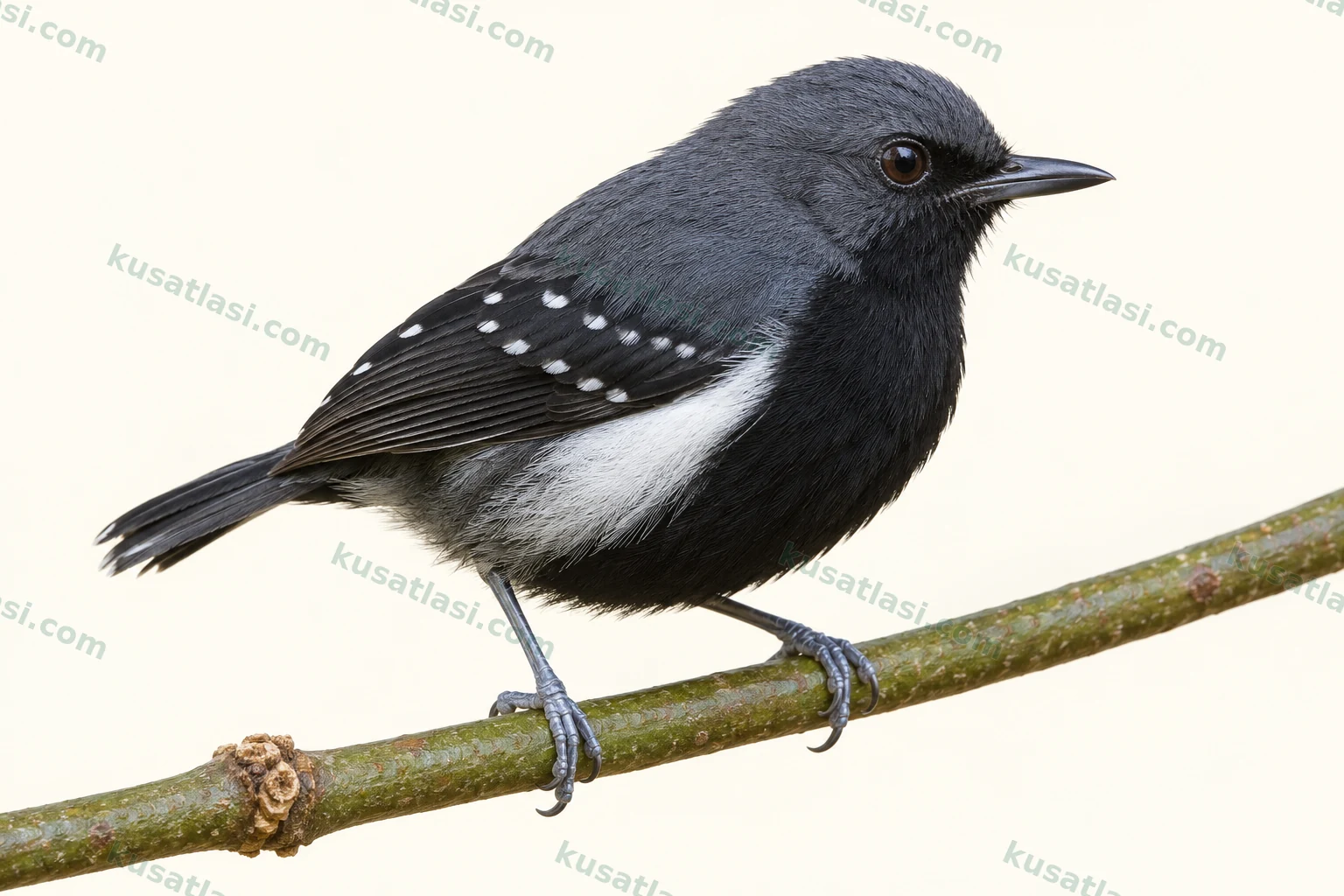
Small, short-tailed forest bird. The dark male shows pale flanks and white wing tips, while the female looks paler brown and grey.
Biometrics
Length
Male9–10 cm
Female9–10 cm
Shared species value
Wing length
Male5.07 cm
Female5.07 cm
Shared species value
Weight
Male5–10.6 g
Female5–10.6 g
Shared species value
White-flanked Antwren
Southern Central America and tropical South AmericaObservation guide in its natural range
Look for three features together
Do not rely on a single featureCheck the pale side feathers beneath the wings on the same individual.
Compare the small pale tips with the body pattern.
Compare male and female
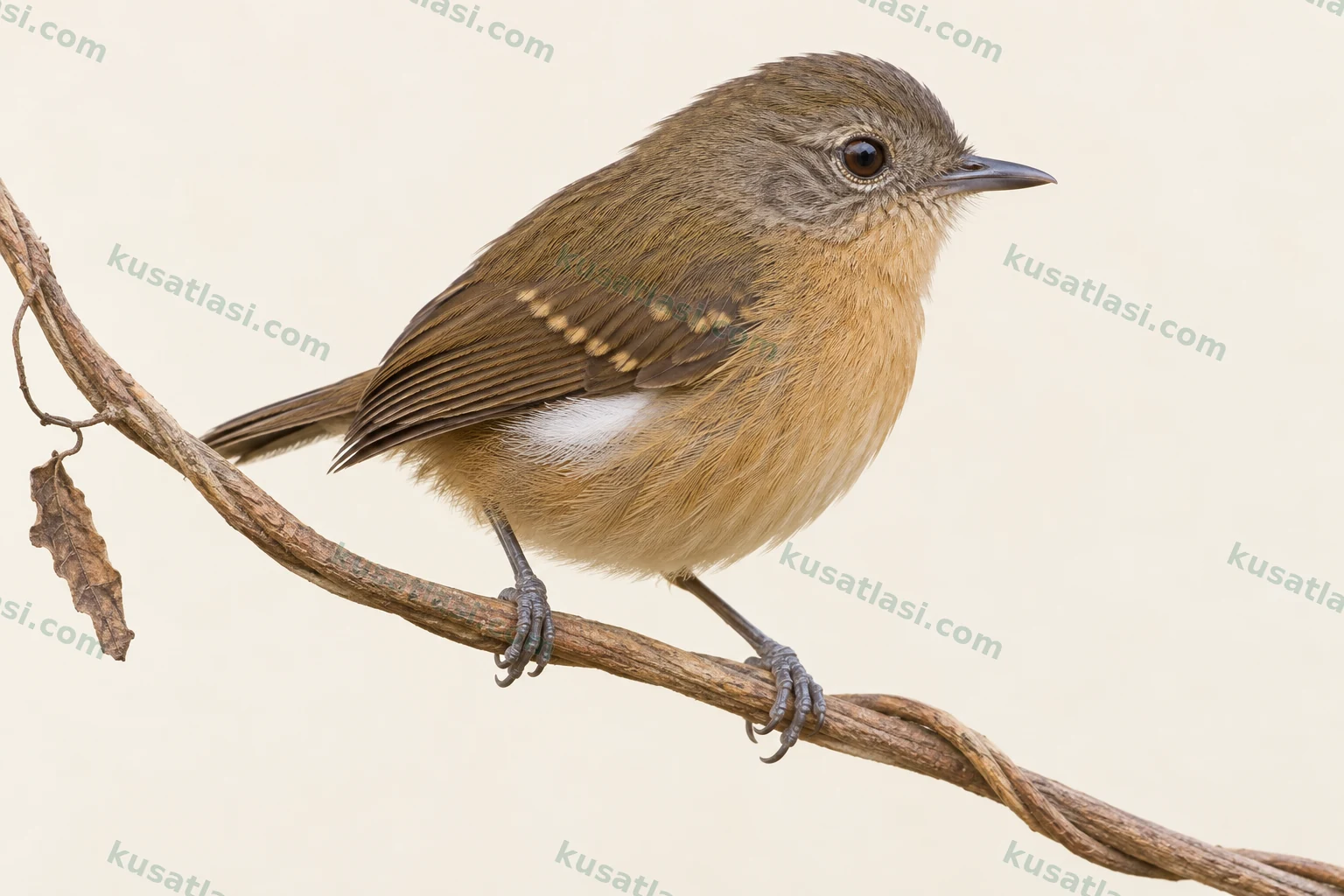 FemaleMale
The male is dark and the female pale grey and brown. Regional colour differences do not provide a key to age or sex.
Where to look in its natural range?
Look in the dense lower and middle levels of humid forest.
Regional populations are resident. Breeding months vary geographically.
January
Resident. Regional breeding calendar. No verified regional date is given for this month. That does not imply local absence.
February
Resident. Regional breeding calendar. No verified regional date is given for this month. That does not imply local absence.
March
Resident. Regional breeding calendar. Regional breeding season in Costa Rica.
April
Resident. Regional breeding calendar. Regional breeding season in Costa Rica.
May
Resident. Regional breeding calendar. Regional breeding season in Costa Rica.
June
Resident. Regional breeding calendar. Regional breeding season in Costa Rica.
July
Resident. Regional breeding calendar. Regional breeding season in Costa Rica.
August
Resident. Regional breeding calendar. No verified regional date is given for this month. That does not imply local absence.
September
Resident. Regional breeding calendar. No verified regional date is given for this month. That does not imply local absence.
October
Resident. Regional breeding calendar. No verified regional date is given for this month. That does not imply local absence.
November
Resident. Regional breeding calendar. No verified regional date is given for this month. That does not imply local absence.
December
Resident. Regional breeding calendar. No verified regional date is given for this month. That does not imply local absence.
Nest, egg and incubation
The deep nest cup is made of leaves. The Costa Rican account reports two eggs. A specialist summary gives 16–19 days of incubation and 8–12 days for young in the nest. The 17.5 days in Panama include egg laying.
Sequences of sharp high notes and short calls vary geographically.
Do not play recordings to attract birds; observe quietly, especially near nests.
Species information
Quick identification
The White-flanked Antwren Myrmotherula axillaris is a songbird of tropical American forests. Its small body, short tail and pale flanks showing beneath the wings help identify it. The adult male’s dark grey and black plumage is broken up by small white tips on the wings and pale feathers on the sides. The female has paler grey, olive-brown and light earthy tones. Pale wing tips may be visible without the male's deep black appearance. The position of the white on the flanks is more useful than the amount of white alone.
Pale side feathers can appear briefly as the bird moves among vines and then disappear beneath the wing. A photograph without visible white does not rule out the species. Look at the head, wing, tail and flank on the same individual. Geographic populations in the current broad species are not identical. The flanks can look greyer in the luctuosa population of Atlantic Brazil. The common name does not require the same colour in every bird.
General appearance and posture
The bird has a rounded body and short tail. The slender bill curves slightly at the tip. When a dark male spreads its flank feathers, its body can look wider than when the feathers are folded. These views do not indicate separate species or measurements. A branch across the body can also distort the apparent tail length. First trace the whole outline, then note the position of pale marks.
Look among leaf clusters in the lower and middle forest levels. Remaining still on a branch and then moving repeatedly over short distances can be parts of the same foraging sequence. Do not look only on the ground. The bird may appear in an active flock of small forest birds. Follow the individual without assuming that all flock members behave alike.
Males, females and young birds
An adult male's pale flank contrasts with its dark underparts. White tips on the wing and tail are additional marks. The female looks browner and greyer, with pale wing tips that can be buff rather than white. The throat can be pale and the rest of the body warmer. Geographic colour variation means that a female described in one region does not establish a fixed pattern across the range.
Young birds described in Costa Rica have cinnamon-brown upperparts, with the throat and belly becoming paler as they develop. Males that have not acquired adult plumage can show a mixture of grey and white below instead of fully black underparts. These regional observations do not provide a definitive field key to age or sex in every young bird. Consider moult and image quality. A pale bird is not necessarily an adult female.
The male and female plates compare distinctive adult appearances. A flank behind a leaf, white looking grey in the light or a wing in moult may not match the unobstructed illustrations. Leave sex undetermined when the observation does not establish it. Identifying the species and determining sex are separate decisions.
Appearance in flight
Pale wing tips, a short tail and a dark body are useful together. A white flash during a brief movement between branches is insufficient because other antwrens also have pale wing marks. Check the bird after it perches. Opening the wing can expose the flank, although the direction of movement and branches can hide it.
A single distant silhouette does not provide a reliable identification. Follow where the bird takes off and lands and check the head and body of that individual. Flight alone does not establish adult sex. In shade, the pale underparts of a female can look darker.
Voice and behaviour
Calls and song can vary by population. The specialist account describes sequences of sharp high notes and shorter calls. No fixed syllable count is required throughout the range. Compare an unseen bird's voice with verified recordings from the region. Do not assign every short call in a mixed flock to this species without seeing which bird gave it.
At Cocha Cashu in Peru, the species joined other insectivorous birds in mixed flocks and maintained that association while nesting. Both members of the pair incubated the eggs. The bird away from the nest could join the foraging flock. This describes the pairs followed at that place and time. It does not require the same shift length or space use in every population. Birds feeding together are not all young of this species.
Similar species
Myrmotherula longipennis is a close lookalike that can join the same forest flocks. At Cocha Cashu the two species overlapped considerably in foraging height and surfaces used. Forest level or flock membership alone is therefore insufficient. Compare wing marks, underparts and flank colour directly, and include voice and locality.
Grey antwrens such as Myrmotherula menetriesii may also look small with pale wing marks. A study finding the species foraging higher does not identify every bird on a high branch. Examine the full underparts and wing pattern. Paler females and young birds should not be identified by applying a key written for adult males indiscriminately.
Global range
It lives in forests of southern Central America and tropical South America. In the current broad taxon, populations from Honduras through Panama and in northern South America and the Amazon region are considered together with luctuosa of Atlantic Brazil. Country names do not mean the whole country is habitat. Forest structure, elevation and the identity of the local population affect the likelihood of an encounter.
Status within its natural range
In Costa Rica it is resident in the Caribbean lowlands and is less frequent in drier areas. At Cocha Cashu in Peru it was studied as a member of mixed flocks. The two regions do not establish a common abundance, breeding calendar or daily movement distance for the continent. Some older sources treated luctuosa as separate, so historical data must be matched to current taxonomic scope. Conservation categories under the broad scope and older narrower assessments are not interchangeable.
Movements and migration
Regional sources describe resident forest populations. Regular intercontinental migration was not verified. Joining a foraging flock or moving to a different branch or patch of forest does not demonstrate long-distance seasonal migration. The map shows natural habitat and approximate verified sightings without routes between them. Records from different countries in different months do not show one individual travelling between those countries.
Breeding habitat
Dense lower and middle levels of humid forest are important. The Costa Rican account describes mature forest and adjacent tall, shaded secondary forest. A sighting in young forest does not make every clearing or farm suitable. Leaf clusters for foraging and slender branch junctions that can support a nest meet different needs in the same forest.
Nest site
In Costa Rica the nest is described as a deep cup of dry leaves and leaf skeletons, attached by the rim and containing dark fungal fibres. The regional height range is 0.2–4 m and the typical clutch is two eggs. A general specialist account gives 16–19 days for incubation and 8–12 days in the nest for young. These durations are not fixed for every population. The Panama study's 17.5-day value includes the laying stage and is not a measure of incubation alone.
Daily use of habitat
The bird can join a mixed flock and still return to the nest. In Peru, adults feeding young were seen foraging close to their nest. Do not follow the pair into cover to locate the nest or part leaves to photograph eggs. Leave the natural branches and foliage in place.
What does it eat?
It mainly eats insects and other small arthropods. The study of foraging flocks at Cocha Cashu counted it among the insectivorous members. The name antwren does not mean it eats only ants. Prey composition and proportions can vary geographically. A single sighting of prey does not establish a percentage of the diet. Distinguish food carried to young birds from food eaten by adults.
How does it forage?
It searches leaf surfaces, leaf clusters and vines for small prey. Cornell's account highlights accumulations of dead leaves and tangled branches. Membership in a mixed flock does not mean all species take the same prey from the same surfaces. When the bill disappears behind a branch, do not infer prey identity. Record food visible before swallowing and the surface being searched. Foraging near the nest is not a reason to approach more closely.
The flock association continues during breeding
Pairs followed at Cocha Cashu stayed associated with mixed flocks while nesting. This shows how foraging and care of young can fit together. The adult not attending the nest can forage with the flock, and the pair may stay closer to the nest during the nestling stage. Seeing the bird away from the nest does not show abandonment. These are direct observations of particular pairs.
Leaving the nest is different from independence
In Peru, two young birds left a nest on 3 October 1976, fed among vines for a time and then joined a mixed flock. They looked like adults in November but remained associated with their family. Strong flight or an adult-like appearance does not by itself establish independence. Several similar individuals in one flock do not prove that it includes more than one breeding pair.
Where a day count begins matters
Nests of this species were among those monitored with temperature loggers in Panama's Soberanía forest. The reported 17.5 days include days of egg laying. This is a different measure from the time between the start of regular incubation and hatching. When comparing breeding durations, check which stage the count covers. Similar labels can use different starting points.
Taxonomic scope and the white flank
The luctuosa population included in the current broad species has greyer sides, a visible difference between the name and the bird. Differences in voice and colour can be geographic variation that merits study. An old record under a separate name is not transferred to other populations without explaining the current scope. Interpret map records by the taxonomic concept used as well as the name.