

World Birds IUCN statusLC · Least ConcernGlobal IUCN. BirdLife v10 (2025); taxon matching AviList 2026 / IOC 15.2; checked: 29.10.2026. The list year is not the species’ assessment date. Source and method · BirdLife OrderPasseriformesPerching birds FamilyThamnophilidaeThamnophilidae
White-streaked Antvireo
Dysithamnus leucostictus
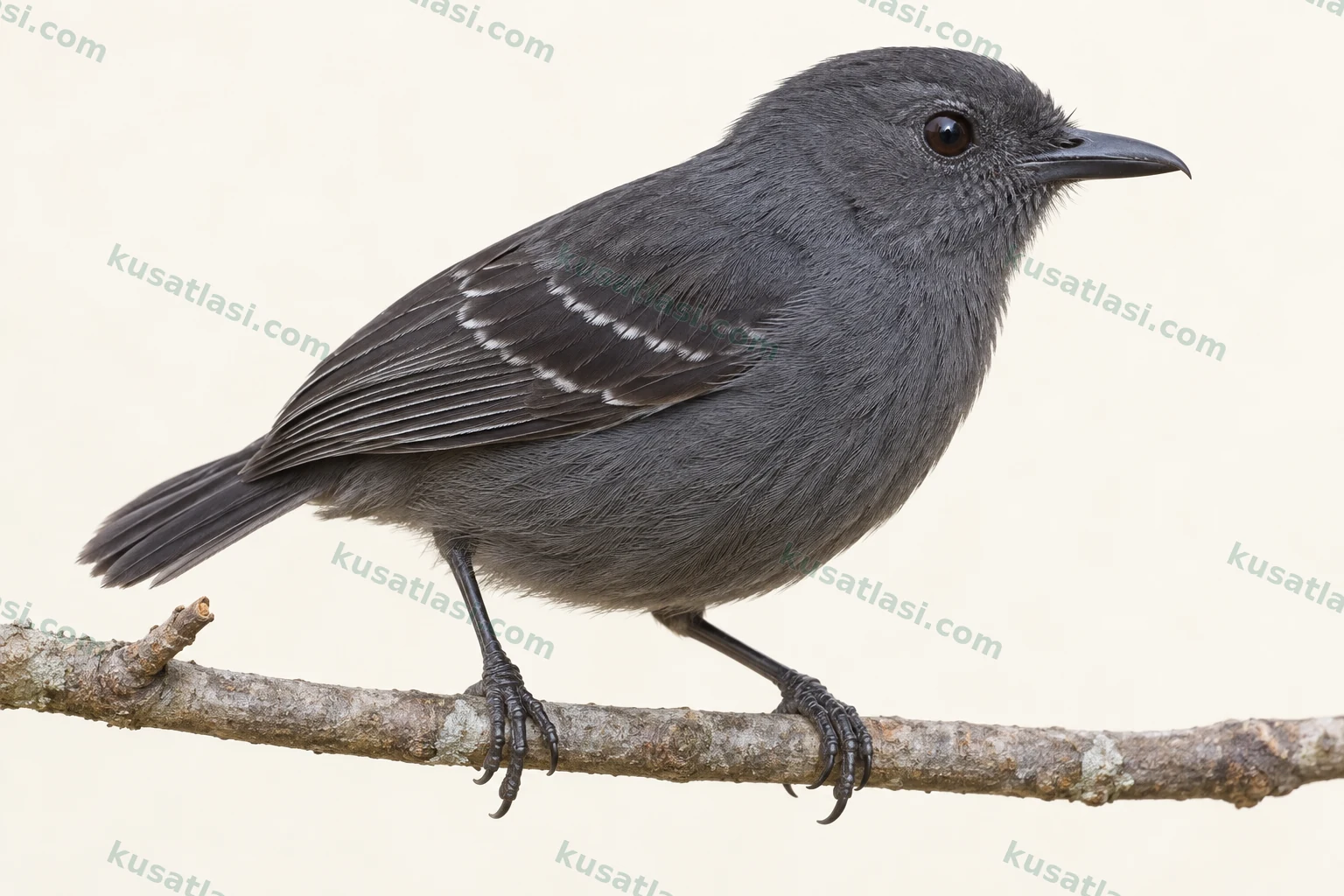
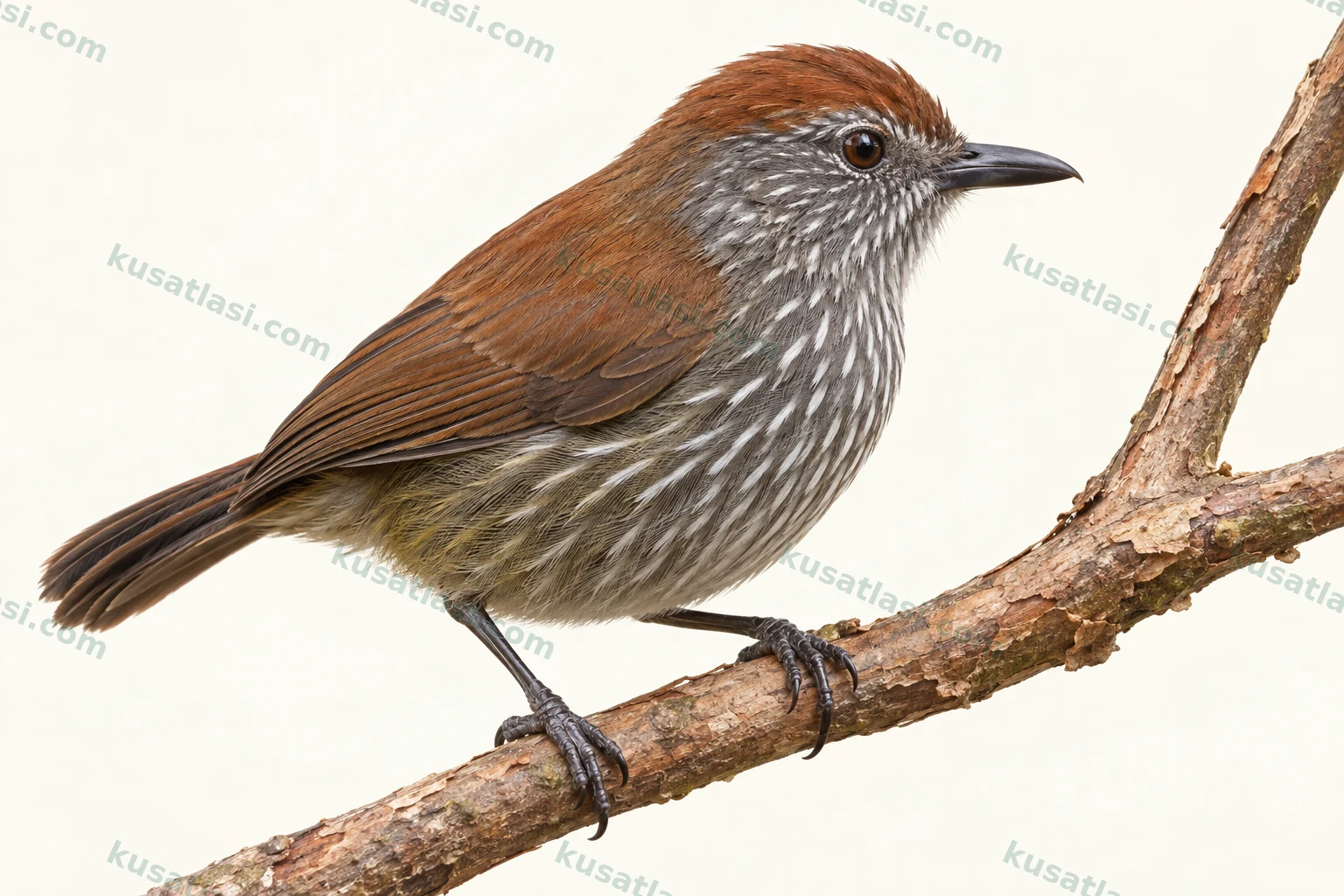
A short-tailed mountain-forest bird; the dark grey male has white feather tips on the wing, the female reddish-brown upperparts and white-streaked grey underparts.
Biometrics
Length
Male12–13 cm
Female12–13 cm
Shared species value
Wing length
Male6.93 cm
Female6.93 cm
Shared species value
Weight
Male20–20.2 g
Female20–20.2 g
Shared species value
White-streaked Antvireo
Northern Andes and northern Venezuelan mountainsObservation guide in its natural range
Look for three features together
Do not rely on a single featureWatch the dark breast and wing markings together.
It may be female or a young male; check streaks and age details.
Compare male and female
 FemaleMale
The adult female has reddish-brown upperparts and streaked grey underparts; a young male can look female-like.
Where to look in its natural range?
Dense undergrowth in moist mountain forest.
Resident; an August nest record has been reported. August–December is a suggested possible period, not a definite calendar for the entire range.
All months: Breeding months were not assigned to every population. No verified regional date specific to this month was given; this does not imply local absence.
January
February
March
April
May
June
July
August
September
October
November
December
Nest, egg and incubation
An August nest record is reported. Usual nest structure, clutch size, incubation and nestling development were not verified from reliable primary species data.
Individually distinguishable whistled notes descending in pitch; regional voice differences are assessed in context.
Do not play recordings to attract birds; observe quietly, especially near nests.
Species information
Quick Identification
The White-streaked Antvireo Dysithamnus leucostictus is a small, short-tailed antbird of moist mountain-forest undergrowth. The adult male is dark grey, blacker on the breast, with conspicuous white tips and edges to the small feathers of the folded wing. The female is reddish brown above and grey below with white streaks. The same streaking is not expected to continue onto the lower belly.
Do not assess a male only by its dark head or a female only by her brown back. Breast, white wing markings and tail proportions must be seen together. Forest shade can make grey look almost black, while shafts of light exaggerate the white tips. If a leaf hides the breast, do not assume unseen streaks are present.
General Appearance and Posture
The short tail helps assess body proportions in dense vegetation. A tail behind a branch may look shorter than it is. If head and body are seen at separate moments, follow the movement to confirm they belong to one individual. Do not accidentally add a nearby antbird's wing mark to this bird.
Natural gaps in the forest undergrowth can provide views. There is no need to move leaves, enter shrubs or surround the corner where a bird hides. Noting breast and folded-wing patterns during a brief good view gives a more useful record than prolonged pursuit that disturbs it.
Males, Females and Young Birds
Adults differ in colour: a dark grey male and a female with reddish-brown upperparts and streaked underparts. Young males, however, may resemble females. A 2005 publication from Ecuador specifically described a collected young male White-streaked Antvireo as female-like. This record shows why not every brown bird can definitely be called female.
When assessing a young bird, do not expect all adult male characters in the same way. Deciding age and sex may require more detail than identifying the species. If feather development is unclear, recording sex as undetermined does not prevent a correct species record.
The northern Venezuelan tucuyensis and Andean leucostictus forms are included within one species in the current list. Vocal samples from a study of one population are not a fixed numerical key for the other. Geography can narrow an explanation, but does not replace unseen plumage or unheard sounds.
Appearance in Flight
A brief passage through dense undergrowth may reveal only a dark or brown silhouette. Small wing markings becoming invisible is not unexpected. When the bird naturally perches again, compare breast, wing and tail proportions. A shaded passage alone does not permit detailed age or sex determination.
The arrangement of white tips on the folded wing may look different when the wing opens. A change of angle is not a change of plumage pattern. If a bird vanishes into vegetation, the next individual passing is not necessarily the first one.
Voice and Behaviour
The song is described as a series of individually distinguishable whistled notes descending in pitch. A 2008 vocal study compared Andean and Venezuelan populations with Dysithamnus plumbeus in southeastern Brazil. Hearing only part of a song does not resolve the distinction completely; assess the sequence and calling context together.
It may forage alone or in pairs and is sometimes reported in mixed bird groups. Two birds in one shrub are not confirmed as a mated pair without direct behaviour. A point from which a voice comes is not necessarily a nest with eggs. Do not repeatedly use playback to demand responses while listening to the bird's natural voice.
Similar Species
Male Dysithamnus mentalis can look similarly dark grey. Assess the White-streaked Antvireo's more uniformly dark upperparts and underparts, wing markings and body proportions together. Comparing nearby birds at different distances does not produce a reliable size measurement.
Male Myrmotherula schisticolor is also small and grey. Grey alone does not distinguish them: folded-wing pattern, tail and breast must actually be seen. Age also matters in comparison with Dysithamnus occidentalis recorded at the same Ecuadorian site. Measurements and plumage of that publication's young specimen of the latter species are not transferred to this species' cards.
World Distribution
The main populations occur on the eastern Andean slopes from Colombia through Ecuador to northern Peru, and in northern Venezuela's mountains. The specialist account also includes separate records from Suriname. This patchy geography does not mean all northern South America is continuously occupied by the same species. Actual mountain forests are distinct from a country's entire area. A valley record does not prove equal density in every neighbouring valley.
Status within Its Natural Range
It is Least Concern; this does not mean abundant or easily seen in every forest. Its inclusion among recorded species in the Portachuelo study indicates presence in the forest understorey community. Captured individuals are not the total world population or density throughout Venezuela. Preserve the sampling place and method of local data.
Migration
It is not classified as migratory. A mountain-pass record alone does not prove long-distance migration; resident and migrant species may use the same pass. New locality records from Ecuador's Cóndor region contribute to understanding the known range. Their dates are not combined into migration start and end dates; verified mapped points are not presented as a tracked journey.
Breeding Habitat
Dense undergrowth in moist mountain forest is the main environment. Local elevation limits differ; Andean and Venezuelan data are not reduced to one definite number for every population. A leafy, densely vegetated place looking suitable does not prove breeding there.
Nest Site
The specialist account mentions a published August nest record and describes August–December as a possible breeding period. This possibility is not a definite monthly calendar for the whole range. Usual nest structure, clutch size, incubation and nestling development were not verified from reliable primary species records. Nest information from other Dysithamnus species has not been substituted.
Daily Use of Space
Most foraging observations involve dense vegetation near the ground. A bird watched from an opening entering shrubs does not require the observer to follow into the plants. Track movement before counting repeated appearances in the same small area as different individuals.
What Does It Eat?
It is classified as an invertebrate feeder. The specialist account explicitly notes limited detailed food information and gives some insect groups as possibilities. No definite prey list or dietary percentages are therefore prepared. When prey is actually visible in the bill, record only the features that can be distinguished.
How Does It Feed?
It searches in dense understorey plants. Bending towards a leaf does not itself prove which animal was taken. Going behind a branch and swallowing prey are not recorded as the same event. The name antvireo does not mean eating only ants or always following ant swarms. Do not invent that obligatory link where local records do not show it. Leaving food and shaking plants alter natural searching behaviour; observe from a suitable distance.
Voice Is a Real Subject of Taxonomic Research
Isler and colleagues' 2008 review compared similar-looking populations through vocal measurements. Differences between Brazilian plumbeus and northern populations supported species separation. Those between Andean and Venezuelan birds did not provide a definite split under the threshold used. The study called for more recordings with known contexts.
A Young Male Can Resemble a Female
The publication about Cóndor specimens reports female-like plumage in a young male White-streaked Antvireo. This shows that two adult colour schemes do not explain all young birds. Nor does one juvenile specimen establish a continuous development calendar for every age stage.
A Mountain-Pass Record Does Not Prove Migration
The Portachuelo community study examined both resident and migratory birds. Inclusion in its list does not automatically make a species migratory. Netting figures relate to the method and forest layer sampled; they are not assumed to represent birds in every tree layer with equal probability.
Evidence Limits Preserve a Record's Value
It is useful to record a short tail, dark male breast or female white streaks when actually seen. An unseen nest and unheard call are not added to the same record. If species is known but sex remains open, do not fill the gap with a guess. This matters especially for forest birds glimpsed behind leaves; clearly seen marks and uncertain details remain separate. A juvenile publication treating two species at one site illustrates this too: preserve which bird each paragraph and specimen number concerns.