

World Birds IUCN statusLC · Least ConcernGlobal IUCN category. BirdLife v10 (2025); taxon matching: AviList 2026 / IOC 15.2; checked: 29.10.2026. The list year is not the species assessment date. Source and method · BirdLife OrderPasseriformesPerching birds FamilyThamnophilidaeThamnophilidae
White-throated Antbird
Oneillornis salvini
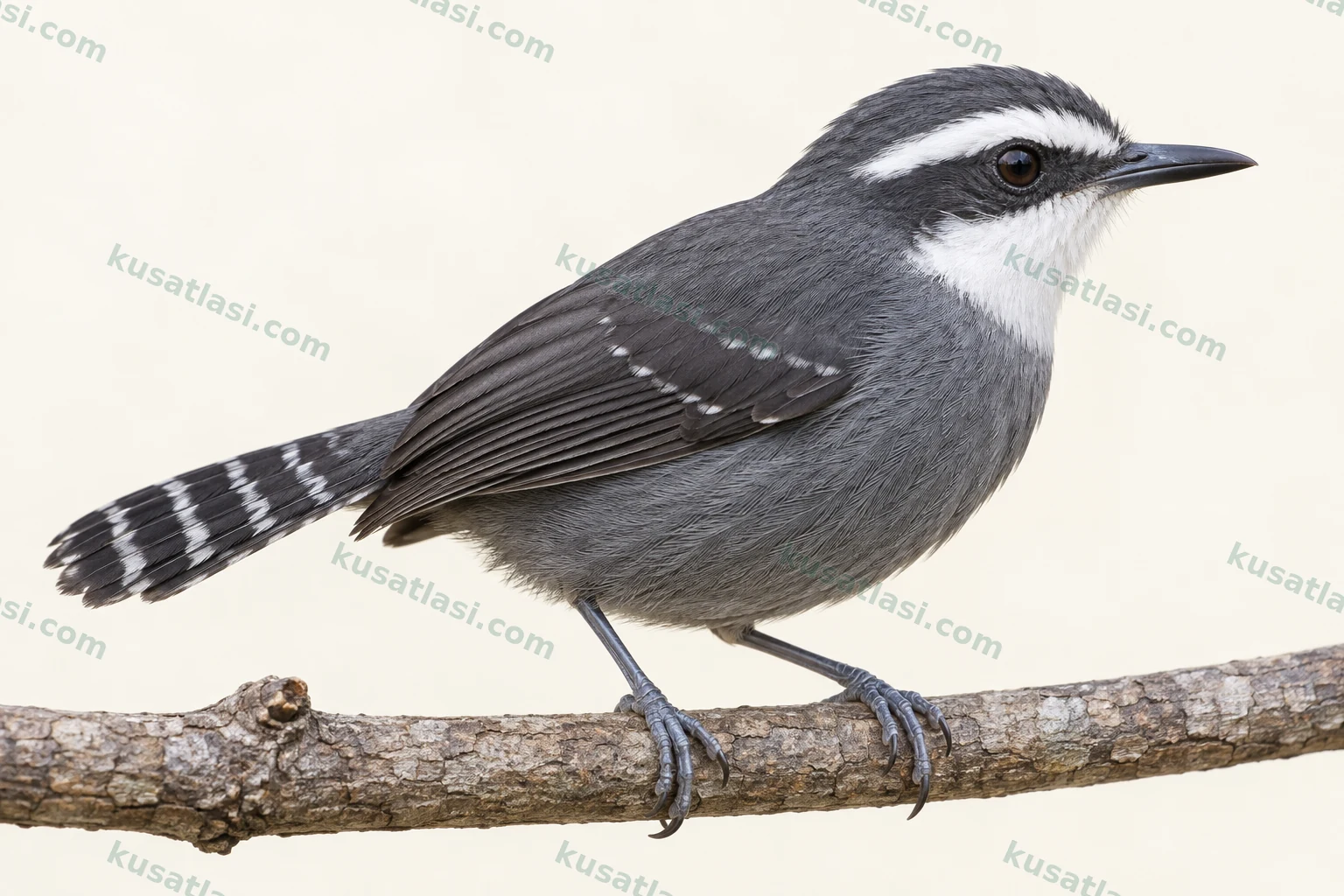
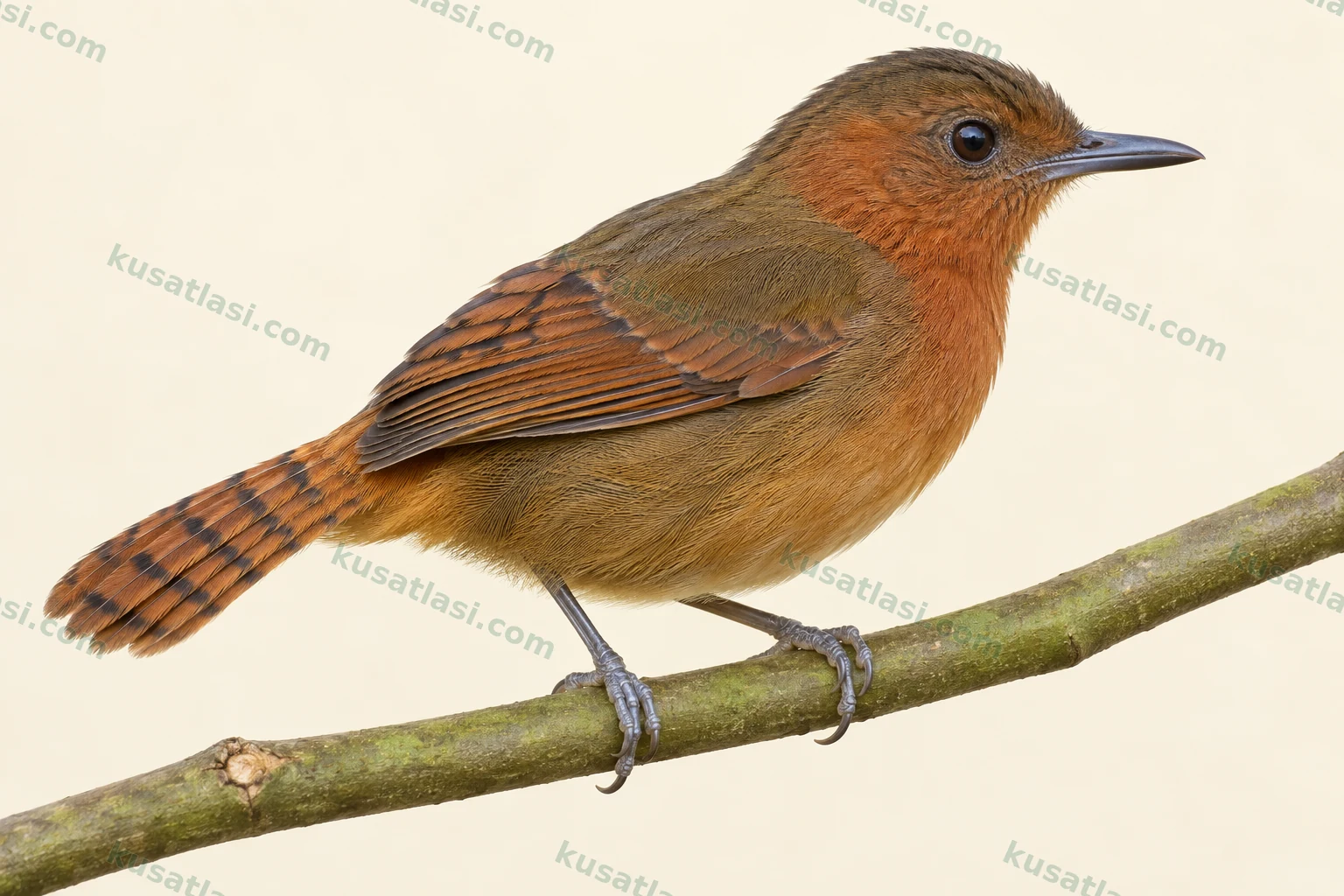
An Amazonian antbird. The adult male is grey with a white throat and pale tail bars. The female is reddish brown with dark tail bars.
Biometrics
Length
Male13–14 cm
Female13–14 cm
Shared species value
Wing length
Male7.07 cm
Female7.07 cm
Shared species value
Weight
Male25 g
FemaleData unavailable
White-throated Antbird
Amazonian forests in eastern Peru, Bolivia and southwestern BrazilObservation guide in its natural range
Look for three features together
Do not rely on a single featureLook for a white throat and broad eyebrow together with the grey body.
Look for a reddish-brown body and dark tail bars.
This understory bird follows prey fleeing army ants.
Compare male and female
 FemaleMale
The adult male is grey with a white throat, and the adult female is reddish brown. A brown bird is not automatically a young male.
Where to look in its natural range?
Watch shaded understory and the surroundings of army ant raids from a distance.
A resident forest bird whose feeding sites may change as army ants move.
All months: The species is resident and can be looked for in suitable Amazonian forest throughout the year. No shared breeding months have been verified. No verified regional date is given for this month. That does not imply local absence.
January
February
March
April
May
June
July
August
September
October
November
December
Nest, egg and incubation
There is a scientific nest record for the species. This review could not adequately verify nest structure, typical clutch size, incubation duration or development times.
The species’ detailed call and song sequence has not been adequately verified. Do not confuse the sounds of different birds following the same ant raid.
Do not play recordings to attract birds; observe quietly, especially near nests.
Species information
Quick identification
The White-throated Antbird Oneillornis salvini is a small antbird of the understory in western Amazonian forests. The adult male has a grey body. Its white throat and broad pale eyebrow contrast with the dark head. The pale bars across the tail are an important clue. The female is more than a paler version of the male. Her overall colour is reddish brown and her tail has dark bars. Learning both adult patterns helps avoid mistaking a male and female in the same area for two species.
Look on shaded lower branches and near prey on the ground. Several kinds of birds may feed where a raid of army ants is advancing. The bird’s name does not mean that it feeds only on ants. It catches insects and other small invertebrates fleeing the advancing ants. Distinguish movement on the forest floor from the prey the bird actually catches. A small bird beside an ant trail is not necessarily a White-throated Antbird.
General appearance and posture
The male’s crown, back and body are shades of grey. The folded wing may look darker. The white eyebrow, lower face and throat are distinct parts of the head pattern. A white throat does not mean that the entire underside is white. The pale bars across the grey tail can be visible at close range from a good angle even when the tail is not fully spread. From behind, the white throat is out of sight, so the back colour alone makes identification difficult.
Consider the female’s reddish face, throat and body tones together with the dark marks on her back and tail. Forest light can make brown look warmer or cooler, while tail barring is a more reliable clue. A momentary forward lean or a move to a lower branch can alter the apparent proportions of the head. Watch several successive postures to see the true boundaries of the colour patches. A glimpse of part of the chest behind a branch is not enough to establish throat colour.
Males, females and young birds
Adult males and females differ especially in the grey or reddish-brown body and the basic colours of the tail bars. Check how the head, body and tail look together on one bird rather than using a single flash of colour on the throat. The male’s white throat gives the species its name. The female’s throat does not have the same whiteness, so the lack of a white throat does not by itself rule out a female of this species.
This review could not verify at what ages young birds acquire the adult male or female plumage during moult. An adult female should not be called a young male simply because she is brown. If there is no reliable age mark, leave the age open. Two adults hunting together do not prove that there is a nest nearby or that the birds are a pair. Prey flushed by an ant raid can bring different individuals of the same species together.
Appearance in flight
A short flight through the understory may reveal the small body, darker wing and short tail. The tail bars can disappear in poor light. Failure to see them in flight does not mean they are absent. Once the bird lands, check the male’s white throat and eyebrow or the female’s reddish-brown body again. If only a shadow passed through the leaves, do not draw a firm conclusion about sex.
Movements within the forest to reach food are distinct from long-distance seasonal migration. As army ant raids move, the bird’s feeding sites can change. A scientific review reports an average area used by the White-throated Antbird in a Peruvian study. That local result does not give the distance any bird can fly or the boundaries of the species’ entire range.
Voice and behaviour
Sound and movement help locate a bird in the understory. This review could not verify a detailed call and song sequence from a sufficient original recording or specialist description, so it does not give a definite written imitation. Hearing a sound and linking it to a bird you see are separate steps. When several species follow the same ant raid, it is particularly important to see which bird makes the sound.
Scientific studies explicitly describe the species’ dependence on army ant raids for foraging. Birds beside an ant trail are not necessarily eating the ants. The ants disturb prey hidden on the ground. Different bird species may feed in the same place. One bird moving away from another does not by itself indicate pairing, care of young or territorial defence. Watch from a distance without scattering the ants, cutting lower branches or playing sounds to bring the birds closer.
Similar species
1. Oneillornis lunulatus is a close relative with similar differences between the sexes. The specialist Peruvian account highlights their separation on opposite sides of the Amazon and Ucayali rivers. When you see a similar grey male, check which side of the river you are on and the bird’s whole pattern rather than relying on colour alone. Geography can be a strong clue, but an incorrect location cannot identify a bird.
2. Antbirds of the genus Rhegmatorhina can also follow army ants. A specialist taxonomic account distinguishes the short crests and pale areas around the eyes in this group from the white throat and eyebrow of the male Oneillornis. Feeding in the same place does not erase these structural differences.
3. Some other grey antbirds can show a patch that resembles a white throat. In the White-throated Antbird, consider the head pattern together with the bars across the tail. A grey body, a white throat or ant following alone is insufficient for a firm identification.
Global range
Its natural range extends from eastern Peru to central Bolivia and the southwestern Brazilian Amazon. The current taxonomic record gives this range for the same scientific name. The Amazon basin covers a very large area, and the species does not occur equally throughout it. Distinguish the ranges of related species on opposite sides of major rivers. In Peru it occurs in forested lowlands and the eastern foothills of the Andes, among other environments.
Status within its natural range
The specialist Peruvian account describes the bird as widespread but uncommon. The understory of forest that is not permanently flooded is important. It may also use transitional forest and some floodplain forest areas. A national boundary does not make the whole country suitable habitat. Forest floor structure, army ant groups and forest continuity affect where it can feed. Its global Least Concern status does not mean that the population in any local forest patch is stable.
Movements and migration
It is generally a resident forest bird. These sources do not report regular long-distance seasonal migration. Daily movements to reach mobile army ant raids are distinct from migration. Not seeing a bird along the same trail every day does not prove that it leaves the area seasonally. The limited licensed records shown on the map summarise places where birds were found. Blank areas do not confirm absence. These records do not establish individual routes or range boundaries that change from month to month.
Breeding habitat
The shaded understory of humid Amazonian forest is its natural environment. It uses forest floors that are not permanently inundated and transitional habitats. Prey flushed by ants is important in daily foraging, but the area around a nest is not assumed to be the same size as the entire feeding area. Seeing an adult feeding is not evidence of an active nest.
Nest site
The first nest record for the species was published in Susan K. Willson’s scientific study of 2000. This review could not adequately verify all the original paper’s species-specific nesting details. It therefore gives no definite nest structure, typical clutch size, incubation duration or development times. Values from a close relative or another antbird treated in the same paper should not be transferred to this species. Do not split open rotten logs or remove vegetation to look for nests.
Daily use of habitat
The bird forages on lower branches and close to the forest floor. It can move short distances as it reaches prey ahead of an ant raid. Observe without blocking the bird, stepping on the ant trail or cutting branches. Protecting several feeding sites within the forest covers more of its needs than protecting only the last branch where it was seen.
What does it eat?
It feeds on small invertebrates. A scientific review of ant following includes it among specialists that feed on prey flushed by army ant raids. The food consists of insects and similar small animals fleeing the ant trail. The word ant in the bird’s name does not mean that it eats only ants. This review could not verify detailed annual prey proportions and does not give a fixed percentage for any particular group of insects.
How does it hunt?
Near the forest floor, the bird watches escaping prey and catches it in short dashes. The ants are separate predators that flush prey hiding in leaf litter. There is no basis for describing this as a deliberate partnership by the birds. As the ant raid advances, the suitable feeding spot can change. A bird’s long absence from one point does not establish that the area is empty. Turning over the ground or driving insects towards the bird changes its natural behaviour. Observe from a distance.
The name is not a list of foods
The name antbird recalls the species’ habit of following army ant raids. The ants disturb small animals hidden on the ground, and the birds catch those animals. A bird beside an ant raid should not immediately be assumed to be eating ants. A scientific review published in 2021 lists the White-throated Antbird among species dependent on this way of feeding. Birds feeding at the same raid need not all depend on it to the same degree.
The old scientific name does not denote a different bird
Older publications may use Gymnopithys salvini. Taxonomic studies evaluating molecular and appearance evidence place this bird and its close relative in Oneillornis. The current AviList also uses Oneillornis salvini. Matching the old name with the current one helps find the relevant sources, but information from other birds with similar names cannot be carried over.
How to read a mean area
The 2021 review gives a mean area used of 27 hectares for the study near Cocha Cashu in Peru. That does not mean every individual stays within an exact 27-hectare boundary or uses the same area throughout the Amazon. A feeding area, the surroundings of a nest and the location of one observation are different things. The same bird may reach several feeding sites. Joining the points does not create a verified migration route.
Learn both adult patterns
The species’ white throat is especially conspicuous in the adult male. A reddish-brown female may not match a single description based on the grey male. Examine the head, body and barred tail together on the same bird. Knowing the difference helps avoid mistaking an adult female for a young male or a different species. When detailed juvenile marks have not been verified, leave age undetermined.