

World Birds IUCN statusLC · Least ConcernGlobal IUCN. BirdLife v10 (2025); taxon matching AviList 2026 / IOC 15.2; checked: 29.10.2026. The list year is not the species’ assessment date. Source and method · BirdLife OrderPasseriformesPasserines FamilyThamnophilidaeThamnophilidae
White-breasted Antbird
Rhegmatorhina hoffmannsi
Crested white-breasted army-ant follower of Brazil’s Amazonian forests.
Biometrics
Length
Male14–15 cm
Female14–15 cm
Shared species value
Wing length
Male7.89 cm
Female7.89 cm
Shared species value
Weight
Male27–34 g
Female27–34 g
Shared species value
White-breasted Antbird
Brazilian Amazon basinObservation guide in its natural range
Look for three features together
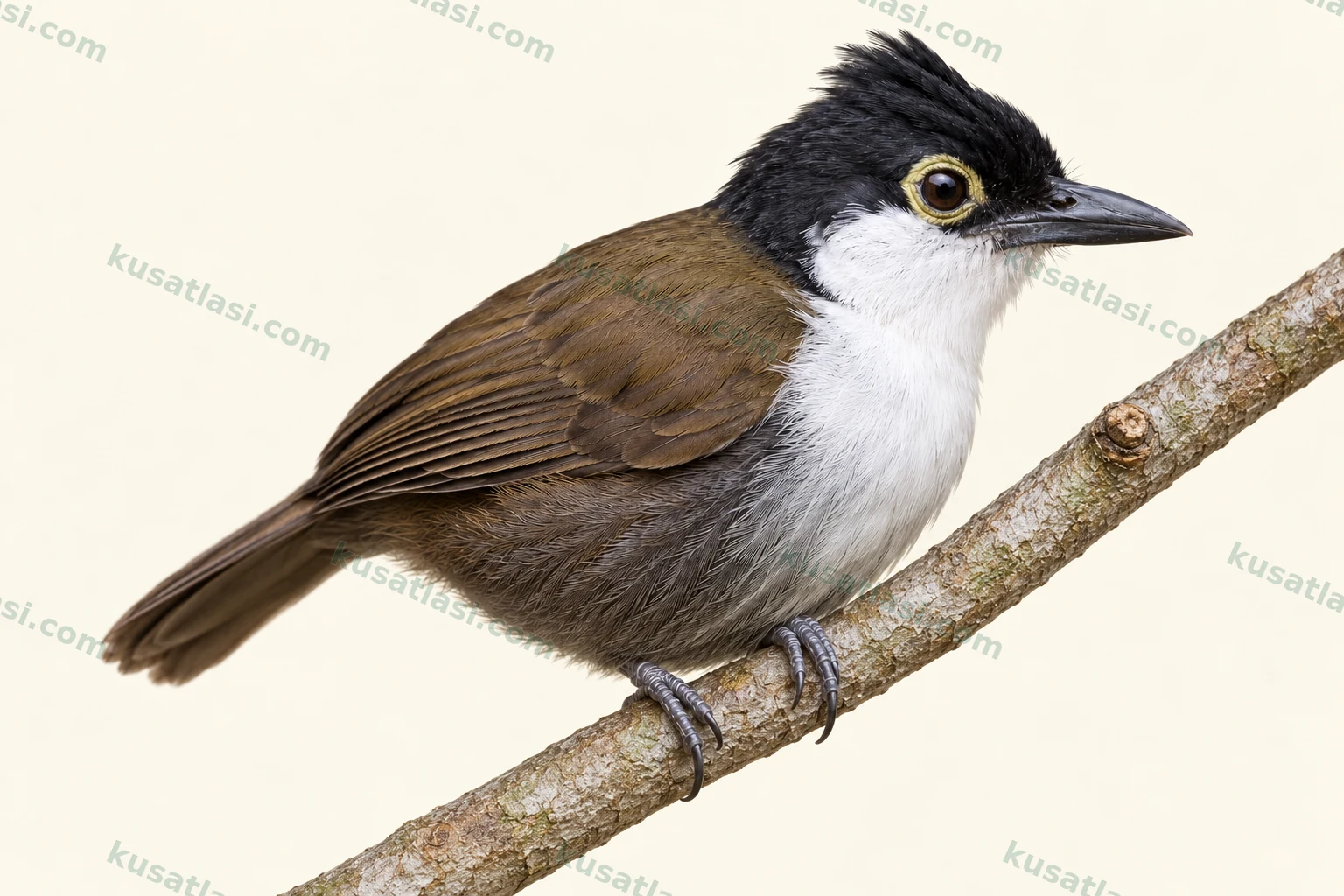
Do not rely on a single featureWhite extends from the lower face to the breast.
Black crest, greenish-brown upperparts.
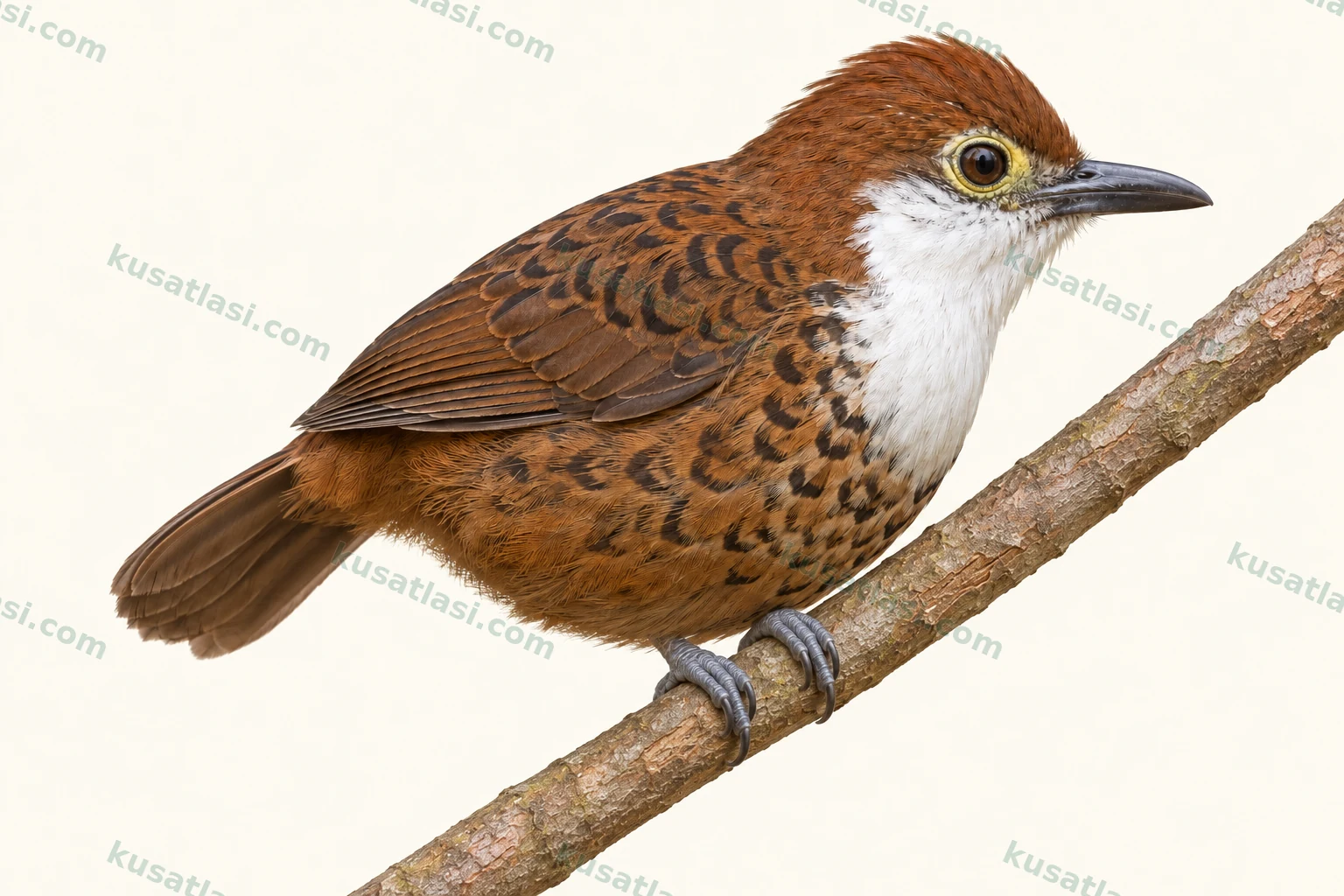
More reddish crest and stronger dark plumage markings.
Compare male and female
 FemaleMale
Adult sexes differ in pattern; intermediate plumages may occur in contact areas.
Where to look in its natural range?
Army-ant swarms in humid forest understorey.
Resident; no verified breeding calendar.
All months: Data unavailable
January
February
March
April
May
June
July
August
September
October
November
December
Nest, egg and incubation
Nest, eggs and developmental periods unverified.
A sharp call in one Amazonas observation; no comprehensive voice key.
Do not play recordings to attract birds; observe quietly, especially near nests.
Species information
Quick identification
The White-breasted Antbird Rhegmatorhina hoffmannsi is a crested, white-breasted ant follower of Brazil's Amazonian forests. The pale face–throat–breast area creates a strong contrast in the black-crested male. White-breasted Antbird is its current English name.
General appearance and posture
The male has a black crest, greenish-brown upperparts and grey over the remaining underparts. Bare skin around the eye is pale greenish; white extends from the lower face to the breast.
Males, females and young birds
The female's crest is a darker reddish colour, with more pronounced black-and-pale streaking or barring in the upper and lower plumage. Edwin Willis's original Brazilian account describes differences between the female and the similar female Harlequin Antbird in terms of the face and white breast. A reliable detailed field key for juveniles was not verified in this research.
Appearance in flight
It makes short sallies after prey in the forest understorey. A dark body seen as a bird moves away is insufficient without seeing the broad white breast. It is encountered around cover and ant swarms rather than as a bird making prolonged flights in the open.
Voice and behaviour
It follows army ants and benefits from prey they flush. Curtis Marantz's recording note from Amazonas, Brazil, dated 22 December 2000 documents a female feeding below half a metre above an Eciton burchelli swarm and giving a sharp call. This single record does not represent year-round feeding height or every vocal function.
Similar species
Harlequin Antbird Rhegmatorhina berlepschi has a black throat and reddish-brown breast. Research in southern Amazonian Brazil examined birds with mixed plumage and genetic admixture in the contact zone between the two species. Intermediate appearances there may not fit a simple colour key; certain identity requires geography and the whole pattern.
World distribution
It is endemic to Brazil. It ranges from central Amazonia to western Mato Grosso; the forest geography between the Madeira and Tapajós rivers is important. Current taxonomy recognizes one subspecies.
Status in its natural range
The global category is Least Concern. Its white breast and the dark breast of its sister species do not alone show genetic separation in some contact areas. Admixture findings from a 2022 study in southern Amazonian Brazil do not mean that every individual throughout the basin is a hybrid.
Migration
The specialist compilation classifies it as resident. Following ant swarms is daily use of feeding space. No regular long-distance migration route was verified.
Breeding habitat
It occurs in the understorey of humid lowland Amazonian forest, generally outside seasonal flooding. It may also be recorded in transitional forests. Opportunities to encounter ant swarms and forest understorey cover both matter in assessing its habitat.
Nest site
Nest structure, verified clutch size, incubation and fledging periods were not found in this research. Nest displays or nest care in related Rhegmatorhina are not transferred as direct breeding records of hoffmannsi.
Daily use of space
It waits on low supports and moves towards fleeing prey. The single documented female observation in Amazonas illustrates this method but does not measure daily area size. Different species and intermediate appearances may occur in the contact zone.
What does it eat?
It eats insects and other arthropods. It catches small animals flushed from cover by ants. Following ants does not mean that ants are its main food.
How does it hunt?
It waits near the ground or in low cover and sallies after escaping prey. The Brazilian Amazon specialist account reports this method. Exact prey taxa and seasonal proportions were not verified.
White breast and genetic boundaries may not coincide
A 2022 scientific study in southern Amazonian Brazil examines the lack of coincidence between the plumage transition and some genetic transitions between hoffmannsi and berlepschi. This shows the risk of naming intermediate-looking birds only by breast tone; it does not say that genetic admixture is the same in every individual.
A local feeding record
In the 2000 recording note from Amazonas, Brazil, a well-seen female fed very low above an army-ant swarm. The record is one example of behaviour, not a definite nest site, breeding date or the species' entire vocal repertoire.