

World Birds IUCN statusLC · Least ConcernGlobal IUCN category. BirdLife v10 (2025); taxon matching: AviList 2026 / IOC 15.2; checked: 29.10.2026. The list year is not the species assessment date. Source and method · BirdLife OrderPasseriformesPasserines FamilyTyrannidaeTyrannidae
White-throated Tyrannulet
Mecocerculus leucophrys
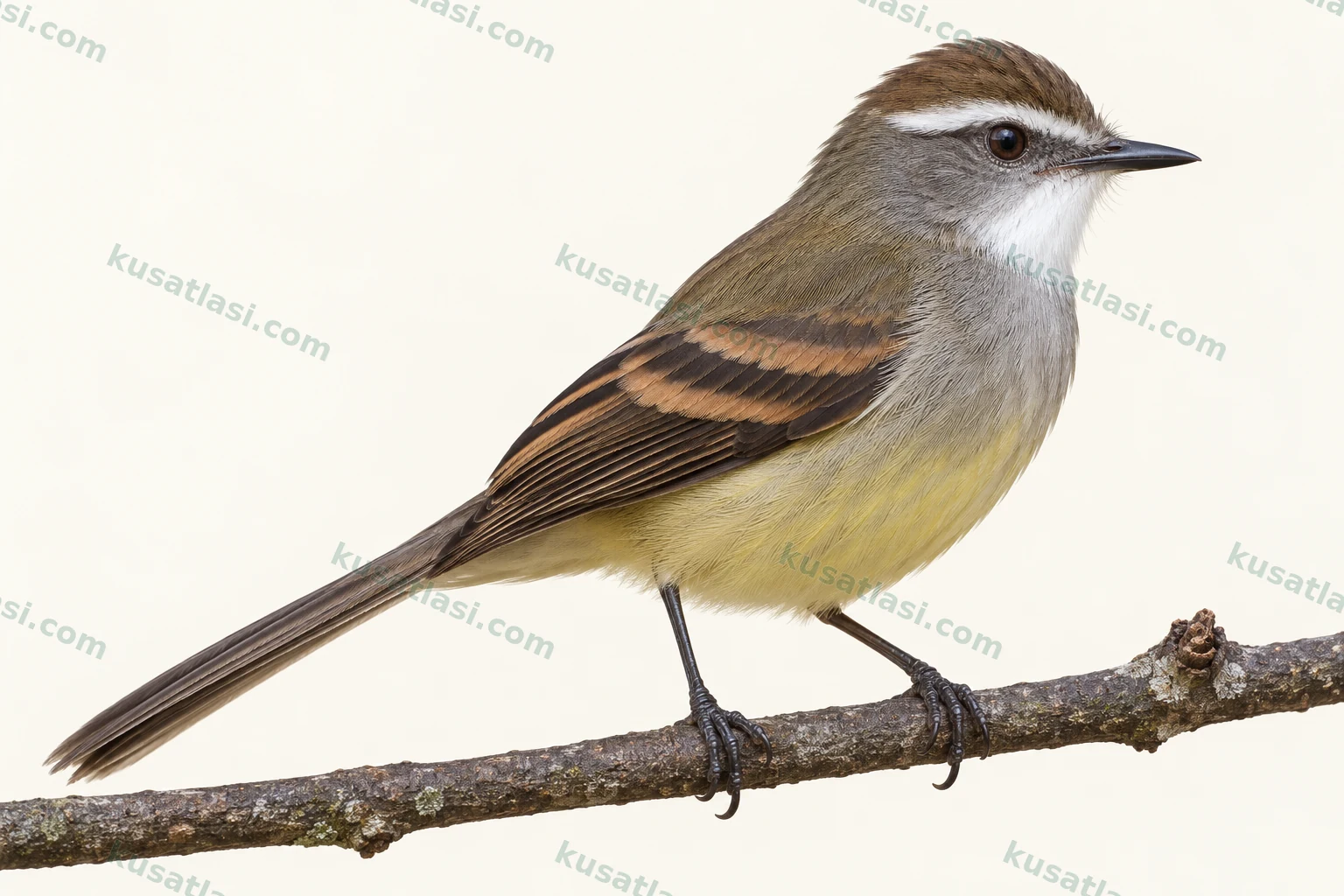
A prominent white throat, pale eyebrow, two wing bars and an upright posture with a long tail.
Biometrics
Length
Male11–14 cm
Female11–14 cm
Shared species value
Wing length
Male6.49 cm
Female6.49 cm
Shared species value
Weight
Male11–14 g
Female13.9 g
White-throated Tyrannulet
Mountains of northern South America and the AndesObservation guide in its natural range
Look for three features together
Do not rely on a single featureCompare the white area, which can look slightly puffed out, with the breast.
Look for two bars. Cinnamon or white may reflect regional variation.
Compare male and female
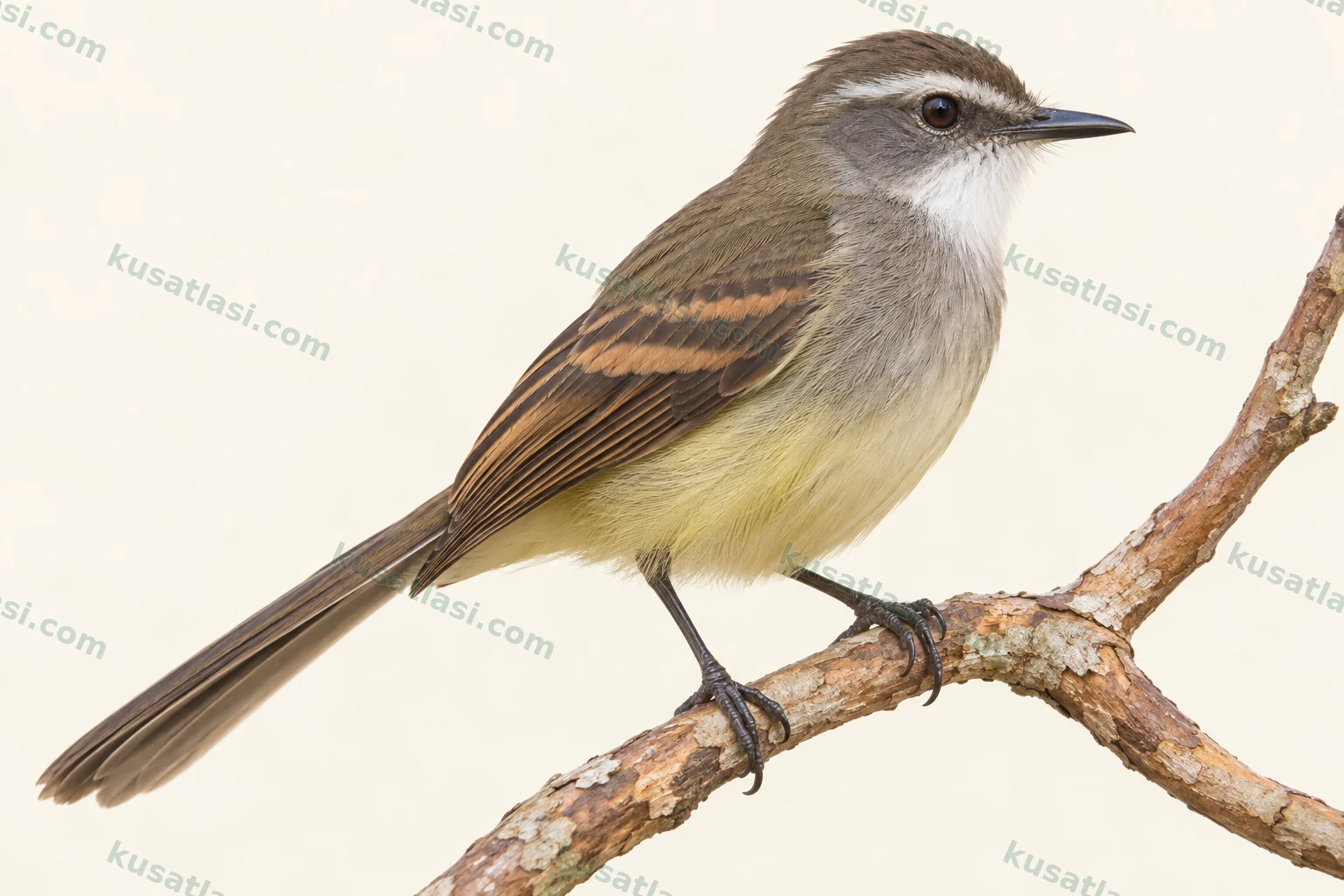 FemaleMale
No reliable field key for sex or juvenile plumage was verified. Regional wing-bar colour does not indicate sex.
Where to look in its natural range?
Watch mixed flocks in scrub and along the edges of humid mountain forest.
Generally resident. Reliable breeding months were not verified for its natural range.
All months: Residency is known, but a detailed breeding calendar has not been verified. No verified regional date was given for this month. This does not imply local absence.
January
February
March
April
May
June
July
August
September
October
November
December
Nest, egg and incubation
The data account gives two eggs. Nest structure, incubation duration and the time young spend in the nest were not verified.
A detailed species-specific note sequence was not independently verified for this account. Match sounds in a mixed flock to the bird in view.
Do not play recordings to attract birds. Observe quietly, especially near nests.
Species information
Quick identification
The White-throated Tyrannulet Mecocerculus leucophrys is a small flycatcher of the Andes and the mountain forests of northern South America. Its prominent white throat can look slightly puffed out. Look for the long tail, upright posture, pale eyebrow and two distinct bars on the dark wing together. The wing bars can be cinnamon or whitish, depending on the region. Neither colour is required across the entire range.
When the bird is perched, compare the pale throat with the breast. The eyebrow and wing bars are separate areas and should be examined under the same light. Fluffing the throat feathers makes the white area look larger. A bird with its feathers held flat is not a different species. When several small flycatchers in a mixed flock use the same branch, do not combine one bird’s head with another bird’s wing. Check that the head, throat, wing and tail belong to the same bird.
General appearance and posture
The upperparts are brownish, the top of the head is grey-brown and the bill is dark. The breast below the white throat can be greyer and the belly yellowish. Consider regional form and lighting when assessing colour. A warm sheen on the breast does not establish that every individual has a dark breast band. The long tail and upright posture of this small bird give an important first impression, but apparent proportions vary with the angle.
Pale cinnamon or whitish wing bars do not indicate sex. When the bird lifts its wing slightly, the space between the bars can be clearer. Bars on the wing coverts and edges on the flight feathers are different features. Fine feather edges lit by the sun do not all count as a third wing bar.
Males, females and young birds
No field key was verified for reliably separating adult males and females at a distance. The size of the white throat patch, the warmth of the wing bars and the length of the tail do not individually establish sex. Plumage varies by region. It can be especially misleading to treat differences between photographs taken in different places as differences between males and females.
Details that distinguish young birds from adults under all conditions, and the duration of juvenile development, were not verified. A bird that looks smaller in a flock may appear so because of the viewing angle. Receiving food from an adult can be more informative about a natural care relationship than colour in a photograph, but the relationship must actually be observed. Two birds standing together are not assumed to be parent and young. Age or sex can be left undetermined in the record.
Appearance in flight
A short movement through the forest can reveal the length of the tail relative to the body. The bars on the dark wing are easier to examine when it is folded. Do not infer an exact number of bars from pale streaks in a blurred flight image. The white throat may stand out when seen from below, but is hidden from behind. When the bird lands, recheck the eyebrow, throat and two wing bars on the same individual.
The samples include six females, seven males and three birds whose sex was not recorded. A short movement with a flock does not establish long-distance migration. Moving from tree to tree while foraging and moving seasonally should be recorded as separate behaviours.
Voice and behaviour
The bird can be seen in pairs or small groups and can join mixed-species flocks. A pause on one branch does not describe all its foraging behaviour. A comparative study in the Sierra Nevada de Santa Marta classifies this species among the active foragers in its sample of flycatchers. This regional result is compatible with a bird sitting still briefly on a branch. A pause and a longer sequence of behaviour are observations at different scales.
When foraging, the bird can be seen in tree crowns and on branches below them. A detailed note sequence was not independently verified for this account. Do not attribute sounds in a mixed flock to the species without matching them to a bird in view. Leave room for small birds to move within cover. Repeated playback that gathers the flock at one spot can make it harder to see which heights and parts of the plants the birds naturally use.
Similar species
The White-banded Tyrannulet Mecocerculus stictopterus can occur in the same mixed flock. The White-throated Tyrannulet usually looks larger. Check its prominent throat, long tail and regionally appropriate wing bars together. If two birds are at different distances, their apparent size does not directly indicate an actual size difference. Comparing body proportions of birds perched near each other on the same branch is more informative.
Other Mecocerculus species may also show a pale eyebrow or wing bars. An eyebrow alone is therefore insufficient for identification. Consider the entire underside, head colour, tail proportions and the mountain forest setting together. If only a small part of the white throat was visible, leave the identification open. Knowing the local subspecies helps, but a local name or old record does not supply a feature that was not seen.
World distribution
It occurs in the mountains of northern South America and along the Andes. The different mountain populations in Venezuela, Colombia, Ecuador, Peru, Bolivia and northern Argentina do not form a continuous lowland belt. Regional forms can look different. Read the general natural range on the map alongside the distribution of suitable woodland and scrub.
Status in the natural range
In Peru it is common in humid mountain forests on the eastern Andean slopes and also occurs on some western slopes. A specialist account gives an elevation range of about 1,800–4,600 m in Peru. An expert committee accepted a photographed record at 4,046 m at Oyón. In that part of Lima the species is considered marginally resident. This one record does not prove that the bird always lives at the same elevation throughout Peru or that it breeds at 4,046 m.
Migration
The species is generally classified as resident. Moving with a mixed flock while foraging is distinct from regular long-distance migration. Its presence on a mountain slope in a given season is insufficient to establish a route of altitudinal migration. No monthly schedule of movements covering the entire natural range was found for this account. The calendar and map use natural forest habitat and reliable records without assigning undocumented months of arrival or departure or precise passes the bird is expected to use.
Breeding habitat
It uses humid mountain forest, forest edges and scrub. Tree crowns and lower branches together provide structure important for foraging. A high-elevation record does not mean that all birds occur exclusively in bare areas above the tree line. Consider both the cover the species can use and local elevation.
Nest site
The data account reports two eggs. Nest structure, incubation duration and the time the young spend in the nest were not sufficiently verified for this account. A mossy cup nest or breeding duration reported for another tyrannulet is not transferred to this species. Seeing a pair together does not establish that there is a nest. Do not part dense branches to look for the nest or interrupt a bird returning repeatedly to the same place.
Daily habitat use
In a mixed flock, the bird may search for food in tree crowns and on plant surfaces below them. A brief sighting does not show which layer it uses throughout the day. The choice of branch, the foraging height and the prey taken can be recorded separately. Staying still without blocking the flock’s natural path can provide better views of behaviour than following one bird closely and repeatedly.
What does it eat?
Its diet consists of invertebrates. The species account and the dataset of measurements classify the bird as an insectivorous forager. This does not show that every small item it takes belongs to the same insect group. Detailed prey proportions covering all regions and seasons were not verified. Record the shape of any prey that can be seen, but do not identify a small unrecognisable item as a particular insect species.
How does it forage?
It searches the canopy and the layer below the canopy in humid forest. Gleaning small invertebrates from plant surfaces is its general feeding method. The active-foraging category in the Santa Marta study does not mean it moves constantly on every branch. Pauses allow time to look and make the next move. Joining a mixed flock does not establish that it shares food brought by other birds. Species moving together can use different parts of plants. Recording the surface the bird reaches towards with its bill, as well as where it perches, gives a better account of its foraging behaviour.
Two wing-bar colours in the same species
The wing bars are cinnamon in some parts of the range and whitish in others. A single illustration therefore does not describe every bird. Assess each colour in relation to the regional form. If the location of the photograph is known, begin by comparing it with birds from that area. An individual is not expected to show the markings of different regions at once.
Throat feathers change the visible shape
The white throat can look slightly puffed out. Raising or flattening the feathers changes the apparent boundary of the white area. This is a change in shape as well as colour appearance. Comparing two postures of the same bird helps prevent a small difference being taken for a difference in species or sex. Keep the eyebrow, wing bars and tail proportions in view as well.
Marginal residency is a regional description
Acceptance of the Oyón record does not mean the species occurs equally often across all western slopes in Peru. The expert committee’s assessment of marginal residency applies to a particular region. Keeping the date, elevation and image together helps document distribution in poorly known mountain areas. One photograph does not establish breeding or regular seasonal migration.
Species in a mixed flock do not all hunt the same way
The Santa Marta study compared foraging strategies of flycatchers living in the same setting. The White-throated Tyrannulet’s classification as an active forager differs from the behaviour of another bird in the flock that spends a long time waiting on one branch. Occurring together does not mean all their behaviours are alike. This makes it valuable to observe each species separately and associate the prey taken with the individual seen. The study’s observations were at about 1,800–2,600 m. The same rate of searching is not assigned to every elevation.