

World Birds IUCN statusLC · Least ConcernGlobal IUCN. BirdLife v10 (2025); taxon matching AviList 2026 / IOC 15.2; checked: 29.10.2026. The list year is not the species’ assessment date. Source and method · BirdLife OrderPasseriformesPasserines FamilyTyrannidaeTyrannidae
White-throated Flycatcher
Empidonax albigularis
Small flycatcher of damp semi-open cover, with a whitish throat and no conspicuous eye-ring.
Biometrics
Length
Male12–14 cm
Female12–14 cm
Shared species value
Wing length
Male6.3 cm
Female6.3 cm
Shared species value
Weight
Male10.4–11 g
Female10.8–12 g
White-throated Flycatcher
Mexico and Central AmericaObservation guide in its natural range
Look for three features together
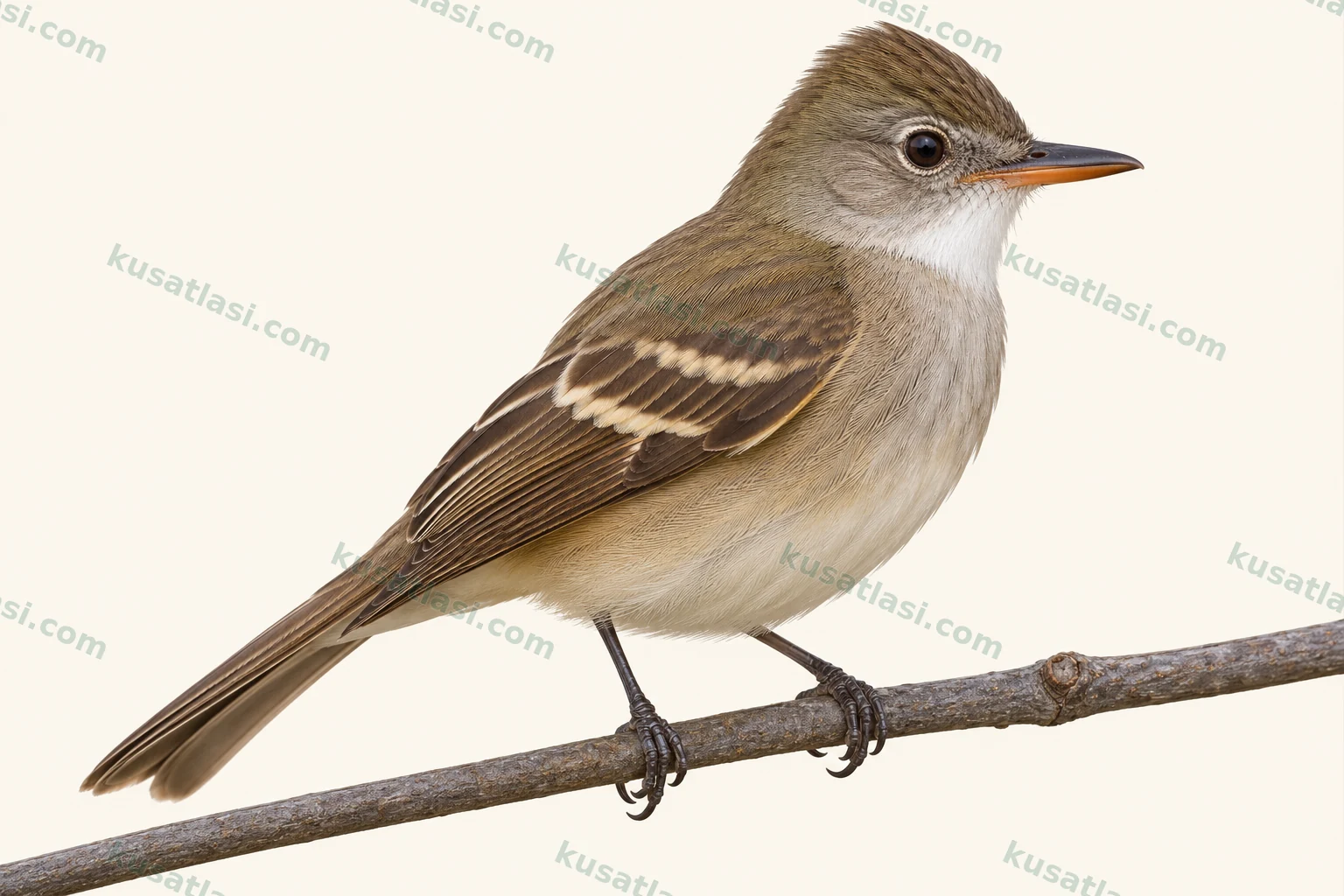
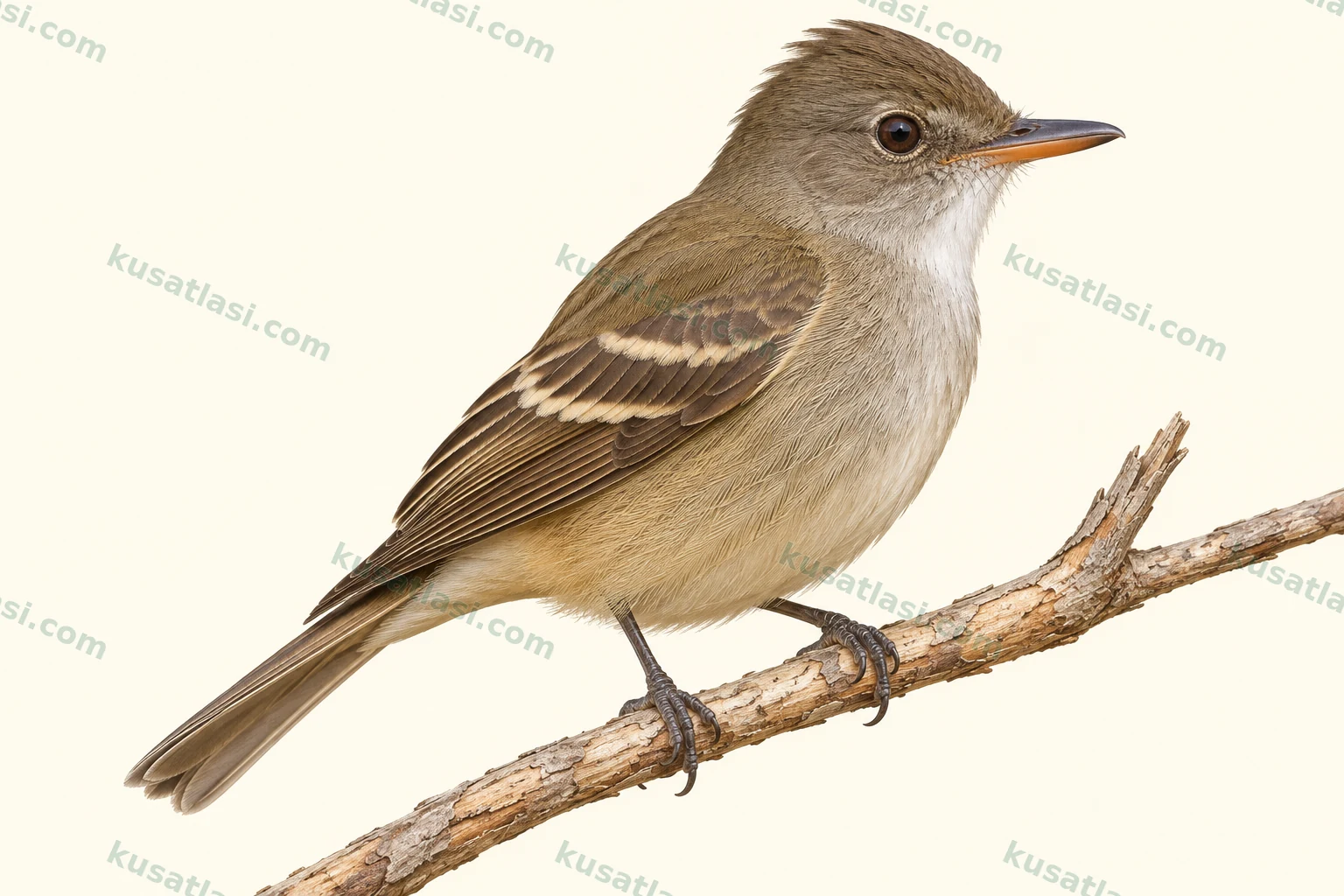
Do not rely on a single featureWhitish throat; indistinct pale eye-ring.
Creamy-yellowish bars and sides.
Upward tail flicks while perched; short hoarse call.
Compare male and female
 FemaleMale
No reliable detailed field key for sex and young birds was verified.
Where to look in its natural range?
Scrub near water, marsh edges and, seasonally, highland openings.
Resident and migrant populations coexist. Yalijux breeding mid-April–late July; detailed months elsewhere unverified.
January
Data unavailable
February
Data unavailable
March
Data unavailable
April
Montaña Yalijux, Guatemala: Breeding period in the local nest study.
May
Montaña Yalijux, Guatemala: Breeding period in the local nest study.
June
Montaña Yalijux, Guatemala: Breeding period in the local nest study.
July
Montaña Yalijux, Guatemala: Breeding period in the local nest study.
August
Data unavailable
September
Data unavailable
October
Data unavailable
November
Data unavailable
December
Data unavailable
Nest, egg and incubation
In Yalijux 1–3 eggs, usually three. Incubation and fledging periods unverified.
Short hoarse sneeze-like call.
Do not play recordings to attract birds; observe quietly, especially near nests.
Species information
Quick identification
White-throated Flycatcher Empidonax albigularis is a small, plainly coloured flycatcher of open scrub near water in Mexico and Central America. Assess whitish throat, creamy-yellowish wing bars and sides and an indistinct pale eye-ring together. White-throated Flycatcher is its English name.
General appearance and posture
The upperparts look dull brownish olive. The throat is paler than the rest of the underparts; the two pale wing bars form part of comparisons with nearby Empidonax species. Plain colours make it hard to see among dry stems and shrub branches. Upward tail flicks while perched are a useful behavioural clue noted by Cornell.
Males, females and young birds
Accessible accounts examined did not provide a detailed plumage key allowing certain sexing. Photographs in the Guatemalan study document an adult and a newly fledged young bird; one age example does not replace a colour key for all young. Neither tail movement nor call count determines sex.
Appearance in flight
No reliable underwing identification pattern was verified for the species. After it perches again, compare throat, eye surround, wing bars and voice together.
Voice and behaviour
Cornell emphasises the short hoarse sneeze-like call as a distinctive feature. Hearing it while watching the same bird is stronger than deciding from pale plumage alone. It may move from low perches at damp scrub and marsh edges; it does not make continual long exposed flights.
Similar species
Willow Flycatcher Empidonax traillii can occur beside it in wintering areas. A similarly small body and wing bars do not ensure identity; evaluate call, whitish throat and eye surround together.
Some other Empidonax have distinct pale eye-rings. Here the eye-ring is generally indistinct; losing the eye surround in shade alone is not a distinguishing criterion.
World distribution
Current AviList recognises three subspecies. timidus is associated with northwestern Mexican mountains; albigularis with highlands from eastern and southern Mexico through Guatemala, El Salvador and Honduras; australis with the belt from Nicaragua to Chiriquí in western Panama. Belize is mainly among non-breeding visiting areas.
Status within its natural range
BirdLife's country assessment separates resident and seasonal populations. Although globally Least Concern, the population trend is reported as declining. The Montaña Yalijux research in Guatemala supplied direct nesting evidence; calling pairs or territory-holding birds in Oaxaca are not by themselves a found nest.
Movements
Northern timidus populations move south and lower after breeding; resident birds occur in the subspecies' southern parts too. The lack of winter observations in Guatemalan highlands was associated with short-distance elevational movements, but details were not measured. One season, route or distance is not assigned to the whole species.
Breeding habitat
It uses damp semi-open scrub, marsh surroundings and vegetation near water. Original Oaxaca field research also documents waterside scrub in a dry valley and pine–oak clearings. It is therefore not considered dependent only on extensive marshes.
Nest site
In Guatemala's Yalijux region, 43 breeding attempts were recorded during 2013–2016. Nests at 1900–2400 m were in 1–6-year regrowth on maize-growing land. The 30 nests with complete clutches had 1–3 eggs, most frequently three. The local breeding period ran from mid-April to late July. Nest-material details, incubation and fledging periods were not given in that study's species account.
Daily use of space
In winter, look especially in wet vegetation strips of lowlands. Waterside shrubs and hedges may form small cover patches in open landscapes. Territory holding is not interpreted as an active nest necessarily occurring in that patch.
What does it eat?
It is a small-insect-eating flycatcher. Eisermann and Avendaño's original natural-history page documents a young bird with wasp-like prey. This one record does not mean all food is wasps or the same prey is important everywhere. Prey proportions were not verified.
How does it forage?
It searches from perches in scrub and marsh cover. The species' association with damp semi-open habitat is also noted in scientific research on flycatcher classification. Accessible sources did not provide detailed capture frequency, prey-size distribution or feeding differences between sexes.
Direct nesting evidence
Young birds were previously considered possible breeding evidence in Guatemala. Multi-year Yalijux nest monitoring strengthened this by documenting it directly. Findings concern one mountain region; its egg numbers or breeding months are not assigned to all Panamanian populations.
A habitat carries traces of close relatives
A 2020 Tyrannidae classification study relates the species to Alder and Willow flycatchers of damp semi-open scrub. Considering habitat alongside genetic classification is valuable; two birds in the same place do not thereby become the same species.
A mean is not one nest's egg number
The Yalijux study explicitly published the distribution of complete clutch counts. A fractional mean does not mean nests contain fractional eggs. The page therefore gives the actual 1–3 range and the most frequent clutches of three eggs; averages from different compilations are not converted into a new clutch size.