

World Birds IUCN statusLC · Least ConcernGlobal IUCN. BirdLife v10 (2025); taxon matching AviList 2026 / IOC 15.2; checked: 29.10.2026. The list year is not the species’ assessment date. Source and method · BirdLife OrderPasseriformesPasserines FamilyTyrannidaeTyrannidae
White-headed Marsh Tyrant
Arundinicola leucocephala
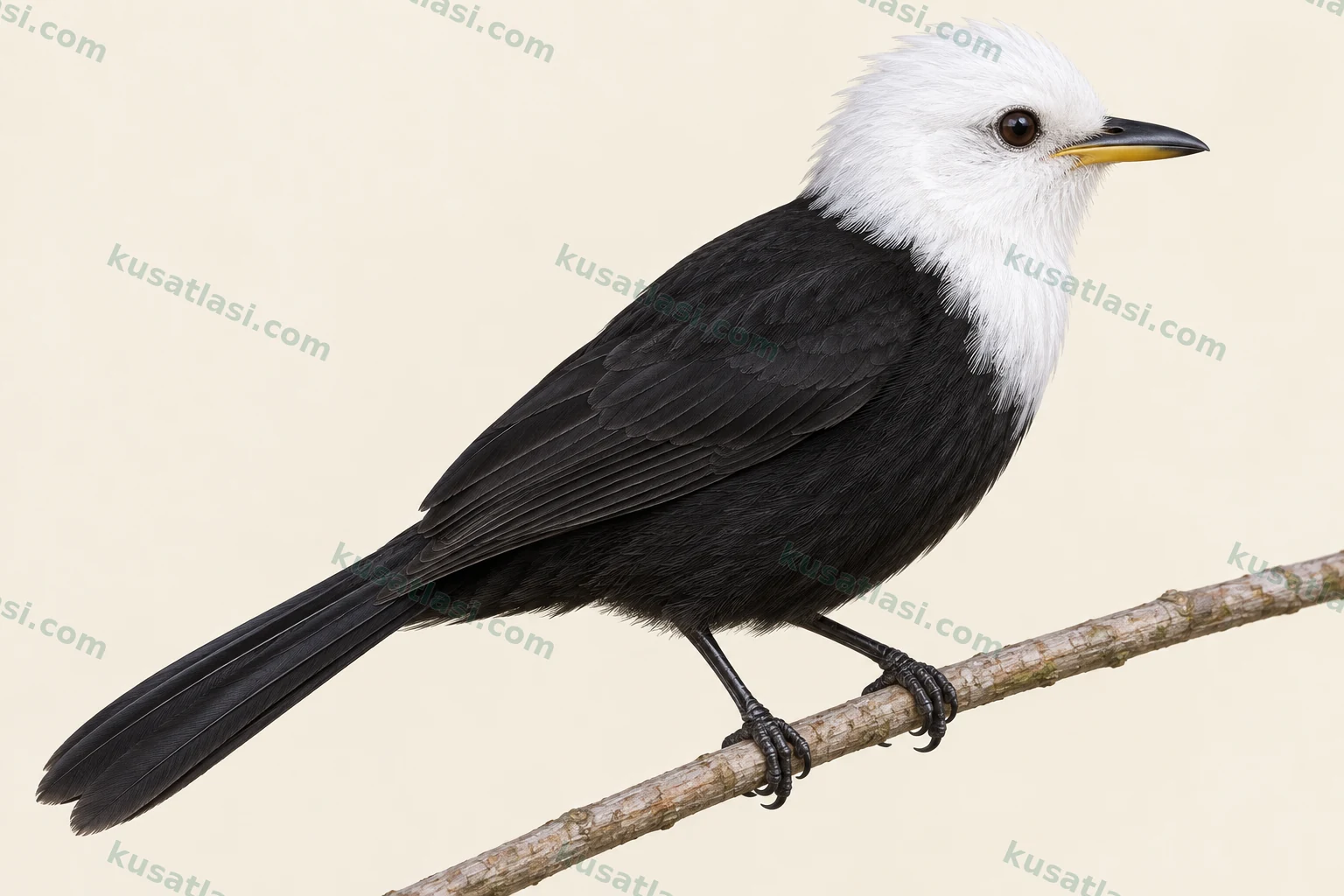
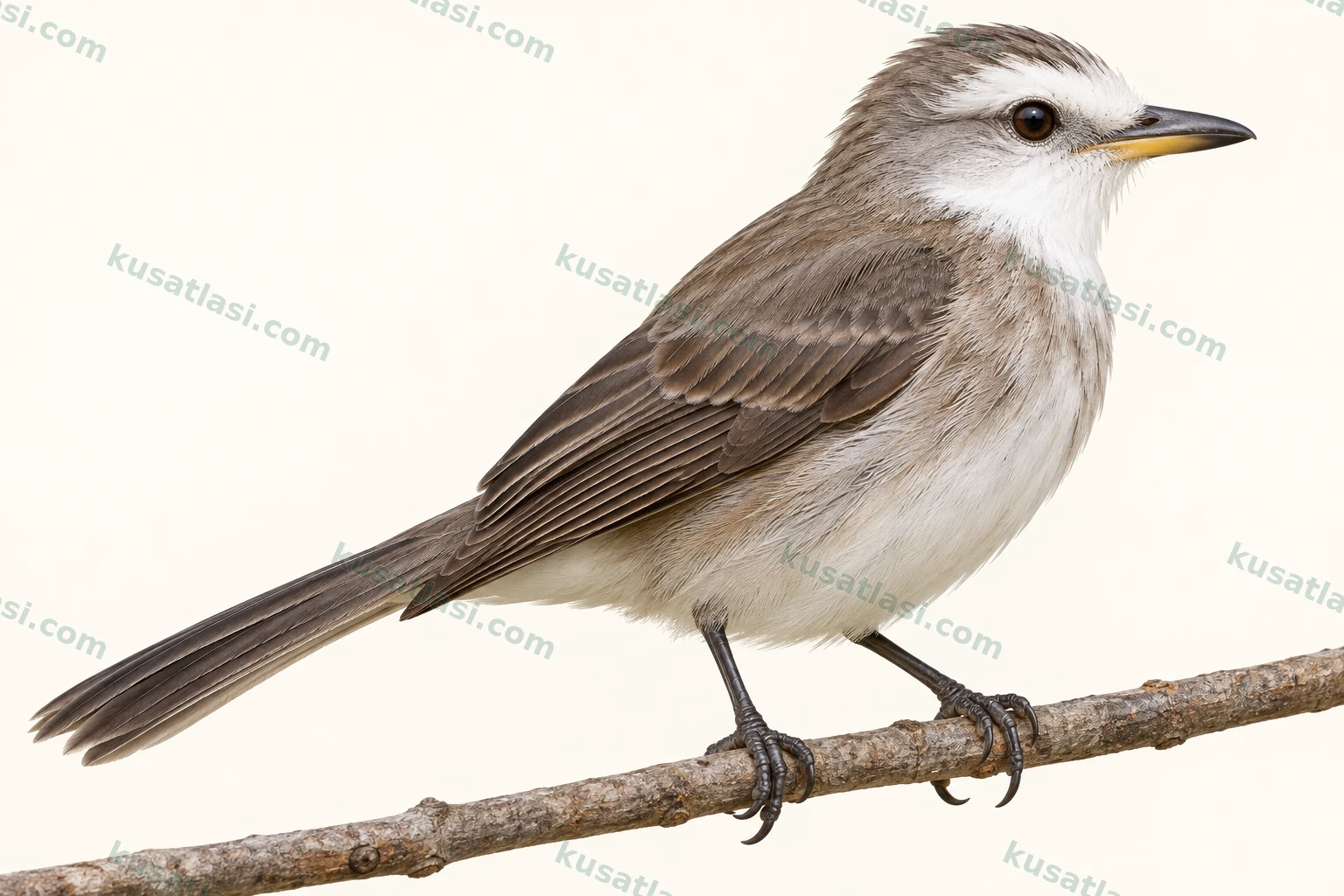
The male has a white head and dark body. The female has grey-brown upperparts, pale underparts and a white forehead and throat. It uses exposed perches near fresh water.
Biometrics
Length
Male12–13 cm
Female12–13 cm
Shared species value
Wing length
Male6.01 cm
Female6.01 cm
Shared species value
Weight
MaleData unavailable
Female14.1 g
White-headed Marsh Tyrant
Lowland wetlands of northern and eastern South America and Trinidad, south to northern ArgentinaObservation guide in its natural range
Look for three features together
Do not rely on a single featureWhite head and throat, mostly dark body and yellowish lower mandible.
The female has grey-brown upperparts and pale underparts. Young birds can resemble her.
Ponds, marshes and vegetated freshwater shores. Short hunting flights.
Compare male and female
 FemaleMale
Adult males and females look markedly different. Young birds can resemble females, so not every pale individual is an adult female.
Where to look in its natural range?
Lake and pond shores, marsh plants, wet grassland and river islands, with exposed perches overlooking water.
A conference abstract on the 2016–2017 study in Jaguaré, Espírito Santo, reported breeding activity from September to April. It is not a calendar for the whole range.
January
Generally resident. A regular long-distance migration route for all individuals has not been verified. Jaguaré, Espírito Santo, regional research in 2016–2017. The breeding period was followed from the first nest to the departure of the last young.
February
Generally resident. A regular long-distance migration route for all individuals has not been verified. Jaguaré, Espírito Santo, regional research in 2016–2017. The breeding period was followed from the first nest to the departure of the last young.
March
Generally resident. A regular long-distance migration route for all individuals has not been verified. Jaguaré, Espírito Santo, regional research in 2016–2017. The breeding period was followed from the first nest to the departure of the last young.
April
Generally resident. A regular long-distance migration route for all individuals has not been verified. Jaguaré, Espírito Santo, regional research in 2016–2017. The breeding period was followed from the first nest to the departure of the last young.
May
Generally resident. A regular long-distance migration route for all individuals has not been verified. No verified regional date specific to this month was given; this does not mean local absence.
June
Generally resident. A regular long-distance migration route for all individuals has not been verified. No verified regional date specific to this month was given; this does not mean local absence.
July
Generally resident. A regular long-distance migration route for all individuals has not been verified. No verified regional date specific to this month was given; this does not mean local absence.
August
Generally resident. A regular long-distance migration route for all individuals has not been verified. No verified regional date specific to this month was given; this does not mean local absence.
September
Generally resident. A regular long-distance migration route for all individuals has not been verified. Jaguaré, Espírito Santo, regional research in 2016–2017. The breeding period was followed from the first nest to the departure of the last young.
October
Generally resident. A regular long-distance migration route for all individuals has not been verified. Jaguaré, Espírito Santo, regional research in 2016–2017. The breeding period was followed from the first nest to the departure of the last young.
November
Generally resident. A regular long-distance migration route for all individuals has not been verified. Jaguaré, Espírito Santo, regional research in 2016–2017. The breeding period was followed from the first nest to the departure of the last young.
December
Generally resident. A regular long-distance migration route for all individuals has not been verified. Jaguaré, Espírito Santo, regional research in 2016–2017. The breeding period was followed from the first nest to the departure of the last young.
Nest, egg and incubation
An enclosed nest with a side entrance in plants near or above water. The species account gives 2–4 eggs. The regional conference abstract reports 14–16 days of incubation and 14–16 days in the nest for the young. Both adults care for the young.
Usually quiet. It sometimes gives brief, high, sharp calls and occasionally quieter repetitions.
Do not play recordings to attract birds; observe quietly, especially near nests.
Species information
Quick identification
The White-headed Marsh Tyrant Arundinicola leucocephala is a small insect-eating bird of South American freshwater habitats. The adult male combines a white head and throat with a dark body. The female has grey-brown upperparts, pale underparts and a white forehead and throat. The sexes have distinct patterns, so the male’s black-and-white description does not apply to the female.
Waiting on an exposed perch beside a lake, pond or marsh makes the bird easier to find. Proximity to water alone does not establish its identity, since other small tyrant flycatchers occur in the same surroundings. Check the extent of white on the head, the light or dark body and the wing pattern on one individual. A glimpse of the female’s white forehead is a different feature from the male’s wholly white head.
General appearance and posture
The male’s head and throat are white, and most of the rest of the body is brownish black. The lower mandible is yellowish. This small coloured area is separate from the white head feathers. If the bill is closed or in shadow, its pale lower part may not show well. Give priority to seeing the white head with the dark body, rather than relying on a single detail of the bill.
The female’s pale underparts contrast with her grey-brown back. The wings and tail appear darker. The white forehead and throat are important marks. These small areas can disappear in a view that leaves the whole face in darkness. Before treating a pale bird and a dark bird seen at opposite ends of a wetland as different species, check the other markings.
A bird waiting on marsh vegetation or a branch overlooking the water may use the perch for more than resting. It can make short hunting flights from there. Watching it scan, fly out and return with prey in its bill helps establish that the behaviour is feeding. Time spent on a branch alone does not identify a nest site.
Males, females and young birds
The clear plumage difference between adults helps determine sex when the bird is well seen. The male has a broad white head and dark body, and the female combines grey-brown upperparts with pale underparts. This difference is more than a slight change of shade caused by lighting. Even so, do not decide from an incomplete view that shows only the head or only the back.
Young birds leaving the nest can resemble the female. Pale underparts and an overall brownish colour alone are therefore unreliable evidence of an adult female. Begging for food from adults, moving with a family and the stage of feather development can help judge age. The appearance of all young birds is not assumed to reach the same stage on the same day.
A conference abstract on regional breeding research in Brazil reported that young birds remained in their parents’ territory for a time. Leaving the nest and feeding entirely independently are therefore separate stages. Seeing several pale birds in the same area does not establish the presence of several adult females. To explain family relationships, also record behaviour such as food transfers between individuals.
Appearance in flight
In short flights, the male’s white head can stand out against the dark body. The female’s plainer colours in a distant view can be confused with those of other small wetland tyrant flycatchers. Seeing the bird from below in flight helps compare the male’s dark body with the female’s pale underparts. If a bird disappears behind a branch, leave any colours that were not seen undetermined.
Direct field research recorded short hunting sallies from perches into the air, towards the water surface or towards aquatic plants. These movements do not show that the bird is making a long migration. The distance covered in a few flights around one pond and the distance moved seasonally are separate measures.
Voice and behaviour
It is generally quiet, but may sometimes give brief, high, sharp calls or quieter repeated notes. A bird seen by water does not belong to another species simply because it does not call continuously. If a call is heard, associate it with the head, body and age-related appearance of the same bird. A similar-sounding call of uncertain origin does not establish identification.
It can occur in pairs and may respond to other birds in the breeding area. Behavioural observations in Brazil showed that a playback encounter could change the birds’ behaviour. A chase seen during such an intervention does not establish that the bird always behaves that way in daily life. During natural observation, watch its exposed perches and hunting movements from a distance without calling it in.
Similar species
Fluvicola pica is another black-and-white tyrant flycatcher of wetlands, but it has a white face and underparts and a conspicuous white V pattern on the upperparts. An adult male White-headed Marsh Tyrant has a dark body, with white confined to the head and throat. When both occur at one site, check whether white extends onto the body rather than comparing only the white on their heads.
Fluvicola nengeta combines a pale head, back and underparts with a black eye mask, and its tail has a white tip. It can walk on the ground. Its mask differs from the female White-headed Marsh Tyrant’s white forehead and throat. Use the face mask and whole body pattern for identification, since behaviour at the water’s edge is shared.
World distribution
Its natural range extends from northern and eastern Colombia, Venezuela, Trinidad and the Guianas into the lowland wetlands of South America. Species accounts include eastern Ecuador, northeastern Peru, northern and eastern Bolivia, Paraguay, northern Argentina and a large part of Brazil. The land in these countries is not uniform habitat. The bird’s use of the region is patchy and associated with lakes, marshes, wet grassland and river surroundings.
Status within its natural range
Its current global category is Least Concern. Argentina’s official biodiversity information system also records it as native. The national assessment and the global category cover different scopes. A record in a protected area does not show the population size across the country. A broad range does not mean the same pair stays at a small pond every year or is unaffected by changes in the water regime.
The map reflects the broad belt of lowland wetlands. It does not add a continuous natural range along the Pacific coast of the Andes or treat all South American high mountains as usual habitat. A point observation can show that a bird was present on that date. Without eggs, young or behaviour at a nest, it does not establish breeding.
Movements
Species accounts describe a mainly resident bird. This research did not verify a regular long-distance migration route followed by all individuals. Birds may use suitable shores as water and vegetation change, but that possibility is not mapped as a confirmed monthly route. Evidence is needed to show that a bird disappearing from one pond and a bird seen at another are the same individual.
Breeding habitat
It is associated with freshwater marshes, ponds, wet grassland and vegetated shores of river islands. Breeding can also be observed at an artificial pond. What matters is the way the shore and emergent plants can be used, in addition to the origin of the body of water. Do not assume that every shrub along the bank provides the same nest site or feeding opportunity.
Nest site
The nest is enclosed and rounded or oval, with a side entrance. Plant fibres and materials such as feathers are used. It is usually placed in vegetation close to or over water. The species account reports 2–4 eggs. A conference abstract on regional research in Espírito Santo reported 14–16 days of incubation by the female and 14–16 days for chicks in the nest. These preliminary figures are not fixed durations throughout the range, and the two durations refer to different stages.
Daily use of space
Short flights between exposed perches and aquatic plants are part of feeding. In a pair studied at an artificial pond, researchers recorded prey delivered to chicks and waste removed from the nest. Do not enter the nesting vegetation, change the water level or open the nest entrance to observe the birds. Watching food deliveries from a distance is more appropriate for understanding how the birds use the area.
What it eats
Small invertebrates are its main food. Research in Brazil that directly examined prey brought to a nest recorded various insects, including dragonflies, crickets, butterflies, beetles and flies. This list shows what that pair brought its chicks on those days. It does not establish the same prey in the same proportions in every month across South America.
How it hunts
It watches from a perch and makes a short flight to catch prey. The air, water surface and aquatic plants are reported as places where it takes prey. Feeding near water does not establish that it catches fish. The identity of prey is not certain from a sally towards water. It requires a view of food in the bill or other direct evidence.
A large-looking prey item brought to a chick does not show that the adult’s own meals are always large. Some studies have followed visits by the male and female to feed chicks separately. A difference in one pair cannot be generalised to all males never bringing food. Prey type, feeding frequency and the reason for a behaviour are considered separately.
A conspicuous appearance in a quiet bird
The adult male’s white head can stand out readily against his dark body, even though the bird is often quiet. Being easy to see does not mean it calls continuously. Scanning above the water’s edge for an individual waiting on an exposed perch is a different way of finding it from waiting for sound alone. The female’s plainer appearance can also make a quiet individual of the same species easy to miss.
A young bird leaving the nest can look like an adult female
The regional breeding study reported that young birds resembled females. This explains why pale birds should not all be counted as adult females. General brown coloration may not distinguish a young bird staying with its family from a breeding adult. This similarity is particularly relevant around nest departure. Observations such as receiving food from a parent and the bird’s stage of feather development become important for judging age.
A difference in visits does not establish its cause
While researchers watched one pair, the female fed the chicks more frequently. The researcher discussed multiple possible causes, including visibility and territorial defence. Measuring a difference does not prove all explanations for it. A human judgement such as calling the male lazy is no substitute for a scientific account of its behaviour.
Playback can change natural behaviour
An original observation in a study published in 2024 described the male chasing his mate after playback simulated another male. This shows why a normal feeding event and an experimental encounter must be considered separately. Attracting the bird with playback is not a method that leaves its behaviour unaffected. Observing from a distance, particularly near a nest, provides a better starting point for understanding natural behaviour.