

World Birds IUCN statusLC · Least ConcernGlobal IUCN category. BirdLife v10 (2025); taxon matching: AviList 2026 / IOC 15.2; checked: 29.10.2026. The list year is not the species assessment date. Source and method · BirdLife OrderPasseriformesPasserines FamilyTyrannidaeTyrannidae
White-throated Kingbird
Tyrannus albogularis
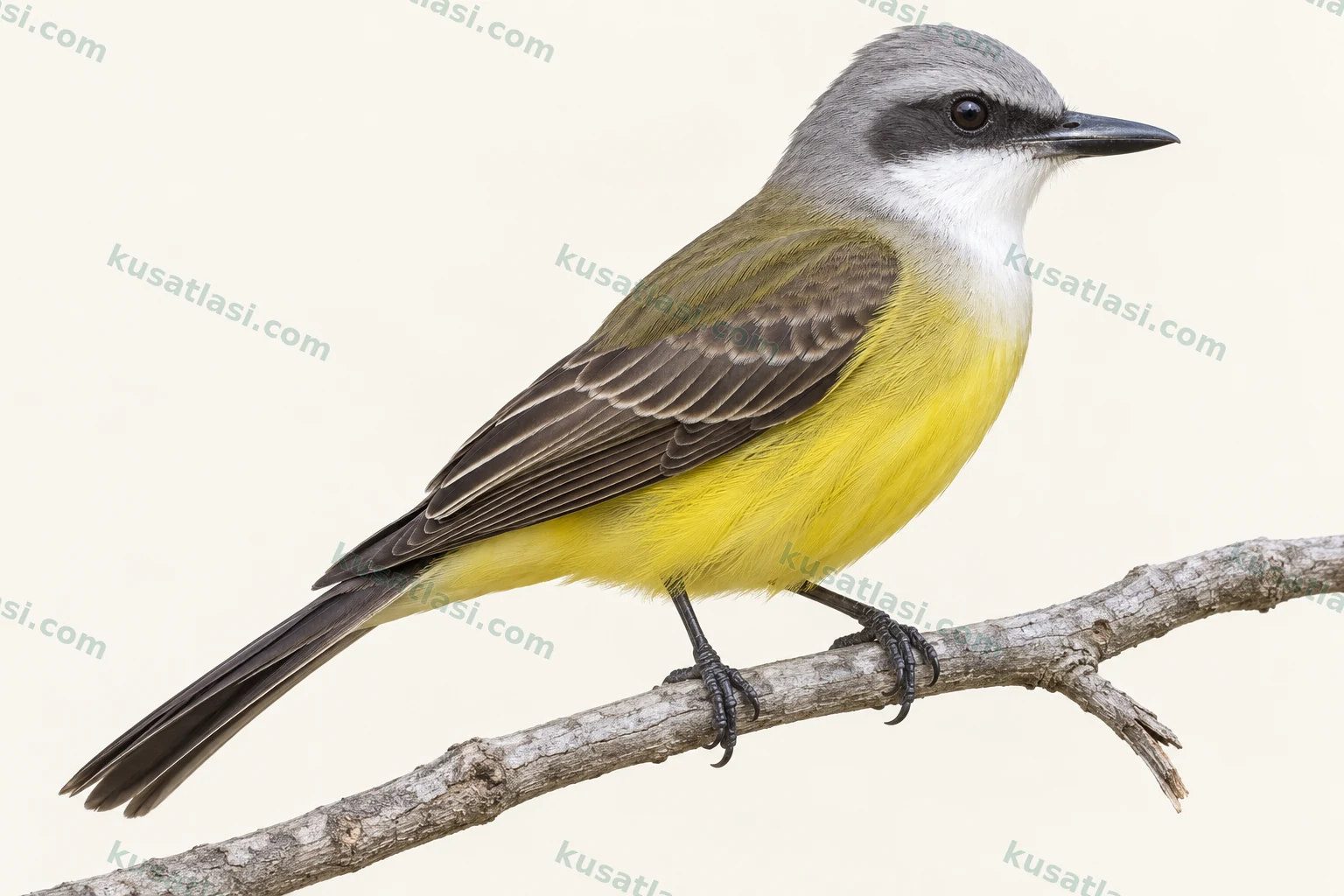
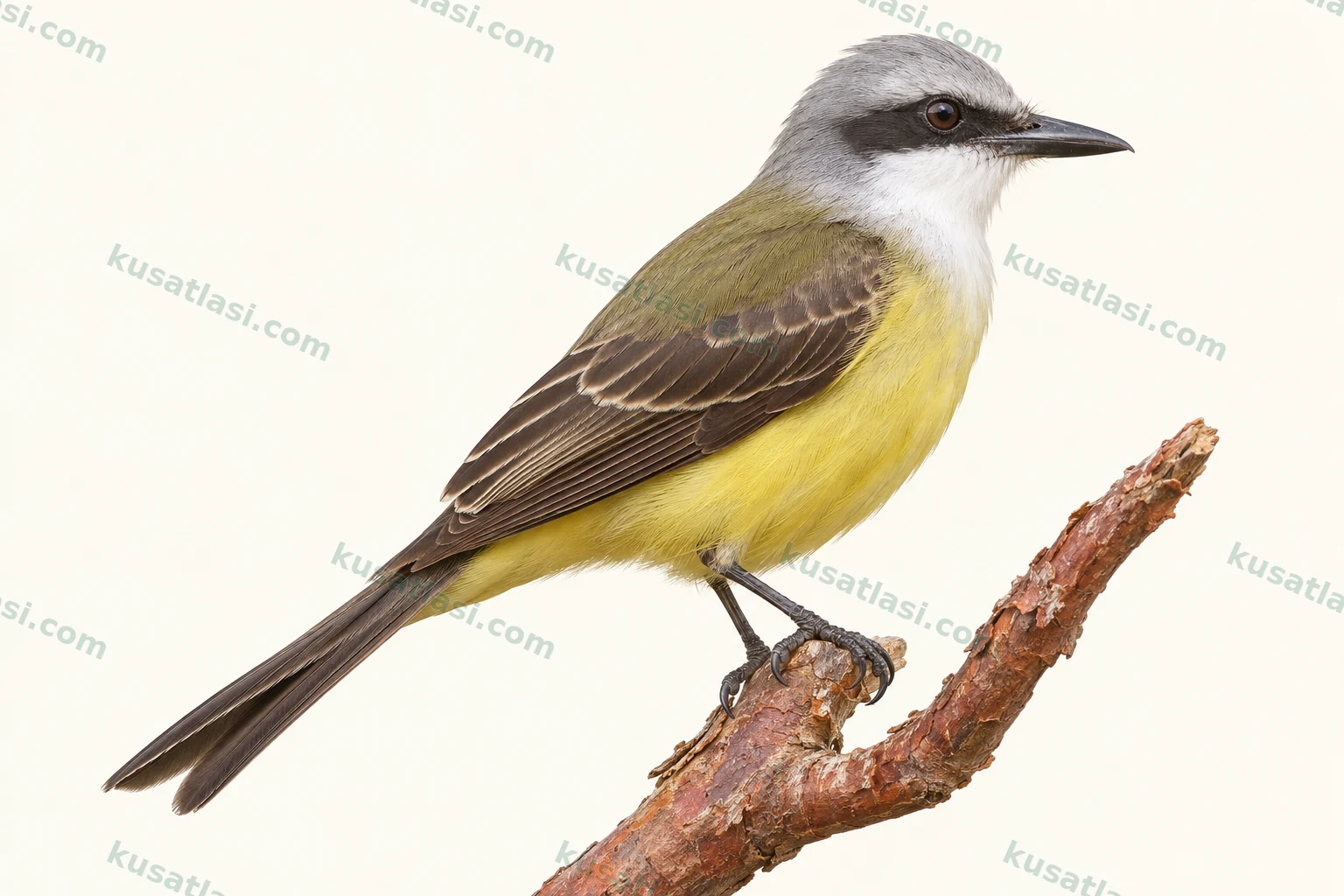
Pale grey head, dark mask and white throat, with yellow underparts and an olive-green back.
Biometrics
Length
Male20–21 cm
Female20–21 cm
Shared species value
Wing length
Male10.58 cm
Female10.58 cm
Shared species value
Weight
Male35–38 g
Female35–38 g
Shared species value
White-throated Kingbird
South America, Amazon region, with breeding examples from Brazil and BoliviaObservation guide in its natural range
Look for three features together
Do not rely on a single featureCheck the pale head, dark mask and white throat together.
Look for the yellow breast and belly, olive-green back and dark wing on the same bird.
Compare male and female
 FemaleMale
No reliable single field mark for sex was verified. Juvenile plumage does not give a definite distinction, and feeding behaviour does not establish the sex of the provider.
Where to look in its natural range?
Watch perches at forest edges, in wooded openings and around pastures.
The Brazil and Bolivia study records breeding from mid-September to mid-February. Movements may differ among populations.
January
Example from a breeding study in Brazil and Bolivia. Example of the breeding period in Brazil and Bolivia.
February
Example from a breeding study in Brazil and Bolivia. Example of the breeding period in Brazil and Bolivia.
March
Example from a breeding study in Brazil and Bolivia. No verified regional date was given for this month. This does not imply local absence.
April
Example from a breeding study in Brazil and Bolivia. No verified regional date was given for this month. This does not imply local absence.
May
Example from a breeding study in Brazil and Bolivia. No verified regional date was given for this month. This does not imply local absence.
June
Example from a breeding study in Brazil and Bolivia. No verified regional date was given for this month. This does not imply local absence.
July
Example from a breeding study in Brazil and Bolivia. No verified regional date was given for this month. This does not imply local absence.
August
Example from a breeding study in Brazil and Bolivia. No verified regional date was given for this month. This does not imply local absence.
September
Example from a breeding study in Brazil and Bolivia. Example of the breeding period in Brazil and Bolivia.
October
Example from a breeding study in Brazil and Bolivia. Example of the breeding period in Brazil and Bolivia.
November
Example from a breeding study in Brazil and Bolivia. Example of the breeding period in Brazil and Bolivia.
December
Example from a breeding study in Brazil and Bolivia. Example of the breeding period in Brazil and Bolivia.
Nest, egg and incubation
A cup nest of plant material is supported from below. Study averages are 2.3 eggs and 16.3 days of incubation. Young spend 18 days in the nest.
The call is a sharp, rapidly repeated, vibrating sequence resembling “tik-tik-tik”.
Do not play recordings to attract birds. Observe quietly, especially near nests.
Species information
Quick identification
The White-throated Kingbird Tyrannus albogularis is a large flycatcher of open and semi-open habitats in South America. Its pale grey head contrasts with the dark eye mask and white throat. The breast and belly are yellow, the back olive-green and the wings dark. Compared with the Tropical Kingbird, one of the most similar species, the head is paler and the contrast between the mask and throat is stronger. A yellow belly alone is insufficient for identification.
When the bird is perched, examine the top of the head, the area around the eye and the throat in the same light. Bright light can make the entire head look pale, while shade can make the mask look broader. Check both the boundary between the white throat and yellow breast and the position of the mask on the face. Consider the dark wing and greenish back alongside the colours of the front. If a brief view reveals only the head, do not settle the identification until the yellow underparts have also been seen.
General appearance and posture
It looks large compared with many small forest flycatchers. It can occur at forest edges, in woodland and pasture, and in open urban areas. Migrants may appear away from their usual breeding habitats. A bird sitting in the open offers a good view, but not every large yellow flycatcher on an exposed perch belongs to this species. Compare it with similar kingbirds in the area. The species of tree used as a perch does not establish the bird’s identity.
Posture changes the apparent proportions of the tail and body.
Males, females and young birds
No single plumage mark was verified for reliably sexing adults in the field. The paleness of the head or the brightness of the yellow alone does not establish sex. Feeding young does not identify a bird’s sex either. In Rio Claro, two adults were seen accompanying two young, but care by both adults was not independently established. Accompanying young, feeding them and incubating eggs are distinct behaviours.
Birds that had recently left the nest were directly observed receiving food. A small bird that can perch and fly can therefore still need care. There is no verified, detailed juvenile plumage key that works under all conditions. Pale colour alone is not a reliable age mark. To identify a young bird, consider its natural interactions with adults, the receipt of food and a suitable view together. Applying another kingbird’s juvenile plumage to this species would overstate the resemblance.
Appearance in flight
The yellow underparts, dark wings and pale head can be seen together in flight. The olive-green back may be hidden when viewed from the front or below, and the white throat is obscured from behind. A single flight image does not cover every distinguishing area. Checking the contrast between mask and throat after the bird lands helps distinguish the species. If only a yellow body was seen in flight, the record may have to remain at the level of a large flycatcher.
A short flight from a perch to take food and return is distinct from long-distance migration. Although the species’ seasonal movements are known in broad terms, a bird’s flight direction alone does not show where it came from. Compare head and breast views with those of the similar Tropical Kingbird from the same angle when possible.
Voice and behaviour
The call is described as a sharp, rapidly repeated, vibrating sequence resembling “tik-tik-tik”. It is useful alongside the bird’s appearance. Do not assign all short, rapid notes in the area to this species. When several birds vocalise nearby, it can be hard to link each sound to one individual. Seeing the calling bird on a branch and checking its throat and mask provides stronger evidence than hearing the call alone.
Food delivery to young after breeding can be observed in open areas. Three Rio Claro records are from November, December and February. In one, an adult was identified carrying an insect to a young bird. These observations support juvenile care, but do not establish the same care dates throughout Brazil every year. Do not assume all nearby adults are parents from the same nest. Record the food provider, the recipient and their interactions separately where possible.
Similar species
The Tropical Kingbird Tyrannus melancholicus is the most important comparison. Check the White-throated Kingbird for the combination of a pale grey head, a more distinct dark mask and a white throat. The yellow breast and greenish back can give a similar first impression in both species. One image of the head under lighting that greatly alters its colours is insufficient. If needed, wait for the bird to turn naturally and consider its short call as well.
When comparing other large yellow flycatchers in the area, start with the structure of the head pattern. A bird with a prominent eyebrow and head stripes does not look the same as a pale grey-headed bird with a dark mask. Do not rely on body size or on the name “kingbird” alone. A sighting in a new place during migration is insufficient on its own. In a region where the species is rare, a good image and careful field notes are especially important.
World distribution
The natural range extends from Venezuela and the Guyana region towards the Amazon basin, Brazil and northern Bolivia. Seasonal movements of some populations reach farther west in the Amazon. Country names in a broad range description do not imply equal use of an entire country. Open and semi-open areas and the surrounding tree cover both affect where the bird can be found.
Status in the natural range
Brazilian records are spread through the year. Fewer winter records in some southern regions suggest seasonal change. The direct nest observations in the breeding study are from southeastern Brazil and eastern Bolivia. Do not assign all birds seen outside those study areas to the same breeding season or assume they are resident. Assess the identity and behaviour of the bird when a regional record is rare.
Migration
Migration patterns are not fully resolved for all populations. In the Southern Hemisphere winter, around May–August, movements west through the Amazon have been reported, reaching southeastern Colombia, eastern Ecuador and northeastern Peru. Some northern populations may be resident. These accounts do not give an exact route, number of stops or distance for an individual bird. The map shows the broad natural range and areas with confirmed records. It does not create a migration route by joining observation points.
Breeding habitat
The species uses open and semi-open areas with trees. Forest edges, pasture margins and woodland openings can provide opportunities to see it. The breeding study examines nests in Brazil and Bolivia. Seeing a bird in a town during migration does not mean it nests there. The example breeding period runs from mid-September to mid-February, with possible regional variation.
Nest site
The nest is a cup supported from below. Reported materials include woody pieces, grass stems, rootlets and palm fibres. The study gives an average of 2.3 eggs per nest, a mean incubation duration of 16.3 days and an 18-day nestling period. A clutch cannot contain 2.3 eggs. This figure is the mean for the nests studied. The durations are not fixed values for every nest.
Daily habitat use
Consider the exposed perch together with nearby feeding areas. An adult standing near the nest can be watched to see where it looks and what food it takes to the young. Close pursuit can change natural care behaviour. Documenting a feeding observation does not require approaching the nest. Do not climb the tree the bird is using, and leave a clear passage between the branch where the young receive food and safe cover.
What does it eat?
This kingbird feeds on invertebrates, especially insects. At Rio Claro, direct observation documented an insect being given to a recently fledged bird. A record from São Carlos also documented consumption of Miconia albicans fruit. The latter study recorded one visit and eight fruits. This does not indicate a primarily fruit-based diet or establish a constant percentage of insects throughout the year. A feeding record and a general dietary tendency have different scopes.
How does it forage?
Watch the bird foraging around an exposed perch. AVONET classifies it as an insectivorous, perching forager. This does not establish that it takes all prey at the same height or in the same manner of flight. If a bird is carrying food, check from a suitable angle whether it took an insect or a fruit. Do not assign a firm name to an unidentifiable item. Preserving a mosaic of woodland, scrub and open ground rather than feeding the bird artificially lets observers see foraging under natural conditions.
New research updates older accounts
The breeding biology of this species was poorly known for a long time. Researchers examined 34 direct nest records from Brazil and Bolivia alongside collection specimens. This provided measured information about nest form and the development of the young. An older account saying that breeding was unknown should not be repeated without considering the study. The date of the information helps show which details are still missing.
A mean egg count is not the count in a real nest
The study’s average of 2.3 eggs does not mean that a nest held a fraction of an egg. Counts from different nests were summarised in one statistic. Likewise, a mean incubation duration of 16.3 days does not mean every chick hatched after exactly the same interval. Stating the scope of the sample helps distinguish a summary measurement from an observation at one nest.
A young bird that can fly can still be fed
In Rio Claro, adults were seen feeding young birds that had left the nest. Perching on a branch or moving to another place does not mean the young bird is fully independent. Its presence with an adult does not establish which sex provided care. Direct food transfer is clearer evidence of care than simply standing together.
An insectivore can also eat fruit
The Miconia fruit record shows that the bird can eat a different kind of food alongside its broadly insectivorous diet. One visit does not support generalisation to all kinds of fruit or to every season. Distinguish the number of visits from the number of fruits taken. Eight fruits do not mean eight separate visits. Keeping the limits of brief records in view helps describe the bird’s natural diet accurately. Classification as insectivorous does not imply that it eats only insects.