

World Birds IUCN statusLC · Least ConcernGlobal IUCN. BirdLife v10 (2025); taxon matching AviList 2026 / IOC 15.2; checked: 29.10.2026. The list year is not the species’ assessment date. Source and method · BirdLife OrderPasseriformesPasserines FamilyCotingidaeCotingidae
White Bellbird
Procnias albus
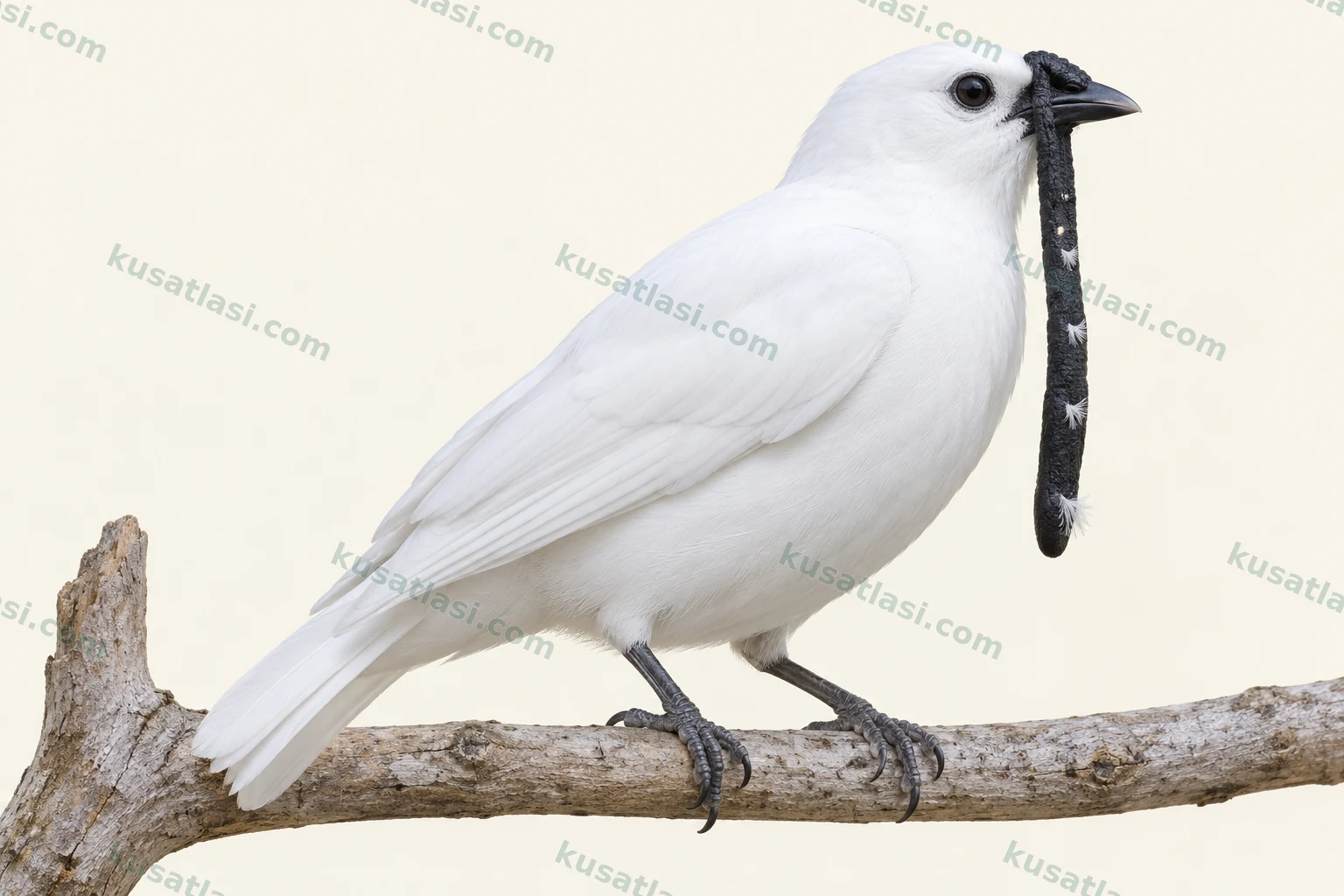
White adult male with a dark fleshy appendage hanging near the bill; green female with a bulky body and long sloping head.
Biometrics
Length
Male28 cm
Female28 cm
Shared species value
Wing length
Male15.05 cm
Female15.05 cm
Shared species value
Weight
Male210–215 g
Female219–222 g
White Bellbird
The Guianas, eastern Venezuela and northern BrazilObservation guide in its natural range
Look for three features together
Do not rely on a single featureAssess white plumage together with bill and hanging appendage.
It may be a female or young male. Colour alone does not establish sex.
Compare male and female
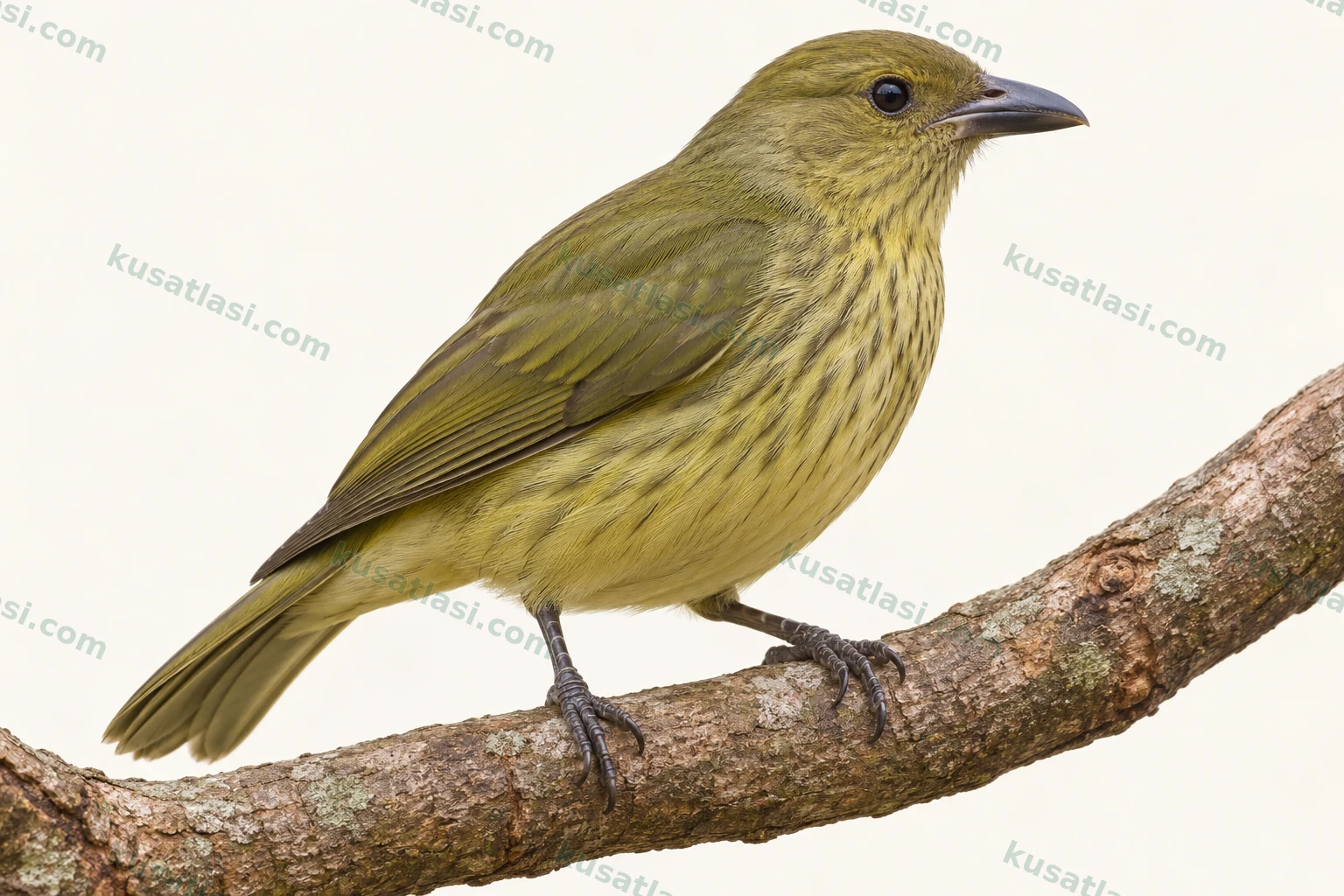 FemaleMale
Adult male white, female mostly green. Young males can also be green.
Where to look in its natural range?
Tall humid forest, canopy and tepui surroundings.
Resident populations and local/elevational movements are reported. No single monthly calendar was verified for the whole range.
All months: Regional movements. Breeding months are not applied to the whole species. No verified regional date is given for this month. This does not imply local absence.
January
February
March
April
May
June
July
August
September
October
November
December
Nest, egg and incubation
A display branch is not a nest. Usual nest structure, egg number, incubation and young development duration could not be reliably verified for the species.
Very powerful, ringing calls, with different forms and broken or incomplete calls in young males.
Do not play recordings to attract birds; observe quietly, especially near nests.
Species information
Quick identification
The White Bellbird Procnias albus is a fruit-eating bird of northern South American forests. The adult male is white, with a dark fleshy appendage hanging near the bill that matters for identification. The female is mostly green. A bulky body and long, sloping head profile help assess her. Their strongly different appearance does not make the sexes separate species.
The white male may stand out above the canopy, but not every distant white bird is a bellbird. Head profile, bill and hanging appendage must actually be seen. The female's green blends into leaves, making colour-only identification still harder. Using a fruiting tree helps as behavioural information, but other fruit eaters can share it.
General appearance and posture
The hanging fleshy appendage is a structure near the bill, not a crest, elongated tongue or prey held by the bird. Its position may change during calling. Do not expect it to appear in one direction or at the same length every time. If part lies behind the head in a photograph, do not estimate a measurement for the unseen part.
Direct sun can erase feather detail on the white male. In shade, white areas may reflect grey or green. This is not a permanent plumage difference. In the female, the sloping head and bulky proportions help more than merely matching leaf colour. Bending changes those proportions too, so compare several natural postures.
Males, females and young birds
The white adult male and green female differ strongly. Young males can also be greenish, so not every green bird is automatically female. Age and sex may remain open if feather development is unclear. Possible species identification does not always provide equally certain age and sex.
Cornell's identification account notes that young males may give more broken or incomplete calls. This can support age assessment, but distance and poor recording also interrupt sound. A poor call recording without the bird in view is not proof of youth. An abruptly ending call alone does not describe the bird's developmental stage.
Green and white birds sharing a fruit tree are not necessarily a pair. Food can bring different individuals together. Record actual mating behaviour separately. Two colours in one image do not directly establish breeding success, a nest or care of young.
Appearance in flight
It can be seen crossing forest openings. A high vantage point sometimes makes flight easier to watch than standing under trees. A white male may be conspicuous in transit while small head details disappear. A green bird's brief silhouette may not give enough head–body proportion for identification. Combine flight with perched views where possible.
Do not interpret an underwing shadow as a permanent dark patch. After losing sight of the bird, retain uncertainty instead of assuming that the next crossing bird is the same individual.
Voice and behaviour
Males call very powerfully from bare branches above the forest canopy and may remain invisible from below. A bell comparison helps, but the real repertoire is not one short word. Loudness alone does not identify it. Assess rhythm, structure and, if possible, the link to a visible bird.
The 2019 study measured two male call types. The louder type was observed when a female approached the display branch. The male turned during the call and directed its final part towards her. This limits an interpretation of long-distance communication as the only function. Explanations of how females protect their hearing are hypotheses, not a directly demonstrated hearing mechanism.
Similar species
Comparison with other bellbirds such as Procnias averano is especially needed for green birds. An adult male's all-white appearance and one long appendage help against males with different dark heads or several appendages. That distinction does not apply in the same way to a young green bird. Use actual locality, appearance and voice together.
Other green fruit eaters also use the canopy and fruiting trees. Without seeing the female's bulky proportions and long sloping head, certainty can wait. A white male nearby does not make every green bird in the tree a female White Bellbird. Follow each individual separately rather than giving all group members one name.
Global range
Its natural setting is eastern Venezuela, the Guianas and northern Brazilian forests. A separate geographic form is recognized in Pará. This broad region does not mean equal density throughout the Amazon basin or breeding in every wooded place. Highland forests around tepuis matter for identification and planning. A national boundary alone does not describe habitat detail.
Status within its natural range
The current list gives Least Concern status. Locally conspicuous calling males do not make the whole population easy to count. Green females and young may differ in detectability at the same place. Local abundance in sources remains distinct from a current global total. A calling point is not marked as a nest containing eggs.
Movements and migration
The general dataset classifies it as resident, while specialist accounts discuss local and elevational movements. Movement associated with Guyana's dry-season food reduction does not establish the same route and months for all birds. Seasonal fruit-tree use may influence movement. Records are not joined into a verified migration route. Regional observations remain distinct from a regular calendar for the full range.
Breeding habitat
Tall humid forest, high canopy and wooded tepui surroundings form its habitat. A male's exposed calling branch is a display point, not automatically a nest. Seeing it below the sound-producing tree does not prove eggs in that tree. Breeding behaviour and direct nest evidence remain separate.
Nest site
The reliable primary material examined was insufficient to verify usual species-specific nest structure, egg number, incubation and young development durations. Data from other bellbirds were not transferred. A female at a display gives neither egg count nor hatching date.
Daily habitat use
It feeds at fruiting trees. Males are easier to hear on bare branches projecting above the canopy. There is no need to approach or use playback to repeat displays. A forest bird may be heard without being seen. Avoid counting the same caller twice from different positions.
What does it eat?
Fruit is the dietary basis. AVONET's fruit-eating category agrees with specialist accounts of fruiting-tree use. Fruit lists still differ between regions. One tree does not establish exclusive year-round use of that fruit. Detailed species-specific proportions were not verified, so no percentages are given.
How does it feed?
Food may be reached from a branch or in short flights. The university account describes swallowing fruit whole and subsequently ejecting the seed. Do not assume it ate an unseen fruit or always deposits seeds in the same place. A shared fruit tree does not prove joint food defence. Observers do not alter the natural tree and feeding by adding fruit. Before assigning a nearby call to the feeding bird, establish the real connection. Feeding and courtship remain separate behaviours.
Very powerful sound has been measured
The 2019 study used calibrated measurements to compare White Bellbird calls with another loud forest bird. Sound pressure was higher in the bellbird samples measured. This does not mean equal power in every call by every individual. Recording levels cannot be compared directly without distance, call portion and measurement method.
Call intensity can vary with behaviour
When females joined males' display branches, males used the louder call type. Turning towards the female is notable, but does not fully explain mate choice or protection of her hearing. Possibilities discussed by the study are not certain biological mechanisms.
The canopy can hide the view
A male calling from an exposed branch may remain invisible beneath trees. A very obvious sound does not mean a bird is near the ground or observer. Follow its real branch and natural movement instead of converting loudness into an exact distance. One bird heard from several directions is then less likely to be counted as several.
Green does not show just one sex
Greenish females and young males prevent transferring the easy white-male identification to all birds. Not every green bird is female or every broken call evidence of youth. Recording cuts and branches add uncertainty. Useful species records can still retain open age and sex. Do not treat all green birds in a fruit tree as one individual: another may replace one that disappears. Compare head profile again at each sighting.