

World Birds IUCN statusLC · Least ConcernGlobal IUCN. BirdLife v10 (2025); taxon matching AviList 2026 / IOC 15.2; checked: 29.10.2026. The list year is not the species’ assessment date. Source and method · BirdLife OrderPasseriformesPasserines FamilyPipridaePipridae
White-throated Manakin
Corapipo gutturalis
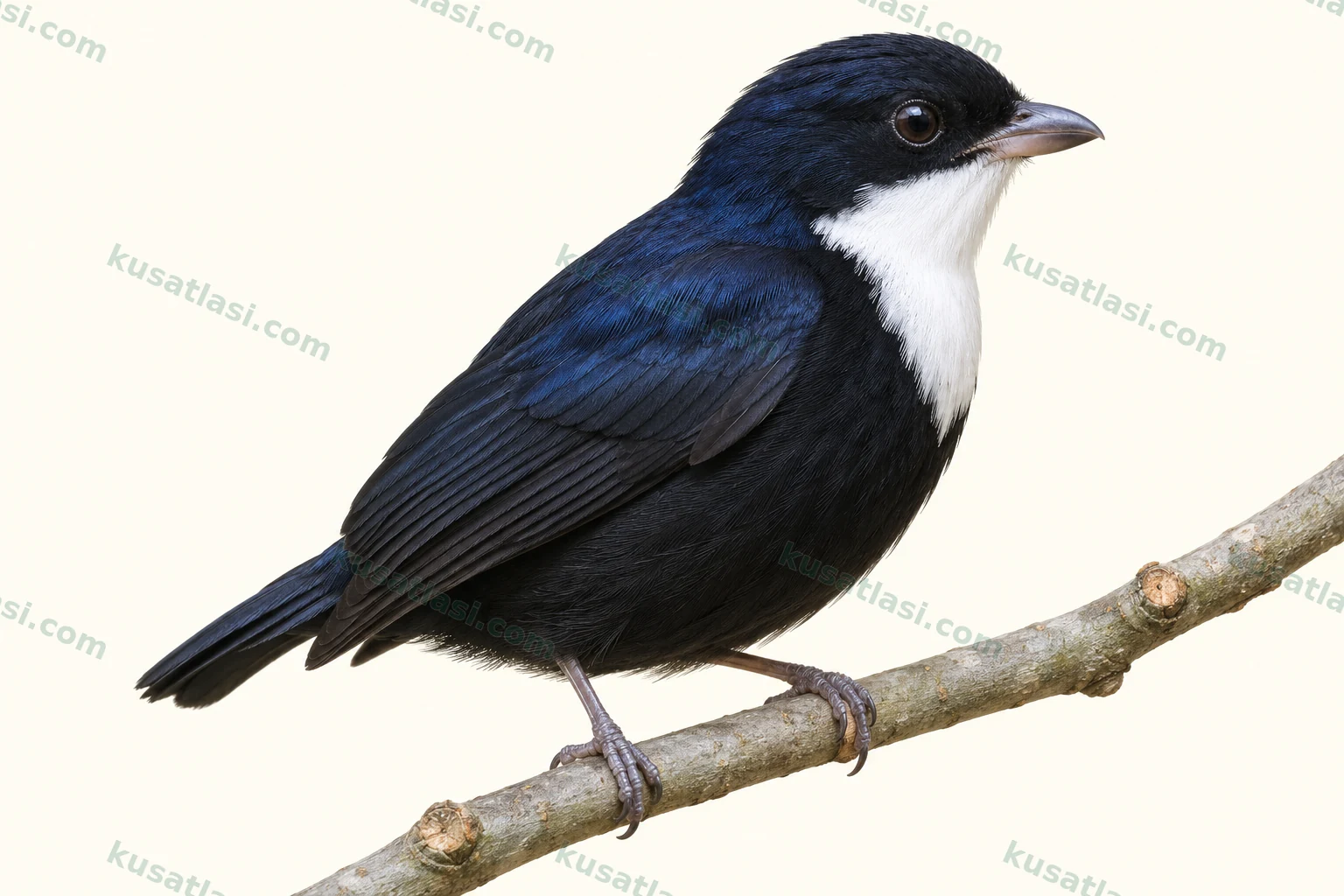
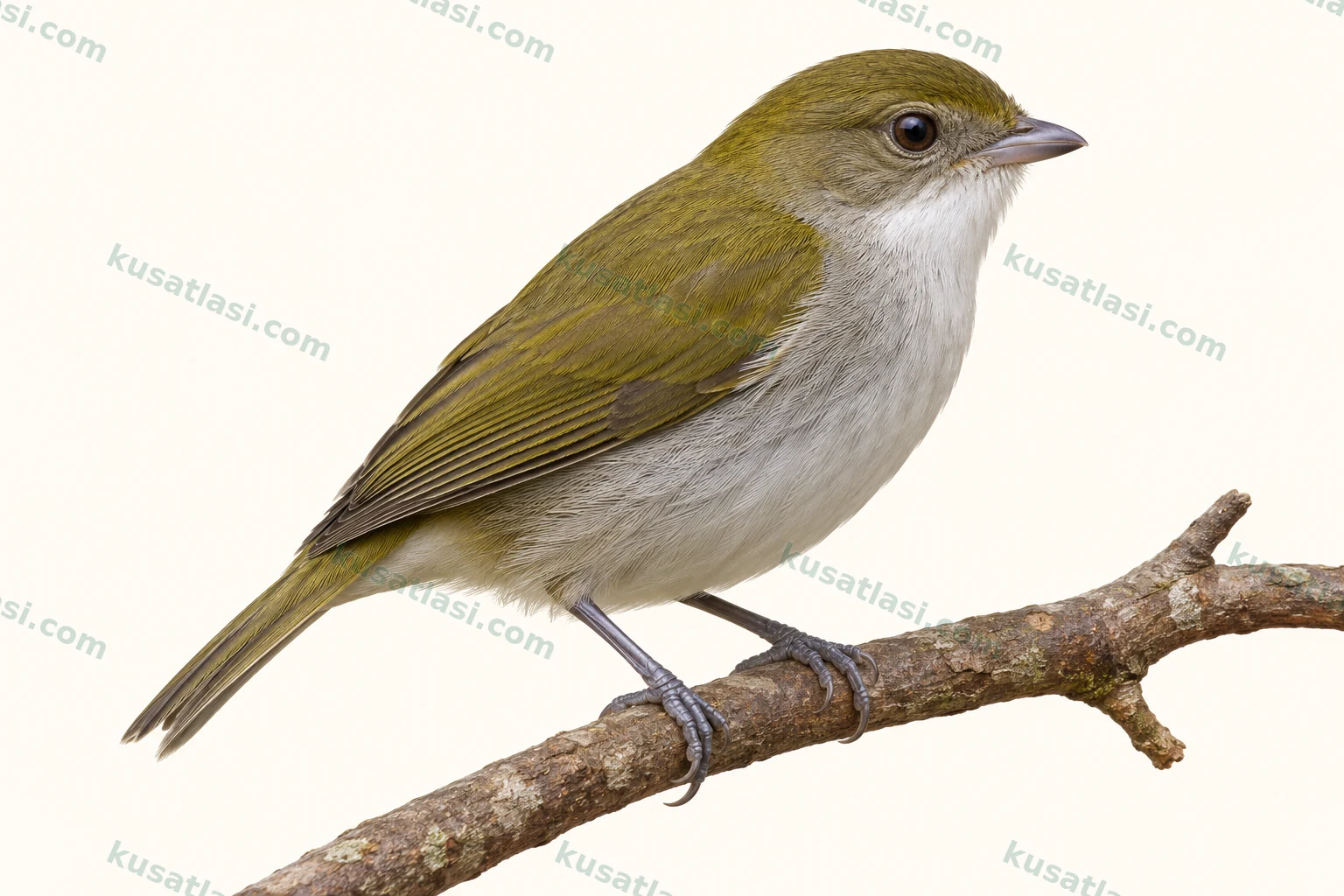
Adult males are blue-black with a white throat; females and young males are grey-green.
Biometrics
Length
Male8–10 cm
Female8–10 cm
Shared species value
Wing length
Male5.64 cm
Female5.37 cm
Female wing length of approximately 5.37 cm is the published mean for 21 females in the Shogren et al. (2022) dataset (53.66666667 mm, rounded for display). It is not wingspan. The files do not detail the flattening protocol or locality of this subsample. The male value comes from a separate AVONET sample; the two figures cannot establish a sex difference.
Weight
Male8.1 g
Female8.8 g
White-throated Manakin
Guianas and northern AmazoniaObservation guide in its natural range
Look for three features together
Do not rely on a single featureBlack male with a white throat and white underwing area.
Humid forests of the Guianas and northern Amazonia.
Males display on mossy fallen logs.
Compare male and female
 FemaleMale
Young males may resemble females; grey-green alone does not identify a female.
Where to look in its natural range?
Middle and upper fruiting branches of humid forest, and display logs.
Resident forest bird; the Amazon study’s display period runs August–January. Local scientific display observations, not an egg-laying calendar.
January
The KM41 study’s display monitoring also covered January.
February
Data unavailable
March
Data unavailable
April
Data unavailable
May
Data unavailable
June
Data unavailable
July
Data unavailable
August
KM41, Brazil: display monitoring in the three-year study began in August.
September
Data unavailable
October
Brownsberg, Suriname: direct display observations during October–December 1982.
November
Data unavailable
December
Data unavailable
Nest, egg and incubation
The display log is separate from the nest. A nest review reports one moss-covered example at 8.30 m; egg number and development periods were not verified.
Thin, usually three-to-four-syllable call falling towards its end; additional movement-linked sounds in display.
Do not play recordings to attract birds; observe quietly, especially near nests.
Species information
Quick identification
White-throated Manakin Corapipo gutturalis is a very small manakin of humid forests in northern South America. The adult male’s blue-glossed black body and conspicuous white throat are the most readily recognised appearance. The white underwing area may not be fully visible on a bird with closed wings. Females and young males are less conspicuous in grey-green, identified using their slender shape and contrasting upperparts and underparts together.
The thin voice often reveals it before it is seen. It may seek fruit in middle and upper forest levels, whereas males display around a mossy fallen log on the ground. These different heights are not contradictory. Feeding sites, calling perches and the courtship display surface need not coincide.
General appearance and posture
In males, the sharp white-throat/black-body boundary is an important mark even in dim forest. The blue gloss varies with viewing angle and incoming light. Looking plain black when gloss is invisible does not alone establish a different species.
A displaying male may point its bill upward and raise the white feathers at the lower end of the throat. It makes short hops, turns and wing movements on the log. The same white throat can look broader in a display posture than during ordinary perching. Its width in a photograph should therefore not be treated as a fixed body measurement.
A male moving to perches near the log may call for a while and return to the display surface. In French Guiana, nearby perches were about 1–10 m above ground. Display logs were scattered through a broad forest area, not all crowded together in one small opening. Calling every high perch a nest site would misrepresent this behaviour.
Males, females and young birds
Fully adult males differ from grey-green females in blue-black and white plumage. But not every grey-green bird is female. Young males resemble females initially, later developing a black face and whiter throat while green feathers may remain elsewhere. Intermediate and final plumage differences do not allow precise ages for every individual from one photograph.
A scientific review of manakin plumage development treats the initial female-like stage, black-faced intermediate stage and final black-and-white stage separately. Nor is sexing a grey-green bird immediately by voice or behaviour reliable. The Amazon study used genetic methods to confirm the sex of such individuals.
Males in different plumage stages may occur together at display sites. A young male visiting another’s log is not thereby a helper caring for young. The relationship concerns courtship and male interactions. A female visiting a display site does not automatically locate her nest there.
Appearance in flight
A male’s display may involve a short flight from a nearby perch to the log or a more conspicuous flight above the treetops followed by a return. The white underwing may show briefly on approach. Sounds can accompany landing and the immediately following hop. This display flight differs from daily branch-to-branch fruit-searching movements.
Direct observations in Suriname documented males turning on logs, hopping back and forth and briefly rising again after landing. Not every repeat contains every movement in the same order. One white wing flash or hop is therefore no certain key representing the entire behaviour.
Plumage stages also matter when judging sex in flight: a female-like young male is not recorded as female merely because green wings were seen.
Voice and behaviour
The ordinary thin call usually has three or four syllables and falls towards its end. It can resemble a small rufous-tailed flycatcher heard in the same forest. Display-flight sounds differ from ordinary calls, with short mechanical and vocal elements associated with movement. Distinguish everyday calls from display sounds in recordings.
An Amazon study following marked birds in 2016–2018 found some males visiting multiple display sites. The number seen at one log over a season is not the number present simultaneously. A displaying male can be alone or have other males nearby. Such association does not mean obligatory simultaneous group dancing.
Researchers found that males remaining longer and displaying more often at a site received more visits from males and females. Total activity at the log did not, however, explain female visits by itself. A busy display site is therefore not necessarily evidence of a more successful male or more matings. Local display-site relationships may change over time.
Similar species
Confusion with Terenotriccus erythrurus is especially possible by voice. Cornell’s specialist identification account contrasts this manakin’s descending 3–4-syllable call with the flycatcher’s two-syllable voice. This helps when the bird is unseen, but a brief or incompletely heard call may not identify it certainly. Seeing the fully adult male’s black-and-white appearance greatly reduces uncertainty.
General green is shared by females and young males of many manakins. Assess this species’ slender form and strong upperpart–underpart contrast together. Males of related Corapipo can also be dark with white throats; relatedness or similar colour alone does not establish identity. This manakin’s Guianan and northern Amazon range is not merged with that of distant Central American relatives.
World distribution
The natural range extends from southern Venezuela through Guyana, Suriname and French Guiana to northeastern Amazonian Brazil. It is a humid-forest bird of the Guiana region. The current checklist treats Corapipo gutturalis without separate subspecies. Similar Central American Corapipo are separate taxa, not an extension of this range.
Status within its natural range
Its category in the current checklist is Least Concern. Behavioural studies come from different regional forests, including Brownsberg in Suriname, Nouragues in French Guiana and forests north of Manaus in Brazil. The Nouragues study was in undisturbed humid forest about 100 km south of Cayenne. The Amazon study took place about 80 km north of Manaus, at Brazil’s KM41 reserve. These sites document presence and behaviour, not the total population across the range.
Movements
It is treated as resident; no regular intercontinental migration route was verified. Marked males moving between display logs show local forest space use. Recapturing the same bird at another site does not show migration to another country or climatic zone. Moving to middle and upper branches for food is daily movement among vertical forest levels. Mapping follows this forest range; distances between display sites do not support intercontinental routes.
Breeding habitat
It uses humid tropical forest. The detailed Amazon display study took place in forest without seasonal flooding, at about 100–150 m elevation. Mossy fallen logs beneath tall tree cover served as male display sites. Feeding in high branches does not change the near-ground display surface.
Nest site
A display log is not a nest. A scientific nest review reports one nest 8.30 m above ground, moss-covered outside and lined with fine black fungal fibres. This is one nest’s context, not a compulsory height for all nests. Reliable species-specific egg numbers, incubation and fledging periods were not verified here; other manakins’ periods were not inserted.
Daily use of space
Fruit is sought at middle and upper forest levels, sometimes lower. Branches near a display log are used for calling and waiting. In French Guiana the logs were at separate points beneath closed tree cover. This does not describe a bird continually feeding on one open ground surface.
What does it eat?
Fruit is the main food. French Guiana studies associated small fruits of Melastomataceae with feeding. Seeds pass in droppings to the forest floor. Researchers found more viable seeds in soil around five display sites than at nearby comparison sites. This links fruit consumption to seed accumulation where birds spend time.
How does it forage?
It uses fruit resources in middle and upper forest levels and occasionally feeds lower down. Descending to a ground-level display log does not mean all food is collected on the ground. Fruiting branches and repeatedly visited display perches may differ. Despite different female, young-male and adult-male appearances, this study does not produce a separate fixed diet for each sex. Many seeds of one fruit family do not prove that all food comes from that family.
Light affects display, but does not alone explain female preference
A comparative study of five closely related manakins found that male White-throated Manakins favoured shaded and sunlit gaps for display over cloudy conditions. Females did not show the same clear light preference when visiting males. Male feathers looking more striking in a light environment and females deliberately preferring that light are different findings. The study illustrates why appearance and behaviour should be tested separately.
More than one male can visit a log
Some marked Amazon males were found at different display sites. A frequent log user can also visit others, complicating assignment of sites to unchanging owners. Displays in the study were often performed by one male; other males nearby did not imply compulsory simultaneous joint display.
A young male may resemble an adult female
The male’s black-and-white adult plumage is not its first stage. The initial grey-green stage may be followed by a black-faced, whiter-throated intermediate stage. This explains why counting every green bird as female can be wrong. Plumage stage and all biological properties are not identical; colour alone does not establish reproductive ability.
Display sites may also accumulate seeds
More viable seeds were found in soil at French Guiana display sites. Repeated returns can concentrate seeds from eaten fruits there. The demonstrated result is a seed bank, however; new forest growing around every log was not directly shown.