

World Birds IUCN statusAccording to source taxonGlobal IUCN. BirdLife v10 (2025); taxon matching AviList 2026 / IOC 15.2; checked: 29.10.2026. The list year is not the species’ assessment date. Source and method OrderPasseriformesPasserines FamilyPipridaePipridae
White-bibbed Manakin
Corapipo leucorrhoa
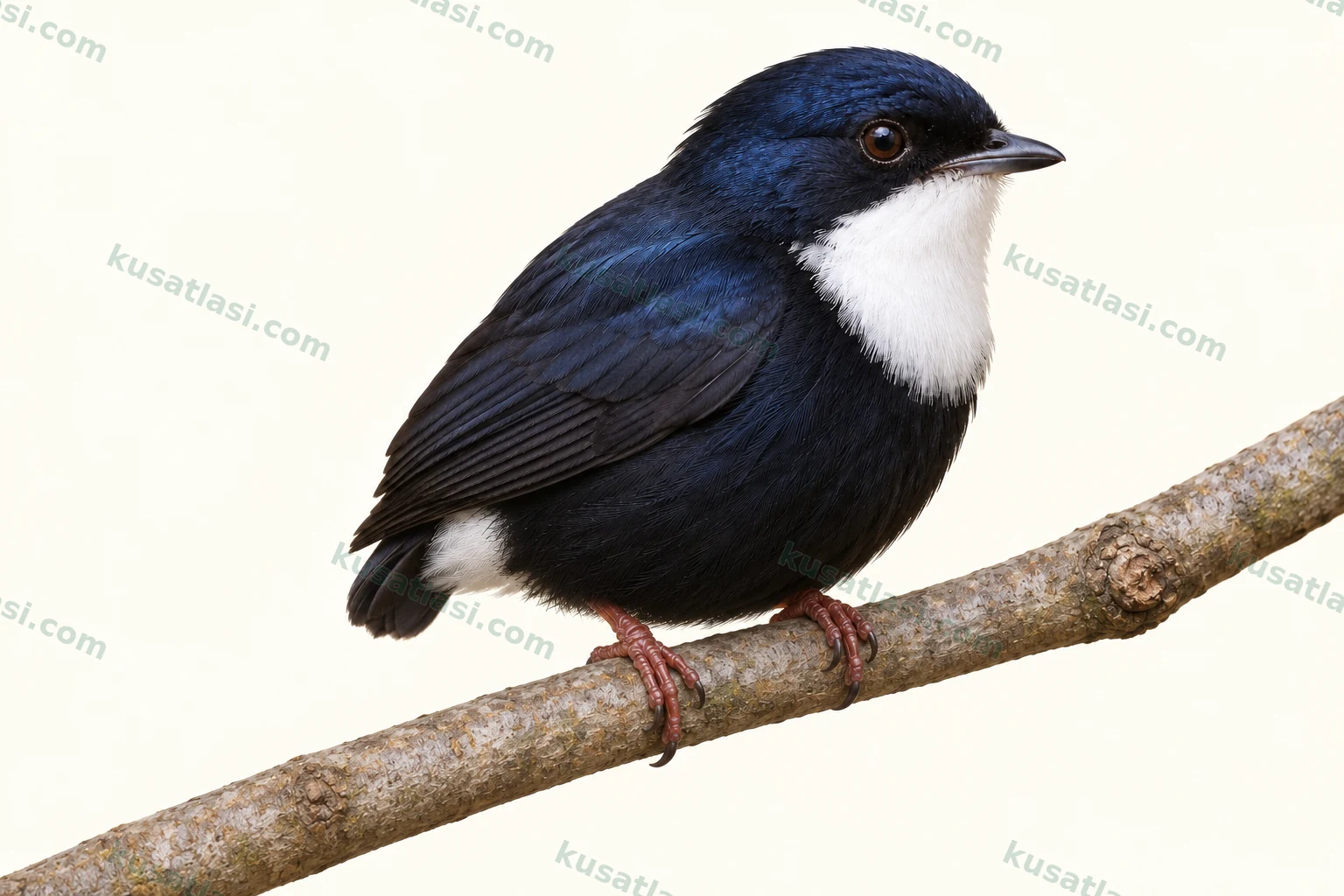
Small manakin of the northern Andes; the male has a blue-black body and a puffed white throat.
Biometrics
Length
Male9–10 cm
Female9–10 cm
Shared species value
Wingspan
MaleData unavailable
FemaleData unavailable
Weight
Male10.7–11.1 g
Female12.7 g
White-bibbed Manakin
Northern Colombia and western VenezuelaObservation guide in its natural range
Look for three features together
Do not rely on a single featureBlue-black; the white throat can be puffed out.
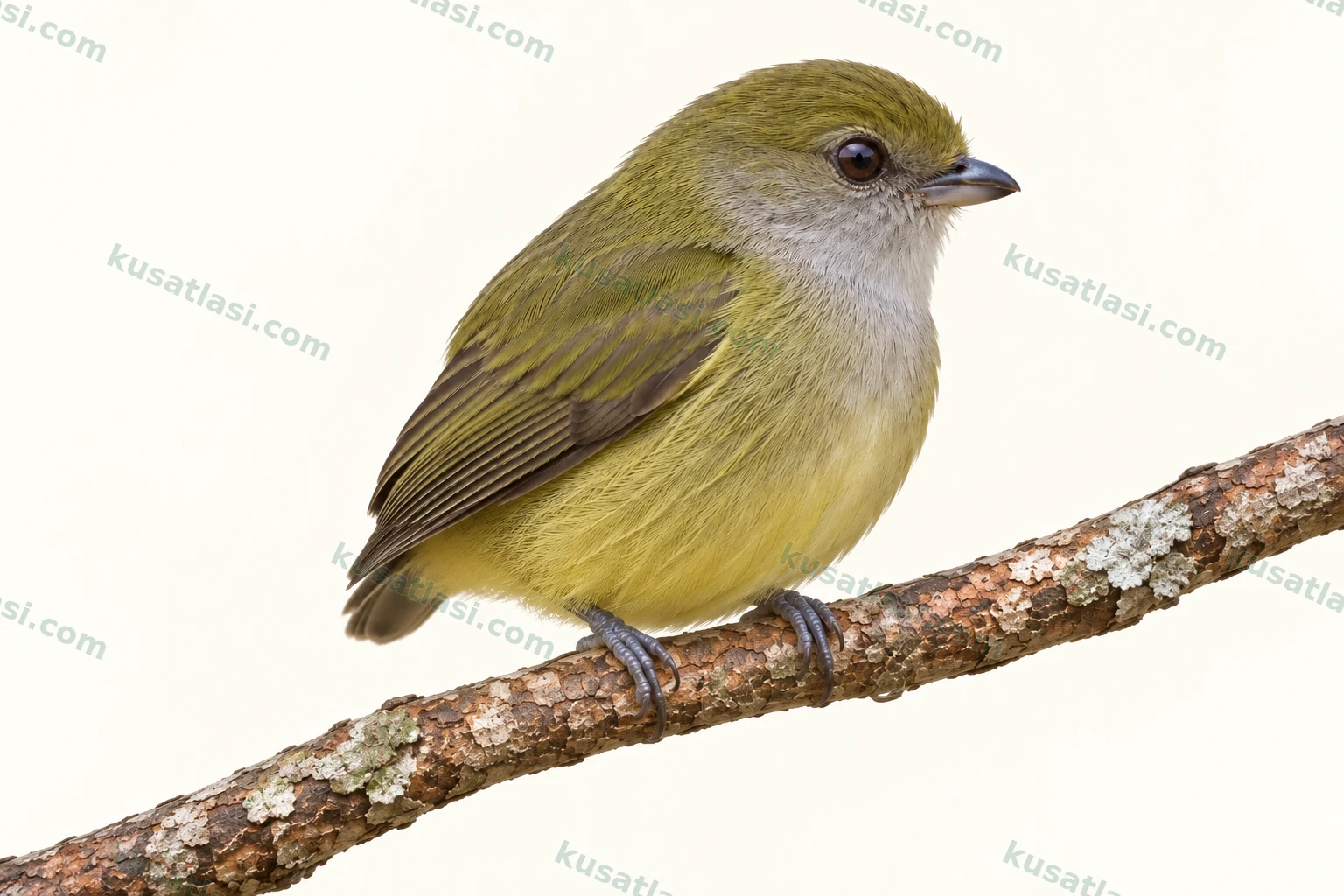
Olive-green upperparts, grey throat, yellowish underparts.
Colombia and Venezuela; distinguish the old name from altera.
Compare male and female
 FemaleMale
Male and female differ markedly; a detailed juvenile key was not found.
Where to look in its natural range?
Lower and middle layers of humid forest and its edges.
Seasonal elevational movements reported; no detailed route.
All months: Data unavailable
January
February
March
April
May
June
July
August
September
October
November
December
Nest, egg and incubation
Nest, eggs and developmental periods of the current narrow taxon unverified.
Thin, soft, insect-like notes.
Do not play recordings to attract birds; observe quietly, especially near nests.
Species information
Quick identification
The White-bibbed Manakin Corapipo leucorrhoa is a small manakin of the northern Andean belt of Colombia and Venezuela. The adult male has a distinctive blue-black body and puffed white throat. White-bibbed Manakin is its current English name; the broader use of leucorrhoa in older sources may also include Corapipo altera, now a separate species.
General appearance and posture
The male looks small, plump and dark; when puffed out, the white throat feathers contrast strongly with the body. The female has more subdued green and yellow tones.
Males, females and young birds
The female has olive-green upperparts, a greyish throat and yellowish underparts. Her grey throat is useful when comparing female manakins. The adult male's colours should not be sought in females. An adequate field key for every juvenile moult stage was not found; a bird without mature male plumage is not necessarily female.
Appearance in flight
It moves in the lower and middle forest layers. Much older display research concerns altera in Central America or gutturalis in the Guiana region. Their detailed dives, wing sounds and flight sequences have not been assigned as confirmed behaviour of present-day leucorrhoa.
Voice and behaviour
The Cornell species account reports thin, soft, insect-like “s-e-e-e” notes, which may be hard to hear. It occurs locally inside forest and at its edge. The availability of sound recordings does not mean that the functions and seasons of all calls have been scientifically explained.
Similar species
Male Corapipo altera looks similar; current range and taxonomic identity are especially important. In female manakins, assess the grey throat with green upperparts and yellowish underparts. The name leucorrhoa in an old Costa Rican study does not mean that the research concerns today's Colombian–Venezuelan species.
World distribution
Current AviList and Cornell accounts place it in the northern Andes of Colombia and Venezuela. Central American manakin populations are separated as Corapipo altera. One subspecies is accepted. Local encounters occur in the lower and middle layers of forest and its edges.
Status in its natural range
The checked AviList entry for the narrow taxon gives NE, Not Evaluated. Least Concern records using a broader leucorrhoa concept are not silently transferred to this narrow taxon. The assessment match for the current separate taxon is tracked independently.
Movements
The Cornell account mentions seasonal elevational movements. Exact routes, dates and distances travelled by individuals were not verified. Numerical results of migration research in Costa Rica under the old broad name are not presented as this species' journeys.
Breeding habitat
It uses humid forest undergrowth, edges and secondary woodland. Records extend from lowlands to foothills. Looking in lower and middle forest layers does not mean that it is exclusively ground dwelling.
Nest site
Nest structure, a reliable clutch size, incubation and fledging periods were not verified for the narrow taxon. Two eggs and Central American breeding information from the old broad leucorrhoa account are not treated as confirmed data here. A related species' display ground is not an egg-laying nest.
Daily use of space
It searches for food in vegetation layers along forest edges and inside forest. The current account reports local, sparse encounters. Verified quantitative information on feeding-area size and individual use of display sites was not found.
What does it eat?
Ecological sources classify it as a fruit eater. A plant list and food proportions tied to the current narrow taxon were not found. The many fruit species reported in Costa Rica are not listed here without accounting for the separation of altera.
How does it obtain food?
It feeds by reaching fruit in vegetation. An ecological classification of taking fruit in flight does not mean that every visit or capture was directly observed. A detailed regional feeding sequence and daily consumption were not verified.
The scope of a scientific name can change
The American Ornithologists' Union taxonomic account explains that altera and leucorrhoa were combined in some older classifications, and that differences such as wing-feather structure were used in recognizing separate species. A study's country and specimen identities therefore matter alongside its name.
The female's grey throat
The conspicuous adult male may be easy to recognize, whereas the female's olive-green upperparts and yellowish underparts can resemble other manakins. The grey throat helps in this situation. Inadequate descriptions of young birds prevent sexing a bird solely from subdued colours.