

World Birds IUCN statusLC · Least ConcernGlobal IUCN. BirdLife v10 (2025); taxon matching AviList 2026 / IOC 15.2; checked: 29.10.2026. The list year is not the species’ assessment date. Source and method · BirdLife OrderPasseriformesPerching birds FamilyTityridaeTityridae
White-naped Xenopsaris
Xenopsaris albinucha
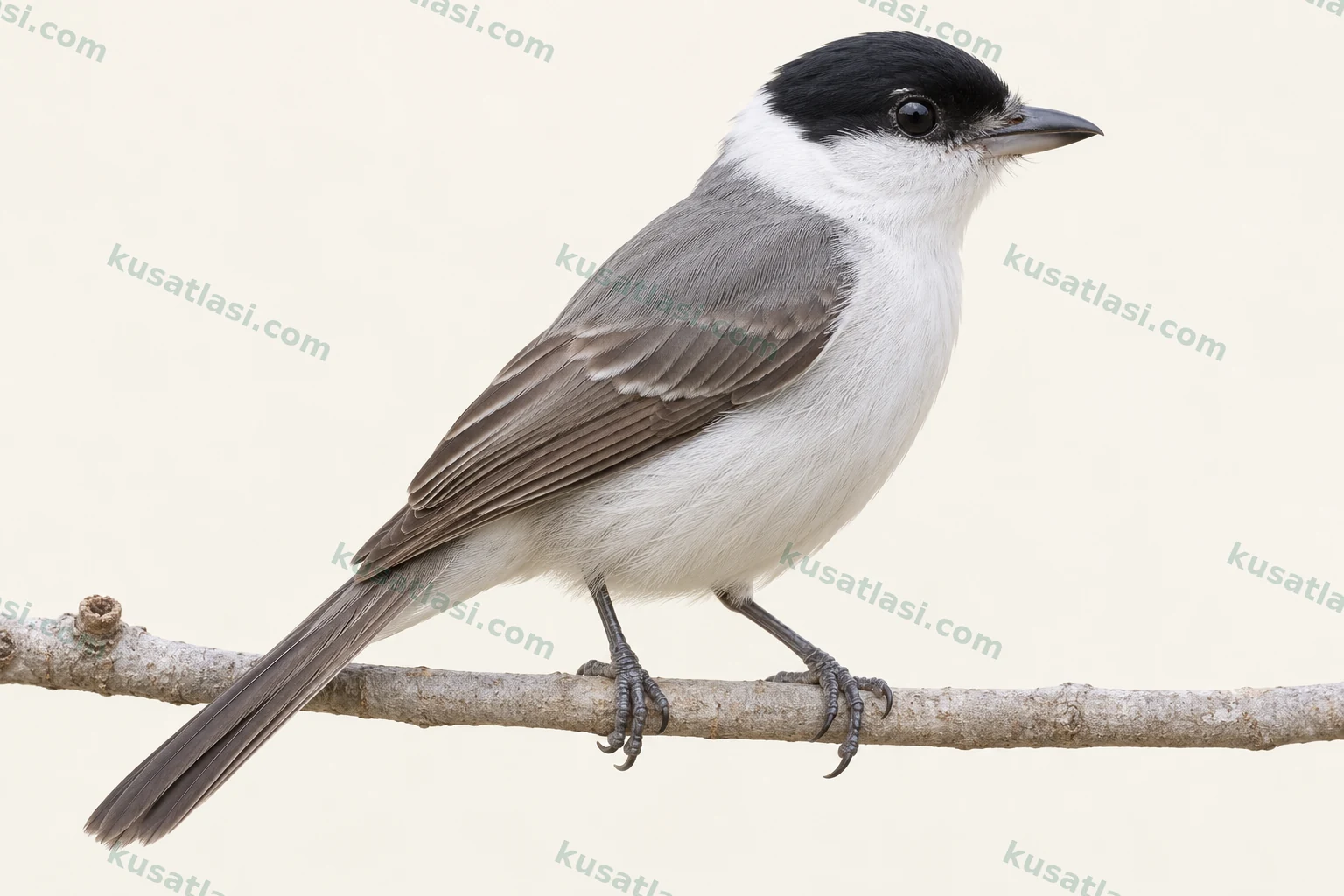
Small dark-crowned South American bird with a pale nape; migration and plumage vary with population and season.
Biometrics
Length
Male12–13 cm
Female12–13 cm
Shared species value
Wing length
Male6.39 cm
Female6.39 cm
Shared species value
Weight
Male6.5–10.5 g
Female6.5–10.5 g
Shared species value
White-naped Xenopsaris
Northern South America, the Caatinga and discontinuous southern areasObservation guide in its natural range
Look for three features together
Do not rely on a single featureCheck the crown, pale nape and pale area between eye and bill together.
Outside the breeding season, do not determine sex conclusively by crown colour alone.
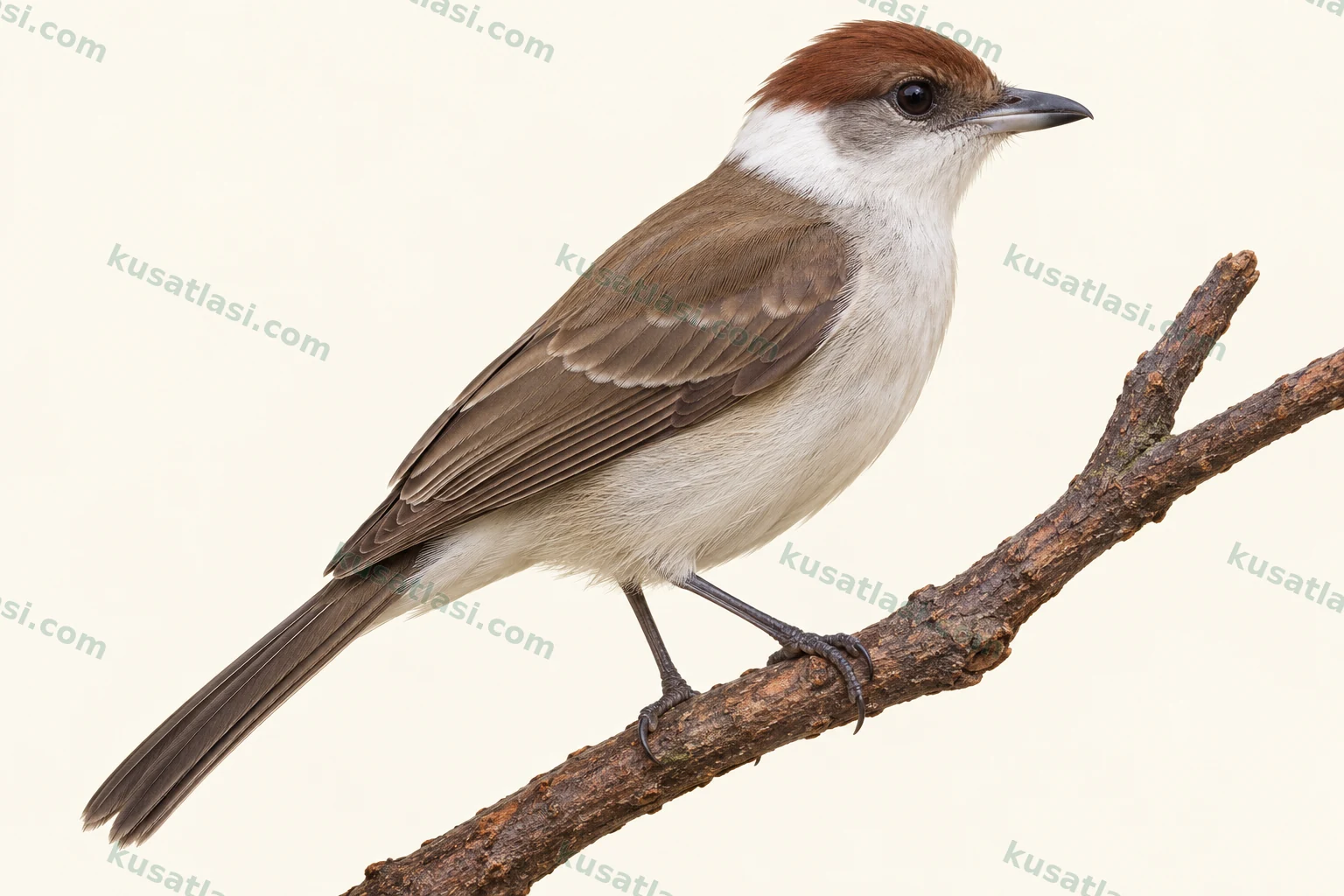
Compare male and female
 FemaleMale
Typical male: black crown; female: chestnut crown. Non-breeding appearance makes this distinction harder.
Where to look in its natural range?
Savannas and open woodland; often exposed branches near water.
Northern population resident; southern migration and probable partial migration in the Caatinga population. Dated Argentine nests are shown separately in the calendar.
January
Population-dependent movements and regional nest examples. Buenos Aires: incubation and chick-care record.
February
Population-dependent movements and regional nest examples. No verified regional date is given for this month. This does not imply local absence.
March
Population-dependent movements and regional nest examples. No verified regional date is given for this month. This does not imply local absence.
April
Population-dependent movements and regional nest examples. No verified regional date is given for this month. This does not imply local absence.
May
Population-dependent movements and regional nest examples. No verified regional date is given for this month. This does not imply local absence.
June
Population-dependent movements and regional nest examples. No verified regional date is given for this month. This does not imply local absence.
July
Population-dependent movements and regional nest examples. No verified regional date is given for this month. This does not imply local absence.
August
Population-dependent movements and regional nest examples. No verified regional date is given for this month. This does not imply local absence.
September
Population-dependent movements and regional nest examples. No verified regional date is given for this month. This does not imply local absence.
October
Population-dependent movements and regional nest examples. No verified regional date is given for this month. This does not imply local absence.
November
Population-dependent movements and regional nest examples. Santa Fe: nest record with three eggs.
December
Population-dependent movements and regional nest examples. No verified regional date is given for this month. This does not imply local absence.
Nest, egg and incubation
Open cup nest of fine fibres. Three eggs in the Santa Fe record; 15–16 days in the nest for the Buenos Aires chick. The complete incubation period could not be verified.
Fine short notes and sequences of high, quivering whistles.
Do not play recordings to attract birds; observe quietly, especially near nests.
Species information
Quick Identification
The White-naped Xenopsaris Xenopsaris albinucha is a small bird of open woodland in South America. The adult male’s dark black crown contrasts with its pale nape and the pale area between eye and bill. The upperparts are grey and the underparts pale. Its small bill and slender build should also be checked; a black crown alone is not unique to this bird.
Current classification places the species in the family Tityridae and genus Xenopsaris. Its treatment under different family names in some older publications does not mean that it is a different bird. An older record must be matched by scientific name and the population studied. A similar posture on a branch alone establishes neither relationship nor certain identification.
General Appearance and Posture
It may sit upright on bare branches. Because the tail and body can turn to different angles on a thin branch, proportions in a single photograph can mislead. A concealed nape does not mean that the pale nape marking is absent. When the bird turns its head naturally, check the pale area between crown and back again.
The pale underparts may look almost white in bright sunlight and dull pale in shade. An overall yellow cast in a photograph is not evidence that an individual genuinely has yellow underparts. Compare markings on the head and body in the same light and on the same bird. In particular, do not force a non-breeding appearance to fit the typical adult-male description.
Males, Females and Young Birds
The typical adult female has browner upperparts and a chestnut crown. However, not every brown-crowned individual can safely be called a female. Research on seasonal plumage reports that sexing becomes harder outside the breeding season. Retain both the date and region and the limits of identification from appearance.
Research has treated the scaly-looking crown of young birds as a useful age clue. This alone is not a timetable covering every juvenile stage. A moulting bird may carry old and new feathers together; a head pattern combining two appearances provides neither a certain sex nor an age in days.
At a nest in Buenos Aires, a small chick had a pink mouth interior, yellow gape edges and pale-grey first down. These are records of nestling development, not identification marks of an adult on a branch. There is no need to make a chick open its mouth or approach a nest to see them. Details inside nests are recorded only under the conditions of authorized scientific observation.
Appearance in Flight
A short flight may reveal pale underparts and darker wings and tail. Yet the distinction between black crown and nape can disappear as the head turns quickly. Rather than call a single flying silhouette an adult male, wait until the head and bill can be seen again after a natural landing.
The sources examined did not provide a measurable pattern key that identifies this species conclusively from one particular wing surface alone. A pale wing edge can be confused with reflected leaves or photographic sharpening. Do not invent flight-feather details when the wing is not open.
Voice and Behaviour
Cornell’s account describes fine short notes and an unusual song sequence of high, quivering whistles. Smith’s Argentine observation describes a rising-pitched call from a bird foraging within a tree; it was not recorded with a sound recorder. A written call description and an actual acoustic analysis are not presented as the same level of evidence.
While foraging, it may use the inside of trees and nearby exposed branches. A long stay on a branch does not show that a nest is there. Driving away other birds approaching a nest was observed in the Buenos Aires record; observers should not provoke the bird to reproduce this behaviour. Retreating allows natural food delivery and care to continue.
Confusable Species
Compared with a male Pachyramphus rufus, its slimmer build, smaller bill and pale white rather than grey nape are important. If the back of the head is hidden, a grey back and black crown alone do not separate them. Female appearances must be assessed separately; male identification marks cannot simply be transferred to females.
With similar small grey-and-white, dark-headed tree birds, check bill shape, pale head areas and the actual habitat together. A sighting near a stream does not make every grey-and-white bird this species. Seasonal plumage changes that make sexing difficult also remind us not to settle identification before all the markings are seen.
World Distribution
Its discontinuous distribution extends from northern South America towards Brazil, Bolivia, Paraguay and Argentina. Research distinguishes the northern Venezuela–Guyana region, the Caatinga of north-eastern Brazil and the southern breeding populations. Not all intervening records are treated as areas where the same population breeds continuously.
Status in Its Natural Range
It is categorized as Least Concern. Scattered observations around open woodland and savanna do not show that it occurs continuously and abundantly throughout Amazonian forest. It is not presented as a bird preferring dense humid forest. Particular nest records in Argentina demonstrate breeding in those places; they are not a single timetable or population count for all South America. Conservation status also does not guarantee that it will be easy to see in a particular place today.
Migration
Lima and Lees’s study assesses the northern population as resident, the southern one as migratory and the north-eastern Brazilian population as probably partially migratory. Southern birds move towards central Brazil outside the breeding season; the precise destination of Caatinga birds is unclear. The results are based on seasonal comparisons of records, not instrument-tracked journeys of every individual. Consequently, no invented migration arrow is drawn on the map. Observation points can be examined by season, but a single point does not define a breeding or wintering boundary.
Breeding Habitat
It may use savannas, open woodland and vegetated surroundings near water. It is not described as a bird of dense humid forest interiors throughout its range. Documented Argentine nests are associated with open woodland or vegetation beside a channel; these examples do not prove that every breeding site has the same structure.
Nest Site
In Santa Fe in November 1976, an open cup nest of fine plant fibres in a tree fork held three spotted white eggs. Another nest documented in Buenos Aires in January 1996 was built of fibres, hair-like material and exterior spider webs. Two adults were seen incubating and tending young there, and the chick’s time in the nest was reported as 15–16 days. The complete incubation period cannot be calculated from this record.
Daily Habitat Use
It forages in trees and may perch on exposed branches. Do not open up vegetation around a possible nest; observe from a distance without blocking a food-carrying bird’s route.
What Does It Eat?
It feeds on insects and fruit. This general description does not mean that the proportion of fruit to insects is the same everywhere. A detailed seasonal prey list covering its entire range was not verified. A bird beside fruit in a tree is not recorded as eating that plant unless it is seen taking the fruit. If a tiny object in the bill cannot be identified, do not name a particular insect.
How Does It Forage?
Smith’s natural observation in Tucumán describes a bird moving through a tree and picking up small prey. This is one individual’s behaviour, not evidence that all foraging takes place on the ground or only in the air. Track a change of perch separately from actual prey capture. Research discusses a possible relationship between southern birds’ migration and food and climatic conditions; this explanation is not the result of an experiment counting all prey. Watch the natural branch surroundings without putting out food to bring the bird closer.
Residency Is Not the Same in Every Population
The seasonal occurrence of records in northern and southern South America differs. The migration study distinguished three breeding populations. A single general “resident” label therefore does not explain all the species’ movements. A mapped sighting point also does not mean the same thing as a place with actual evidence of breeding.
Head Colour Does Not Identify Sex in Every Season
Research on seasonal appearance reports that changes outside the breeding season prevent some individuals from being sexed by crown colour alone. The scaly juvenile appearance and transitional moult appearance need careful comparison. A single photograph without date and region does not represent the whole annual plumage cycle.
Egg and Chick Counts Are Different Information
Three eggs were documented in the Santa Fe nest, whereas one chick was described at a different nest in Buenos Aires. It is incorrect to substitute the second nest’s chick count for the first nest’s egg count. Retain the developmental stage at which a nest was first seen; do not manufacture an incubation period by assuming days before it was found.
A Chick’s Pink Mouth Interior Is a Scientific Detail
The pink mouth interior of a nestling is a feature researchers compared with other bird groups. Current family classification does not rest on this one character alone. There is also no need to disturb a chick to see the detail. Adult field identification uses the appearance of head, nape, bill and body; nestling details are not transferred to adult plates.
The Viewing Angle May Hide the Nape
The pale nape is useful in comparison with the Cinereous Becard, but a White-naped Xenopsaris facing the observer may conceal its nape. Waiting for a natural head turn allows a more reliable comparison than treating a hidden marking as absent. Check the slender body and small bill on the same bird too; proportions of another bird in another pose are no substitute.