

World Birds IUCN statusLC · Least ConcernGlobal IUCN. BirdLife v10 (2025); taxon matching AviList 2026 / IOC 15.2; checked: 29.10.2026. The list year is not the species’ assessment date. Source and method · BirdLife OrderPasseriformesPasserines FamilyClimacteridaeClimacteridae
White-throated Treecreeper
Cormobates leucophaea
White-breasted treecreeper of eastern Australian forests, seeking ants in bark crevices.
Biometrics
Length
Male14–17 cm
Female14–17 cm
Shared species value
Wingspan
Male19–26 cm
Female19–26 cm
Shared species value
Weight
Male17–24.4 g
Female17–24.4 g
Shared species value
White-throated Treecreeper
Eastern and southeastern AustraliaObservation guide in its natural range
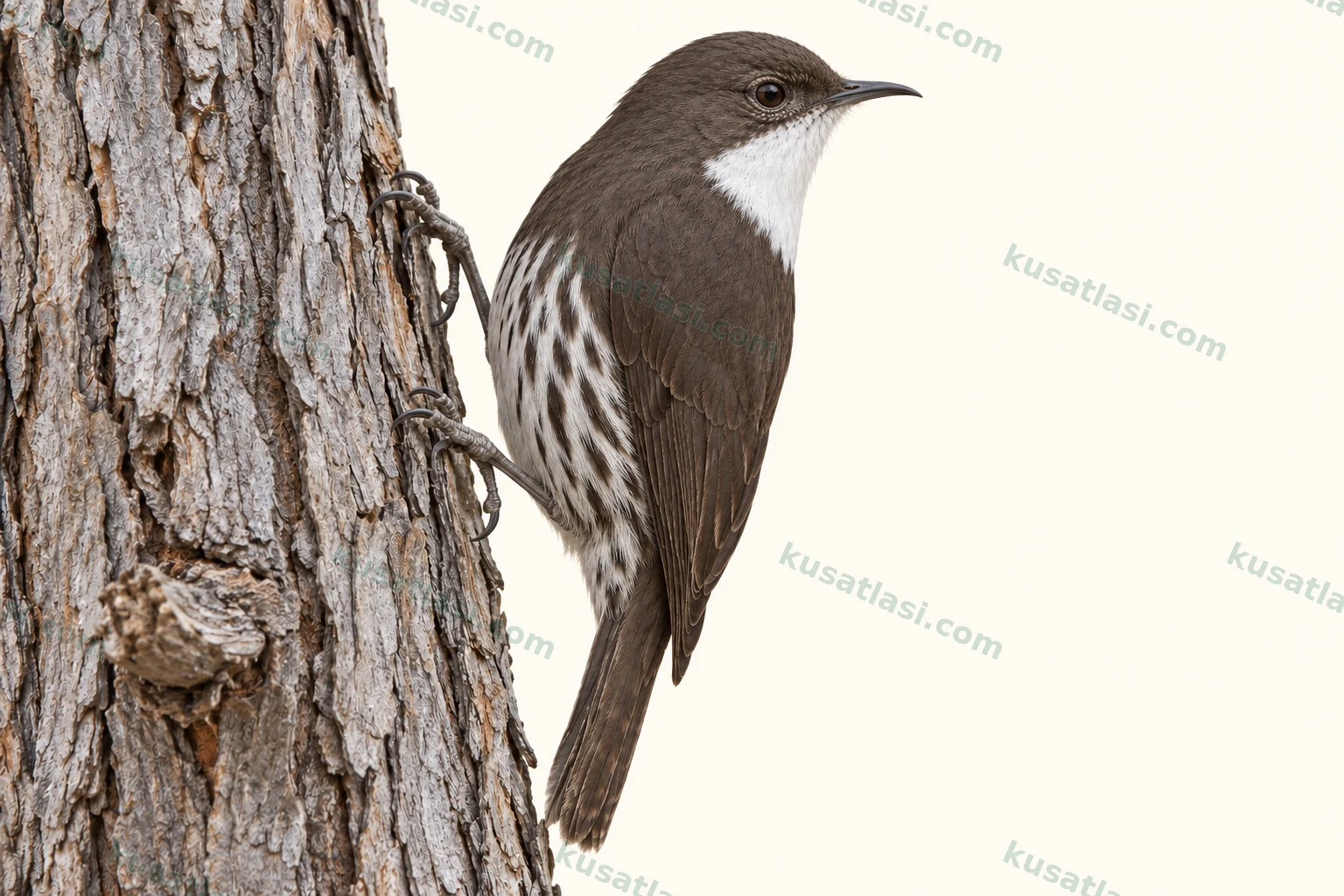
Look for three features together
Do not rely on a single featureWhite throat and breast, streaked flanks and dark back.
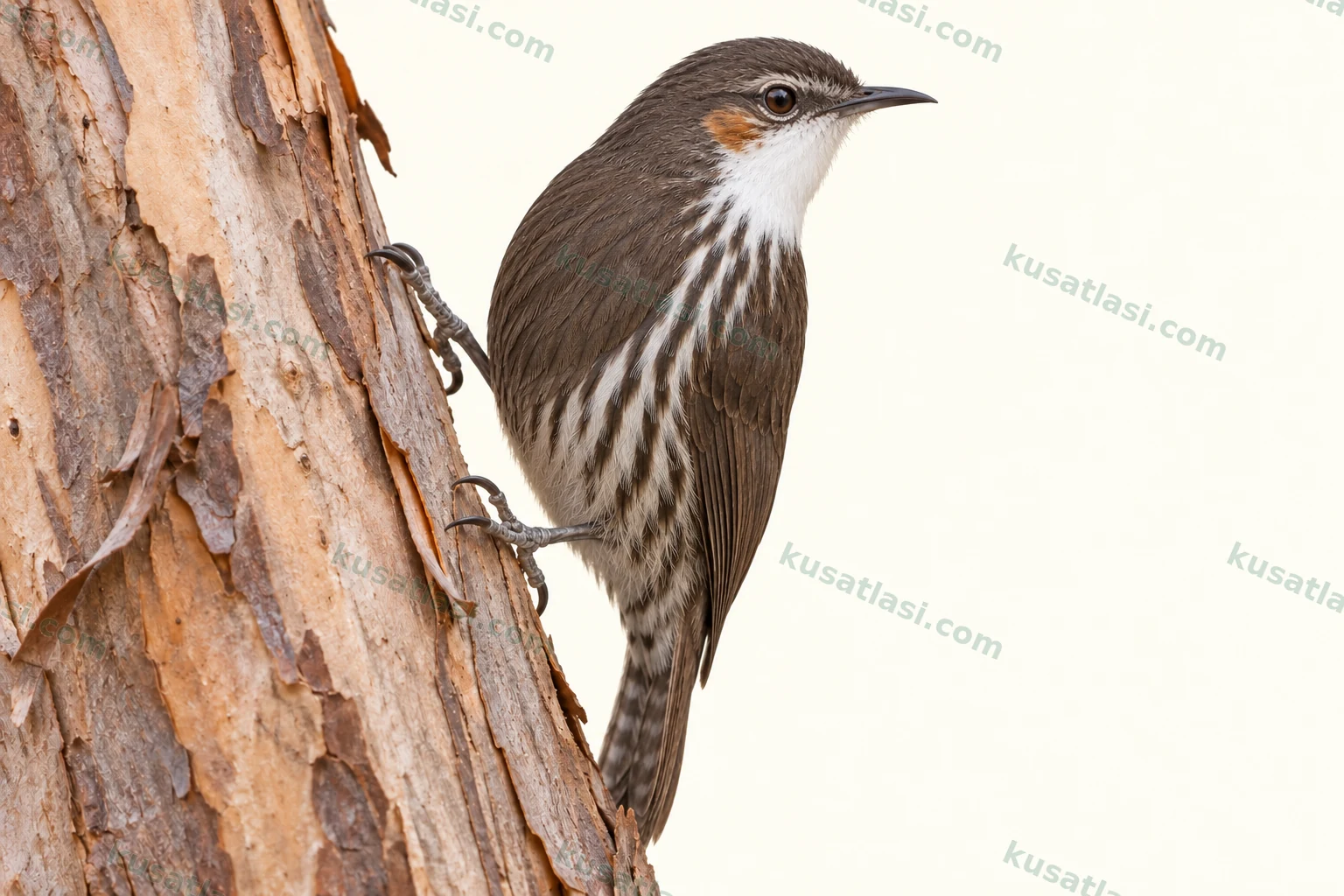
Small orange patch on the side of face and neck.
Climbs trunks head-up; strong whistled call.
Compare male and female
 FemaleMale
Adult female’s small orange face/neck patch; juvenile key unverified.
Where to look in its natural range?
Trunks and large branches in forest, woodland and tree-lined watercourses.
Resident; regional breeding period August–January. Wet Tropics guide: August–December; local periods are not generalised across the range.
January
Australia, Australian Museum species account: reported general breeding period.
February
Data unavailable
March
Data unavailable
April
Data unavailable
May
Data unavailable
June
Data unavailable
July
Data unavailable
August
Australia, Australian Museum species account: reported general breeding period. Northern Queensland Wet Tropics, Australia: breeding period in the local BirdLife guide.
September
Australia, Australian Museum species account: reported general breeding period. Northern Queensland Wet Tropics, Australia: breeding period in the local BirdLife guide.
October
Australia, Australian Museum species account: reported general breeding period. Northern Queensland Wet Tropics, Australia: breeding period in the local BirdLife guide.
November
Australia, Australian Museum species account: reported general breeding period. Northern Queensland Wet Tropics, Australia: breeding period in the local BirdLife guide.
December
Australia, Australian Museum species account: reported general breeding period. Northern Queensland Wet Tropics, Australia: breeding period in the local BirdLife guide.
Nest, egg and incubation
Tree hollow; two–three eggs. Female incubates; both parents care for young. Compiled representative durations: incubation 19.5 days, fledging 25.5 days.
Strong clear repeated whistled call.
Do not play recordings to attract birds; observe quietly, especially near nests.
Species information
Quick identification
White-throated Treecreeper Cormobates leucophaea is a small brown bird feeding on tree trunks in eastern Australia. Identify it by white throat and breast, pale dark-edged flank streaks, a long curved bill and head-up climbing together. White-throated Treecreeper denotes the same species.
General appearance and posture
Head and back are dark grey-brown; their similar colour helps comparison with related treecreepers. Dark streaking around the white front helps distinguish it from birds with a plain pale breast. The undertail is cross-barred. The fairly long, slightly downcurved bill reaches bark crevices.
Males, females and young birds
The female's small orange patch on the side of the face and neck is the main adult sex clue reported by the museum and BirdLife guide. Since it is small, its absence from a view with the side concealed does not prove a male. Both adults share the basic brown, white and streaked appearance. The examined sources provided no reliable detailed juvenile field key.
Appearance in flight
A pale warm reddish band can show on the opened wing. The Australian Museum reports short twisting flights. Cornell's account also emphasises a broad pale wingband in flight. Lighting affects its colour, so a white or reddish impression alone does not mean a different species.
Voice and behaviour
Its distinct clear whistled call often precedes a sighting. Museums Victoria describes it as loud and repeated. It searches upwards on trunks, sometimes winding around them. Because it is rarely on the ground, looking at bark and large branches is more useful.
Similar species
Head-to-back colour and facial marks matter in comparison with Red-browed Treecreeper Climacteris erythrops. Here the head shares the back's dark grey-brown appearance; the red-browed species has a grey head more clearly distinct from its brown back. The female's small orange side patch is not a wholly reddish eyebrow.
Other Australian treecreepers also cling to trunks and take food from bark. Assess white throat and breast, streaked flanks, facial mark and voice together; climbing a tree alone does not identify the species.
World distribution
It is endemic to Australia. Current AviList separates five subspecies. Different belts extend from northern Queensland's Wet Tropics uplands to the Clarke–Connors area, from the central Queensland coast to New South Wales, and southeast to mountainous forests of South Australia. The Mount Lofty form grisescens is listed separately.
Status within its natural range
The global category is Least Concern. Museum accounts concentrating on the southeast do not exclude the northern Queensland form; the current taxon list and Wet Tropics guide specify that northern area. Museum records may spell the name leucophaeus, an older spelling of the same species now accepted as leucophaea.
Movements
It is resident and holds permanent areas. No regular long-distance migration route was verified. Northern and southern forms occurring in different places do not imply annual travel between those areas.
Breeding habitat
Rainforest, wet forest, woodland and tree-lined watercourses are used. Bark-covered trunks provide feeding surfaces and tree hollows provide nest sites. There is also a feeding record from dry heathy forest in southern Victoria; it is not restricted to closed tropical rainforest.
Nest site
The female lines a tree-hollow nest with soft materials such as bark, hair and fur. Museums Victoria reports typically two–three eggs. The female incubates and both parents care for young. The Australian Museum gives August–January, while the local Wet Tropics guide gives August–December; read these within their regional scopes. Two breeding attempts in a season may be possible, not compulsory for every pair.
The shared species row in a life-history compilation gives incubation as 19.5 days and fledging age as 25.5 days. These are compiled representative durations, not evidence that every studied nest develops to identical half-day precision.
Daily use of space
Trunks and large branches are visited within a permanent area. Sources report head-up climbing while probing beneath bark and into cracks. Daily distance travelled and identical area sizes across regions were not verified.
What does it eat?
Ants are the main food; other invertebrates and nectar are also taken. A scientific observation documented a female in Victoria tearing off and swallowing white pieces of Laetiporus portentosus growing on a tree. Whether the pieces contained larvae was unclear; fungus is not declared its staple food.
How does it forage?
It progresses over trunks and large branches, probing bark crevices with its long curved bill. It takes prey while perched or climbing head-up. Bark with accessible ants is a different feeding environment from open soil. In the fungus observation, the bird worked on the underside and struck forcefully to remove pieces; that particular event is distinguished from ordinary insect searching.
Two parents caring in a hollow
The female prepares the nest and incubates; both parents share care of young. Museums Victoria states that, unlike some other Australian treecreepers, cooperative rearing with helpers is not its usual breeding system. Group care by another member of the family is not transferred to this species.
Limits of a fungus observation
On 10 July 2013 a female observed at Yuinup in Victoria tore pieces from the underside of a fungus for several minutes. Researchers could see that she deliberately selected the fungus but could not measure its nutritional benefit. A suggested link with winter insect scarcity is a possible explanation, not an experimentally established cause.
A local northern form
BirdLife's Wet Tropics guide describes northern Queensland birds with regional size, range and breeding period. These details are not copied to all southern birds. Different subspecies occupying different belts make it difficult for one national calendar to represent every local condition.
A route along the tree
The revealing movement is head-up progression winding around the trunk. A whistle draws attention to the tree; the moving bird may show its underside and then its back. Combining both surfaces' marks is more useful than deciding from a brief view of one.