

World Birds IUCN statusLC · Least ConcernGlobal IUCN category. BirdLife v10 (2025); taxon matching: AviList 2026 / IOC 15.2; checked: 29.10.2026. The list year is not the species assessment date. Source and method · BirdLife OrderPasseriformesPerching birds FamilyMeliphagidaeMeliphagidae
White-throated Honeyeater
Melithreptus albogularis
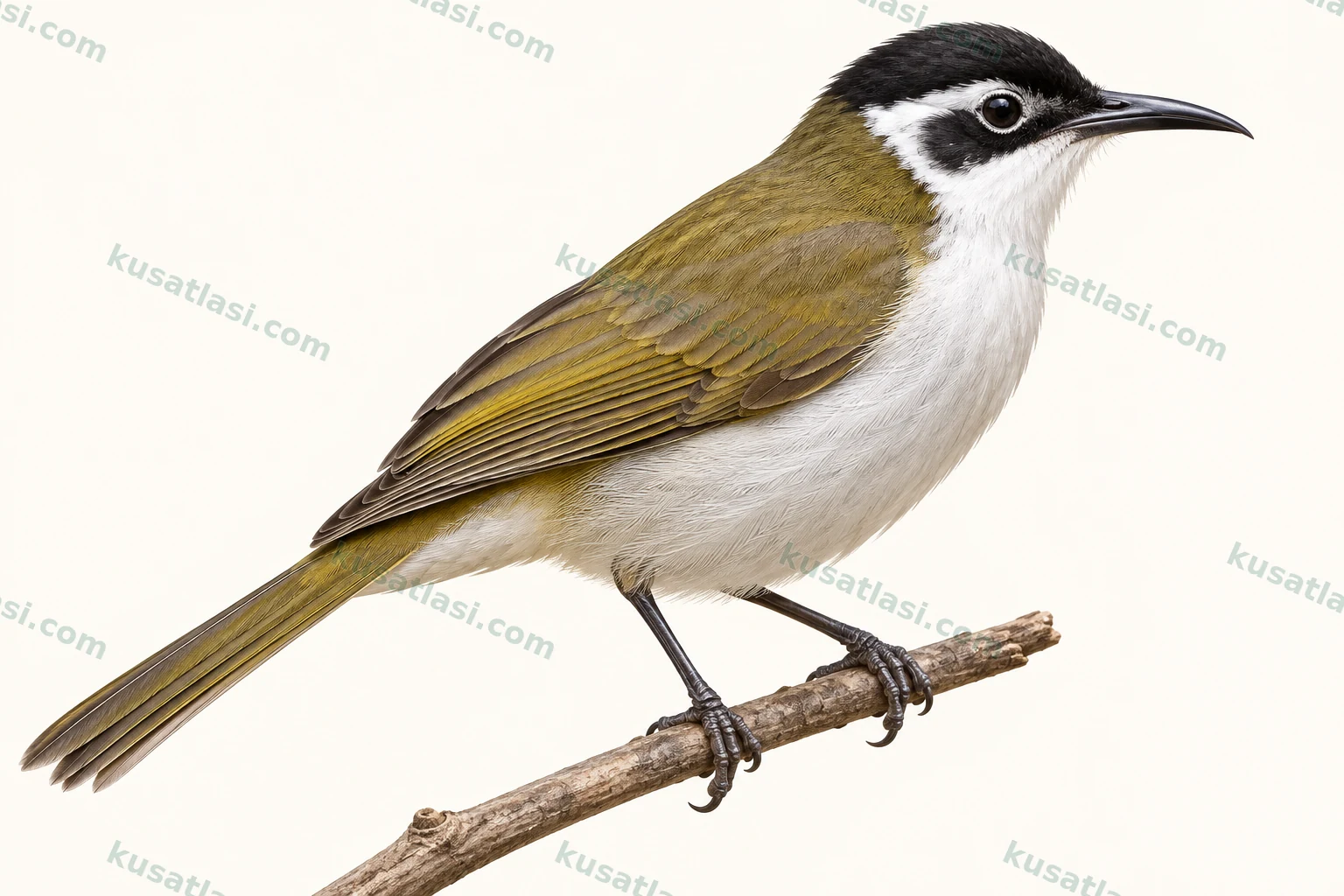
Look for a black head, a white nape crescent and pale chin and throat, together with a greenish back, white underparts and a bluish white eye surround. Young birds have a brown head.
Biometrics
Length
Male11–15 cm
Female11–15 cm
Shared species value
Wing length
Male7.1 cm
Female7.1 cm
Shared species value
Weight
Male10–15 g
Female9–15 g
White-throated Honeyeater
Northern and eastern Australia and the lowlands of southern New GuineaObservation guide in its natural range
Look for three features together
Do not rely on a single featureA white crescent lies behind the black head. The pale area around the eye is a separate area of skin.
The chin and throat are pale. A shadow from the head does not count as black chin feathers.
Young birds have a brown head and a pale bill base. This appearance does not identify a female.
Compare male and female
 FemaleMale
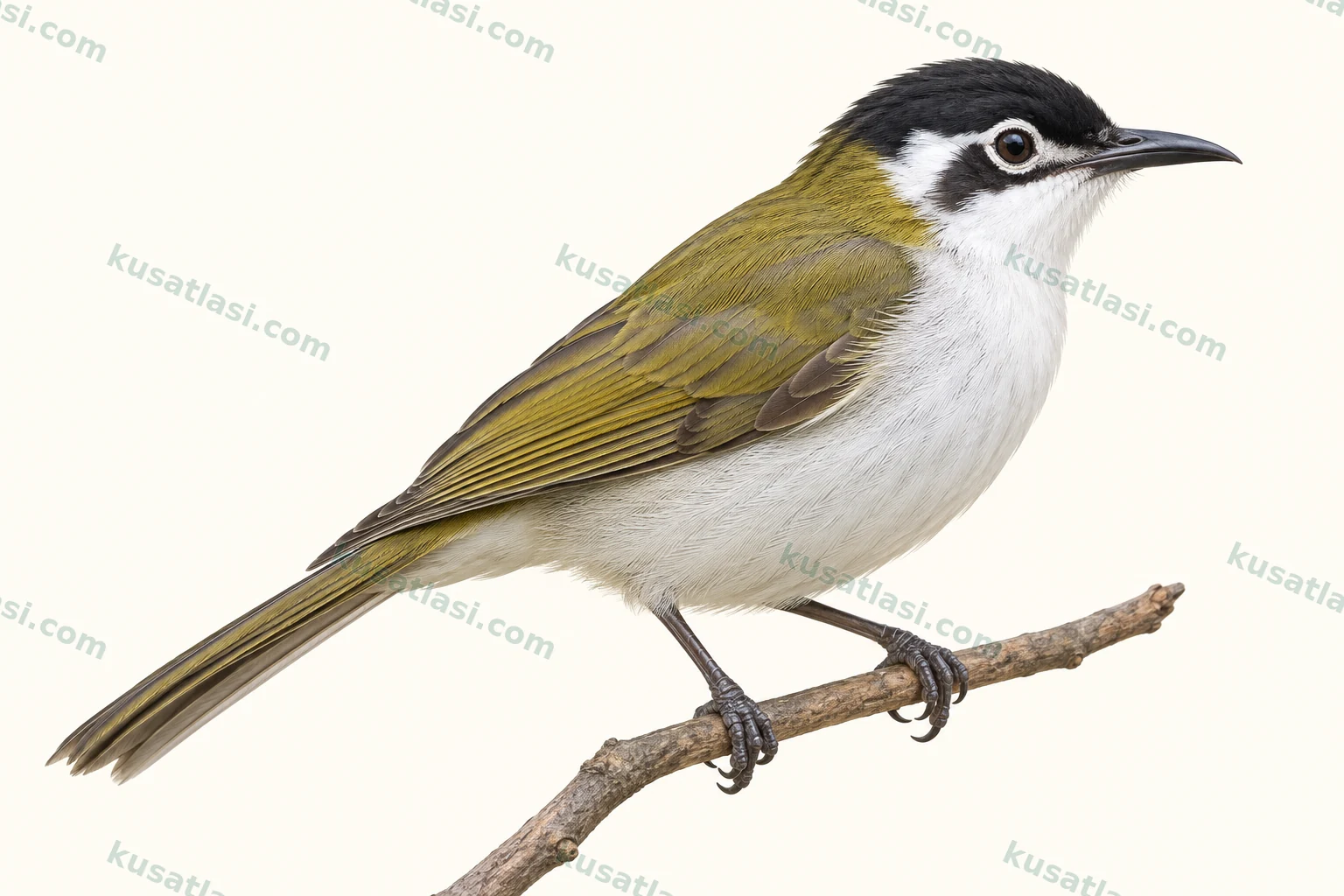
Adult males and females look alike, and their measurement ranges overlap. The brown head of young birds is not female colouring.
Where to look in its natural range?
Look in eucalypt forests, woodlands and New Guinea savannas.
The published egg-laying period for the Northern Territory is April–October. The October date of the two-egg Cooktown clutch is a separate record. No single calendar applies to the entire natural range.
January
It is resident in some regions of Australia. No long-distance migration route has been verified. No verified regional date was provided for this month. This does not mean that the species is locally absent.
February
It is resident in some regions of Australia. No long-distance migration route has been verified. No verified regional date was provided for this month. This does not mean that the species is locally absent.
March
It is resident in some regions of Australia. No long-distance migration route has been verified. No verified regional date was provided for this month. This does not mean that the species is locally absent.
April
It is resident in some regions of Australia. No long-distance migration route has been verified. A regional egg-laying period has been published for Australia's Northern Territory.
May
It is resident in some regions of Australia. No long-distance migration route has been verified. A regional egg-laying period has been published for Australia's Northern Territory.
June
It is resident in some regions of Australia. No long-distance migration route has been verified. A regional egg-laying period has been published for Australia's Northern Territory.
July
It is resident in some regions of Australia. No long-distance migration route has been verified. A regional egg-laying period has been published for Australia's Northern Territory.
August
It is resident in some regions of Australia. No long-distance migration route has been verified. A regional egg-laying period has been published for Australia's Northern Territory.
September
It is resident in some regions of Australia. No long-distance migration route has been verified. A regional egg-laying period has been published for Australia's Northern Territory.
October
It is resident in some regions of Australia. No long-distance migration route has been verified. A regional egg-laying period has been published for Australia's Northern Territory. The 1899 Cooktown museum clutch is a dated record of two eggs. It does not define the general season.
November
It is resident in some regions of Australia. No long-distance migration route has been verified. No verified regional date was provided for this month. This does not mean that the species is locally absent.
December
It is resident in some regions of Australia. No long-distance migration route has been verified. No verified regional date was provided for this month. This does not mean that the species is locally absent.
Nest, egg and incubation
The nest hangs from a slender drooping branch and is made of fine strips of Melaleuca bark. The clutch usually contains two speckled eggs. The duration of incubation and the number of days to first flight from the nest have not been verified.
It gives loud, simple whistles, singly or several in succession.
Do not play recordings to attract birds; observe quietly, especially near nests.
Species information
Quick identification
The White-throated Honeyeater Melithreptus albogularis is a small honeyeater with a short, slender bill. Look for a black head, a white crescent on the nape, pale underparts and a greenish back. The bare skin around the eye can look pale, bluish white. This area is separate from the eye itself. The chin and throat lack the distinct black patch seen in some similar honeyeaters. The English name White-throated Honeyeater refers to this pale throat. A white nape line alone does not establish the identification.
The accepted scientific name is Melithreptus albogularis. Conopophila albogularis shares the word albogularis but is another honeyeater. Its measurements, nest and voice cannot be attributed to this species. Current taxonomy recognises two subspecies. The nominate subspecies of northern Australia and the eastern inopinatus are geographical forms of the same species. Subspecies names in older publications do not always correspond exactly to current names. They do not distinguish males from females.
General appearance and posture
The adult's crown, sides of the head and upper neck are black. A white crescent curves around the back of the head and stands out against the dark feathers. The white nape feathers and the bare skin around the eye are separate areas. The crescent can be partly hidden as the angle of the head changes. It may be present even when it cannot be seen from the front.
The upperparts have green and yellowish olive tones. In the first detailed description, Gould called the back greenish wax yellow. The brown ground colour of the flight and tail feathers was edged with the same colour. The folded wing thus blends into the green of the back, whereas browner feather surfaces can be visible when the wing opens. Treating the whole wing as a single bright green surface in a photograph oversimplifies the actual feather pattern.
The chin, throat and underparts are white. The pale throat below the black head is important for identification. As the neck bends, dark feathers of the head can come in front of the chin. Shade can also make this area look dark. Distinguish actual black chin feathers from the shadow of the adjacent black head. The underparts do not become the green of the back, but light reflected from foliage can make white feathers look yellowish.
The bill is dark, slender and tapered. The adult iris is described as reddish brown, red or browner, depending on the source and the individual. A pale area around the eye in a small photograph should not be recorded as the iris colour. A historical description gives greenish grey feet and a bluish front surface to the legs. These subtle colours may be unreliable at a distance. Assess the head pattern, throat and body before trying to identify the bird from eye or foot colour.
Males, females and young birds
Adult males and females have similar head and body patterns. Gould noted that the female could generally be smaller. A modern banding summary says clearly that appearance and measurements cannot reliably establish sex. The overlap of measurement ranges is consistent with this warning. A black-headed bird should not automatically be called male or a smaller-looking bird female.
A young bird has a mid-brown crown. The bill is usually dark, although the base of the lower mandible and the gape can show pale orange-pink areas. These pale areas do not mean that the whole bill is yellow. Gould also described brown sides to the head and neck in young birds, and a less conspicuous bare area around the eye than in adults. Treating a brown head as female plumage confuses age with sex.
The banding summary reports that birds at an early stage retain some older, greyer brown flight feathers, tail feathers and wing coverts. The head can darken before the whole wing takes on the adult appearance. Feather replacement is gradual, and a photograph alone cannot establish the bird's exact age in months. When comparing young and adult birds, consider the head, bill base and feather condition together.
Appearance in flight
A moving bird can show a small body, pale underparts and darker flight feathers. In short flights in the canopy the nape crescent is visible only from some angles. Greenish edges on the folded wing should not be extended to the whole underwing. The brown flight feathers in the historical description are considered separately. A brief view of the silhouette is insufficient to distinguish similar small honeyeaters.
Voice and behaviour
A specialist account describes loud, simple whistles, which can be heard singly or in short succession. Gould also noted conspicuous whistles coming from among the leaves. A written description does not replace an actual recording. Match the sound to the bird you see, as other birds in the same area can be confused with it. Historical observations describe agile birds feeding among fine branches and leaves and clinging to the ends of flower clusters.
Similar species
The White-naped Honeyeater Melithreptus lunatus has a similar black head and pale underparts. The White-throated Honeyeater can have a broader, longer nape band. Also look at the bluish white bare skin around the eye. The region and more than one view of the head matter, because one view with the nape obscured is insufficient.
In comparison with the Black-chinned Honeyeater Melithreptus gularis, look for the dark area under the chin. The chin and throat remain pale in the target species. A shadow from the head does not count as dark chin feathers. Do not base the comparison only on a small body and black crown.
Global range
Northern and eastern Australia form an important part of its natural range. Current lists associate the nominate subspecies with northern areas from the Kimberley to Cape York, and inopinatus with the east coast from Cairns to Coffs Harbour. This regional account does not imply occurrence throughout the continental interior or in Tasmania. The structure of local forest and woodland affects where the species occurs.
Status within its natural range
The species is not confined to Australia. Mees's 1982 museum publication examines the record from Koerik in southern New Guinea and earlier information from Oriomo. A current specialist account also includes savanna in southern and eastern New Guinea in the natural range. The supported lowland areas on the map do not represent the mountains of the entire island.
Movements and migration
The species is reported to be resident year-round in some parts of Australia. A regular long-distance route between continents has not been verified. Drawing a line between Australia and New Guinea would turn distribution information into supposed evidence of migration. Local movement can occur in a resident population. Observation cells do not establish that there was a nest with eggs or that the same individual was present all year. The map shows the general natural range.
Breeding habitat
Woodland and eucalypt forest are the principal habitats. Storr's Northern Territory account reports that it is very common in the more humid northern belt and less common in drier areas. The 2020 study around Weipa also found it frequently in natural Darwin Stringybark eucalypt forest. This regional result does not show that all Australian forests are used at the same density.
Nest site
In Gould's original field account, the nest hangs from a slender drooping branch and can sway in the wind. Fine, soft strips of Melaleuca bark are described as nest material. The eggs are usually two, pale salmon and speckled with reddish brown. A museum record from Cooktown dated 22 October 1899 also documents a clutch of two eggs. No species-specific duration of incubation or time to first flight from the nest was verified.
Daily use of habitat
The bird searches for food among thin branches and leaves. Consider the hanging nest in relation to the movement of its supporting branch. Do not immobilise the nest for easier photographs, approach a nest with eggs, bend the branch or add food to flowers to attract the bird. Keep a distance at which natural behaviour can still be observed.
What does it eat?
Gould's original observations specifically describe insects and pollen taken from flowers. These records show that the diet of this small honeyeater should not be reduced to sugary liquid alone. The strong generalisation in the historical account does not give modern annual dietary percentages. Seasons, ages and regions were not all studied with the same sample. A visit to a flower does not show how much was taken at that moment or that the bird drank only nectar.
How does it forage?
The bird moves agilely among slender branches and leaves. The historical field account describes individuals feeding while clinging to the very ends of flower clusters. Clinging increases the feeding surface this small bird can reach. Remaining at the tip of a branch does not always mean that prey has been caught. Record bill movement separately from food that can actually be identified. A stomach sample or experimental sugar preference from another honeyeater does not establish this species' diet simply because the birds belong to the same family.
Feathers and bare skin provide different clues
The white crescent at the back of the head consists of feathers, whereas the pale area around the eye is bare skin. In young birds the head is brown and the area around the eye can be less conspicuous. The two areas can both be called white, but differ in anatomical location and in how visible they are at different ages. For identification, nape feathers and the area around the eye cannot be used interchangeably.
A nest that can sway in the wind
Gould describes a nest suspended from a drooping branch that could move in the breeze. The use of fine strips of Melaleuca bark is a specific detail of this field account. Movement does not mean the nest was built incorrectly. Holding the branch or fixing the nest in place alters the setting selected by the bird.
Encountered repeatedly in natural forest
In Susan F. Gould's Weipa study, 36 natural forest sites were visited eight times each over 16 months. The White-throated Honeyeater was detected at every site and on every round of surveys. This shows regular occurrence in the surveyed forests. The total count from repeat visits is not a count of different individuals worldwide.
An old colour description can be checked again
Mees compared an earlier description of orange-red skin around the eye in New Guinea birds with two colour images showing a white eye surround. One old statement about colour was not treated as a fixed feature of the entire region. The example shows why a detail in a written source can still be tested against new images and specimens.
Two eggs form a separate museum record
The museum catalogue preserves the date and collector of the two-egg clutch from Cooktown. This agrees with Gould's description of usually two eggs. A single clutch does not show that every nest always has two eggs or that incubation lasts a particular number of days. Egg count and development time require different evidence.