

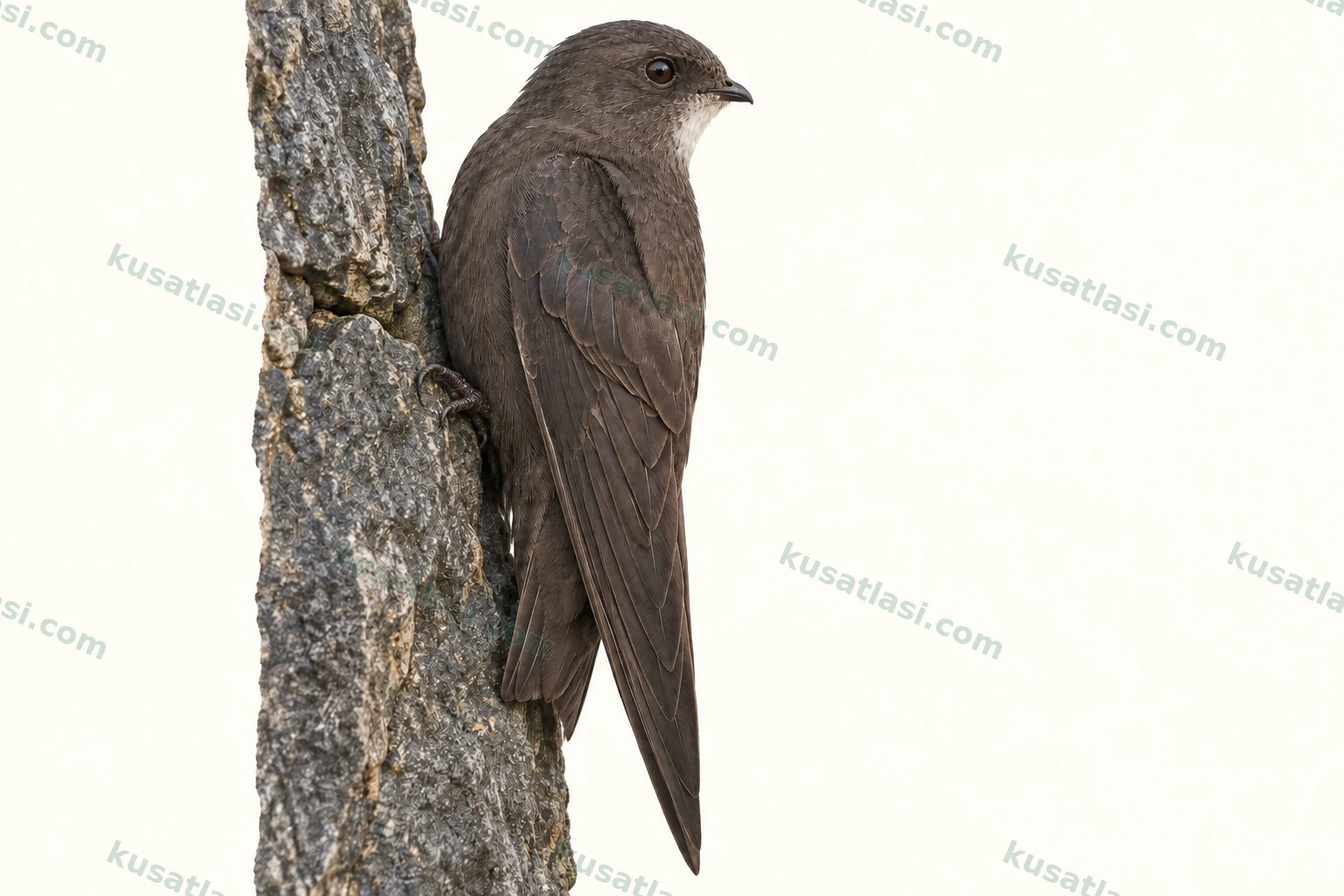
World Birds IUCN statusLC · Least ConcernGlobal IUCN. BirdLife v10 (2025); taxon matching AviList 2026 / IOC 15.2; checked: 29.10.2026. The list year is not the species’ assessment date. Source and method · BirdLife OrderApodiformesSwifts and hummingbirds FamilyApodidaeApodidae
White-chinned Swift
Cypseloides cryptus
Difficult-to-identify dark swift with a short square-ended tail, nesting on damp waterfall rocks.
Biometrics
Length
Male15 cm
Female15 cm
Shared species value
Wing length
Male13.72 cm
Female13.72 cm
Shared species value
Weight
Male32.5–39.4 g
Female32.5–39.4 g
Shared species value
White-chinned Swift
Central America and northern South AmericaObservation guide in its natural range
Look for three features together
Do not rely on a single featureShort and square-ended.
Small white patch, very hard to see in flight.
Damp rock near or behind waterfalls.
Compare male and female
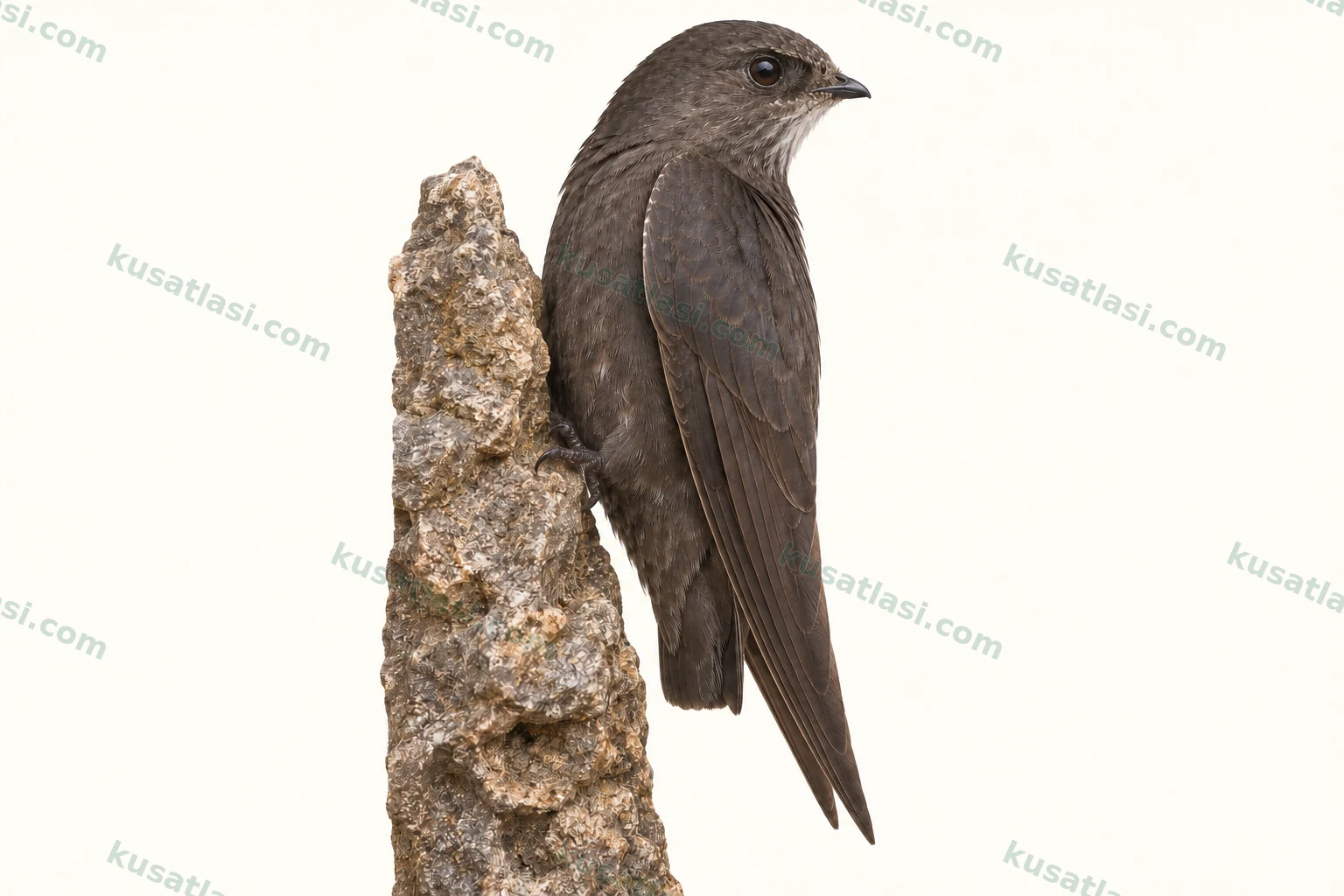 FemaleMale
Plumage differences in five local adults are not a certain sexing key.
Where to look in its natural range?
Waterfalls in tropical forest valleys and the airspace above them.
Scattered distribution; Brazilian records in at least nine months. Panama and Amazonas nesting dates have separate geographic contexts.
All months: Data unavailable
January
February
March
April
May
June
July
August
September
October
November
December
Nest, egg and incubation
Amazonas and western Panama: shallow mossy cup on damp rock, one egg; exact incubation and fledging periods unverified.
No reliable detailed species voice key was found.
Do not play recordings to attract birds; observe quietly, especially near nests.
Species information
Quick identification
White-chinned Swift Cypseloides cryptus is a dark grey swift with a short square-ended tail. Pale chin and lores are tiny and may be hard to see in flight or even photographs. White-chinned Swift denotes the same taxon. Looking only for a white chin is insufficient.
General appearance and posture
The body is dark grey, wings long and tail short. Pale feather edges on the rear belly and near the undertail may look scaly.
Males, females and young birds
Four females in the Amazonas study had pale feather tips below, while one male's belly was more uniformly dark. Researchers do not establish a reliable sexing key; more specimens are needed. Young birds are also poorly known. Pale scaling does not always mean female or juvenile.
Appearance in flight
Dark body and short square-ended tail give a starting point. Direction and wing posture alter the visible wing shape. Western Panama research specifically shows wing shape alone is unreliable among similar swifts. Failure to see a white chin does not exclude the species by assuming it is absent.
Voice and behaviour
It joins mixed swift flocks. Damp rock faces and waterfalls matter for nesting and roosting. At one western Panamanian nest, adults covered the chick at night, one could rest nearby and behaviour suggested nocturnal feeding. Long daytime adult absence in the same observation is not evidence of chick torpor. No reliable detailed species voice key was found.
Similar species
Spot-fronted Swift Cypseloides cherriei is compared using more conspicuous white spots on the face and behind the eye; its poorly known young complicate identification. White-collared Swift Streptoprocne zonaris and Chestnut-collared Swift Streptoprocne rutila may share flocks, but collar marks, size and entire appearance must be assessed together. Poorly lit silhouettes do not permit certainty.
World distribution
It is sparsely distributed from scattered Central American records to northwestern South American mountains and some northern Amazon areas. Amazonas and Acre records in Brazil show it is not confined to the Andes. Sources report sea level to about 3000 m, not continuous occupancy throughout that belt.
Status within its natural range
The checked global category is Least Concern. Infrequent sightings relate both to local distribution and difficult flight identification. One confirmed waterfall nest does not mean every nearby waterfall is occupied. Located observation cells are therefore not presented as exact native-range boundaries.
Movements
The Amazonas study and earlier local records indicate presence in Brazil in at least nine months; the authors interpret this as support for year-round residency. They did not prove the same birds were followed for nine months or that all populations are nonmigratory. No verified long migration route was found.
Breeding habitat
It uses valleys, gorges and waterfalls in lowland and montane tropical forest. Aerial feeding space and a damp nest rock face are different habitat pieces; birds may forage over broad airspace while breeding on a limited waterfall surface.
Nest site
Six active nests studied in Amazonas, Brazil, in 2012 and 2013 were small shallow cups on damp rock beside or behind waterfalls. Moss, roots and mud were used; one white egg was documented. Western Panama research also confirms damp rock nests near water. Panamanian study sites had nesting from late spring into summer; Amazonas visits found a March egg and chicks later in the year. These regional dates are not one global calendar. Exact incubation and fledging periods were not verified.
Daily use of space
Waterfalls are roosts as well as nest sites. Western Panamanian nest watching recorded long daytime adult absences and nearby presence at night. One nest's pattern is not every individual's daily schedule.
What does it eat?
It eats flying insects. In the Amazonas study in Brazil, two of five stomachs were empty and the other three held 36 prey in total. This small sample contained 26 hymenopterans and 10 hemipterans. Winged ants among identified Hymenoptera and psyllids among Hemiptera were important. These figures describe only that local sample, not annual dietary proportions.
How does it hunt?
It catches insects in flight. Stomach psyllids led the authors to discuss possible gleaning from vegetation, not directly observed behaviour. A little moss in the stomachs is not interpreted as deliberate plant feeding; it may have been swallowed accidentally with nest material.
The white chin is not always visible
The name's tiny pale patch may be nearly invisible in flight. Even close photographs depend on light and angle. This name is not applied to every dark swift with an unseen white spot; other species share mixed flocks.
Waterfall nests and night care
Researchers in western Panama watched one nest by day and night. Chick covering, a second adult nearby and possible feeding at night show that daytime watching alone misses some care. Long daytime adult absence does not itself show metabolic torpor in the chick; no such measurement was made for this species.