

World Birds IUCN statusLC · Least ConcernGlobal IUCN category. BirdLife v10 (2025); taxon matching: AviList 2026 / IOC 15.2; checked: 29.10.2026. The list year is not the species assessment date. Source and method · BirdLife OrderApodiformesSwifts and allies FamilyApodidaeApodidae
White-naped Swift
Streptoprocne semicollaris
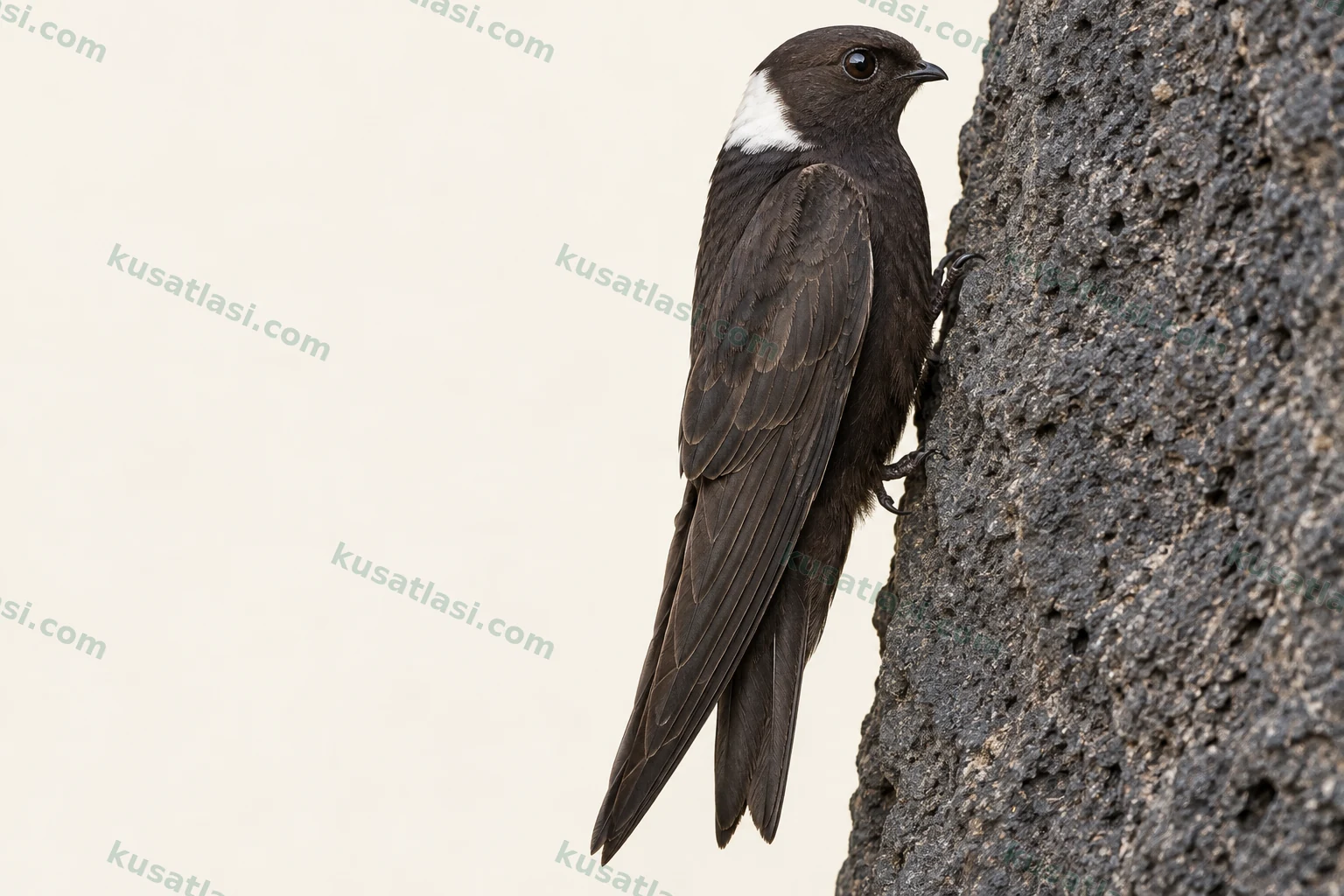
Large Mexican swift: check the broad white nape band on a dark body and shallowly notched tail together.
Biometrics
Length
Male22 cm
Female22 cm
Shared species value
Wingspan
Male56–59 cm
Female56–59 cm
Shared species value
Weight
Male180 g
Female170–175 g
White-naped Swift
Western and central MexicoObservation guide in its natural range
Look for three features together
Do not rely on a single featureCheck the nape-only white band from several natural angles.
Notice tail opening and moult.
Compare male and female
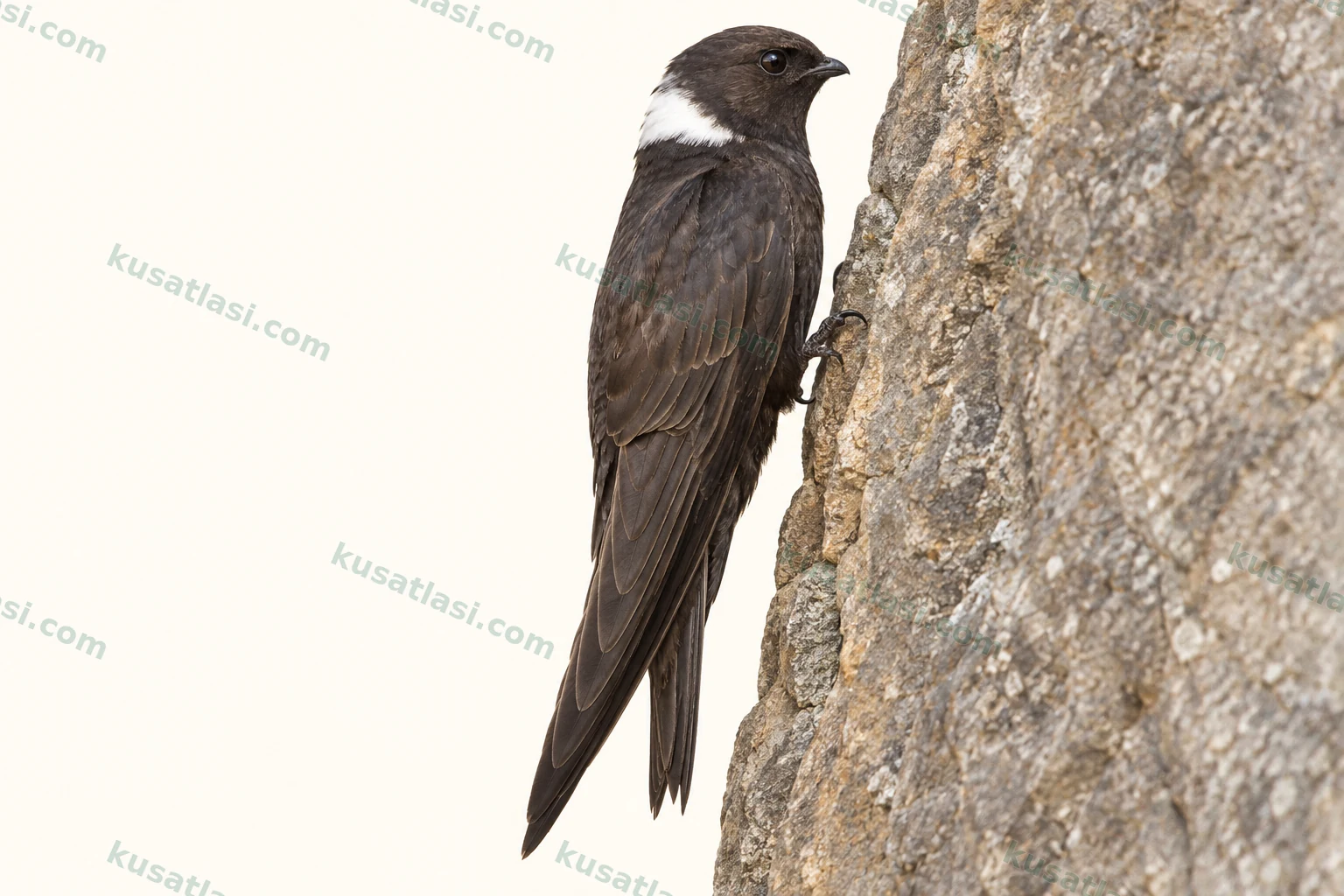 FemaleMale
Reliable distant sexing of adults was not verified.
Where to look in its natural range?
Mountain valleys, caves and waterfalls; aerial feeding flocks.
Guerrero nests in May and June. A monthly breeding calendar for every population was not verified.
January
Daily/local movements and regional nest examples. No verified regional date is given for this month. This does not imply local absence.
February
Daily/local movements and regional nest examples. No verified regional date is given for this month. This does not imply local absence.
March
Daily/local movements and regional nest examples. No verified regional date is given for this month. This does not imply local absence.
April
Daily/local movements and regional nest examples. No verified regional date is given for this month. This does not imply local absence.
May
Daily/local movements and regional nest examples. Guerrero: regional records of nests containing eggs.
June
Daily/local movements and regional nest examples. Guerrero: regional records of nests containing eggs.
July
Daily/local movements and regional nest examples. No verified regional date is given for this month. This does not imply local absence.
August
Daily/local movements and regional nest examples. No verified regional date is given for this month. This does not imply local absence.
September
Daily/local movements and regional nest examples. No verified regional date is given for this month. This does not imply local absence.
October
Daily/local movements and regional nest examples. No verified regional date is given for this month. This does not imply local absence.
November
Daily/local movements and regional nest examples. No verified regional date is given for this month. This does not imply local absence.
December
Daily/local movements and regional nest examples. No verified regional date is given for this month. This does not imply local absence.
Nest, egg and incubation
Nests on cave rock ledges. Two white eggs in documented nests. Sand hollows or built nests depend on ground conditions. Durations unverified.
Flock screams and rapid chatter, also repeated near caves.
Do not play recordings to attract birds; observe quietly, especially near nests.
Species information
Quick identification
The White-naped Swift Streptoprocne semicollaris is a large swift of western and central Mexico. Its dark body contrasts with a broad white nape band, not a complete ring around the breast. Tail and the pale band's actual position are assessed together. A large dark flying bird alone is insufficient.
The closest comparison is the White-collared Swift Streptoprocne zonaris. Its young may have a faint or incomplete breast collar. Missing breast white therefore does not alone establish semicollaris, especially without age. Follow different natural flight angles.
General appearance and posture
Most views are in flight. Broad-wing posture and opening or closing the tail alter the silhouette. A small notch in one image may look nearly straight in another. Compare whether two birds glide similarly with equally spread tails.
Males, females and young birds
No separate colour key safely sexing adults at a distance was verified. A broad or thin-looking nape is not a sex mark without angle control. Different distances also alter apparent size; proximity is not a body or sex difference.
A plumage calendar covering all young stages was not verified. Do not copy another swift's young here. The incomplete collar of some young zonaris complicates comparison. Use tail, nape, general size and real locality together rather than naming semicollaris from this absence alone.
Short inner or outer tail feathers in moult can change the tip. This is not a fixed species mark. Follow the same tail through several turns, without substituting another bird's more open tail. Catching a young bird to spread feathers is unnecessary for distant identification.
Appearance in flight
Flight is strong and fast. Some circling flock members spread wings and glide; broad parts can give a paddle-like silhouette, also found in other large swifts. Recheck nape and tail instead of relying on a brief silhouette.
A closed or slightly spread gliding tail can look shallowly notched or nearly straight, rounding when opened more. The pale nape may be clear from the side but invisible directly below. Unseen is not absent. The more distinctly forked zonaris tail changes too when spread.
Amadon and Eckelberry's Mexican observation describes silent narrow circles rising above trees after a rapid pass. They also noted the narrow appearance near the wing–body junction. This does not appear equally in every pose. Speed, turning angle and wing spread matter.
Voice and behaviour
Flock screams and chattering sequences can recall small parrots at a distance. The old nesting study recorded rapidly repeated calls while birds clung to cave walls and flew. A vocal group need not be all one species. Follow the view and sound direction together.
Collective movements around caves and waterfalls can be watched. Entering dark nesting areas to flush birds alters natural behaviour. Watch outside without blocking their route. Colony size depends on place and time. A flock is not the entire Mexican population.
Similar species
Streptoprocne zonaris is compared by its complete white collar and more clearly forked gliding tail. Young collars can be incomplete and spread tails straighter. Check head–neck pattern and tail under comparable flight conditions, not one mark.
With chestnut-collared or other large dark swifts, assess whether the mark is white or warm-coloured and a full collar or nape only. If too distant, flock direction or size does not determine species. An uncertain swift record is more useful than false certainty.
Global range
It is endemic to western and central Mexican mountains. Current taxonomy describes Chihuahua through Nayarit, Hidalgo and Morelos. The studied Guerrero cave is another important example. Continuous use of every intervening place and elevation is not assumed.
Status within its natural range
The category is Least Concern. Mexican endemism does not identify every large swift abroad. An easily seen large colony does not imply abundance everywhere. Mountain birds may descend locally to foothills and lower areas. Cave and rock roost protection is separate from surrounding tree cover alone.
Movements and migration
Old Morelos observations reported use of the same surroundings during the study while daily feeding extended farther. This does not prove all populations motionless all year. No whole-species instrument-tracked seasonal route was provided. Daily flight, local elevation change and intercontinental migration are not equated. General geography and approximate records have separate map meanings.
Breeding habitat
Colonies can occur in rocky mountains, deep valleys and cave-associated places. Cornell notes flocks around waterfalls and other roosts. Woodland or openings used for aerial feeding do not locate the nest by themselves.
Nest site
Guerrero nest sites examined in May 1961 held two white eggs each. Some were shallow dry-sand hollows. Later research showed use of suitable ground without such a built nest, and mud-and-plant nests on sloping ground. The old claim that it never builds is invalid. Full incubation and nestling durations were not verified.
Daily habitat use
Feeding flights and colony rest can be in different places. Do not block entrances or disrupt arrival with flash, drones or playback. Observers near rocks keep a safe distance too.
What does it eat?
It eats airborne insects. Rowley and Orr's one Morelos bird from July 1960 contained many flying ants and plant-sucking insects, with fewer other insect groups. This is real diet evidence, not fixed proportions for every season and bird. Another swift's stomach contents are not added.
How does it hunt?
It hunts in flight. A circling flock does not catch one specified prey on every turn. Airborne insects and flight height vary with time. The sample shows numerous small flying prey can be taken, not a whole day's intake. Feather parasites found in the same bird are not confused with eaten prey. Food and parasites are separate records.
Different ground can mean different nests
Later research linked slope and natural edges with nest use. A sand hollow and mud nest do not mean different species. This swift may respond differently to changing ground at the same colony.
Old colony photographs are not today's conditions
Researchers found different structures on the same ledges years later. Flooding was discussed as a possible reason for reduced sand, not a universal proven cause. One date does not cover all nesting behaviour.
The nape may disappear from below
A band clear from the side can hide from directly underneath. Failure to see it on a fast bird does not prove absence. Tail opening also changes appearance. Several natural angles give better identification than one silhouette.
A big flock is not the whole population
A waterfall flock shows birds at one roost. Daily entries, exits and repeated individuals affect counts. Local flock size is not the national total; keep date, place and count conditions. If a departing bird's destination is unseen, its last direction is not a migration arrival point.