

World Birds IUCN statusLC · Least ConcernGlobal IUCN category. BirdLife v10 (2025); taxon matching: AviList 2026 / IOC 15.2; checked: 29.10.2026. The list year is not the species assessment date. Source and method · BirdLife OrderPasseriformesPasserines FamilyCorvidaeCorvidae
White-collared Jay
Cyanolyca viridicyanus
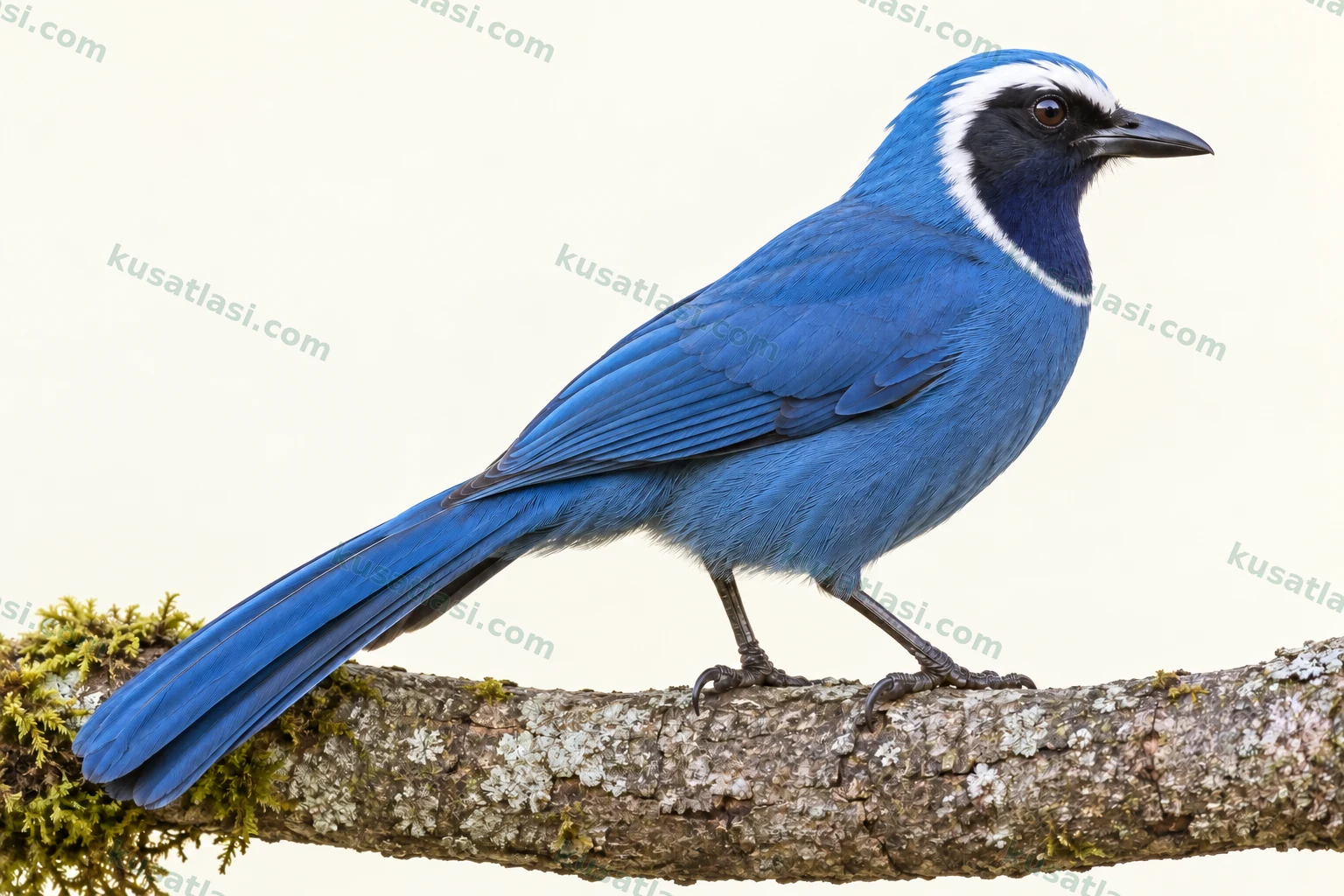
A white crescent below the dark face and throat, a blue body, long tail and crestless head.
Biometrics
Length
Male34 cm
Female34 cm
Shared species value
Wing length
Male13.82 cm
Female13.82 cm
Shared species value
Weight
Male82 g
Female106 g
White-collared Jay
Andean forests of Peru and BoliviaObservation guide in its natural range
Look for three features together
Do not rely on a single featureMake sure the white crescent below the dark throat is actually seen.
Do not treat geographic blue-tone differences as sex or age.
Compare male and female
 FemaleMale
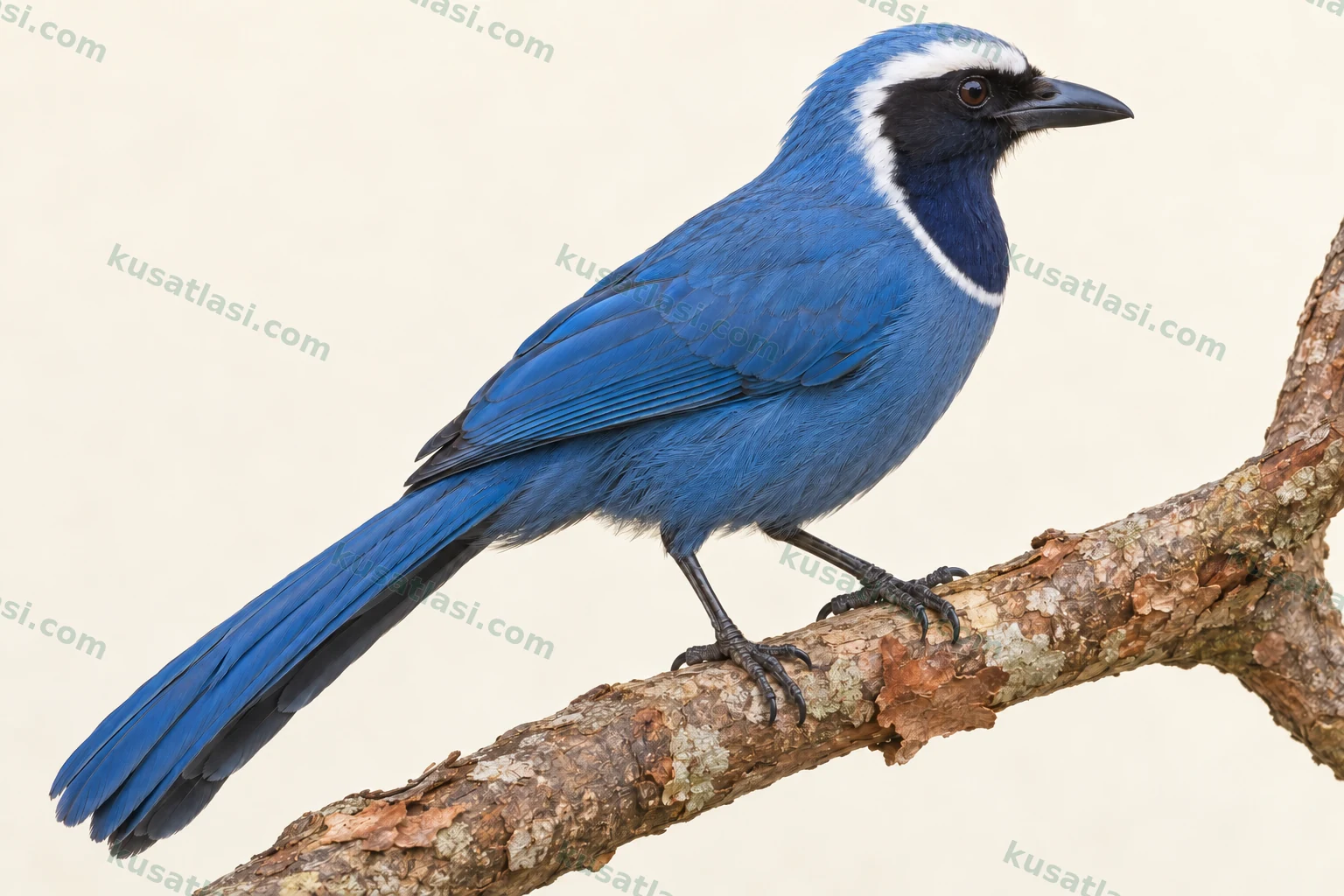
No verified field sexing key. Regional colour differences are not allocated to the sexes.
Where to look in its natural range?
Humid cloud forest, mossy trees and scrub within forest.
Resident. Species-specific breeding months were not verified.
All months: Resident. Monthly breeding status could not be verified. No verified regional date is given for this month. This does not imply local absence.
January
February
March
April
May
June
July
August
September
October
November
December
Nest, egg and incubation
Nest structure, usual egg number, incubation and young development durations were not verified.
Repeated whistles and harsher calls. Match the sound to the bird you see.
Do not play recordings to attract birds; observe quietly, especially near nests.
Species information
Quick identification
The White-collared Jay Cyanolyca viridicyanus is a blue-toned corvid of Andean mountain forests in Peru and Bolivia. Its slender body, long tail, dark face and white crescent below the throat matter together. It has no conspicuous crest. The white collar in its name does not mean the entire head or breast is white. Check the pale line's position against the dark throat.
A fine pale eyebrow helps, but its width looks different from different angles. A slight head turn can hide part of it. If only a blue body is visible and the pale boundary below the throat cannot be seen, certain identification can wait. More than one blue corvid inhabits mountain forest. Blue alone is insufficient. Assess the dark face, white crescent and tail proportions together.
General appearance and posture
The bill and legs are dark. A long tail and slender look may help even when part of the body is hidden, but proportions cannot be read properly if branches hide the tail. Stretching the neck can expose the white crescent, while resting feathers may conceal it partly. A mark missing from one photograph does not show that the bird lacks the feather area.
The blue tone varies among geographic forms. Some populations look more greenish-blue, others darker blue or purplish. These differences are not allocated to males and females. Light can also alter two photographs from the same region. Compare colour with the place, light and visible surface of the bird in mind.
Males, females and young birds
The examined sources did not provide a clear colour key for reliable field sexing. Neither crescent width, brightness of blue nor an apparently large body establishes sex.
Species-specific identification features of young birds were not sufficiently verified. Juvenile patterns from other Cyanolyca species are not transferred here. A pale photograph is not necessarily a young bird and a dark one is not necessarily adult. Age can remain open if not supported by actual feather development or verified nest context.
It is particularly important not to mistake Peruvian geographic colour variation for age differences. A darker blue effect on the throat is not explained by age or sex alone. Scientific work has examined geographic forms alongside genetic information. Such distinctions cannot be expected from one distant photograph. Watching natural movement from several angles can complete identification areas missing in the photograph.
Appearance in flight
The long tail helps show body proportions in flight. The underwing may look dark. This does not mean that all blue tones visible on a perched bird can be seen from the same flight angle. During short forest crossings, the head and breast crescent appear small. Dark underwings and a long tail alone do not establish the species.
Flight and perched marks can be considered together when both views belong to the same bird. If the bird was lost from sight, the next blue bird is not assumed to be the same individual. Confusion is easy with pairs or small groups.
Voice and behaviour
Repeated whistles and harsher, nasal-sounding calls are parts of its repertoire. Vocal variety does not imply that all calls have the same function. A recording heard without seeing the bird needs comparison with similar corvids. Rhythm, repetition and connection to the visible individual matter more than memorising one imitation as a word.
Pairs or small groups can forage in the middle level of mossy forest. Several adults together do not prove shared care of young. Studies of helpers in close relatives do not establish the same breeding system in this species. Follow individuals separately on a branch and do not assign one behaviour to the entire group.
Similar species
Compare the brighter turquoise appearance, dark breast band and pale forehead of Cyanolyca turcosa. In the White-collared Jay, the pale crescent below the dark throat is important. Geography helps, but a country name alone does not complete identification. The actual record near a boundary and the feather areas seen must be assessed.
Against other blue Andean jays such as Cyanolyca armillata, the white crescent needs to be genuinely visible. A bright line made by sunlight is not naturally white plumage. Blue bodies and small groups occur in several species and do not identify one alone. Do not fill unseen marks by assumption. Look again when the head and throat naturally come into view.
Global range
Its natural environment is the mountain forests of the eastern Andean belt in Peru and Bolivia. It is not shown as sharing the geography of Central American blue jays. Dry valleys separating mountain forests differ from forested slopes. A record in one country does not imply equal use of its plains or Amazonian lowland forest.
Status within its natural range
The current taxonomic account gives Least Concern status. Field work around the Apurímac showed that the boundaries of some colour forms do not simply follow a single dry river valley. Population boundaries should therefore not all be inferred from a river line on a map. A local record gap need not be true absence. Consider survey time and forest accessibility together.
Movements and migration
It is a resident mountain-forest bird. Separate records are not converted into migration lines without a verified long-distance seasonal route. A small group's movement along a slope may be feeding-area use. Present-day observation points are not equivalent to following one bird throughout a year. One record being higher than another does not by itself prove regular altitudinal migration. Record dates are retained for this reason.
Breeding habitat
Humid Andean cloud forest, mossy trees and suitable scrub are parts of its natural setting. Not every slope where it feeds is a confirmed nesting site. A breeding pair record and a small group roaming forest are kept separate. Continuity of vegetation gives more meaningful habitat context than describing only the tree where the bird was seen.
Nest site
Species-specific nest structure, usual egg number, incubation and young development durations could not be verified. Nest and egg information from other Cyanolyca species was not transferred here. Disappearing into a bush is not proof of nesting. Tree height and nest materials are not specified without real nesting behaviour being seen.
Daily habitat use
It searches along branches and in the forest's middle level. When dense cover limits visibility, there is no need to move branches or lure the bird into view with playback. Wait for the group's natural progress. Using a particular mossy tree does not prove that its entire diet depends on that tree species.
What does it eat?
The detailed diet is not well documented. AVONET classifies it as an invertebrate feeder, without specifying which insects or their proportions. A mixed diet is discussed as possible in the specialist account. This possibility is not turned into a definite fruit or prey list. Where food identity is unseen, menus of other blue jays do not fill the gap.
How does it forage?
Moving along branches, it can investigate surfaces, moss and clumps of plants growing on trees. Reaching into a crack does not prove a capture. If the swallowed item is visible, note shape and behaviour separately. An uncertain object is not given a definite insect name. Each bird in a group need not take the same food. Removing moss or leaving bait alters natural searching. Watch the branches and surfaces chosen by the bird itself.
Mountain populations differ in colour
Bonaccorso's genetic research examined marked differences among geographic forms and proposed splitting the northern jolyaea form. A research proposal and the boundaries accepted in current taxonomy are different matters. This page retains the accepted Cyanolyca viridicyanus concept and does not turn colour differences into a male–female distinction.
One valley does not explain every boundary
Field study around the Apurímac reported that some blue jay specimens examined on both sides of the river were similar. Not every local colour boundary therefore follows one dry valley. Geographic barriers matter, but drawing certain population boundaries without species-specific observations can lose information.
Group living is not a breeding system
The involvement of several adults with a nest has been researched in close Cyanolyca relatives. Without confirmation for this species, birds feeding together are not called nest helpers. Separating social movement from egg and young care avoids excessive conclusions from a small group.
Unknown nest details leave room for research
Missing breeding information does not mean the bird does not breed. A species-verified nest, documented date, directly counted eggs and young development could fill the gap in future. Obtaining such a record does not require opening nests or disturbing birds. Distinguishing described behaviour from observer inference makes even a limited record more useful. If an adult's carried material is visible, note it, but a hidden structure is not automatically a nest containing eggs.