

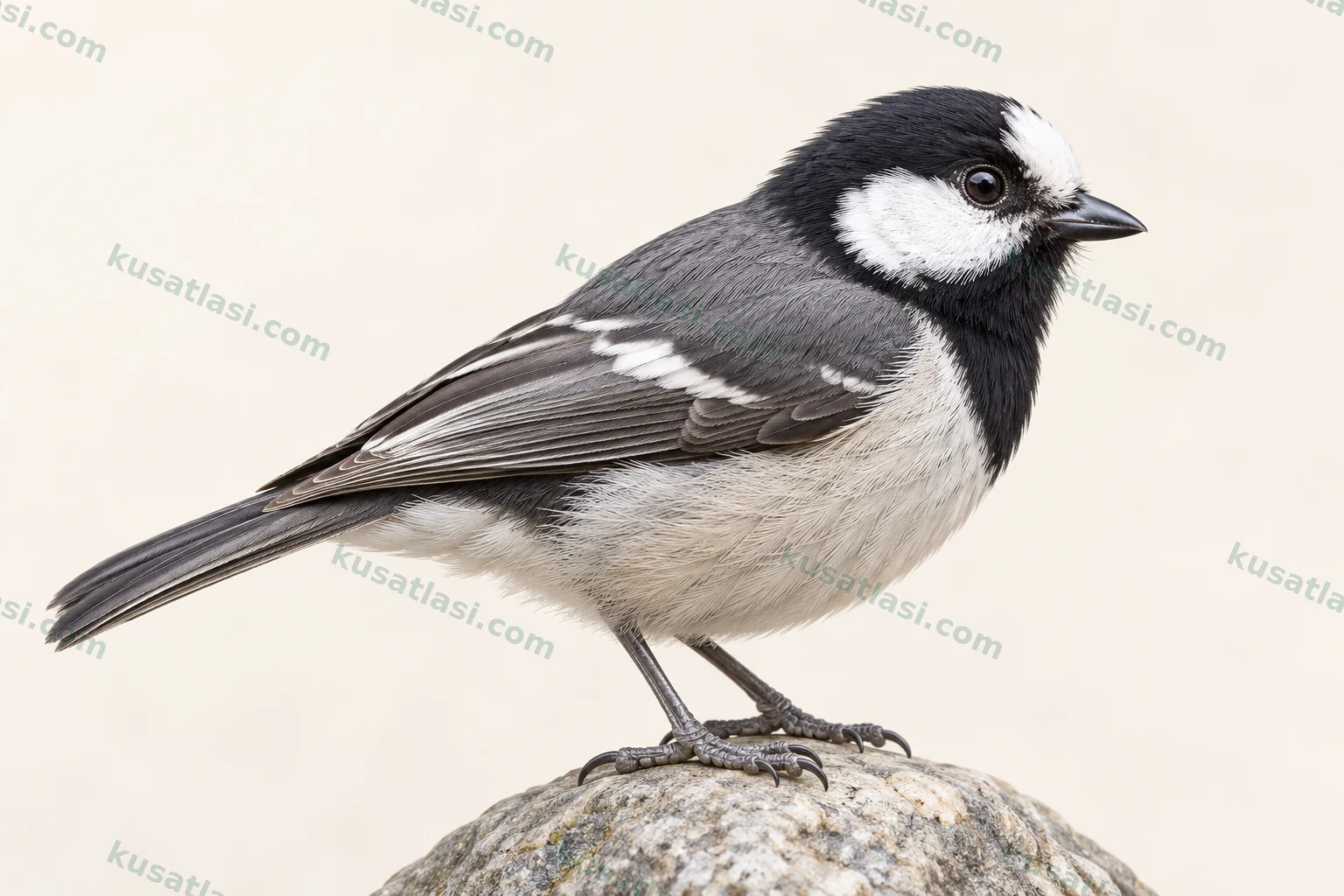
World Birds IUCN statusNT · Near ThreatenedGlobal IUCN. BirdLife v10 (2025); taxon matching AviList 2026 / IOC 15.2; checked: 29.10.2026. The list year is not the species’ assessment date. Source and method · BirdLife OrderPasseriformesPasserines FamilyParidaeParidae
White-fronted Tit
Sittiparus semilarvatus
A largely dark, white-fronted tit of Luzon and Mindanao forests; plumage details vary with sex and geographical form.
Biometrics
Length
Male13 cm
Female13 cm
Shared species value
Wing length
Male7.42 cm
Female7.42 cm
Shared species value
Weight
Male15.1–20.2 g
Female15.1–20.2 g
Shared species value
White-fronted Tit
Philippines — forests of Luzon and MindanaoObservation guide in its natural range
Look for three features together
Do not rely on a single featureThe white forehead extends in front of the eye; the rest of the head is dark.
A conspicuous white band on Mindanao; the same broad patch is not expected on Luzon.
The female’s underparts may be browner; a young male may resemble a female through its pale nape.
Compare male and female
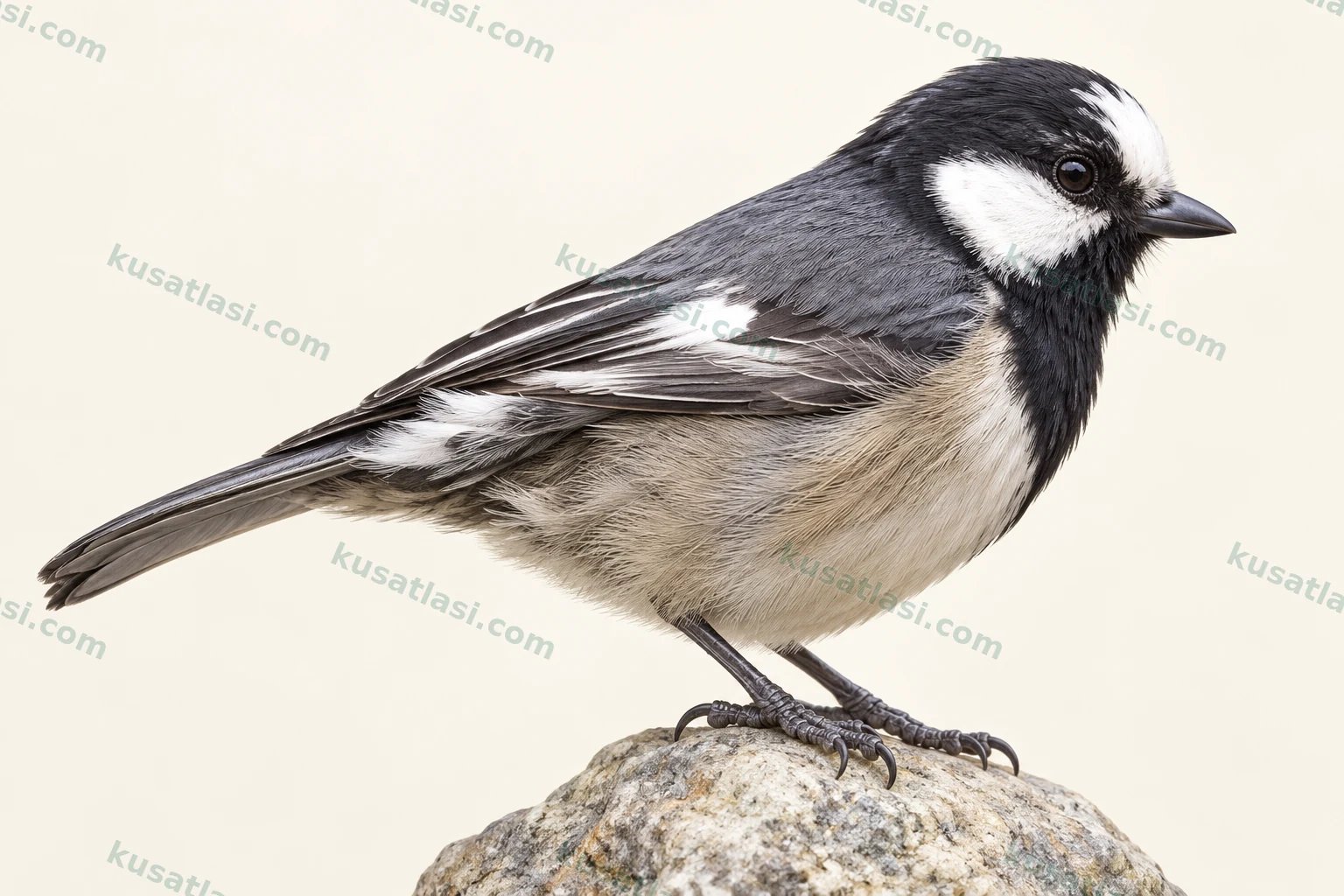 FemaleMale
The male is blacker and glossier; the female has brown underparts, especially in northern Luzon. Young males’ pale nape pattern may resemble females.
Where to look in its natural range?
Look in the middle and upper forest layers, assessing white forehead and dark body together.
This is a resident species. Verified local young-bird observations are shown; no egg-laying season is inferred for all islands.
January
Resident; no verified long-distance migration route. No verified regional date specific to this month was provided; this does not mean local absence.
February
Resident; no verified long-distance migration route. No verified regional date specific to this month was provided; this does not mean local absence.
March
Resident; no verified long-distance migration route. Minuma, Sierra Madre — 1991: an adult was observed feeding a young bird.
April
Resident; no verified long-distance migration route. Palay, Sierra Madre — 1991: a group containing at least two young was seen feeding.
May
Resident; no verified long-distance migration route. No verified regional date specific to this month was provided; this does not mean local absence.
June
Resident; no verified long-distance migration route. No verified regional date specific to this month was provided; this does not mean local absence.
July
Resident; no verified long-distance migration route. No verified regional date specific to this month was provided; this does not mean local absence.
August
Resident; no verified long-distance migration route. No verified regional date specific to this month was provided; this does not mean local absence.
September
Resident; no verified long-distance migration route. No verified regional date specific to this month was provided; this does not mean local absence.
October
Resident; no verified long-distance migration route. No verified regional date specific to this month was provided; this does not mean local absence.
November
Resident; no verified long-distance migration route. No verified regional date specific to this month was provided; this does not mean local absence.
December
Resident; no verified long-distance migration route. No verified regional date specific to this month was provided; this does not mean local absence.
Nest, egg and incubation
Luzon has young-feeding and young-bird records in March and April 1991. Nest structure, typical clutch size, incubation duration and time to first flight were not verified.
Cornell’s specialist description gives three thin descending notes and a rapid broken trill.
Do not play recordings to attract birds; observe quietly, especially near nests.
Species information
Quick identification
White-fronted Tit Sittiparus semilarvatus is a small dark forest bird of Luzon and Mindanao in the Philippines. The white forehead extends between bill and eye. The adult male is largely black; the female’s underparts look browner, especially in northern Luzon. Mindanao birds have a conspicuous white band across the wing. This is not compulsory throughout the species: demanding the same broad wing band on Luzon may lead to overlooking a real individual.
White forehead, dark body and forest movement are assessed together. Branches may reveal only part of the forehead; the entire head is not white. Pale on the nape does not immediately mean another species either. White concealed beneath nape feathers is more or less visible with sex, age and geographical form. The island helps interpret the pattern.
General appearance and posture
In suitable light, the adult male’s dark head, back and underparts look glossy black. The female is duller and browner, especially below, but the difference is not equally marked throughout Luzon. The northern Luzon form snowi is less glossy than the nominate form of central and southern Luzon. Brown and black become hard to distinguish in forest shade. Seeing the same bird in light from several directions is more reliable than sexing from one dark photograph.
White concentrates just above the bill and in front of the eye. The rest of the head is dark, so the small pale area may stand out from a distance. Northern Luzon females may have more conspicuous white on the nape, extending partly along the head’s sides. This is not described as a broad, fully exposed white collar; some remains hidden beneath feathers. Turning the head changes the visible size of the patch.
Males, females and young birds
The basic tendency is a blacker, glossier male and browner female underparts. Parkes’ comparison of museum specimens found the distinction stronger in northern than central and southern Luzon. Not every pale-looking bird is therefore female, nor should every female have the same light brown tone. Sex is assessed with age and geographical form.
Northern Luzon females have a larger, more visible white nape area than males. However, the same work describes young males with a partial pale collar extending along the head’s sides, resembling adult females. Such a collar alone is not proof of female sex. More concealed similar white in central and southern Luzon juveniles shows that age marks vary within the island too.
The Mindanao form nehrkorni has a clear white flight-feather band, helping separate it from both Luzon forms. White edges on some northern Luzon flight feathers are broader and cleaner; these are not the same feature as Mindanao’s broad crosswise band. Combining different regions’ marks in one bird creates a misleading composite instead of a real geographical form. Forehead, nape and wing are assessed separately.
Appearance in flight
A short forest flight usually shows a small dark bird. The Mindanao white wing area may be especially helpful when the wing opens. Absence of that broad mark does not rule out Luzon birds. Seeing white forehead and body colour again after landing is more reliable than a flash glimpsed in flight alone.
White edges on the inner sides of wing feathers change with viewing direction and how far the wing opens. Parkes describes feather structure; every flying bird is not expected to display all those details. Identification may remain open when white is seen but the head is not. Moving between branches in the forest’s middle and upper layers does not prove long-distance seasonal migration.
Voice and behaviour
Cornell’s specialist description gives three thin descending notes and a rapid broken trill. These may help locate the bird among leaves. Other small passerines call in the same trees; the sound is linked to the visible bird. Having “tit” in the name does not justify assigning another tit’s voice to this species.
Sierra Madre fieldwork mostly observed birds in the middle and upper forest layers. Near Palay in April 1991, ten individuals including at least two young fed together. This directly records social foraging and young with adults, not that all ten came from one nest or all cared for young. An adult feeding a young bird at Minuma in mid-March is also observational breeding evidence.
Similar species
Elegant Tit Periparus elegans is another small tit to consider in the same Philippine forests. Cornell emphasizes yellow cheeks and underparts, black head and throat and pale wing spots. White-fronted Tit’s largely dark body and white forehead differ. Particularly on Mindanao, cheeks and belly should be seen rather than one white wing spot alone. A paler female Elegant Tit does not thereby become an entirely black-bodied White-fronted Tit.
White-fronted Tit’s own geographical forms must also be compared. A conspicuously wing-banded Mindanao bird and an unbanded Luzon bird may be different forms of the same species. White nape and brown underparts also require age and sex together. A brief front-of-head view is insufficient for definite subspecies or sex identification.
World distribution
White-fronted Tit is endemic to the Philippines, with verified natural range confined to Luzon and Mindanao. The recognised forms are snowi in northern Luzon, the nominate in central and southern Luzon and nehrkorni on Mindanao. Sierra Madre forests are important Luzon record areas. Bataan, Mount Arayat in Pampanga and Sorsogon also occur in historical sources. These names do not show continuous presence across the whole island.
Status within the natural range
The currently checked taxon list gives Near Threatened. Forest records show use of secondary forest and some edges as well. Poulsen’s 1991–1992 Sierra Madre study saw the bird infrequently, including in lowland forest patches. The researcher’s local assessment then does not replace today’s global category. Flexibility in one area does not mean it is unaffected by forest loss throughout its range.
Negros may appear in older publications. Parkes stated in 1971 that he found no supporting documentation for this island’s record. Himalayan and northern Chinese locality labels on early specimens are not true range evidence either. The map does not turn these historical errors into resident areas.
Movements and migration
Compilations classify it as resident. No verified regular distant migration route exists, so no journey line connects the islands. Forest feeding movements, changes between tree layers and young travelling with adults are not confused with this classification. Changes in monthly observation counts alone do not prove marked individuals migrating along the same route.
Breeding habitat
It lives in forest and may use edges and secondary woodland. Sierra Madre observations ranged from sea level to 1,150 m. This is that study’s detected elevation scope, not an absolute upper limit for all the Philippines. Young feeding by an adult in March at Minuma and young seen at Palay in April support local breeding knowledge. The two dates are not generalized as every island’s egg-laying season.
Nest site
The checked original studies did not verify detailed nest structure, typical egg number, incubation duration or time to first flight. Other tits nesting in tree cavities is insufficient to fill these fields for this species. If an adult feeds young, watch from afar rather than entering the place it hides, and do not come between parent and young.
Daily habitat use
It feeds in the middle and upper forest layers. It also occurred in remnant forest patches surrounded by open grass between Palay and Baliuag. The habitat in those records is the forest patches, not open grassland. A single scrub sighting near Palay does not replace the whole daily habitat. Retaining standing trees and connected leafy areas helps sustain the observed environment.
What does it eat?
Food details are less documented than appearance and range. AVONET’s ecological classification places it among birds eating small animal prey and gleaning food from trees. This suggests the importance of insects and similar small invertebrates, not a stomach or dropping analysis giving percentages of particular insect species. No verified species-specific proportions were found, so no prey list or year-round percentages are supplied.
How does it forage?
Poulsen observed feeding in the middle and upper forest layers. Sometimes several individuals use the same woodland. The ten-bird group feeding in April 1991 directly records this behaviour, not every individual choosing the same prey. The exact food in the March young-feeding record is not specified either. Watching leafy branches helps find birds; relatives’ known seed, fruit or caterpillar preferences are not presented as verified details of this species.
White marks carry three kinds of information
Forehead white helps identify the species. Partly concealed nape white is interpreted with age and sex. A broad white crosswise wing area distinguishes the Mindanao form. These are not interchangeable. Calling pale flight-feather edges in northern Luzon the same as Mindanao’s broad band erases geography. Within-species variation explains why several traits are needed.
A museum label is not always correct geography
Early specimens being registered with other collections temporarily associated this Philippine bird with the Himalayas or China. Parkes compared specimens and older publications to separate documented localities and questioned the Negros basis too. An old place repeated in many books does not mean independent new evidence. True specimen origin matters for today’s range account.
A young male may resemble a female
Northern Luzon young males’ pale nape and head sides may resemble adult females. This shows why visual sexing is difficult without age. Rather than calling a partial-white-collared bird female directly, consider underpart tone, gloss, geography and youth together. Museum comparisons do not mean every distant bird easily shows all details.
Genetic closeness is not the same life history
Johansson and colleagues’ 2013 multigene tit study supported closeness of this bird, then named Parus semilarvatus, to the Varied Tit group. The currently accepted genus is Sittiparus; the old Parus name is not another bird. Kinship does not permit assigning another species’ nest measurements, prey list or incubation duration to White-fronted Tit. Every biological detail needs evidence for its own species.