

World Birds IUCN statusLC · Least ConcernGlobal IUCN category. BirdLife v10 (2025); taxon matching: AviList 2026 / IOC 15.2; checked: 29.10.2026. The list year is not the species assessment date. Source and method · BirdLife OrderPasseriformesPasserines FamilyParidaeParidae
African Blue Tit
Cyanistes teneriffae
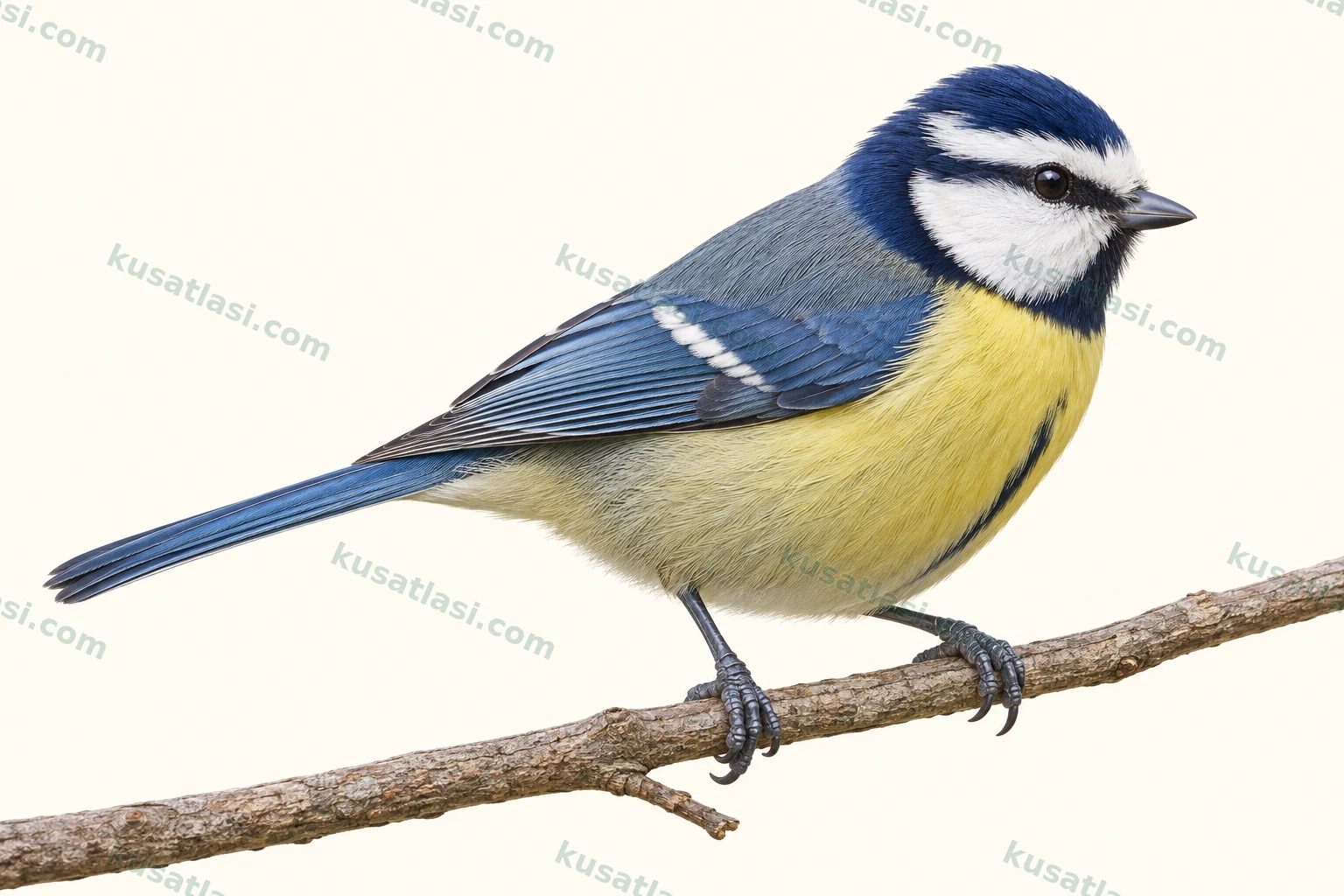
Identify it by white cheeks, a dark eye-stripe, dark blue crown and yellow underparts together. Forms in North Africa and the Canary Islands differ; males and females share the same basic appearance.
Biometrics
Length
Male11–12 cm
Female11–12 cm
Shared species value
Wing length
Male5.97 cm
Female5.97 cm
Shared species value
Weight
Male10–11.6 g
Female10–11.6 g
Shared species value
African Blue Tit
North Africa and the Canary IslandsObservation guide in its natural range
Look for three features together
Do not rely on a single featureCheck the dark eye line above the white cheek together with the dark blue crown.
Back tone and wing markings may vary with regional form; one colour alone does not identify it.
Look for a small tit moving through fine branches and leaves; note island or mainland locality.
Compare male and female
 FemaleMale
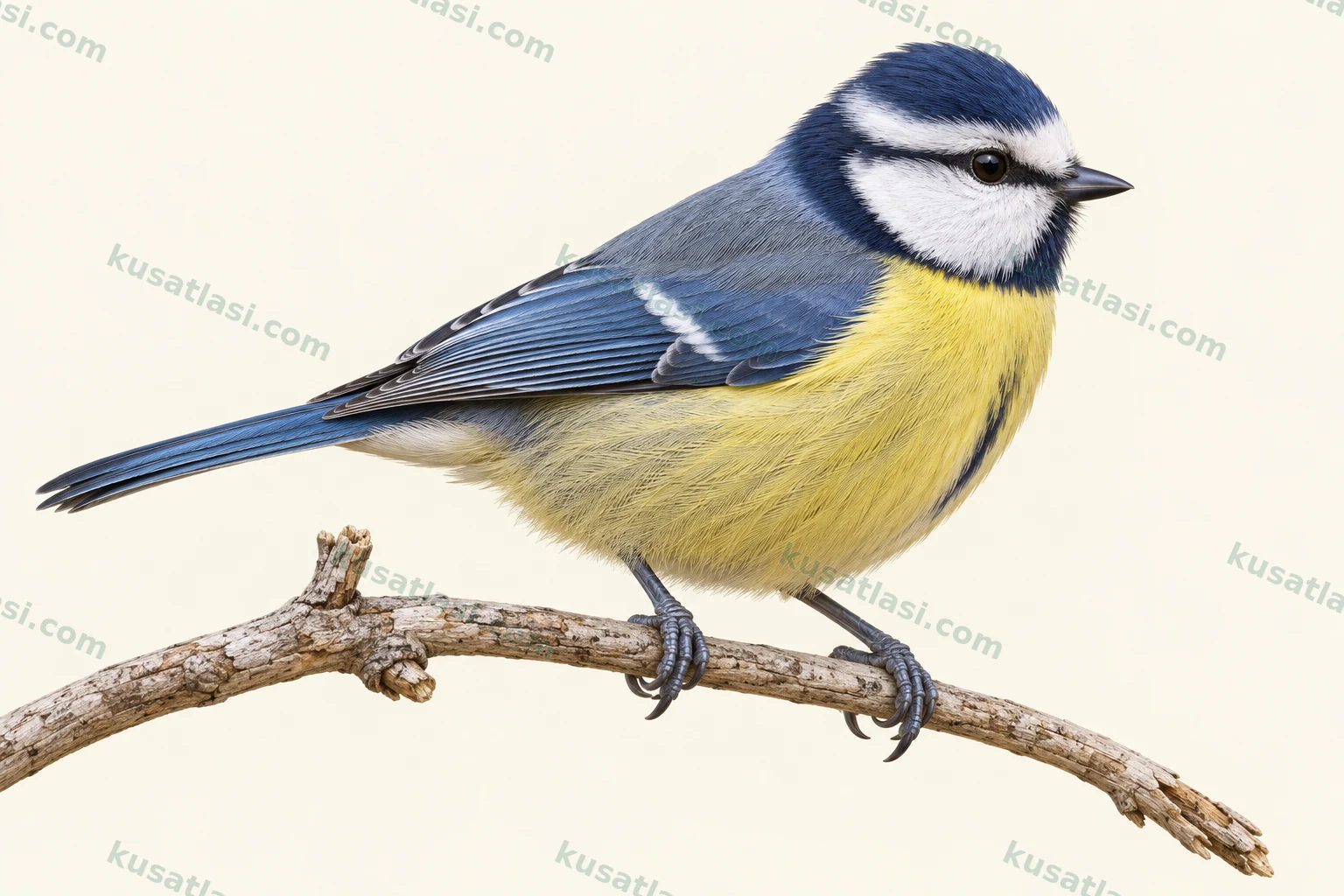
Male and female have similar basic plumage. The intensity of blue or yellow in a photograph alone does not allow reliable sexing.
Where to look in its natural range?
Check suitable oak, cedar, pine and laurel forests, wooded valleys, parks and gardens. Do not assume Canary and North African subspecies share the same appearance and calendar.
Resident. Breeding varies with island, habitat, elevation and year. Early spring examples occur in Canary populations; laying beginning in May was recorded in northeastern Algerian mountain forest. These are not combined into one definitive laying calendar for the entire taxon.
January
Resident. Laying varies with island, elevation and local conditions.
February
Resident. Laying varies with island, elevation and local conditions. Canary studies include early spring examples.
March
Resident. Laying varies with island, elevation and local conditions. Canary studies include early spring examples.
April
Resident. Laying varies with island, elevation and local conditions. Canary studies include early spring examples.
May
Resident. Laying varies with island, elevation and local conditions. A northeastern Algerian study recorded laying beginning in May.
June
Resident. Laying varies with island, elevation and local conditions.
July
Resident. Laying varies with island, elevation and local conditions.
August
Resident. Laying varies with island, elevation and local conditions.
September
Resident. Laying varies with island, elevation and local conditions.
October
Resident. Laying varies with island, elevation and local conditions.
November
Resident. Laying varies with island, elevation and local conditions.
December
Resident. Laying varies with island, elevation and local conditions.
Nest, egg and incubation
Natural cavities, suitable cracks and boxes may be used. Dry plants, grass, hair and feathers are reported. A specialist Canary account gives 3–6 eggs; the 2007–2009 northeastern Algerian mountain-forest study gives a mean of 6.96 per nest and a maximum observed 9. A regional mean is neither one nest count nor an invariant species clutch. Incubation figures in compilations potentially inheriting broader old taxa were not verified against this taxon’s original population context, so no definite duration is given. Do not approach or open boxes for observation.
Songs repeat short whistled notes, with various calls. Voices may differ among island and regional forms. Assess rhythm, repetition and head pattern together; written imitation does not represent the full vocal variety.
Do not play recordings to attract birds; observe quietly, especially near nests.
Species information
Quick Identification
African Blue Tit is a small tit of North Africa and the Canary Islands. Assess the white cheek, dark line through the eye towards the nape, dark blue crown and yellow underparts together. Wings and tail are blue-toned; back colour can vary with the regional subspecies. A yellow belly or blue wing alone is insufficient. Its small body, short pointed bill, head pattern and movements among branches complete the picture.
Related blue-tit species have similar sizes; size alone is not diagnostic. Locality also matters: natural Canary Island and North African populations are not described under the same taxon as Europe's Eurasian Blue Tit. Older studies may use a broader species or an earlier genus name; check which population the scientific name covers.
General Appearance and Posture
A dark blue crown covers the top of the head. The pale bordering stripe and white cheeks are separated by a dark eye-level line, beginning near the bill and running through the eye towards the nape. Dark chin and throat areas can stand out among the pale head areas. On a fleeting view the crown may seem black; shade readily hides blue tones. Record the crown-cheek-eye-line arrangement rather than naming a colour alone.
The underparts are yellow; upperparts range between blue and grey tones. Pale or blue feather edges and white wing markings are not equally conspicuous in every population. Some island forms may lack the clear white wingbar expected in Europe's Blue Tit. Conversely, defining every African Blue Tit solely by a missing wingbar is wrong. Account for the subspecies described and the observation island or region.
The bill is dark, short and finely pointed. The eye looks dark; legs and feet may be greyish blue. On a slender branch the bird often turns its body to different angles, head down one moment and sideways the next. This activity makes small breast markings harder to compare. Several complementary views rather than one static pose allow better assessment of head and wing patterns.
Males, Females and Young Birds
The sexes share a similar basic pattern. Blue brilliance or yellow intensity in one photograph does not establish sex. Sun, shade, image colour settings and regional form can alter the same colour. Male and female plates do not imply that different colours must be drawn for each sex.
Specialist Canary accounts describe duller young, sometimes with yellowish colour in the adult's white forehead and parts of the pale face. A youngster's head lines may be less clean than an adult's. These details are not equally sharply stated for every subspecies. An island's juvenile appearance should not become a fixed scheme for all North African young. First check the regional scope of the age character in its source.
Feather development and wear change appearance through the year. A duller member of a family group may support juvenile assessment but does not establish age alone. Entering a nest also does not prove a bird is female. Food-carrying parents may be observed, but the individual's sex requires separate confirmation. Keep watches short and do not block the entrance route.
Appearance in Flight
Most sightings involve short flights between trees or branches. A small body, rapid movement of short wings and a blue tail may be noticed. Crossing a larger gap can give an impression of rising and falling flight. This movement alone does not identify a distant small bird as African Blue Tit; do not be certain without head pattern and natural geography.
Voice and Behaviour
Calls vary; song may repeat short whistled notes in changing arrangements. Alarm calls can differ from song. Voices across islands and North Africa are not assumed identical. Written imitation conveys only a small part of this variation. Assess rhythm and repetition with head appearance; a similar tit call alone does not establish the taxon.
While foraging among twigs and leaves it can hang down and use different tree and shrub heights. It occurs alone, in pairs or small family groups, not necessarily migrating flocks. Breeding studies have used nest boxes as well as natural cavities; box-nesting results do not prove equal success in every natural nest. Feeding birds, opening nests or constant playback is unnecessary for observing natural behaviour.
Similar Species
1. Eurasian Blue Tit (Cyanistes caeruleus) is the closest visual comparison through white cheek, dark eye stripe and yellow underparts. Assess African Blue Tit crown and upperpart tones and wing markings according to regional form. An old online photograph labelled Blue Tit does not establish the current taxon: check locality and classification.
2. Great Tit (Parus major) can confuse briefly through its yellow body and white cheeks. Compare the broad black head area, distinct breast stripe and overall structure together. Both species used nest boxes in the same Algerian study forest; coexistence does not make every yellow tit the same species.
Natural Range
The Cyanistes teneriffae taxon used on this page includes the relevant North African and Canary Island tit populations. Populations from Morocco to northern Tunisia, the local form in northeastern Libya and different Canary subspecies are treated within this broad taxon. Island identity, lowland versus montane forest and subspecies scope matter when comparing sources. An old account restricted to Canary birds must not supply the range for the whole current taxon.
Island and Mainland Populations
Plumage and life-history differences among Canary islands have been studied. Tenerife pine and laurel forests and Fuerteventura wooded valleys are not the same habitat. Nor are northeastern Algerian oak and cedar studies merged with those island results into one breeding calendar. Habitat, study population and scientific name are recorded together.
Movements and Reading the Map
Generally resident. Local or altitudinal movements do not justify drawing a regular intercontinental route. A tit seen in another woodland at season's end does not show a journey between breeding and wintering grounds by the whole population. The calendar therefore separates year-round presence from regional breeding examples.
The map's modelled area is an estimated range with taxon matching. Record cells show selected observation dates and locations, not complete breeding boundaries on every island. Because the islands are small, zooming should retain the surrounding African coast and island-group context. A single record is not silently merged with an older tit observation using different taxon limits.
Breeding Habitat
African Blue Tit uses wooded and scrubby areas. Studies cover North African oak and cedar forests, Canary pine and laurel forests and suitable wooded valleys. Parks and gardens can be used with appropriate vegetation. Such diversity does not imply dependence on one tree species in every population. Habitat successful on one island is not assumed to work equally on another or the mainland.
Nest Site
Nests may occupy natural tree cavities, suitable cracks or nest boxes. Canary accounts list dry plants, grasses, leaves, pine needles, hair and feathers. Materials vary with local availability. Hanging study boxes at one height does not place every natural nest at that height. Do not block cavity entrances or open nests to see birds.
Daily Space Use
It may forage on fine branches, leaves and within shrubs. It is not limited to one tree height and makes short moves among branches or trees. Hidden by foliage, it may reveal only a moving twig or brief call. Wait quietly rather than shaking trees. Assess food, cavities and vegetation structure as well as the name of the wooded habitat.
What Does It Eat?
Insects and other small invertebrates matter; plant food is also used. Specialist Canary accounts list small insects, butterflies and seeds. Nestling-diet studies in northeastern Algeria show the need to examine breeding-season prey separately. A local chick diet does not prove the adult eats the same proportions all year. No unsupported animal-versus-plant percentages are invented.
How Does It Forage?
It may search twigs, leaves, pine cones and different tree levels. Hanging head down to examine a branch's underside gives access to small prey. Canary accounts also describe holding food between its feet and working it with the bill. These observable movements do not mean every pose on a twig is a capture; do not name prey without seeing it.
Local forest studies examine breeding timing and food access. Insect availability need not peak together in different tree communities. Examining food brought to boxes is not direct measurement of the whole forest's prey abundance. Keep locality and sample context when describing nestling provisioning. Feeding or approaching nests is unnecessary for observation.
Different Breeding Calendars within One Species
Nest-box research on Tenerife and Fuerteventura in 2000–2004 found first-egg timing differing among islands and habitats. The early season at the Fuerteventura site is not identical to Tenerife's forest calendar. The authors also discussed evolutionary explanations linked to island life; an explanation is not the same as a directly measured finding. This page does not turn one island's result into fixed months for the whole species.
A Study of Breeding Together in Algeria
African Blue Tit and Great Tit breeding in the same northeastern Algerian mountain forest were compared. Laying time varied among years and the difference between species was not constant annually. The reported mean of 6.96 eggs in studied African Blue Tit nests is not a single nest count (published mean for the 2007–2009 study population). Eggs in one nest are whole numbers; means compare different nests.
Nest Boxes and Natural Cavities Are Different Samples
Nest boxes can make monitoring and year comparisons easier. Box-nesting results do not put all natural cavities in equivalent conditions. Nest type, region and year are stated when assessing success. Preserving cavity-bearing trees matters; research use of boxes does not make the rest of the habitat unnecessary.
Reading Older Names
African and European blue-tit groups were formerly treated as a broader species. A historical compilation's row under the current name does not guarantee every measurement was taken directly from today's narrower taxon. Check original populations for biometrics and breeding figures. Older general values possibly inherited from European birds are not made definite African Blue Tit measurements without verifying source context.