

World Birds IUCN statusLC · Least ConcernGlobal IUCN. BirdLife v10 (2025); taxon matching AviList 2026 / IOC 15.2; checked: 29.10.2026. The list year is not the species’ assessment date. Source and method · BirdLife OrderPasseriformesPasserines FamilyAlaudidaeAlaudidae
Grey-backed Sparrow-Lark
Eremopterix verticalis
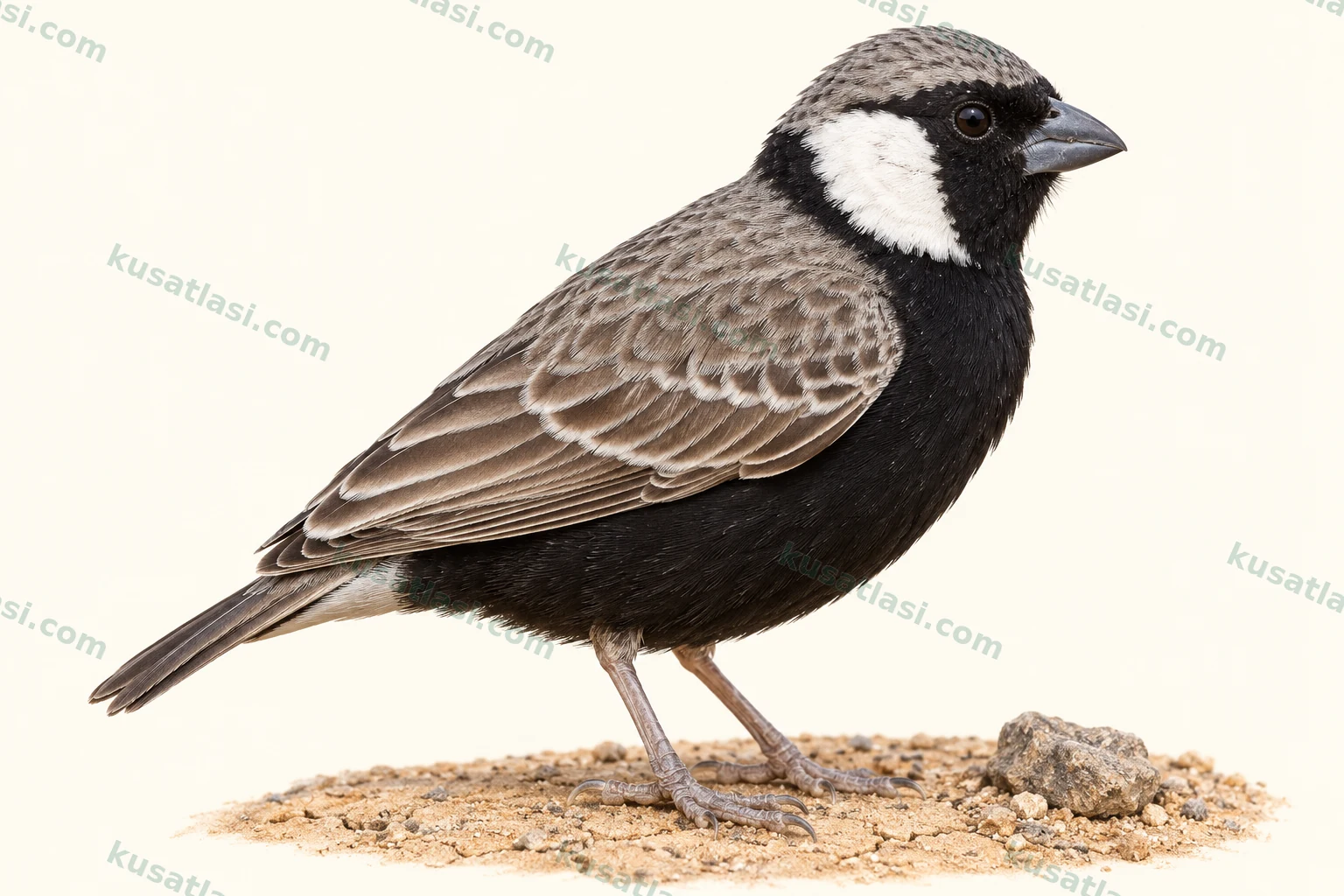
Small grey-backed sparrow-lark; the male has a black head and breast with broad white head sides.
Biometrics
Length
Male12–13 cm
Female12–13 cm
Shared species value
Wing length
Male8 cm
Female8 cm
Shared species value
Weight
Male13–19.8 g
Female12.5–21 g
Grey-backed Sparrow-Lark
Arid plains of southern AfricaObservation guide in its natural range
Look for three features together
Do not rely on a single featureVerify grey back and black-and-white head pattern on the same bird.
Assess faintly streaked breast, dark lower belly and unstreaked flanks together.
Ground-feeding flocks on arid open plains, sometimes mixed with other species.
Compare male and female
 FemaleMale
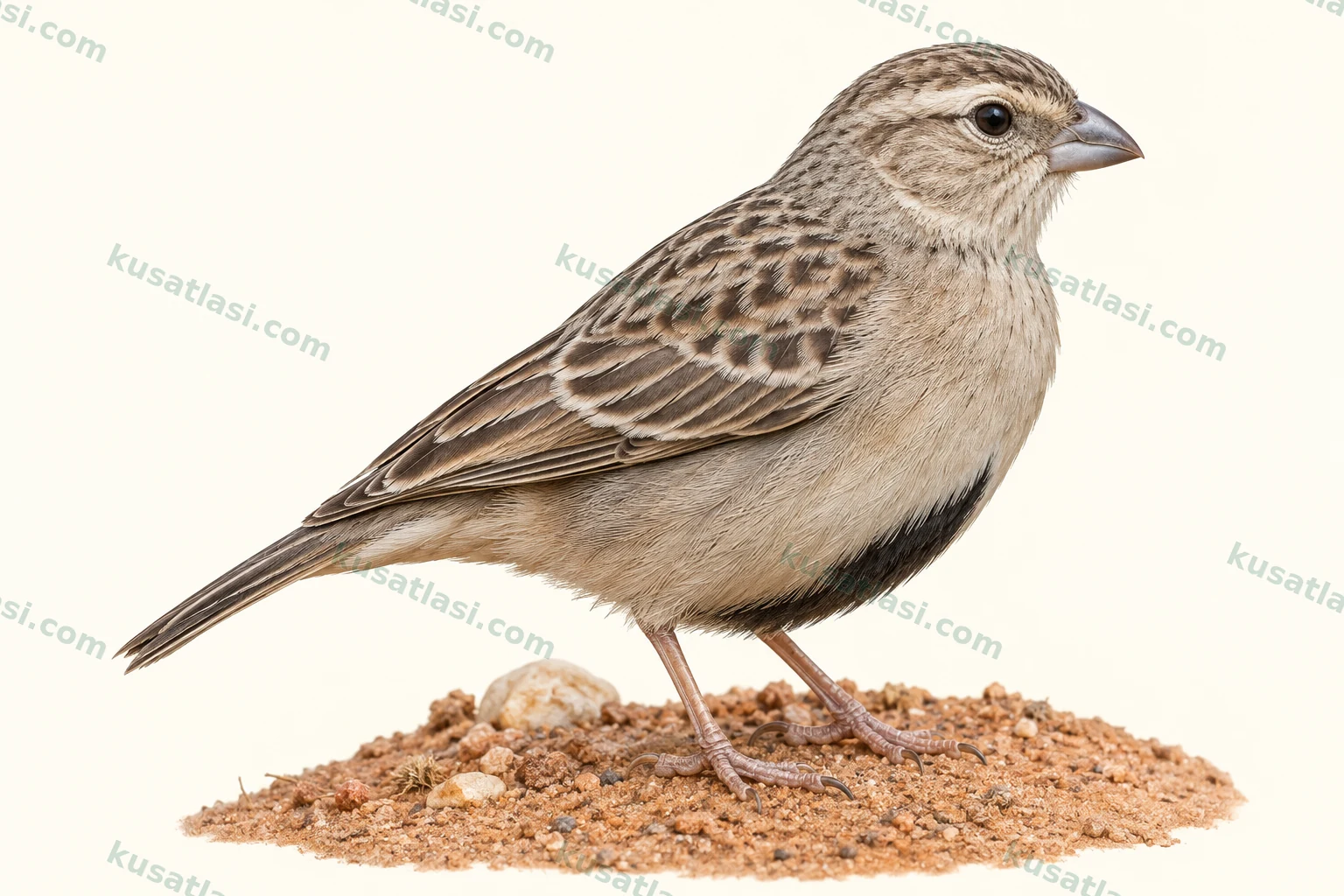
Adult males have a striking black-and-white head; females and young are plainer.
Where to look in its natural range?
Karoo, Kalahari surroundings, flat ground with sparse grass and scrub.
Breeding is opportunistic and rain-dependent; no fixed monthly sequence for the whole range was verified. Resident and rain-responsive nomadic populations occur.
All months: Data unavailable
January
February
March
April
May
June
July
August
September
October
November
December
Nest, egg and incubation
Small ground cup beside grass or scrub, usually 2–3 eggs. Incubation is reported as 9–11 days, nest departure 7–10 and first flight 15–20 days.
Short flock chirps; voice may accompany the male’s undulating display flight.
Do not play recordings to attract birds; observe quietly, especially near nests.
Species information
Quick identification
The Grey-backed Sparrow-Lark Eremopterix verticalis is a small lark of southern Africa's arid plains, with a short, stout, sparrow-like bill. In an adult male, look together for grey back, black head and breast, and a broad white area extending from the head side towards the nape. The female is duller grey-brown; a dark lower-belly patch and lack of strong flank streaking help distinguish her.
Waiting for the flock to land on open ground helps identification. The male's grey back is especially useful; other nearby sparrow-larks may have more chestnut-brown backs. Flocks can contain several species, so ensure that the visible head and back belong to the same bird.
General appearance and posture
The short, full body and thick seed-processing bill suggest a sparrow. Grey-brown edges on upperpart feathers can give slight scaling. The adult male's black face and underparts contrast sharply with pale cheeks and nape. The white head area's shape changes with head angle; do not assume one uniform white stripe covering the entire nape.
It searches for food on the ground with short walking steps. It may perch on a shrub or fence, but ground birds are more typical in everyday observation. On flat, sparsely vegetated ground the grey back blends with the surroundings; black breast and white head sides may be easier to see.
Males, females and young birds
An adult male has a conspicuous dark head, black breast and broad pale head sides. The female's head and back are plainer grey-brown; faint breast streaks and a dark lower-belly area may be present. Her paler appearance does not make her another species.
Young birds generally resemble females. Pale cream or whitish tips to upper feathers can give a more spotted appearance. Wear and age alter the view, so pale spots and the adult male's strong head pattern are read as different marks.
In the field, adult plumage pattern is more useful than small numerical differences.
Appearance in flight
Small flocks show active, sometimes irregular flight when moving. A displaying male can rise from the ground on an undulating path, with legs dangling. The specialist account describes this display up to 15–30 m high. Do not confuse it with ordinary feeding flights; add the head and back pattern if visible on the displaying bird.
The underparts appear briefly as a crowded flock turns; not every bird is expected to be black like a male. Watch spontaneous take-offs and landings instead of flushing birds for a view. This preserves behaviour and allows the ground identification marks to be checked again.
Voice and behaviour
Short chirps and calls are heard in flocks; the male's display flight may also be accompanied by voice. Overlapping feeding-flock sounds make the owner of one call difficult to separate. Assess voice with grey back and the head pattern appropriate to sex.
Small ground-feeding groups are usual, but favourable areas after rain may hold very large gatherings. Birds come to drink in flocks where water is available. At New Holme in South Africa, researchers directly observed them waiting for frozen water to thaw. Water use by this arid-land species is thus documented; adaptation to drought does not mean that it never drinks.
Similar species
The Chestnut-backed Sparrow-Lark Eremopterix leucotis is compared especially in females. Its adult male's chestnut-brown back differs from the grey back of this species. Similar head patterns do not justify certainty without seeing the back.
The Black-eared Sparrow-Lark Eremopterix australis can occur in the same arid region. Its female may be darker; chestnut-brown wing coverts and stronger breast streaks help comparison. One dark belly patch is insufficient.
Global range
Its natural geography is the arid and semi-arid plains of southern Africa. Central and western South Africa, Namibia and Botswana are important areas. It also occurs in southwestern Zambia and adjacent southeastern Angola; records extend north on Angola's west coast towards Luanda. This broad frame does not imply continuous equal density. Irregular arrivals in Zimbabwe are particularly linked to rainfall and food.
Status within its natural range
The current taxonomy list gives Least Concern globally. Many birds in one favourable area do not show that the flock remains there all year. Rain-created feeding areas in dry Karoo and Kalahari landscapes can quickly alter apparent numbers. The 2023 New Holme ringing study examined water points on one South African farm; its 130 captured birds are not a regional population census.
Movements and migration
Resident groups occur alongside rain-responsive nomadic and locally moving birds. Movement cannot be reduced to a regular north–south journey. Areas with more grass seeds and small invertebrates after rain may attract flocks, which may disperse during later drought. Several arrivals do not prove breeding. Dated map points show visits, not tracking data establishing individual routes.
Breeding habitat
It uses flat, sparsely vegetated sandy or firm gravelly ground. Dry Karoo grasslands, the Kalahari surroundings, open scrub and lightly wooded plains may be suitable. Burned grassland, fallow fields and dry pans are used too. Dense forest and rocky mountain settings are less typical than open plains. Breeding can follow favourable food conditions after rain; no single monthly calendar is assigned to the whole range.
Nest site
The nest is a small cup in a ground hollow beside grass or a small shrub. Fine grasses and roots are used, with small stones and soil pieces sometimes around the rim. The female plays the main building role. Usually 2–3 eggs occur within the documented range of 1–5. Incubation is reported as 9–11 days, shared by both sexes. Young may leave the nest around 7–10 days, which is not the same as flying; first flight is described at about 15–20 days.
Daily habitat use
Feeding is mostly on open ground. Shade from grass or scrub can matter at a nest; a position south or east of it helps shelter from hot sun. Both adults bring food and may distract threats. Do not follow an alarming bird or one behaving as if injured; move away from the hidden ground nest.
What does it eat?
Seeds of grasses, some herbs and shrubs are important adult foods. The diet is not tied to one grass species. The specialist accounts also mention grasshopper nymphs, termites and other small invertebrates. The insect contribution can change with season and breeding status. Mainly seed-eating adults do not necessarily feed young only seeds: termites, caterpillars and grasshoppers are described among nestling foods.
How does it forage?
It walks with short steps and picks food from the ground with its bill. The thick bill suits seed handling. It may break some plants' fruits to reach seeds and use small animal food when termites emerge. A flock remaining in one place does not mean all birds eat the same thing.
Responses to increased food after rain can affect both nomadic movements and breeding. Water visits are a separate part of daily use. A bird at water does not necessarily spend the whole day there. Record natural ground-picking from a distance instead of scattering feed through a flock or following birds to nests.
Moult may precede breeding
In September 2023, of 127 birds examined in South Africa, six had begun replacing their first primary flight feathers. Together with older seasonal observations in Namibia, this led researchers to suggest that moult may precede breeding. It is not a fixed calendar starting simultaneously everywhere. Year-to-year rainfall variation in arid regions calls for separate study of breeding and feather-renewal timing.
Wing and tail differences between the sexes
In the 2023 study in South Africa, males had longer mean wing and tail measurements.
A flock waits for ice to thaw
On one research day at New Holme farm, South Africa, the water points were frozen in the morning and birds waited to drink. This direct observation in the cold season of the arid Karoo shows why a habitat should not be imagined only as hot desert. Flocks visiting water were observed; a broad estimate of different individuals using the area was not presented as an individually counted total.
Leaving the nest is not flying
Reported nest departure at 7–10 days and first flight at 15–20 days are different development stages. Finding a small young bird on open ground does not show abandonment or ability to fly immediately. Adults may continue feeding nearby. Leave such birds where they are and observe at a suitable distance so natural parental care can continue.