

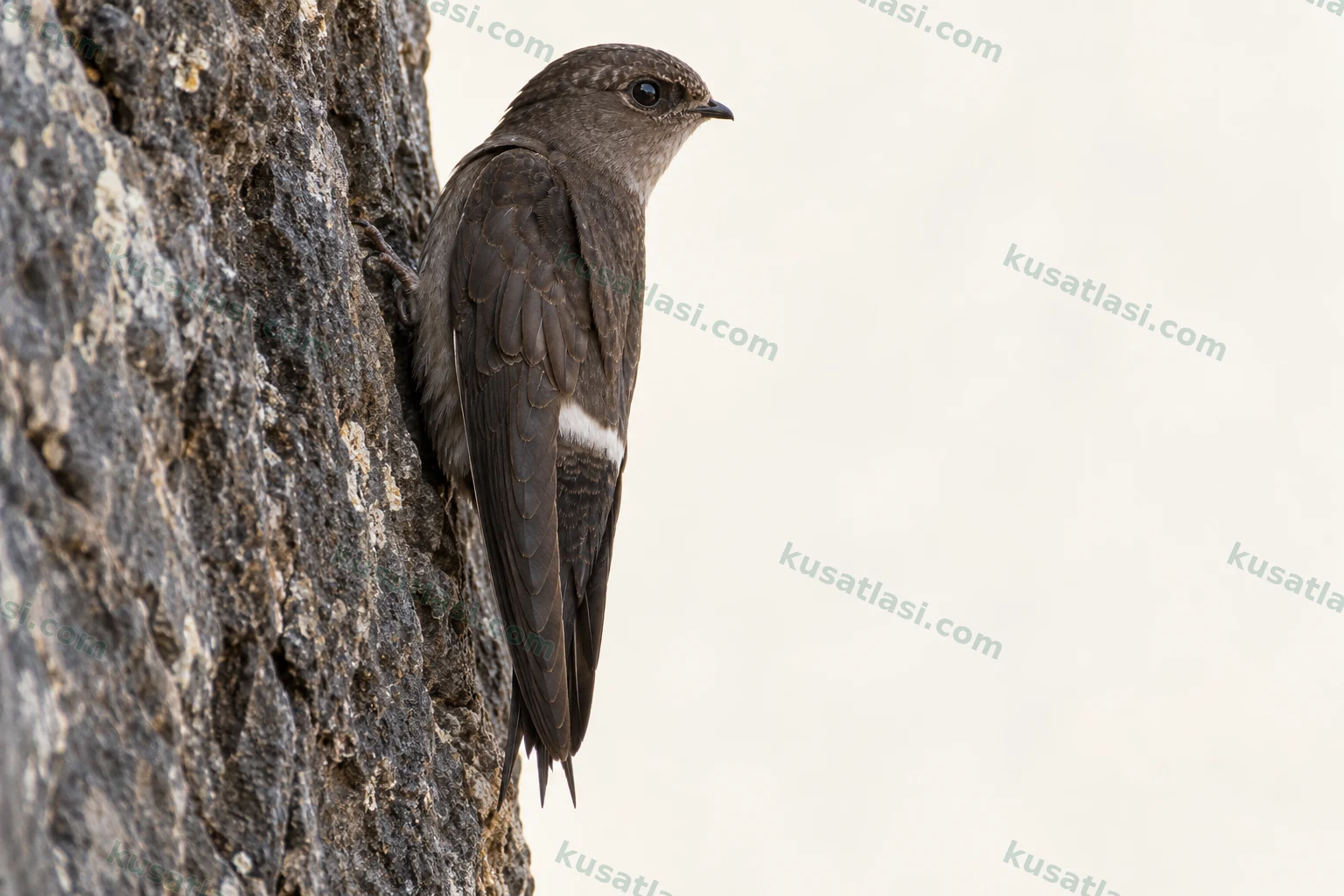
World Birds IUCN statusLC · Least ConcernGlobal IUCN category. BirdLife v10 (2025); taxon matching: AviList 2026 / IOC 15.2; checked: 29.10.2026. The list year is not the species assessment date. Source and method · BirdLife OrderApodiformesEbabilimsiler FamilyApodidaeApodidae
Band-rumped Swift
Chaetura spinicaudus
A small dark-bodied swift. Its distinguishing pale marking is a narrow band across the top of the rump, not on the belly. The current taxon is separate from the Costa Rican Swift.
Biometrics
Length
Male10 cm
Female10 cm
Shared species value
Wing length
Male10.37 cm
Female10.37 cm
Shared species value
Weight
Male16–18 g
Female15 g
Band-rumped Swift
Central Panama to western Ecuador, Venezuela, the Guiana region, Amazonian Brazil and TrinidadObservation guide in its natural range
Look for three features together
Do not rely on a single featureA narrow pale band near the tail base, without broad pale tail coverts.
Pale chin and throat, grey-brown breast and underparts.
Consider light, band width and geography together.
Compare male and female
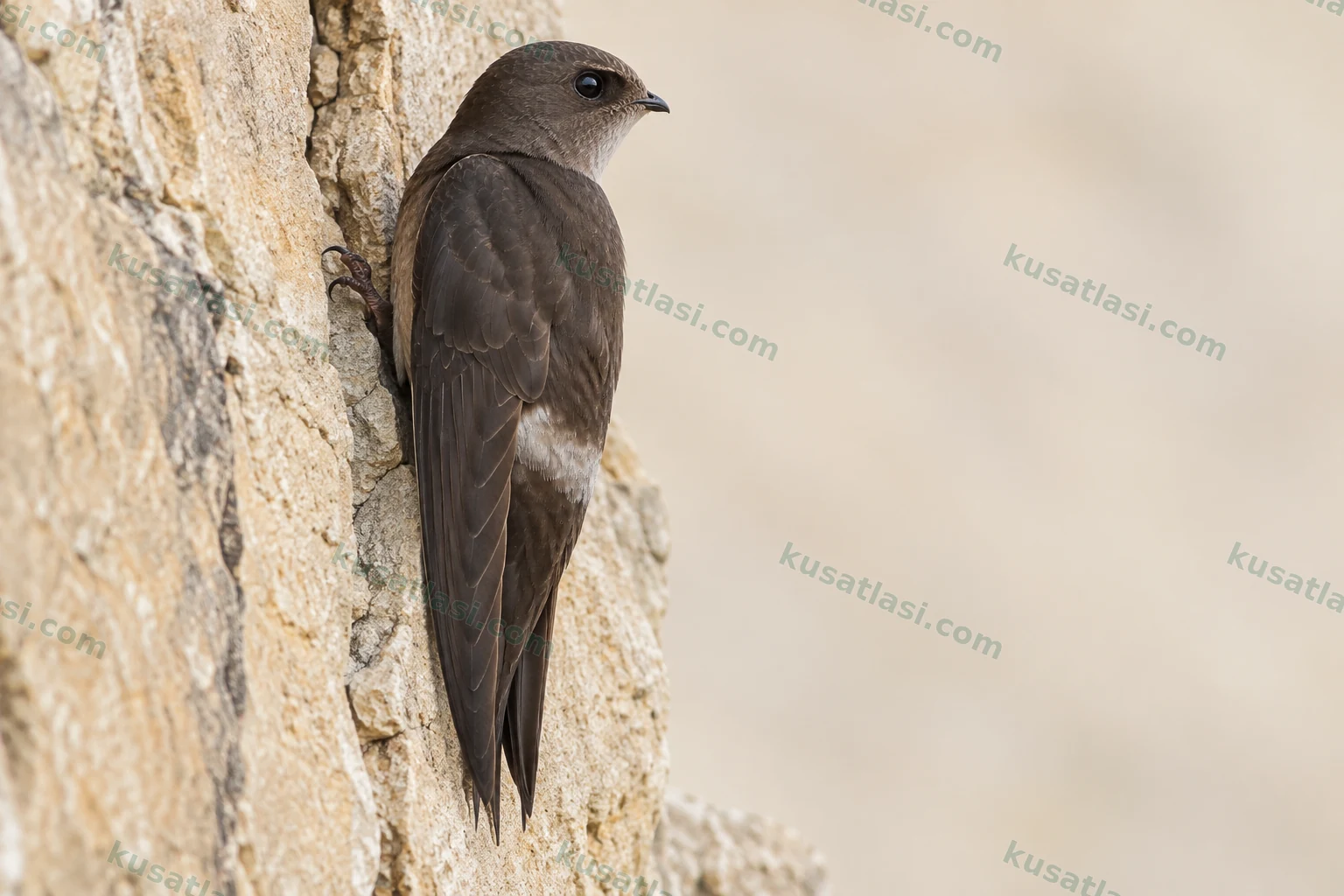 FemaleMale
No reliable separate field colour key for males and females or detailed juvenile plumage sequence was verified.
Where to look in its natural range?
Watch for birds flying over forests and forest edges. Local observations are documented on the western slopes of Ecuador.
The species is classified as resident. Reliable laying months for the entire range were not verified. The date of an archived recording does not establish a breeding month.
All months: Resident. No regular annual route was verified. No verified regional dates were given for individual months. This does not imply local absence.
January
February
March
April
May
June
July
August
September
October
November
December
Nest, egg and incubation
Nest structure, typical clutch size, incubation duration and time to flight from the nest were not verified for the current taxon. A night roost is distinct from a nest. Do not disturb its entrance.
The Guyana archive recording documents calls of adults in flight. In a mixed group, match the call to a bird you can see.
Do not play recordings to attract birds; observe quietly, especially near nests.
Species information
Quick identification
The Band-rumped Swift Chaetura spinicaudus is a small, dark-bodied swift. The pale marking referred to in the Turkish name is a narrow band across the rump near the base of the tail. The belly is not broadly white, and the band should not be mistaken for a broad white patch covering all the uppertail coverts. On a fast-moving bird it may appear as a brief flash. Check the wings, body and rump on the same bird.
The current English name is Band-rumped Swift. Older publications may use the spelling spinicauda or apply the name to a more broadly defined species. The Costa Rican Swift Chaetura fumosa is now a separate taxon. Measurements and nest or food records from Costa Rica under the old shared name are not automatically assigned to this species. Similar names among close relatives do not establish that the birds are the same.
General appearance and posture
In Hartert's museum account, the upperparts are nearly black with a slight metallic sheen. The narrow rump band varies from pale grey to nearly white, while the remaining uppertail coverts are dark. The underparts are greyish brown, with the breast appearing darker. The chin and throat are pale, and the lower belly is paler than the breast. This gradation does not amount to an entirely white belly. The undertail coverts are brown.
The pale band seen from above and the throat seen from below are different anatomical areas. Losing sight of one and seeing the other as the bird banks does not mean that the pale marking changes position on the body. Backlighting can make the upperparts look uniformly black, while direct sunlight can make pale grey look nearly white. The narrowness of the band and its position above the tail matter as much as the exact shade. A single bright pixel in a photograph cannot establish the identification.
Males, females and young birds
The scientific sources examined did not provide a reliable field key to sex. The narrow pale rump band helps identify an adult but does not distinguish a male from a female on its own. A darker breast is not treated as a male trait without considering light and geographic plumage variation. Sex labels on historical specimens do not mean that a flying bird can be sexed with equal confidence from appearance.
This review did not find a verified colour sequence covering all juvenile age stages. A pale band, worn feathers or a small-looking body alone do not establish that a bird is young. The position of the wing feathers and the camera angle can make a bird look smaller than it is. If marks support the species identification but age is unknown, leave the age open rather than adding unwarranted certainty.
The darker appearance of birds in central Brazil is discussed in its geographic context in the scientific comparison. The blacker appearance is not assigned to all males, nor the browner appearance to all females. Comparing photographs from different regions as though they showed a male and female pair can mislead. Consider plumage colour, location and light together as parts of the same observation.
Appearance in flight
A turn that reveals the upper surface of the rump is especially useful for identification. The pale band can be partly hidden in the silhouette of a bird moving away overhead. The pale throat seen from below does not substitute for the rump band. If several small swifts are in one flock, do not combine marks from different birds. Follow one individual through several turns.
The Ecuadorian field study discusses how swift species can feed at different heights in the same setting. Relatively low observations of this species do not mean it always flies close to the ground. Height in flight and elevation above sea level are separate measurements. A bird just above a mountainside can be at high elevation even while flying close to the ground.
Voice and behaviour
A recording from Guyana in the Macaulay archive documents calls of adults in flight. The presence of several birds in the same recording does not distinguish the calls by sex. It is difficult to confirm the species from a flock's calls without seeing the pale band. Linking a recording with a visual observation is more informative than hearing only a thin call from the sky. The date and place of the recording do not establish a calling calendar for the entire range.
Original observations from Trinidad show that small numbers of this species can join other small swifts at communal night roosts. A roost is not described as a nest with eggs. Repeated returns to an entrance do not prove that young are inside. Do not probe enclosed roosts with a light or block their entrances. Observe from outside without cutting across the birds' path.
Similar species
Chaetura egregia has a broader pale area across the rump and above the tail. Look for a narrower band on the Band-rumped Swift. Regional variation in darkness is not enough on its own. Check whether the birds flying side by side are at the same distance and whether the entire boundary of the pale area is visible.
The grey rump of Chaetura cinereiventris can look very pale in strong sunlight. Consider the width of the marking, the overall appearance of the body and the region as well as the degree of whiteness. The Costa Rican Swift Chaetura fumosa is treated separately under the current taxonomic limits. The old shared name is not grounds to add records automatically to the current map.
World distribution
The western part of the current taxon's range runs from central Panama through northwestern Colombia to southwestern Ecuador. The other part comprises southern and eastern Venezuela, the Guiana region and northern to central Amazonian Brazil. There are also original observations and specimen records from Trinidad. These broad regions do not imply continuous occupancy of every landscape in each country. Forest, open areas and local elevation may affect habitat use.
Status within the natural range
The Ecuadorian study recorded the species on western slopes at 300–1,500 m above sea level, with records concentrated at 450–900 m. This applies to the study area and periods of observation. It does not establish a fixed upper limit for the species. Other similar swift taxa occur east of the Andes, so the two slopes are not joined into one range. A coloured map cell does not indicate a verified nest there.
Movements and migration
Specialist species data classify it as resident. However, this review did not verify a tracking study showing where individuals move throughout the year across the entire range. Daily feeding movements are not drawn as a regular migration route between continents. An observation in one region on a particular date does not make that month the annual arrival time for the whole population. The locality, observed behaviour and date should be considered together in the source.
Breeding habitat
Specialist species data describe an aerial feeder associated with forests and forest edges. Observations in Ecuador cover western slopes at various elevations. A bird feeding over a forest does not prove that it nests at that very spot. The feeding setting and verified breeding site are recorded separately.
Nest site
The original sources examined did not establish a reliable nest structure, typical clutch size, total incubation duration or time to flight from the nest for the current taxon. Joining other species at night roosts in Trinidad is not a nest record. Costa Rican details under the old shared name spinicauda are not transferred without clarifying the taxon limits. Do not enter an enclosed cavity to check a resting bird.
Daily use of space
A feeding flock can move from the forest edge into open sky. Distinguishing a roost entrance, an area where prey is caught and land merely crossed in flight gives a more accurate account of habitat use. Observe from a clear position out of the birds' flight paths and avoid disturbing places where they gather at night.
What it eats
Species data with citations classify the Band-rumped Swift as a feeder on airborne invertebrates. For the taxon as currently defined, no adequate quantitative study of all the insect groups in its diet and their seasonal proportions was verified. Food percentages published under an older shared name in a Costa Rican study are not used without verifying the current taxon. Finding one insect group in the diet does not establish that it forms the bulk of the diet throughout the year.
How it catches prey
It feeds in flight. The Ecuadorian study discusses swifts using different flight heights at the same site. Reduced competition is an interpretation and has not been experimentally established as a rule for all regions. A lone bird may fly at a different height from one in a flock. Repeated changes in direction over the same area are more informative about feeding movements than a single passage. Observed flight height is distinct from elevation above sea level.
The pale band is not on the belly
Looking for a broadly white belly on the basis of the name can lead to the wrong marking. The narrow band across the top of the rump is the key pale area. The throat can also look pale, but it is a different anatomical part. Different surfaces come into view in succession as a bird banks. This does not mean that the same mark is seen in different positions. Recording the viewing angle matters as much as recording the colour.
Genetic research on close relatives
A 2018 molecular study examined relationships within Chaetura using mitochondrial and nuclear data. The relationships within the spinicaudus group are more complex than a simple single-branch account suggests. The results inform research and taxonomic discussion. A phylogenetic tree in one study does not automatically change every species boundary in the current checklist. The scientific name on the page is matched to the currently accepted taxon.
Two species may share a night roost
The Trinidad study recorded a small number of these birds roosting with other swifts, showing that a night roost need not contain just one species. The size of the entire group is not the count of this species. A roost is not read as a nest containing eggs. Naming the behaviour accurately sets a limit on what can be inferred from it.
Two meanings of height
In mountainous terrain, a bird's elevation above sea level differs from its height above the ground. The Ecuadorian paper keeps the measurements separate in discussing habitat and feeding height. Assuming a bird just above a mountainside is close to sea level misrepresents the range in elevation. The same observation is clearer when the locality, elevation and flight height are recorded separately. Both measurements may be in metres but have different starting points.