

World Birds IUCN statusLC · Least ConcernGlobal IUCN category. BirdLife v10 (2025); taxon matching: AviList 2026 / IOC 15.2; checked: 29.10.2026. The list year is not the species assessment date. Source and method · BirdLife OrderPasseriformesPasserines FamilyAegithalidaeAegithalidae
White-throated Bushtit
Aegithalos niveogularis
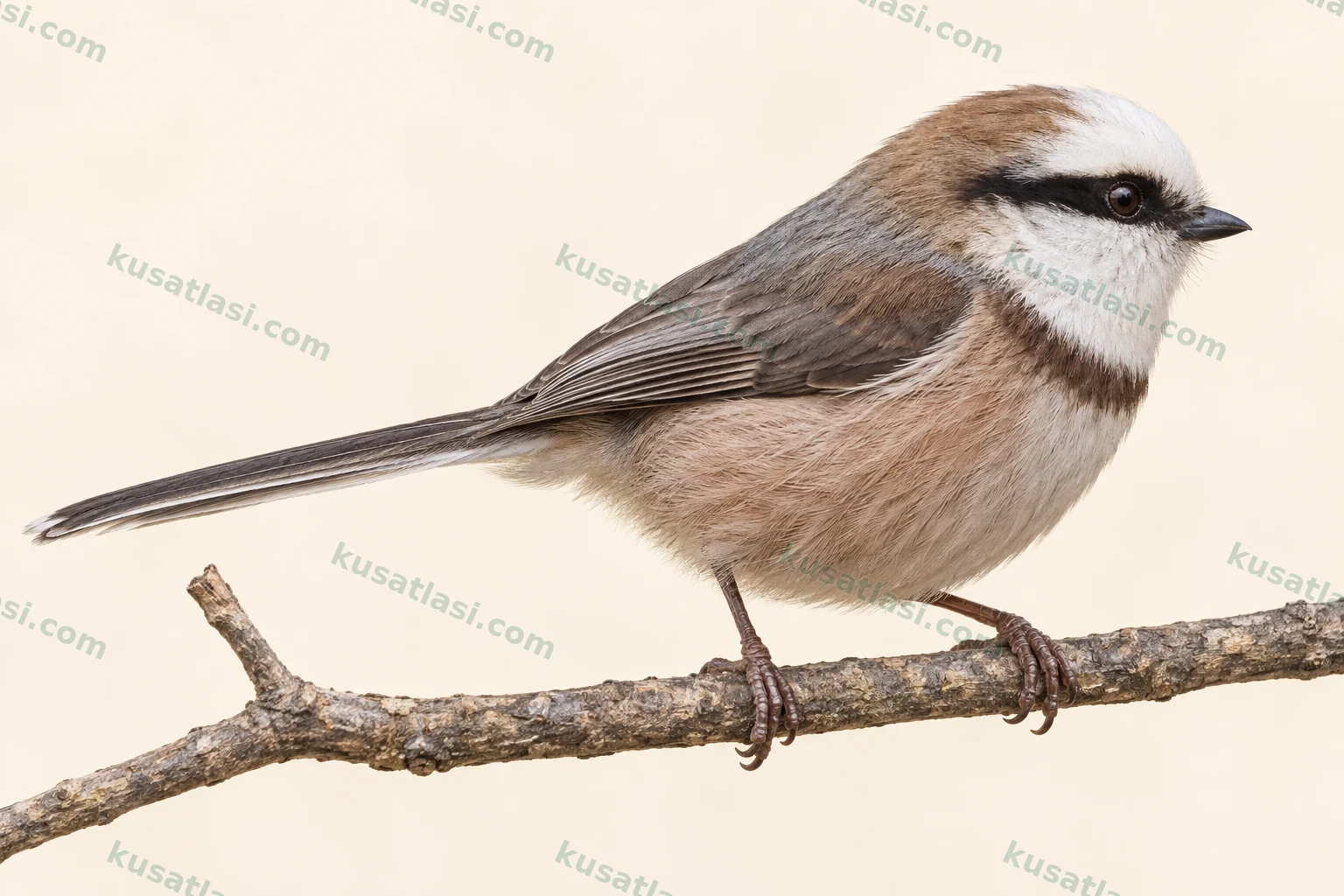
A western Himalayan mountain bird with a white forehead and throat, a broad dark eye band, dark eyes and a conspicuous tail.
Biometrics
Length
Male11 cm
Female11 cm
Shared species value
Wing length
Male5.97 cm
Female5.97 cm
Shared species value
Weight
Male7.8 g
Female7.8 g
Shared species value
White-throated Bushtit
Western Himalayas; northern Pakistan, northwestern India and northwestern NepalObservation guide in its natural range
Look for three features together
Do not rely on a single featureCheck the white forecrown and throat with the dark eye band on the same bird.
Watch small or mixed feeding groups at forest edges and in high scrub.
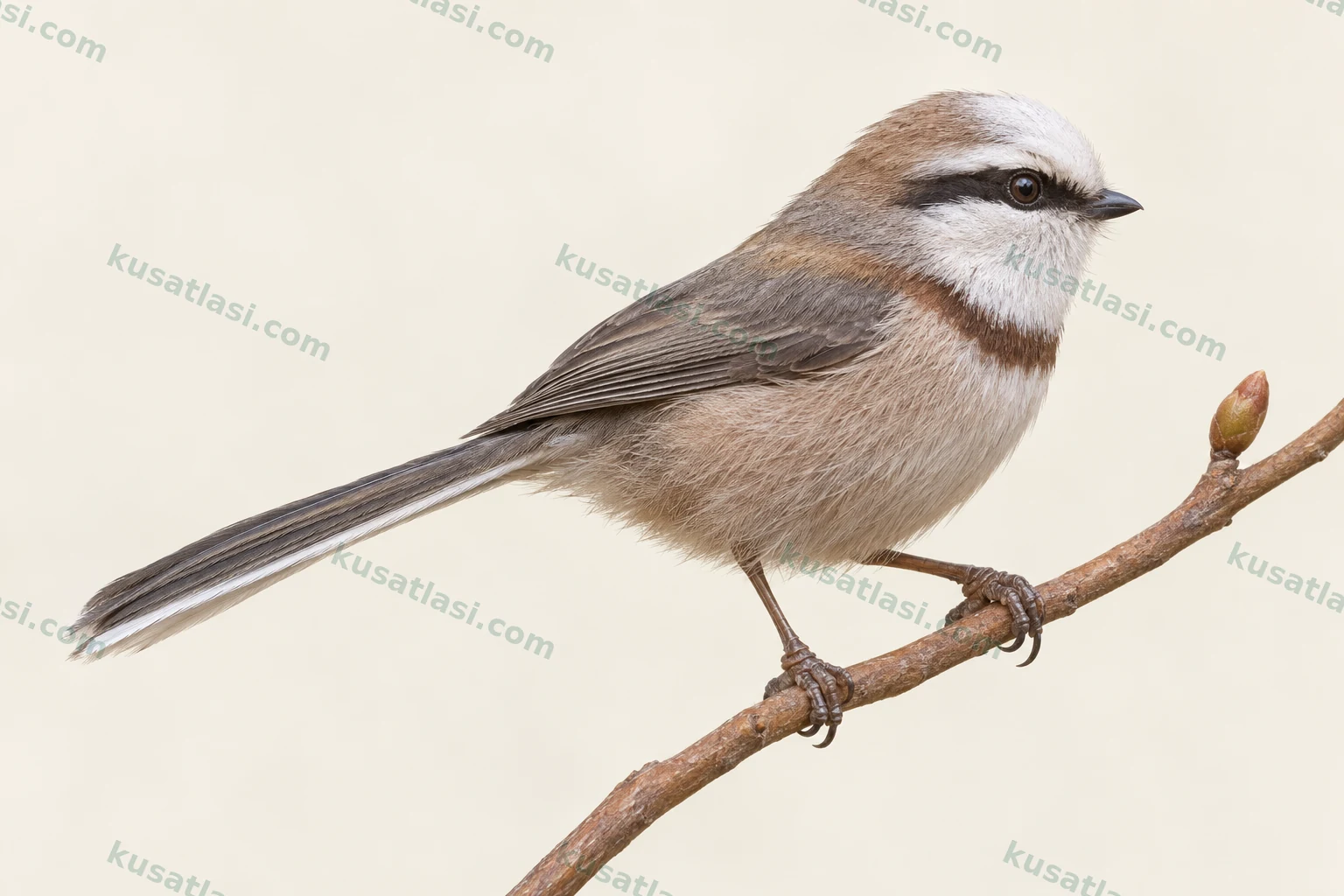
Compare male and female
 FemaleMale
Adults of both sexes have similar plumage. Young birds are described with a pinkish-white throat and a more prominent breast band. Shades alone do not establish age.
Where to look in its natural range?
Edges of mixed broadleaved–coniferous mountain forest and high scrub.
Resident, with movements between elevations. The regional handbook reports breeding from May to early July.
January
Regional breeding records from the western Himalayas. No verified regional date is given for this month. This does not imply local absence.
February
Regional breeding records from the western Himalayas. No verified regional date is given for this month. This does not imply local absence.
March
Regional breeding records from the western Himalayas. No verified regional date is given for this month. This does not imply local absence.
April
Regional breeding records from the western Himalayas. No verified regional date is given for this month. This does not imply local absence.
May
Regional breeding records from the western Himalayas. Regional breeding period, continuing into early July.
June
Regional breeding records from the western Himalayas. Regional breeding period, continuing into early July.
July
Regional breeding records from the western Himalayas. Regional breeding period, continuing into early July.
August
Regional breeding records from the western Himalayas. No verified regional date is given for this month. This does not imply local absence.
September
Regional breeding records from the western Himalayas. No verified regional date is given for this month. This does not imply local absence.
October
Regional breeding records from the western Himalayas. No verified regional date is given for this month. This does not imply local absence.
November
Regional breeding records from the western Himalayas. No verified regional date is given for this month. This does not imply local absence.
December
Regional breeding records from the western Himalayas. No verified regional date is given for this month. This does not imply local absence.
Nest, egg and incubation
An enclosed moss and spiderweb nest, covered with lichens and lined with feathers. A historical Garhwal record gives four eggs. Typical clutch size and development durations remain uncertain.
High, thin metallic notes, chattering calls and dry trilling sequences.
Do not play recordings to attract birds; observe quietly, especially near nests.
Species information
Quick identification
The White-throated Bushtit Aegithalos niveogularis is a small mountain bird of the western Himalayas. Its tiny bill, large head relative to the body and conspicuous tail stand out. The forehead and forecrown are white. The white throat extends along the sides of the neck as a collar broken at the nape. A broad dark eye band contrasts with these pale areas. The current specialist description gives a dark eye. Examine the head pattern and eye together.
A white cheek or a long tail alone does not identify it. Natural front and side views show where the white lies on the forehead, throat and sides of the neck. A branch in front of the eye may create darkness that can be mistaken for eye colour. When identifying this small, active bird, check that the white forehead is on the front of the crown and the white throat below the bill.
General appearance and posture
The back is grey and the wings grey-brown. The rear crown and nape look warmer brownish. There is a brown band across the upper breast, with pale pinkish-brown underparts below it. A narrow white edge may show on the outer grey-brown tail. Some small colour areas fade in the light. The warm underparts may be less obvious at a shaded forest edge, but the positions of the white forehead and throat remain the same.
A side view on a branch is better for assessing the overall appearance and bill-to-head proportions together.
Males, females and young birds
The handbook describes adult males and females as having the same plumage. The width of the white collar, warmth of the head or visibility of the breast band alone does not establish sex. Light and posture can change the apparent extent of those areas. Seeing two adults together does not identify the male either. Record behaviour and appearance separately.
The older specialist description gives young birds as similar to adults but with a pinkish-white throat, a more prominent breast band and paler brown underparts. These are small differences in shade, insufficient by themselves for certain ageing in poor light. Actually seeing food passed to a bird near a nest can provide stronger context for its developing stage. Do not disturb birds by searching for the nearby nest.
Appearance in flight
The small head-and-body outline and relative tail length can be watched as a bird moves between bushes. However, the white forehead, throat and eye band can be briefly hidden in flight. Do not leave identification to that short silhouette. Check the head pattern when the bird settles among leaves again. Birds moving one after another in a mixed flock need not all be the same species.
A short downhill flight does not show that the whole species began migrating that day. Immediate movement and seasonal changes in elevation are separate observations.
Voice and behaviour
It can form small groups at forest edges and in high mountain scrub, and joins mixed-species feeding flocks. Thin, high metallic notes, chattering calls and dry trilling sequences are parts of the current specialist voice description. Find the bird producing a thin sound among leaves. Do not combine calls of different small birds in the same flock as the variable song of one individual.
A foraging group moves through shrub and tree foliage. Group living does not prove that three or more individuals care for young at the same nest. No study directly confirming helper-assisted breeding in this species was used here. Care patterns of close relatives are not transferred automatically. When a bird carries nest material or food, its time, place and actual transfer can be recorded separately.
Similar species
When comparing Aegithalos leucogenys, the white throat together with the forehead and eye band is important. That species' dark throat and pale cheek make a different head pattern. The handbook also describes a difference in bill shape, but measuring it with certainty at a distance in a small, moving bird is difficult. A clear head view from the same angle is more useful than identification based on a slightly longer-looking bill.
Aegithalos iouschistos and eastern forms included in a broader group in older accounts require particular care. Current taxonomy does not automatically include them in this species' natural range. Check the White-throated Bushtit's white forecrown and throat with its dark eye. Geography supports identification but does not replace a head pattern that cannot be seen. A distant eastern Himalayan record must not be assigned to this species without establishing the old scientific name's taxonomic scope.
Global range
The natural range is in the western Himalayas. The specialist handbook describes the mountain belt from Kaghan in northern Pakistan through Kashmir, Himachal Pradesh and Garhwal to northwestern Nepal. Current taxonomy and scientific assessments retain this predominantly western scope. Neither the whole Himalayan chain nor all of Nepal is shown as one continuous species range. Eastern relatives' records are considered separately.
Status within its natural range
Mixed coniferous and broadleaved forests with birch, oak and cherry, forest edges and high scrub are important. Information from mountain areas of Pakistan and India does not prove widespread occurrence at every elevation in either country. The Garhwal genetic study obtained samples of this species from a site at 3,200 m. This does not mean its entire range is restricted to that altitude.
Movements and migration
The species is resident, but seasonal movements between elevations are reported. The older handbook mentions descending to about 1,800 m in winter. This is not a long-distance migration route between countries. Regional breeding information covers late spring and early summer. It does not provide a universal calendar starting and finishing on the same day in different valleys. The map shows approximate verified western Himalayan records, without identifying each bird's valley or pass.
Breeding habitat
It uses mixed broadleaved and coniferous mountain forests and willow and rhododendron scrub near the upper boundary. The regional handbook gives breeding habitat at 2,700–3,300 m in Kaghan and up to 3,600 m in Garhwal. Not every bare slope at the same elevation is suitable. The vegetation and sheltered structures the bird uses must also be present.
Nest site
The nest resembles an enclosed pouch with an entrance near the upper side. It is made of moss and spiderweb, covered with lichens and lined with feathers. Nests in shrub forks or attached to tree branches are reported. Old Garhwal records describe four eggs, but the later handbook leaves the typical clutch size unknown. Four is a historical observation, not an unvarying species value. Incubation and young development durations were not verified.
Daily habitat use
Small groups forage among shrub and tree foliage. The connection between high scrub and mountain forest helps explain their daily search area. An enclosed nest does not need to have its entrance opened for inspection, which could harm the bird. Material carrying and care are watched from a natural distance without changing behaviour.
What does it eat?
The specialist handbook gives insects as the main food, and the ecological overview is consistent with an invertebrate-based diet. Specific prey species, daily percentages and the detailed composition of food for the young were not verified for this account. Small items among leaves are not all assumed to be the same insect species. Fruit, seeds or buds reported in other bushtits are not added without independent evidence for this species.
How does it forage?
It moves through leafy parts of shrubs and trees to find food. Joining mixed feeding flocks is a directly recorded general behaviour, without implying that all flock members take the same prey. Watching prey in the bill or a search on a leaf strengthens a feeding record. One observation does not establish prey abundance throughout a season. A brief foraging excursion is not the same movement as a seasonal change of elevation.
Older names may have a wider scope
The relationship with eastern relatives has been discussed in ornithological work. The currently accepted taxon does not automatically include every form grouped under the same species in an older book. A place name or measurement in a source must therefore first be assigned to the correct taxon. Similar appearance does not mean the same natural range.
Mountain movements are not always long journeys
Being classified as resident does not mean staying at one elevation. A descent to lower forest in winter has been reported. This differs from migration to a distant country. Joining points from two seasons with a line on a map does not establish the real route. The movement between them needs its own tracking.
It appears in immune-gene research
A study in Garhwal examined this species to compare immune-related genetic diversity with a close relative. The comparison shows that the bird is studied for biological traits as well as appearance. The population bottleneck result found in the other species is not transferred to this one. Inclusion in the same study does not mean every result belongs to both species.
An enclosed nest does not reveal everything inside
Knowing the structure of a mossy, feather-lined nest does not establish how many days incubation takes. That must be followed separately. A historical record of four eggs does not resolve typical clutch size or regional variation. Long-term observation without disturbing adults near the nest can give more breeding information than one nest photograph. The closed entrance should be left as a structure the bird naturally maintains.