

World Birds IUCN statusEX · ExtinctGlobal IUCN. BirdLife v10 (2025); taxon matching AviList 2026 / IOC 15.2; checked: 29.10.2026. The list year is not the species’ assessment date. Source and method · BirdLife OrderPasseriformesPasserines FamilyAcrocephalidaeAcrocephalidae
Aguiguan Reed Warbler
Acrocephalus nijoi
An extinct olive-brown reed warbler confined to Aguiguan forests; the map shows the historical island.
Biometrics
Length
MaleData unavailable
FemaleData unavailable
Wing length
Male8.63 cm
FemaleData unavailable
Weight
MaleData unavailable
FemaleData unavailable
Aguiguan Reed Warbler
Aguiguan, Mariana Islands — historical rangeObservation guide in its natural range
Look for three features together
Do not rely on a single featureAguiguan only; records from Guam and Saipan are not the same species.
Olive-brown upperparts, cream and brownish underparts; colour overlaps with related species.
Extinct; the last verified observations were in the 1995 survey.
Compare male and female
 FemaleMale
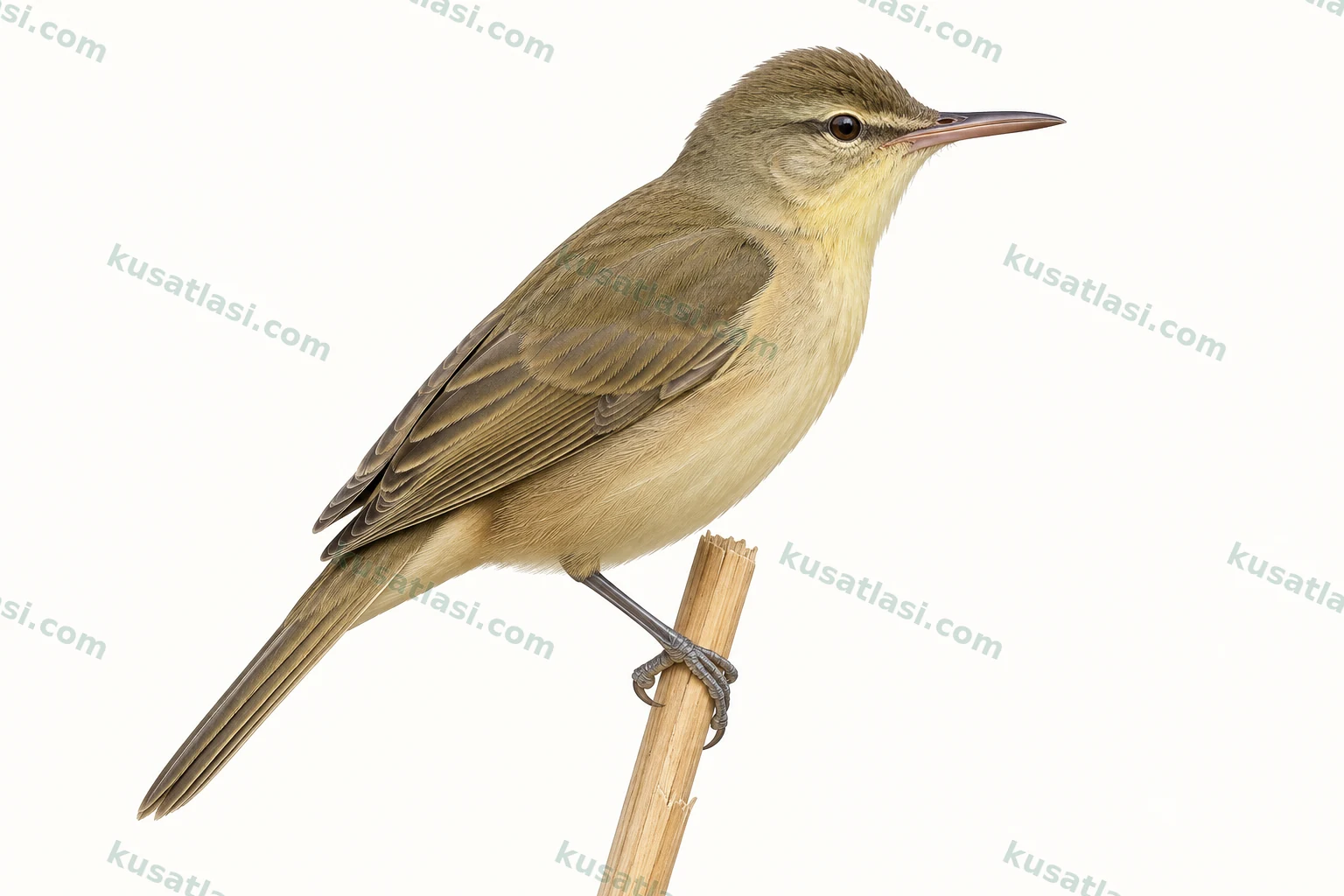
An adult field sexing key and details of juvenile appearance were not verified. The wing measurement series comprises only three males.
Where to look in its natural range?
There is no current observation site; the map shows the historical island’s location.
Historical calendar of an extinct species; there is no current seasonal presence or verified monthly breeding information.
All months: Extinct; historical breeding and migration dates for this month were not verified.
January
February
March
April
May
June
July
August
September
October
November
December
Nest, egg and incubation
Species-specific nest structure, egg count, incubation duration and age at first flight were not verified; values of living relatives are not used.
Historical sources record singing males; a detailed, reliable species-specific voice description was not verified.
Do not play recordings to attract birds; observe quietly, especially near nests.
Species information
Quick identification
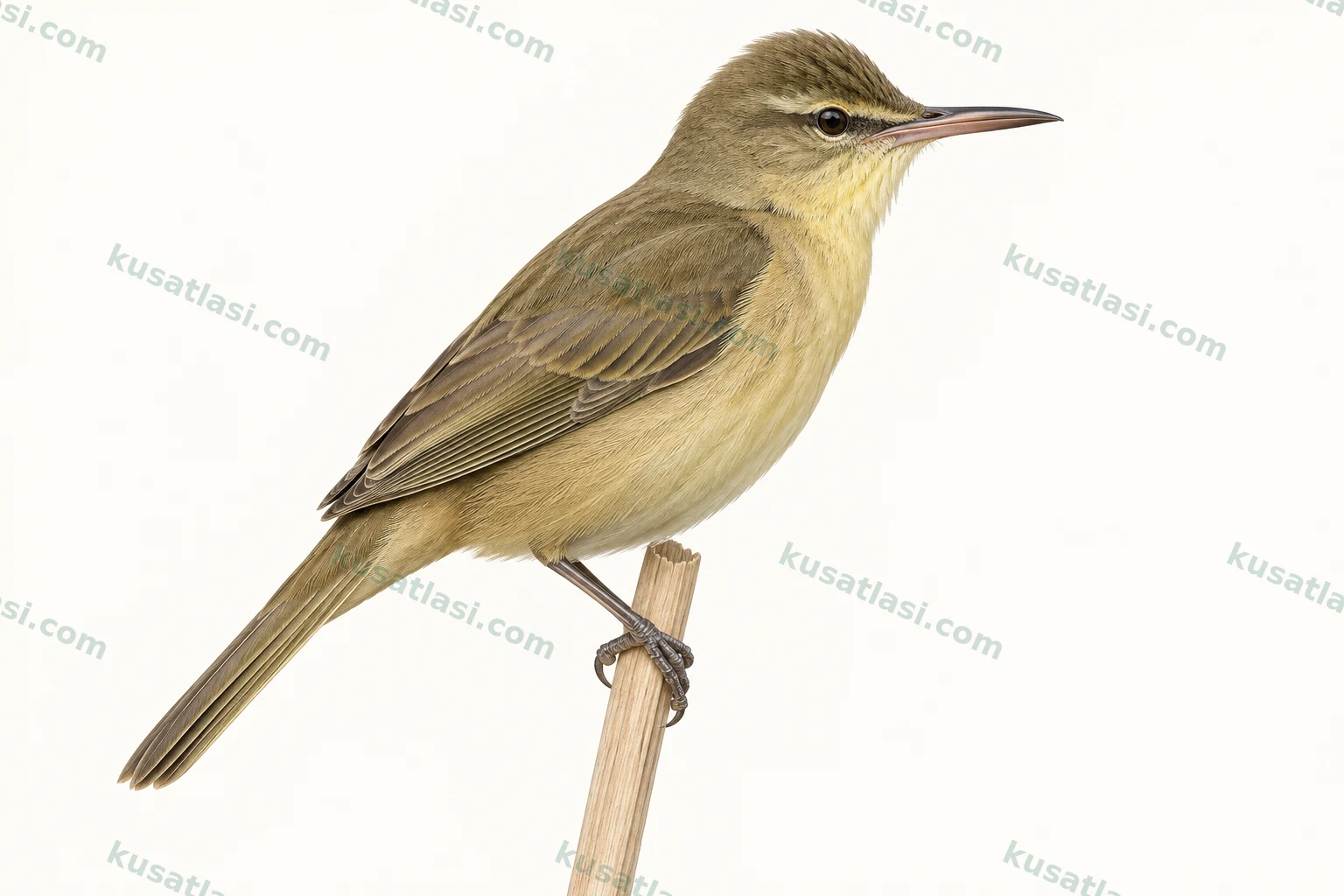
Aguiguan Reed Warbler Acrocephalus nijoi was a passerine confined to Aguiguan in the western Pacific's Mariana Islands and is now considered extinct. Aguijan, Agiguan and Aguiguan are different spellings of the same small island. Its basic appearance was olive-brown above, pale cream to brownish below, with a rather long bill. These colours also occur in reed warblers of neighbouring islands. When identifying a historical specimen, its island of collection and record identity matter as much as its appearance.
It is not described as a species that can be observed in the wild today. The current Extinct category must be read alongside older publications treating it as an island population of a wider species. A reed warbler photographed on Saipan or Guam cannot be used as a living example of Aguiguan Reed Warbler.
General appearance and posture
The 2012 comparison of museum specimens showed that Mariana reed warblers are very similar in olive-brown upperparts and cream underparts. The original description reproduced in Baker's 1951 compilation described Aguiguan birds as less rusty above than Saipan and Alamagan specimens and darker brownish on flanks and belly. This compares the historical series examined; it is not a certain field key distinguishing every individual by hue alone. Preserved feather colour and photographic lighting can also change the appearance.
In the same series, the mean from bill tip to skull was 2.80 cm, while the mean from the rear edge of the nostril to the tip was 1.98 cm. These bill measurements do not use the same starting point. The 2.7–2.9 cm given in the 1951 compilation for five adults is exposed upper-bill length; figures obtained by different methods are not merged into one range.
A museum specimen's measurement is not a direct record of flight posture or all the movements of a living bird.
Males, females and young birds
The 2012 study attempted to obtain genetic data from historical male and female specimens, obtaining a successful Aguiguan sequence from one male. Its size comparison, however, comprised three males; genetic sample size and measurement sample size are not identical. This also prevents the mistaken conclusion that only one male was measured. To avoid sex-related size differences affecting comparison, the authors restricted measurement analysis to males.
A reliable species-specific field colour key separating adult female and male was not verified in these sources. Sufficient data were also lacking for detailed juvenile moult, timing of the first adult appearance and seasonal colour changes. Juvenile appearances of neighbouring species are not transferred here. A historical label's sex is information about that specimen's identity; it does not show that every female has identical bill or wing dimensions. Age or sex is not settled merely by an illustration's paleness.
Appearance in flight
No reliable sequence describing natural flight in detail was verified in this review. Wingbeats, flight heights or migration speeds taken from other reed warblers are therefore not given as species characteristics. For an extinct species it is particularly important that measurement and behaviour are different forms of evidence.
Confinement to one island does not prove that no individual ever crossed the sea. Birds from neighbouring Saipan were proposed as an explanation for the final Aguiguan records, but the 2012 genetic study did not support recent intensive gene exchange. The authors considered the last individuals of the native species more likely. That does not mean every historical bird's flights were tracked. No regular migration line is shown between islands.
Voice and behaviour
The 2012 synthesis reports that an earlier survey found two singing males. Singing is one of the historically recorded behaviours, but the publications examined do not provide a reliable sequence of notes, duration or detailed vocal identification for the whole species. Saipan Reed Warbler recordings are not presented as the same voice. Three reed-warbler detections at two stations during the 1995 island count do not prove a shared family or flock either; they are survey detections.
Forest occurrence shows why “reed” in the name should not confine the species to reedbeds. The 2012 study explicitly states that Aguiguan has no natural wetlands. Sufficient species-specific data were not verified for daily activity hours, pair bonds, territorial details or chick care. These gaps are not filled with behaviour of living relatives. Historical records are interpreted with their actual statements and island identity retained.
Similar species
1. Saipan Reed Warbler Acrocephalus hiwae is similar-looking on Saipan and Alamagan. Upper- and underpart colours alone are unreliable for separation; measurements partly overlap in the 2012 study too. The island and current taxon of older records under broad Acrocephalus luscinius are checked. A Saipan photograph is not assigned to Aguiguan's extinct species.
2. Guam Reed Warbler Acrocephalus luscinius was historically similar in colour. Although Guam males in the research had a longer mean bill, assigning one bird to an island by its bill appearance alone is unreliable. Pagan Reed Warbler Acrocephalus yamashinae differed through smaller wing and bill dimensions in the study. These comparisons explain historical specimen identities, not a possibility of seeing all three extinct species together in the field today.
World distribution
The known natural range was Aguiguan alone in the Mariana Islands. This island of about 7 km² lies southwest of Tinian in the western Pacific. Older reed-warbler records from Guam, Saipan, Alamagan and Pagan, even when published under the same broad name, are not added to current Acrocephalus nijoi range. The identity of prehistoric reed-warbler remains on Tinian is uncertain; the 2012 study does not label them directly as nijoi. The map represents Aguiguan's historical location, not a living population today.
Status within its natural range
The current category is Extinct. According to the 2014 island study, there were four detections outside count minutes in 1982, and three detections at two stations during the count in 1995. Later surveys did not find the bird. These few detections are not a complete census establishing that only three or four birds lived on the island. The last sighting year remains 1995; the exact day of death and identity of the last individual are unknown. Forest clearance and pressure on vegetation from introduced goats are possible contributors to decline, not an experimentally proven single cause.
Movements
No verified regular seasonal migration route was found. The known history is treated as that of a native forest bird of one island; lines to different continents for breeding and non-breeding seasons are not added. Resemblance to Saipan birds does not mean annual migration from there. The 2012 genetic study does not support recent strong inter-island gene exchange, but one successful Aguiguan genetic sample cannot reconstruct every past movement. The map focuses on the historical island and the time information on the final records.
Breeding habitat
Aguiguan is a small island without natural wetlands, with steep limestone slopes and stepped flat areas. The reed warbler lived in forest; its name does not require reedbed breeding. The 2014 island study describes old agricultural land later becoming scrub and secondary forest. Benefits of that change to other birds do not prove restoration of successful nijoi breeding habitat. A detailed study measuring suitable breeding vegetation structure was not verified.
Nest site
Species-specific nest height, materials, egg count, egg colour, incubation duration and age at first flight were not verified in this review. Nest descriptions of Saipan or Guam reed warblers are not transferred to fill these gaps. A museum bird's collection date does not show egg-laying that day; a singing male on the same island is not equivalent to a found nest. This distinction allows an accurate reading of poorly known historical life-history details.
Daily space use
Forest is the verified environment; daily feeding height and individual range size are unknown. Cover removal for agriculture, later goat grazing beneath forest and inadequate native-tree regeneration matter in the island's habitat history. Increases in some other forest birds in 2008 do not show the same response by all species. That survey did not find nijoi; this is explicitly retained. Forest restoration cannot automatically bring back an extinct species, though it can protect habitat for other native birds still living on the island.
What did it eat?
Directly examined stomach contents, a detailed prey list or seasonal diet proportions of Aguiguan Reed Warbler were not verified in this review. Information in old publications under the broad Nightingale Reed-warbler heading cannot be assigned to this species without identifying its island. A feeding record from Guam does not prove the same prey was eaten on Aguiguan. No precise insect, fruit or other prey percentage is calculated from bill shape; neighbouring species' diets are not presented as nijoi's verified list.
How did it forage?
It is known to have lived in forest, but sufficient species-specific observations were not found for feeding height, searched surface or capture movements. Techniques such as searching leaf undersides, digging soil or aerial hunting are not borrowed from other birds. Historical bill measurements compare shape; they do not directly document a hunting technique. No definite method or daily consumption amount is therefore given here. Habitat knowledge and feeding-behaviour details remain separate.
Museum specimens can reveal lost diversity
The 2012 research obtained readable genetic data from a male collected on Aguiguan in 1940. This supports not treating the island bird as the same species as neighbouring Saipan birds on appearance alone. Failure to obtain a successful sequence from the other Aguiguan specimen shows that old material cannot answer every question. Scientific collections preserve more than colours and size measurements; accurate identity and dates also permit study of past diversity.
The small island's bird was not a reedbed bird
This reed warbler lived in forest despite Aguiguan lacking natural wetlands. The name does not mean all relatives use identical vegetation. Studies of island evolution and habitat use should start with where the species was actually recorded. A generic family image of reedbeds is not direct documentation of nijoi habitat. Forest damage on the small island therefore matters to its conservation history.
Last sighting and day of extinction are not the same
The 1995 survey made three detections; later surveys did not find the bird. This gives a last sighting year, not a definite number of years survived by the final individual. The same uncertainty also does not permit describing a verified living population today. The current Extinct assessment and historical detections are different kinds of information. A new claim requires correct species identity and reliable evidence.
Similar appearance does not always mean close kinship
Although Aguiguan and Saipan body and bill dimensions overlap, the 2012 genetic results do not support the populations as close sisters. The authors discussed independent convergence or a misleading small sample as possibilities for the resemblance. Neither is presented as a settled ecological cause. Matching brown feathers alone do not determine species; specimen island, measurements and genetic findings are considered together.