

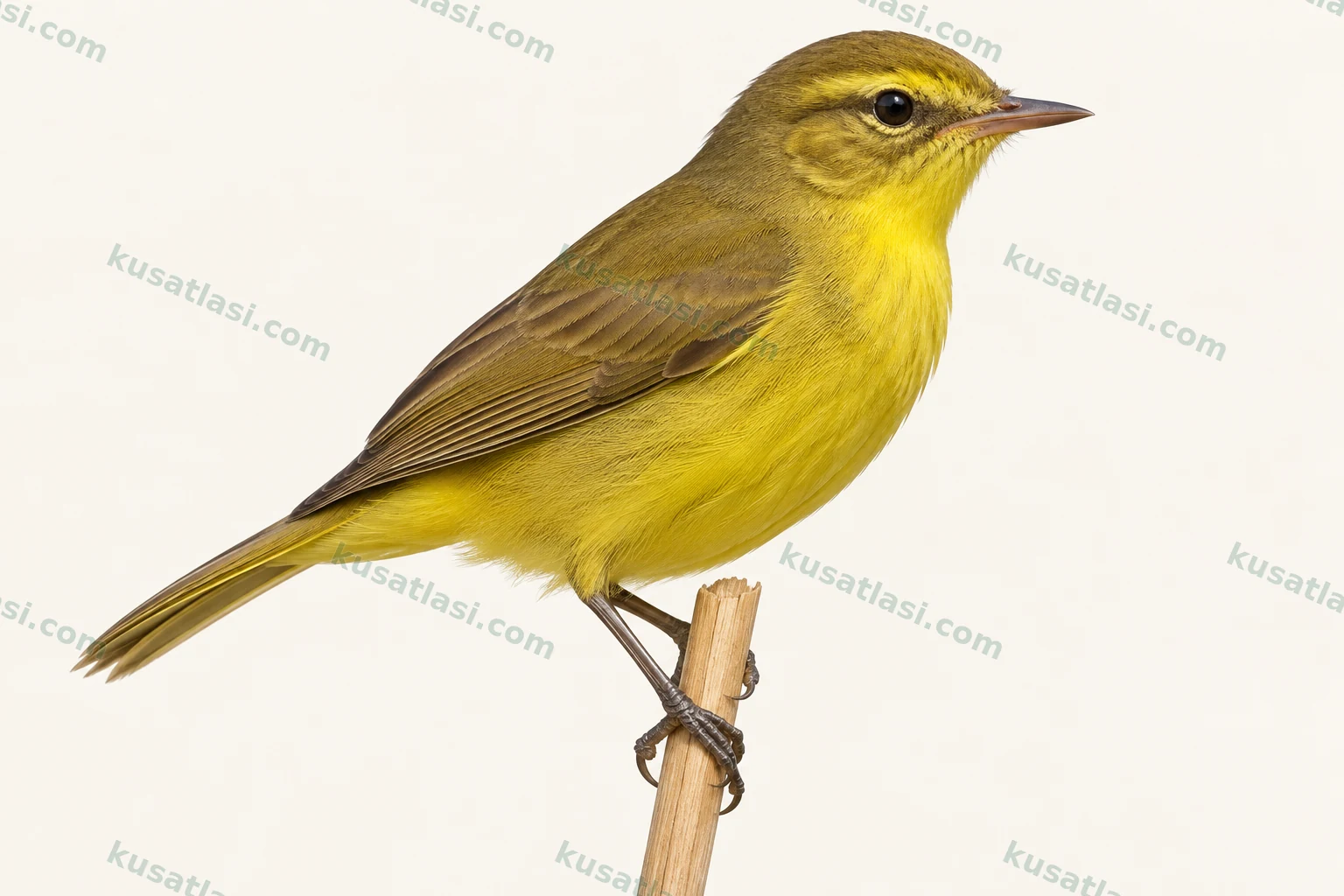
World Birds IUCN statusLC · Least ConcernGlobal IUCN category. BirdLife v10 (2025); taxon matching: AviList 2026 / IOC 15.2; checked: 29.10.2026. The list year is not the species assessment date. Source and method · BirdLife OrderPasseriformesPasserines FamilyAcrocephalidaeAcrocephalidae
African Yellow Warbler
Iduna natalensis
A yellow-underparted songbird of moist dense cover; assess the long bill, olive back and geographically variable crown together.
Biometrics
Length
Male13 cm
Female13 cm
Shared species value
Wing length
Male6.15 cm
Female6.15 cm
Shared species value
Weight
Male10–11.5 g
Female10.6 g
Female: 10.6 g. Published entry in the biometric compilation of Lislevand et al. (2007), sample size n=4. Locality, season, age and subspecies are not specified in this row; it is not assumed to represent all populations. The compilation generally uses mean values; the original handbook page and calculation of this entry were not independently verified. The existing opposite-sex value is from another source; the two cannot establish a sex difference.
African Yellow Warbler
Moist scrub of west-central and east-southern AfricaObservation guide in its natural range
Look for three features together
Do not rely on a single featureLook for the yellow underparts together with the olive back.
The crown can be dark or olive depending on subspecies.
Rapid introductory notes precede a quavering song; associate the sound with the correct bird.
Compare male and female
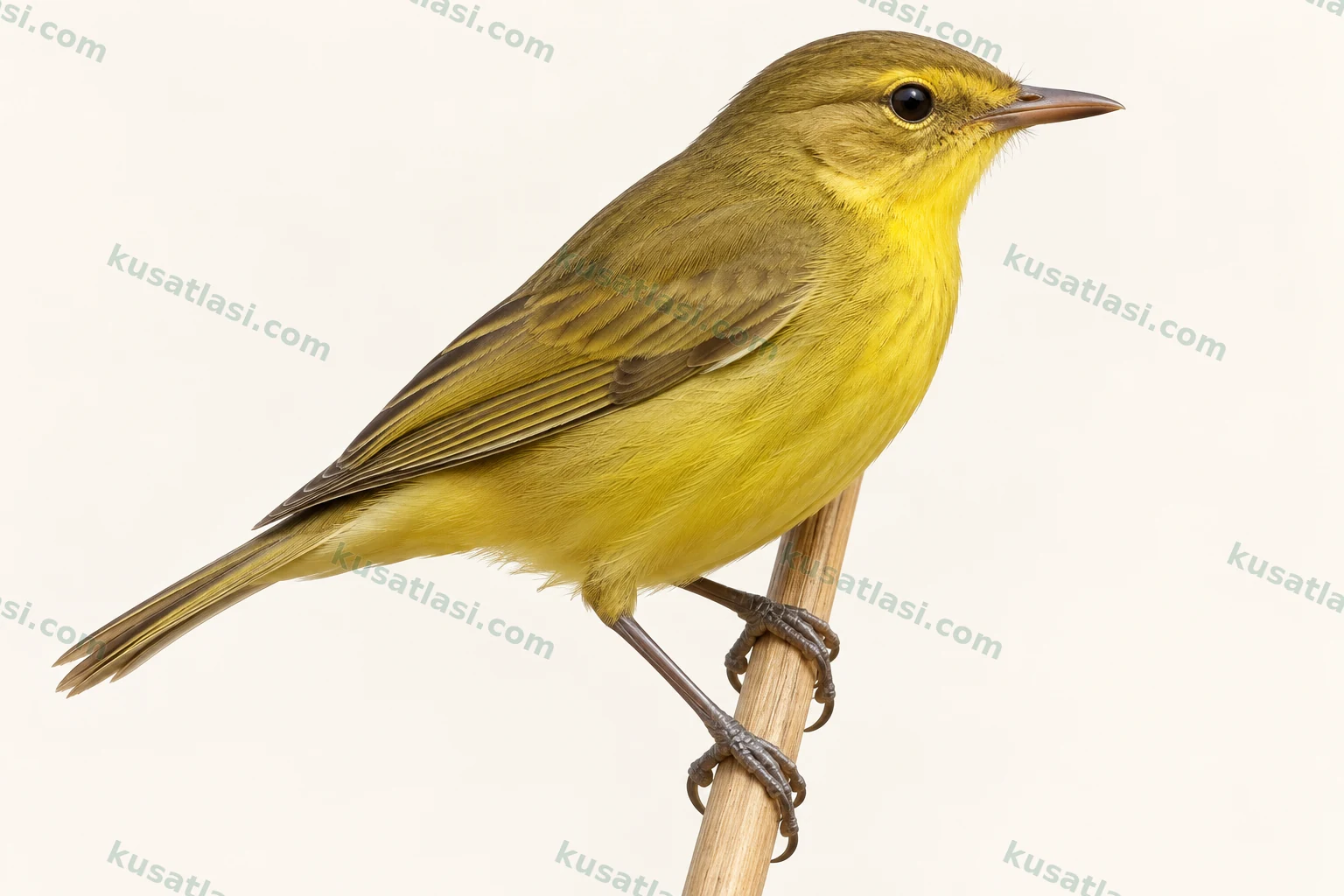 FemaleMale
A definitive sexing or juvenile plumage key was not verified; crown darkness varies geographically.
Where to look in its natural range?
Watch dense cover around wetlands, streamside bushes and scrub in moist highlands.
The southeastern African atlas has breeding records from September to April, concentrated in November–December. These are not shared egg-laying months for the whole natural range.
January
It is essentially resident; post-breeding elevation changes are reported in some regions. Southeastern Africa, regional atlas: this month is within the recorded breeding-activity interval.
February
It is essentially resident; post-breeding elevation changes are reported in some regions. Southeastern Africa, regional atlas: this month is within the recorded breeding-activity interval.
March
It is essentially resident; post-breeding elevation changes are reported in some regions. Southeastern Africa, regional atlas: this month is within the recorded breeding-activity interval.
April
It is essentially resident; post-breeding elevation changes are reported in some regions. Southeastern Africa, regional atlas: this month is within the recorded breeding-activity interval.
May
It is essentially resident; post-breeding elevation changes are reported in some regions. No verified regional date specific to this month was provided; this does not mean local absence.
June
It is essentially resident; post-breeding elevation changes are reported in some regions. No verified regional date specific to this month was provided; this does not mean local absence.
July
It is essentially resident; post-breeding elevation changes are reported in some regions. No verified regional date specific to this month was provided; this does not mean local absence.
August
It is essentially resident; post-breeding elevation changes are reported in some regions. No verified regional date specific to this month was provided; this does not mean local absence.
September
It is essentially resident; post-breeding elevation changes are reported in some regions. Southeastern Africa, regional atlas: this month is within the recorded breeding-activity interval.
October
It is essentially resident; post-breeding elevation changes are reported in some regions. Southeastern Africa, regional atlas: this month is within the recorded breeding-activity interval.
November
It is essentially resident; post-breeding elevation changes are reported in some regions. Southeastern Africa, regional atlas: this month is within the recorded breeding-activity interval. In the same atlas region, breeding records concentrate in these months; song also affects detection frequency.
December
It is essentially resident; post-breeding elevation changes are reported in some regions. Southeastern Africa, regional atlas: this month is within the recorded breeding-activity interval. In the same atlas region, breeding records concentrate in these months; song also affects detection frequency.
Nest, egg and incubation
The southeastern African atlas records breeding activity in September–April, concentrated in November–December. Nest structure, typical clutch size, incubation duration and first-flight age in days were not verified with sufficient context.
Several rapid introductory notes precede a quavering song; the bird is easier to detect while singing.
Do not play recordings to attract birds; observe quietly, especially near nests.
Species information
Quick identification
African Yellow Warbler Iduna natalensis is a songbird with yellow underparts and an olive-green back that hides in dense vegetation. Its relatively long bill, distinctly yellow underparts and crown are examined together. The crown is almost black in some subspecies and olive, like the back, in others. A black head therefore cannot be required throughout its range. A head appearing dark in an image is different from genuinely dark head feathers: shade can markedly change this area.
Moist scrub and dense cover around wetlands are important places to look. The bird becomes harder to detect when not singing. A brief view inside low vegetation may reveal only yellow underparts; that single feature cannot establish identification. Bill, head-to-back colour relationship and habitat must be seen in the same individual. The song, with short introductory notes followed by a quavering passage, helps, but other birds may be calling at the same time.
General appearance and posture
Yellow underparts and an olive back form the basic colour combination. As crown darkness varies geographically, the appearance in one region is not a colour key for all subspecies. The long-looking bill and movements through low cover contribute to separation from other small yellow birds. Green reflections from leaves can make the underparts look greener; reassess body colour when the bird enters a gap.
In two male specimens examined at Inyanga in 1964, the eye was recorded as dark brown, the upper mandible black and the lower mandible brownish-pink. The feet were described as dark horn-coloured or black. This direct specimen note supplies local context; it does not establish identical colours in every subspecies, age and sex. Which surface of the bill is described matters particularly: upper and lower mandible colours must not be reversed.
Males, females and young birds
This research did not verify a species-specific colour key that reliably separates the sexes by appearance. Since head darkness varies geographically, treating a dark-headed bird as male and a greener-headed one as female can mislead. Two birds together in the same habitat can show different feather tones because of light and head angle. Reliably observed breeding behaviour may supply other information; standing alongside one another is not evidence of sex.
Sufficient direct sources were also unavailable for juvenile moult and definitive differences from adults. Paler-looking plumage is not automatically evidence of youth. Behind vegetation, tail and wing proportions are incompletely seen; photographic sharpness cannot determine age. If the view is inadequate, a basic species record can be made without adding age or sex.
The sex of the male specimens in the old museum study does not rest on a simple colour difference assumed from appearance. Such records do not automatically provide labels for present-day field photographs. Geographic variability must be retained especially when comparing subspecies from different countries. A bird's head colour matching the local population is not, by itself, a definitive subspecies identification either.
Appearance in flight
When moving from cover to another patch of vegetation, the bill-to-body relationship and tail may briefly be visible. However, no verified field key to detailed flight-feather pattern was found for this species, so a single frame of a light or dark wing is not used to establish identification. It is important to see the yellow underparts together with the crown and overall upperpart colours. A bird moving away on foot or climbing within cover must not be assumed to have flown.
The atlas account describes disturbed birds dropping lower and moving away concealed in vegetation. This is not a measurement of weak flying ability. Post-breeding movement to lower elevations by a resident species in some regions is also distinct from a short daily flight. No tracking data of that kind were verified for this study.
Voice and behaviour
The specialist field account describes several rapid introductory notes followed by a quavering passage. The regional atlas also notes that the bird is more easily detected while singing. More summer records therefore need not mean new birds have arrived; song activity can change detectability. One written song description is not assumed to cover every call type. To ensure a sound comes from the visible bird, follow its direction together with the bird's behaviour.
It remains concealed in lower vegetation and can drop down and move through cover when threatened. Failure to stand in the open does not establish absence. Waiting quietly and allowing space for its own movements gives a more reliable observation than opening up scrub to search for it. Song, feeding and nesting behaviour should be recorded separately. A singing location is not a confirmed nest site without eggs or young being seen.
Similar species
1. Iduna similis, named Mountain Yellow-Warbler in English, is a closely related yellow warbler. In similar yellow birds, compare crown, bill, overall upperpart–underpart combination and local habitat together. Some subspecies of African Yellow Warbler have a darker head, others an olive one; no single head-colour rule should ignore this variability. A yellow bird at high elevation is not, by itself, identified as Mountain Yellow-Warbler.
2. Reed warblers around the same wetland can be confused in brief views through dense cover. For African Yellow Warbler, evaluate distinctly yellow underparts, olive upperparts and a long bill in the same bird. Combining one bird's sound with another's image can produce a false identity. If the view shows only a tail or one wing fragment, leave the record at a broader level rather than forcing certainty.
World distribution
In the western and central part of its Afrotropical range, populations occur around Nigeria–Cameroon, Gabon and Angola; in the east, they extend from around Sudan–Ethiopia to Tanzania and farther south. Subspecies accounts associate batesi, massaica, major and natalensis with different regions. This broad geography is not one continuous habitat: moist-scrub distribution and elevation matter. The same head colour is not expected across all these populations.
Status within its natural range
The current list places it in Least Concern. The southern African atlas highlights highland eastern Zimbabwe, eastern South Africa's escarpment and mountain belts, KwaZulu-Natal and Eastern Cape. Unsuitable habitats, such as dry thorn vegetation in the Tugela Valley, are associated with local gaps. A few distant records do not establish a continuously resident population or a new breeding area. Local habitat structure explains more than a country list alone.
Seasonal movements
It is regarded as essentially resident. The atlas's seasonal models did not show regular large movements, whereas other regional publications describe post-breeding movement to lower elevations in winter. These findings need not conflict: failure of one dataset to detect movement does not prove that local elevation changes never occur. Increased summer records can also reflect easier detection through song. No verified migration line, sequence of countries or distance is therefore shown on the map.
Breeding habitat
It uses moist scrub, dense vegetation along streams and gullies, evergreen forest edges and cover around reedbeds. Atlas records are prominent in the wet highlands of eastern Zimbabwe. Historical fieldwork at Inyanga also reports small bushes and scrub within grassland. Together, these accounts show that different vegetation combinations can be used in the same region; seeing water alone does not fully describe the habitat.
Nest site
The atlas discusses similarities in nest-building behaviour to reed warblers, but this research could not establish nest structure, typical clutch size and incubation duration in days for the current species with adequate primary or specialist accounts. A mean of 1.7 eggs in a life-history compilation is not the number of eggs in one nest. The card therefore displays neither fractional eggs nor a duration borrowed from another species. Regional breeding records remain valid; the numerical gap does not mean breeding is absent.
Daily habitat use
It moves low in scrub and within dense cover. Being more visible while singing does not mean it spends all day on open perches. The atlas account describes disturbed birds dropping down and hiding. Vegetation structure, proximity to water and elevation can be recorded during observation, but the same information does not establish an exact nest location. Opening vegetation or repeatedly playing calls to see the bird can change its natural habitat use.
What does it eat?
AVONET's current taxonomic record associates the basic diet with invertebrates. The specialist compilation's classification as a gleaner of invertebrates from vegetation supports this. These sources do not establish the annual share of particular insect groups or identical foods in every season. Dietary percentages and a detailed series of stomach contents were not verified for this study. Another yellow warbler's food list is not reused simply by changing the species name.
How does it forage?
While the bird moves in vegetation, food-taking around leaves and branches can be watched. A directed bill movement is searching behaviour; capture is recorded only if the object or swallowing movement is sufficiently visible. Movement hidden behind cover must not be described as if seen. Foraging and hiding from danger are different behaviours. Waiting quietly at moist scrub edges can make natural searching easier to follow. Providing live bait or shaking leaves changes both the food obtained and the place the bird uses.
Not every population has a black head
Older English names emphasise head darkness. Yet the specialist field account explains that some subspecies have an almost black crown while others have one olive like the back. A feature emphasised in a name may not be an unchanging diagnostic mark throughout the species' geography. Head and back should be seen together in the same light.
More summer records do not always mean migration
The regional atlas notes that song and display can make the bird more conspicuous in summer. An increased record count is different from the actual arrival of new individuals. Residency, local elevation changes and detectability are considered together. Labelling the whole range migratory from one seasonal graph can be wrong.
An old genus name does not create another yellow bird
Chloropeta natalensis is the former generic placement of the current Iduna natalensis. Primary field papers and atlases may use the old name. Their information about the appropriate taxon remains valuable, but their contemporary family heading is not automatically substituted for current classification. A genus change and recognition of another species are different processes.
An egg average is not a count in an actual nest
A fractional egg average in a life-history compilation is not shown as the actual number of eggs in one nest.
The two males in the Inyanga study had dark brown eyes. Upper and lower mandibles were described separately: the upper was black and the lower ranged from brown to pink. Distinguishing crown-feather colour from eye colour helps interpret the old field note correctly.