

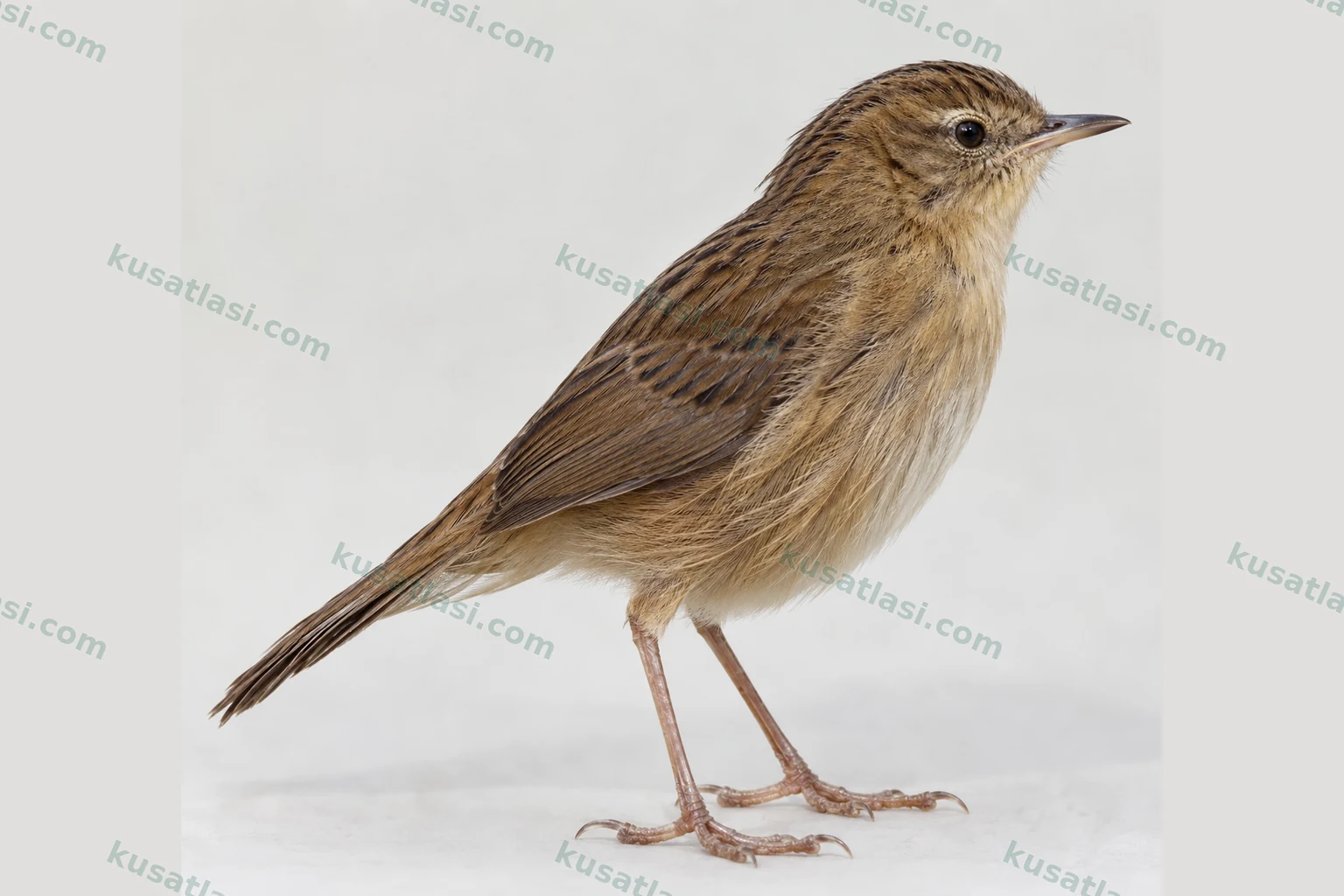
World Birds IUCN statusLC · Least ConcernGlobal IUCN category. BirdLife v10 (2025); taxon matching: AviList 2026 / IOC 15.2; checked: 29.10.2026. The list year is not the species assessment date. Source and method · BirdLife OrderPasseriformesPasserines FamilyLocustellidaeLocustellidae
Little Rush Warbler
Bradypterus baboecala
It is a small dark songbird hidden low in dense reeds. Its broad dark tail, variable fine breast streaks and accelerating song series are assessed together.
Biometrics
Length
Male13–15 cm
Female13–15 cm
Shared species value
Wing length
Male5.85 cm
Female5.85 cm
Shared species value
Weight
Male11–15.4 g
Female14.9–22 g
Little Rush Warbler
Vegetated wetlands of sub-Saharan AfricaObservation guide in its natural range
Look for three features together
Do not rely on a single featureSee the whole tail together with fine breast markings.
Separate shadow marks from true feather pattern.
Listen for accelerating repeated notes; link voice and image to the same individual.
Compare male and female
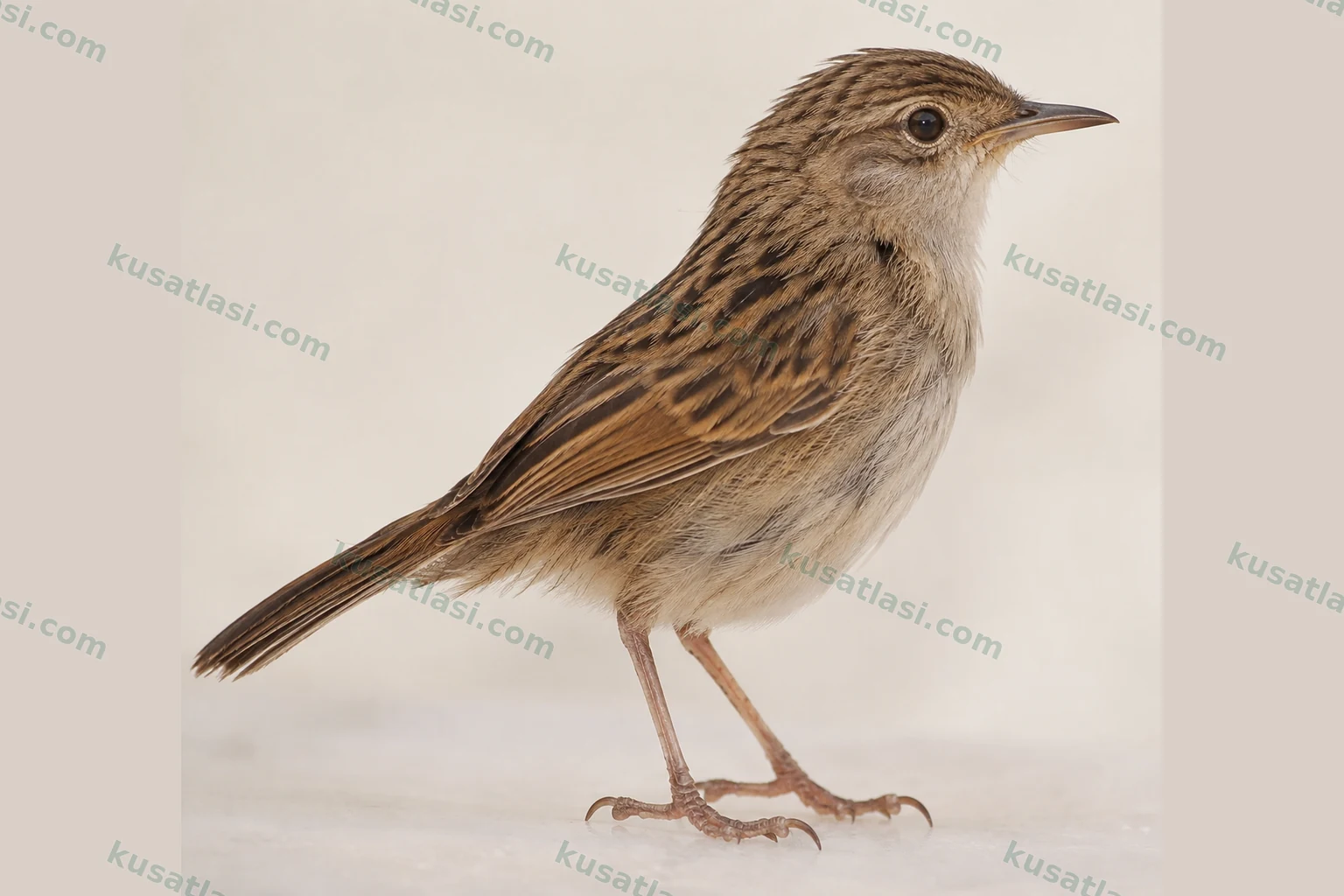 FemaleMale
Adults of both sexes share the same basic plumage. Tone, size or feeding young alone does not establish sex with certainty.
Where to look in its natural range?
Listen from an open footpath to the water-level bases of reeds, rushes and papyrus. Birds may appear briefly in the morning. Do not part plants or repeatedly attract the bird with playback.
The species is resident and may make local movements in response to water levels. The South African account gives egg-laying September–March, peaking December–January; August–January is also given for the Western Cape. These dates do not form one breeding calendar for all Africa.
January
The species is generally resident. In the South African regional breeding example, this is a reported peak egg-laying month. The Western Cape account also places this month within the egg-laying period.
February
The species is generally resident. In the South African regional breeding example, this month is within the egg-laying period.
March
The species is generally resident. In the South African regional breeding example, this month is within the egg-laying period.
April
The species is generally resident. In the South African regional breeding example, this month is outside the stated main egg-laying period; this does not mean local absence or absence of breeding.
May
The species is generally resident. In the South African regional breeding example, this month is outside the stated main egg-laying period; this does not mean local absence or absence of breeding.
June
The species is generally resident. In the South African regional breeding example, this month is outside the stated main egg-laying period; this does not mean local absence or absence of breeding.
July
The species is generally resident. In the South African regional breeding example, this month is outside the stated main egg-laying period; this does not mean local absence or absence of breeding.
August
The species is generally resident. In the South African regional breeding example, this month is outside the stated main egg-laying period; this does not mean local absence or absence of breeding. The Western Cape account also places this month within the egg-laying period.
September
The species is generally resident. In the South African regional breeding example, this month is within the egg-laying period. The Western Cape account also places this month within the egg-laying period.
October
The species is generally resident. In the South African regional breeding example, this month is within the egg-laying period. The Western Cape account also places this month within the egg-laying period.
November
The species is generally resident. In the South African regional breeding example, this month is within the egg-laying period. The Western Cape account also places this month within the egg-laying period.
December
The species is generally resident. In the South African regional breeding example, this is a reported peak egg-laying month. The Western Cape account also places this month within the egg-laying period.
Nest, egg and incubation
The nest is a deep cup of reeds and coarse grass, hidden low in dense waterside plants. Regional sources give 2–3 eggs, about 12–14 days of incubation and departure from the nest after 12–13 days. Both parents bring food to the young. Nest departure does not mean full flight ability or independence; do not enter the reeds to seek nests.
Slow-starting repetitions can accelerate conspicuously. Studied West African songs include low-pitched forms; one written sequence does not represent geographic variation. Song structure also matters against similar Bradypterus centralis.
Do not play recordings to attract birds; observe quietly, especially near nests.
Species information
Quick Identification
Little Rush Warbler Bradypterus baboecala is a small dark brown songbird living in dense waterside vegetation. Assess the broad dark tail behind the body together with pale throat and faint dark upperbreast streaks. A fine bill and pinkish legs tinged light brown help comparisons with other small reed-dwelling birds. Breast streaks vary in prominence, and leaf shade can create false lines. Good identification combines head, tail, breast and song rather than merely a brown bird.
General Appearance and Posture
The upperparts are dark grey-brown, with a potentially more rufous rear back. Paler underparts are especially apparent on throat and breast. Fine variable dark upperbreast marks help separate it from a wholly plain reed warbler. Flanks and undertail-coverts are pale rufous-brown. The pale eyebrow is not striking; assess dark lores and brown cheek together. Eyes are dark brown; the dark bill may have a paler base.
The tail is long, broad and heavy-looking. Only this may show through plants, which is not sufficient alone. Seeing the whole tail is better than judging one feather tip. Back, breast and legs may appear at different moments as a bird moves into reeds. Note these as successive views of the same bird: features of two adjacent singers can otherwise be wrongly combined.
It mostly stays low in vegetation, sometimes briefly perching on a more exposed stem in early morning before returning to cover. Plan for short appearances rather than a long motionless pose. A whitish throat behind a reed may initially merge with surrounding light. A colour patch alone does not justify a record without head turns, bill opening and tail position.
Males, Females and Young Birds
Adult sexes share the basic plumage. Darker or larger drawings are therefore not definite sex marks. Natural light, wear and individual variation can produce strong differences between photos. Behaviour near a nest is not sex evidence alone: both parents feed young. Definite sex must come from an independently verified individual record.
Young resemble adults but can have yellower underparts. This alone does not establish age: warm light can yellow adult pale feathers. Assess overall feather condition, visible bill and legs and any family behaviour together. Calling yellowish underparts in breeding habitat an automatic chick that has just left the nest goes beyond the observation.
Some birds caught in The Gambia were moulting, others had worn feathers. This local finding does not define one African moult month. Worn tail and flight feathers can alter appearance; a short-looking damaged or incomplete tail does not show that the normal shape is absent. Region, date and feather condition retained with the photograph make these distinctions more reliable.
Appearance in Flight
Long flights seldom reveal this species. Moving on foot through cover, it usually flies only briefly between plant clumps. Wings beat quickly and the broad tail can spread into prominence. Dark back and tail show from above; from the side, the broad tail behind a small body stands out. Fine breast streaks are generally hard to see reliably in such short flights.
Combine a short flight with the preceding perched view and voice at that spot. Do not mistakenly assign another reedbed bird's flight to the singer. After disappearance, do not part reeds, tread on nests or follow into water. Waiting in an open spot lets the bird reappear naturally. Flight distance and direction are not migration or regional movement evidence.
Voice and Behaviour
Song is as valuable as appearance for locating a concealed bird. Slowly starting repetitions accelerate, providing a structure to follow. Full song series studied in The Gambia resembled low-pitched West African forms; one written syllable string therefore does not perfectly represent every subspecies. Record onset, acceleration, pauses and habitat together. Windblown reeds and overlapping birds can obscure listening.
It is usually noticed alone or in pairs. Singing unseen for long periods can make a seemingly empty reedbed misleading. Song supports presence, not certain breeding without eggs, nest or young. Authorised capture and playback in research are not everyday observation advice. Listen from a path and use brief natural appearances instead of repeatedly attracting it with recordings.
Similar Species
Acrocephalus gracilirostris may share wetlands. Its apparently unmarked breast, darker legs and more clearly melodic song help comparison. In Little Rush Warbler seek broad dark tail and variable breast streaks together. If a photo hides legs, treat that distinction as unused.
Schoenicola brevirostris can have a similar broad-tailed silhouette. Compare lighter brown upperparts and greyish-white undertail with Little Rush Warbler's pale rufous undertail. Tail spreading alone is insufficient; check underpart colour and voice too.
Bradypterus centralis was included in older broad accounts. Song is particularly important in the current separation. Place and elevation can suggest a candidate but do not establish an unclear bird solely from map position. Preserve original identification evidence when updating an older Bradypterus record.
Global Range
Little Rush Warbler occurs patchily in suitable sub-Saharan African wetlands. Its range is not an unbroken whole-country surface: it follows water meeting dense reeds, rushes, papyrus and similar plants. Local West African populations occur alongside widespread regional records in eastern and southern Africa. Broad dry Kalahari and Namib gaps should not be treated like occupied suitable riverbanks.
Research around Kuntaur and Nianija Bolan in The Gambia in 2019 and 2021 provides direct scientific evidence for West African presence. Appearance, sound and genetics were combined. The lack of earlier national records does not prove recent arrival from another country. A quiet population in dense reeds could have long been overlooked; new range evidence differs from a colonisation hypothesis.
Regional Status
South African accounts describe a species that can be frequently encountered in suitable marshes and stream or river margins. Regional frequency does not mean many visible simultaneously in one pond. Vegetation, water level and calling affect detection. One atlas-cell record does not prove every reedbed occupied or equal annual breeding numbers. Older broad Bradypterus baboecala records need review under current taxon splits.
Movements
It is basically resident, with reported local movements related to water levels. Using seasonally flooded grassland is not regular intercontinental migration. Moving from drying reeds to nearby favourable habitat differs from long-distance travel. Map months are not joined as successive journey stops. Without individual tracking, do not give definite start, end or distance.
Breeding Habitat
Dense waterside vegetation providing cover from its base defines breeding habitat. Reeds, papyrus, rushes and lush bank grasses matter. Open water does not represent the whole feeding area; assess the vegetated edge separately. Marshes, streams and suitable artificial wetlands can be used. Presence at a treatment pond or reservoir does not prove polluted water beneficial or every artificial pond suitable.
Nest Site
The nest is a deep cup of coarse grass and reed pieces and can look untidy externally. It may be lined with finer grass and rootlets. It sits concealed low in waterside plants. Regional sources give 2–3 eggs, about 12–14 days of incubation and nest departure about 12–13 days later. Departure is not adult flight ability or full independence; both parents feed young.
Daily Space Use
It forages low in vegetation near water or mud. Watching only open water from a hide can miss it; listen quietly to reeds beside a footpath. Dense cover protects daily movements and nests. Cutting plants for photos or entering reed clumps endangers hidden nests and chicks. Without direct measurement, do not assign an exact territory size to one seen individual.
What Does It Eat?
Verified accounts mention small insects and insect eggs, including ant eggs in the South African specialist account. This does not mean the entire diet is known. Concealed foraging makes prey identity and quantity difficult to see. Do not add every abundant reedbed animal or create annual percentages from one capture. The fine bill fits observed small prey but alone proves no particular insect species.
How Does It Find Food?
It searches low in reeds and similar plants near water or mud. Disappearance behind a moving stem does not prove underwater capture; without bill and prey, feeding should not be confirmed. Both adults provisioning chicks show the importance of these small animals in breeding. There is no need to approach nests to see carried prey. Protecting vegetation and wetlands retains prey-bearing surfaces and safe cover; this connection is not presented as an experiment measuring a particular pesticide's effect.
Being Present Unseen
Hearing may be much easier than seeing. A short reedbed watch with no sightings does not prove emptiness. Gambian research showed that a cover-dependent songbird can escape notice even in a long-visited area. Multiple evidence types complemented each other; one brown feather or geographic point did not replace identification. Everyday observations likewise need sound and image linked to the same bird.
Song and Species Limits
Bradypterus baboecala and Bradypterus centralis could formerly share a broad account. Pitch, structure and acceleration are valuable comparisons. Written imitation can help listening but is not detailed sound analysis. A silent bird's locality does not remove all uncertainty. For old records especially, do not add a definite current map point before understanding the name's original scope.
Vegetation Is Habitat Too
Water alone is insufficient: hiding, foraging and nesting reed cover is habitat too. Some Gambian sites were reported altered by farming and grazing. This local observation does not prove equal change across Africa, but shows why water-surface measurement alone can be incomplete. Opening dense plants for a photograph also intervenes in unseen habitat.