

World Birds IUCN statusVU · VulnerableGlobal IUCN category. BirdLife v10 (2025); taxon matching: AviList 2026 / IOC 15.2; checked: 29.10.2026. The list year is not the species assessment date. Source and method · BirdLife OrderPasseriformesPasserines FamilyCisticolidaeCisticolidae
Aberdare Cisticola
Cisticola aberdare
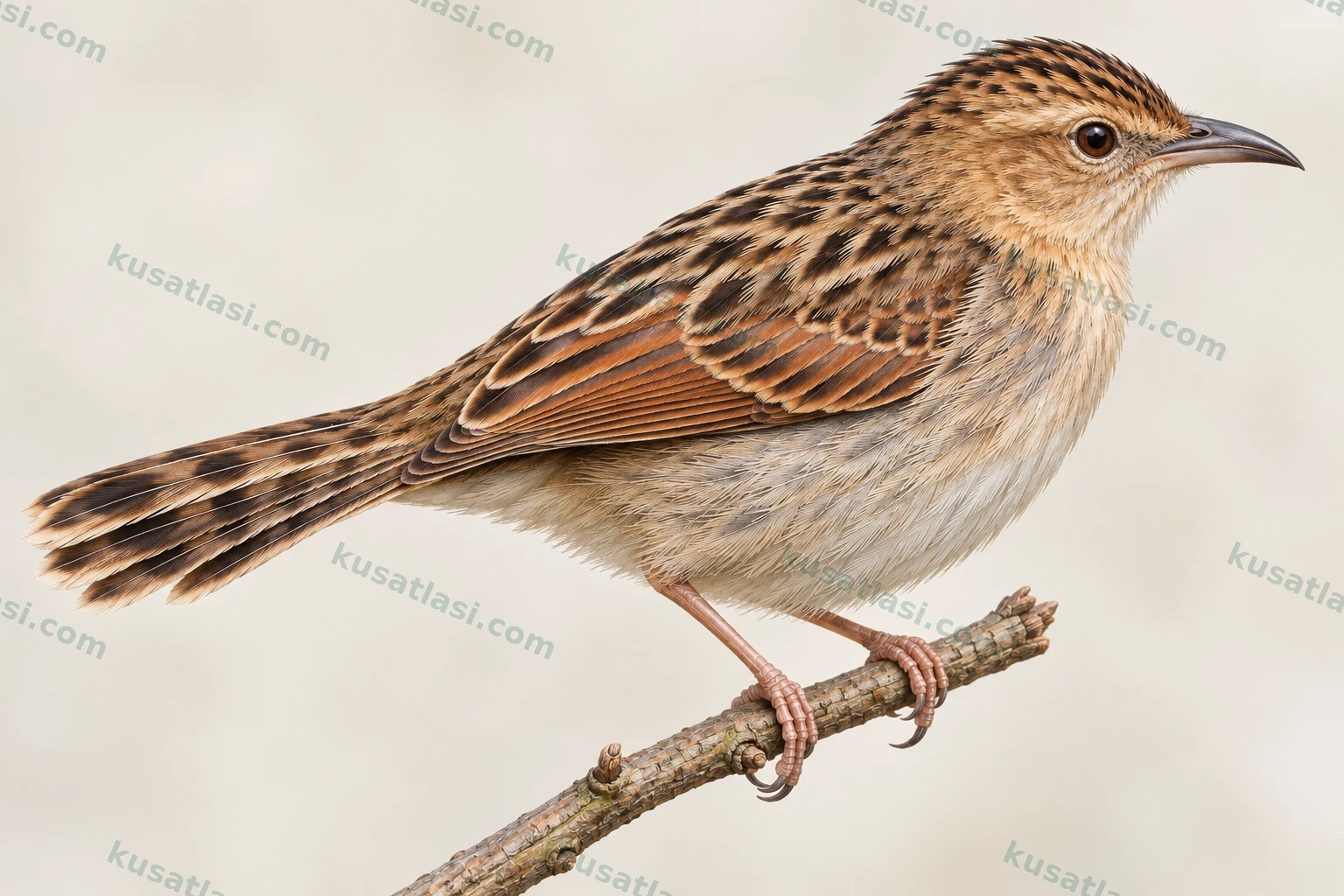
View the dark streaks on the rufous-brown crown and nape together.
Biometrics
Length
Male12–15 cm
Female12–15 cm
Shared species value
Wing length
Male6.31 cm
Female6.31 cm
Shared species value
Weight
Male16–24 g
FemaleData unavailable
Aberdare Cisticola
Grasslands around Kenya’s Aberdare and RiftObservation guide in its natural range
Look for three features together
Do not rely on a single featureView the dark streaks on the rufous-brown crown and nape together.
Compare it with the warm brown wing area.
Areas with grass tussocks and scattered small shrubs.
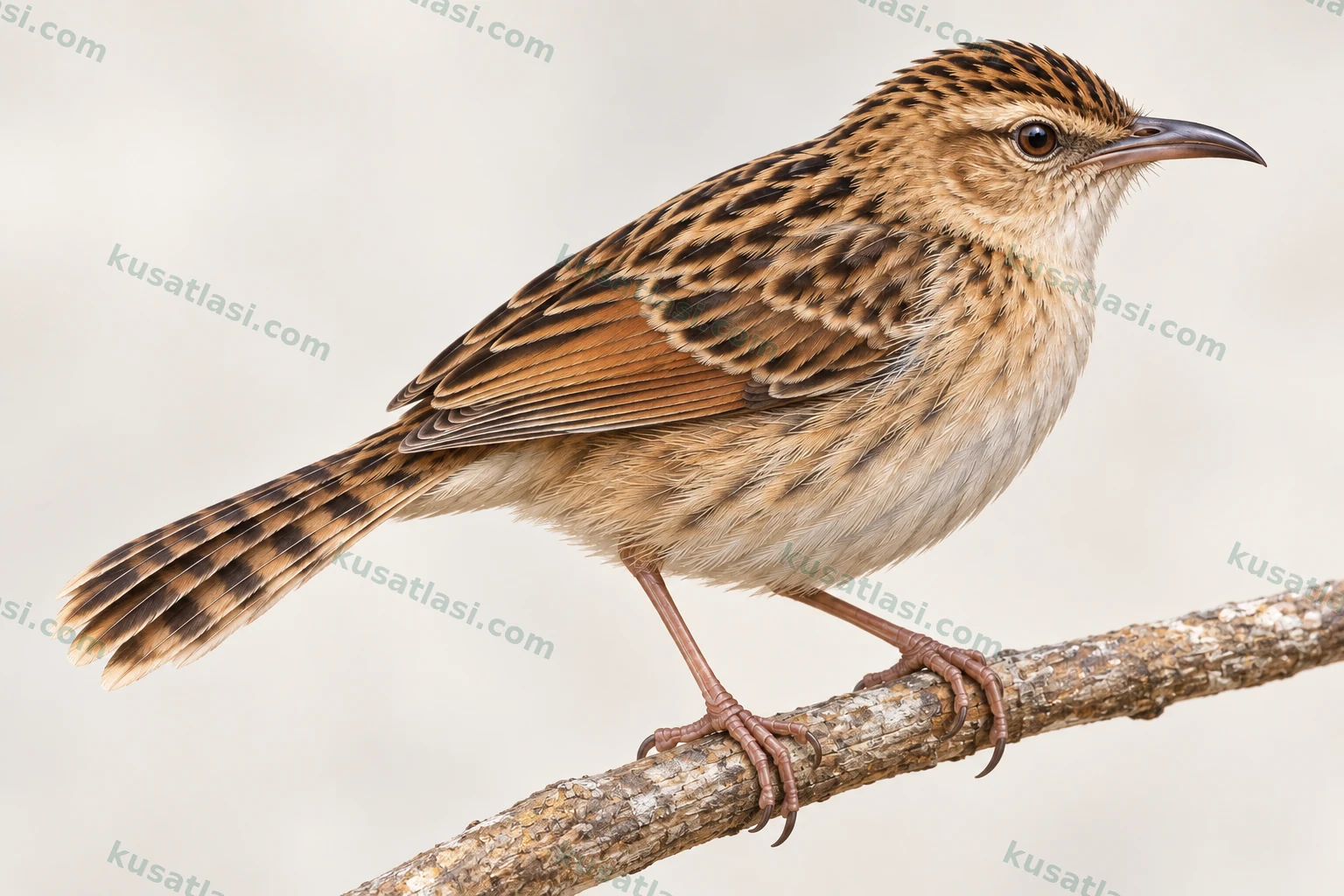
Compare male and female
 FemaleMale
Compare it with the warm brown wing area.
Where to look in its natural range?
Watch stem and small-shrub perches in humid highland grassland from a distance. Assess nape streaks, back and natural voice together.
Resident species. Several breeding stages were recorded in the Aberdare in March 2011; a historical Mau Narok record reports breeding in February and May. Evidence is not equally strong for every month.
All months: Monthly data unverified.
January
February
March
April
May
June
July
August
September
October
November
December
Nest, egg and incubation
Nests were recorded in dense low cover and grass tussocks. Display, nest building, incubation, feeding young and dependent young were observed in central Aberdare grasslands in March 2011; the historical Mau Narok record also reports breeding in February and May. The specialist life-cycle catalogue gives two eggs, without sample context. Species-specific incubation and fledging periods could not be verified. Watch from a distance without opening grass tussocks.
Cornell describes sequences of rapid, thin, squeaky notes and lower flowing sounds. Assess these together with habitat and nape streaks. A real bird recording with verified identity and record-specific licence has not yet been added.
Do not play recordings to attract birds; observe quietly, especially near nests.
Species information
Quick identification
The Aberdare Cisticola is a Cisticola confined to Kenya’s highland grasslands. It looks large for its genus. The crown and nape are dull rufous-brown and carry dark streaks. The conspicuous black back streaks and rufous-brown wing area are important initial features. Streaking on the nape is particularly useful when comparing it with the very similar Cisticola robustus. A brown back or the silhouette of a small bird among grasses is insufficient; habitat, voice and plumage pattern are examined together.
General appearance and posture
The warm brown of the head and the black back streaks are different features. Check whether streaking continues onto the nape behind the crown; this area may disappear when the bird turns its head or grass leaves conceal it. The warm-coloured wing area does not mean that the whole back is uniform either. Feather surfaces may appear darker in shade and lighter in sunshine. Following the position of the streaks is a more useful approach to identification than judging how reddish a photograph looks overall.
The bird may use small shrubs or taller stems among the grasses as perches. A 2006 field report links these plants to perching and calling around feeding areas; birds found in the 2001 survey were on or near lightly scrubbed grassland. This does not make it a closed-forest bird. A few shrubs within grassland and a site entirely overgrown by shrubs are different habitat conditions. Seeing the bird on a perch gives a clearer opportunity to compare nape and wing markings.
Males, females and young birds
The identification accounts examined do not provide a detailed key that reliably separates all males and females by appearance alone. A brighter brown bird is therefore not automatically labelled male, nor a smaller-looking one female. The shared mean on the wing card covers both sexes; the same number in two boxes does not prove that all males and females are actually identical in size. Information needed to determine sex and the streaked back and nape pattern used to identify the species address different questions.
Sessions’s Mau Narok observations, published in 1966, describe young birds as distinctly yellow-ochre below, becoming white towards the belly. The record used the name Cisticola robusta aberdare, and the specimen’s identity was confirmed by a museum. This historical description of young birds is not generalised to all adult underparts. Nor is it a complete key separating every juvenile stage or the first moult day by day; the context of the observation is retained when assessing age.
The 2011 study also recorded fledged young still dependent on their parents. Seeing young birds is direct evidence of local breeding, stronger than simply finding an adult in grassland. However, the date of those young cannot yield a single fledging date or development period for all Kenya. Recording different breeding stages during the same field visit also provides context for considering that nearby nests had not all started on the same day; synchrony of all pairs is not claimed.
Appearance in flight
The small passerine silhouette and warm brown wing area may be noticed in flight, but nape streaks readily disappear with distance. A bird flying above the grass is not conclusively named by colour alone. When it lands again on a stem or shrub, compare the head, nape and back. The wing area visible in a perched bird need not appear as a patch of the same size in flight; the position of the coverts and the light alter its appearance.
Folded-wing length is not the tip-to-tip span of open wings. As the sources do not verify true wingspan, no figure is generated from flight images. Nor is the display flight of another Cisticola transferred to this species merely because they belong to the same genus. The movement seen and the sound heard are recorded together; a flying bird that is not seen clearly enough may remain unidentified.
Voice and behaviour
Cornell’s account describes rapidly delivered thin, squeaky notes and a lower, flowing sequence. Voice is an important aid with similar birds in this genus, but a single short note from an unseen source does not provide certain identification. Nape streaks and suitable highland grassland habitat are assessed alongside it. Sessions’s historical observations also describe a vibrating introduction followed by more emphatic notes; written comparisons do not mean that all individuals deliver the same sequence in the same time.
A single song record is not, by itself, evidence of eggs or successful breeding. When searching grassland, observe perches and the direction of calls from a distance rather than opening grass tussocks or repeatedly playing calls to draw birds out.
Similar species
Cisticola robustus is the principal similar species. Cornell highlights the Aberdare Cisticola’s nape streaking in the comparison. Assess crown, nape and back in the same view; a rufous crown alone does not separate them. Location and voice complete the comparison. As older publications may treat the Aberdare bird as Cisticola robusta aberdare, information should not be assigned to today’s Cisticola robustus solely because robusta appears in an old title. Check the historical taxon and study locality together.
Global range
The species is endemic to Kenya. Verified regional sources cover the Aberdare Mountains, the Mau Narok and Molo grasslands across the Rift Valley, and later Kinangop records. Its Aberdare name does not mean it occurs only inside the national park. Nor should the broad country area between these highland grasslands be filled in as continuous range; the location and condition of suitable grassland matter.
Status within its natural range
The current specialist catalogue lists the species as VU, Vulnerable. The 2003 and 2011 studies use the EN category of their time; that historical label does not replace the current status. A change of category alone does not prove population growth. The 2001 Mau Narok/Molo survey found seven individuals in three sample areas and noted possible undercounting due to the method. The 137 birds counted in central Aberdare grassland in March 2011 were a local count from a different place and method. These figures are not directly compared to calculate population growth for the species as a whole.
Migration
The species is described as resident. The sources examined do not verify a regular long-distance migration route or a seasonal journey between countries. Movements within grassland, use of nest surroundings and transfers between feeding sites are not used as a migration map. Failure to find the bird at a site during a survey does not prove local extinction either; repeat checks at suitable times, using appropriate methods and taking vegetation into account, are required.
Breeding habitat
It uses humid highland tussock grasslands and openings containing scattered small shrubs. The specialist catalogue mostly reports elevations of 2,300–3,700 m; these figures are not presented as mandatory limits for every observation. The 2011 field study recorded an association with dense low cover in undisturbed grassland and with some stream valleys. Protecting closed forest alone does not meet this open-country bird’s needs.
Nest site
Field reports found nests within the cover provided by grass tussocks. Nest building, incubation and feeding young were directly recorded in March 2011. The specialist catalogue’s life-cycle compilation reports two eggs; this is not presented as a measurement series following every nest. As species-specific incubation and fledging periods could not be verified in the sources examined, those of other Cisticola species are not added.
Daily habitat use
Grassy cover provides concealment and nesting sites, while small shrubs and stems may be used as perches. Birds located in the 2001 count were on or near lightly scrubbed grassland. Maintaining both cover and open feeding surroundings within the grassland matters; the single stem on which a bird is seen does not represent its entire used area.
What does it eat?
The specialist catalogue describes the species as feeding on invertebrates. Grassland and low vegetation provide its feeding environment. The species-specific studies examined do not give seasonal percentages of insect groups or precise food proportions for chicks. It would therefore be incorrect to transfer another Cisticola’s insect list or dietary proportions directly to this species. Seeing the food recorded provides stronger evidence than the bird’s presence in suitable habitat alone.
How does it obtain food?
It picks small food items from vegetation; low shrubs and grass stems may be perches around feeding areas. The 2006 report describes these perches and surrounding tussocks as separate habitat components. Perching on a stem does not necessarily mean the bird is taking prey at that moment; the same perch may be used for calling. Record the food taken, plant used and bird’s movement together. An indistinct dark spot in the bill does not establish prey identity or quantity.
A low count does not always mean few birds
The 2001 Mau Narok/Molo survey recorded seven individuals in three sample areas. The authors specifically noted that a method designed for another grassland bird, Macronyx sharpei, could under-record this species. Even when two birds use the same highland grasslands, they may not be equally detectable with one counting method. The result does not mean that seven birds represented the population of the entire area.
Five breeding stages during one field visit
The March 2011 survey observed display, nest building, incubation, feeding young in nests and dependent fledged young. This is direct evidence of breeding in that area. Seeing different stages on the same visit means one should not assume that all nests began on the same day; the study did not measure an exact incubation period.
A national park name does not describe the entire range
The Aberdare Mountains are an important habitat; grassland records from Mau Narok, Molo and Kinangop are also parts of the range. Field studies recorded conversion of grassland to farmland and fragmentation. Legal protection of a site does not replace experimental evidence that fire or grazing has the same effects everywhere. The 2011 authors recommended further research into these effects.