

World Birds IUCN statusLC · Least ConcernGlobal IUCN category. BirdLife v10 (2025); taxon matching: AviList 2026 / IOC 15.2; checked: 29.10.2026. The list year is not the species assessment date. Source and method · BirdLife OrderPasseriformesPasserines FamilyCisticolidaeCisticolidae
Red-capped Forest Warbler
Artisornis metopias
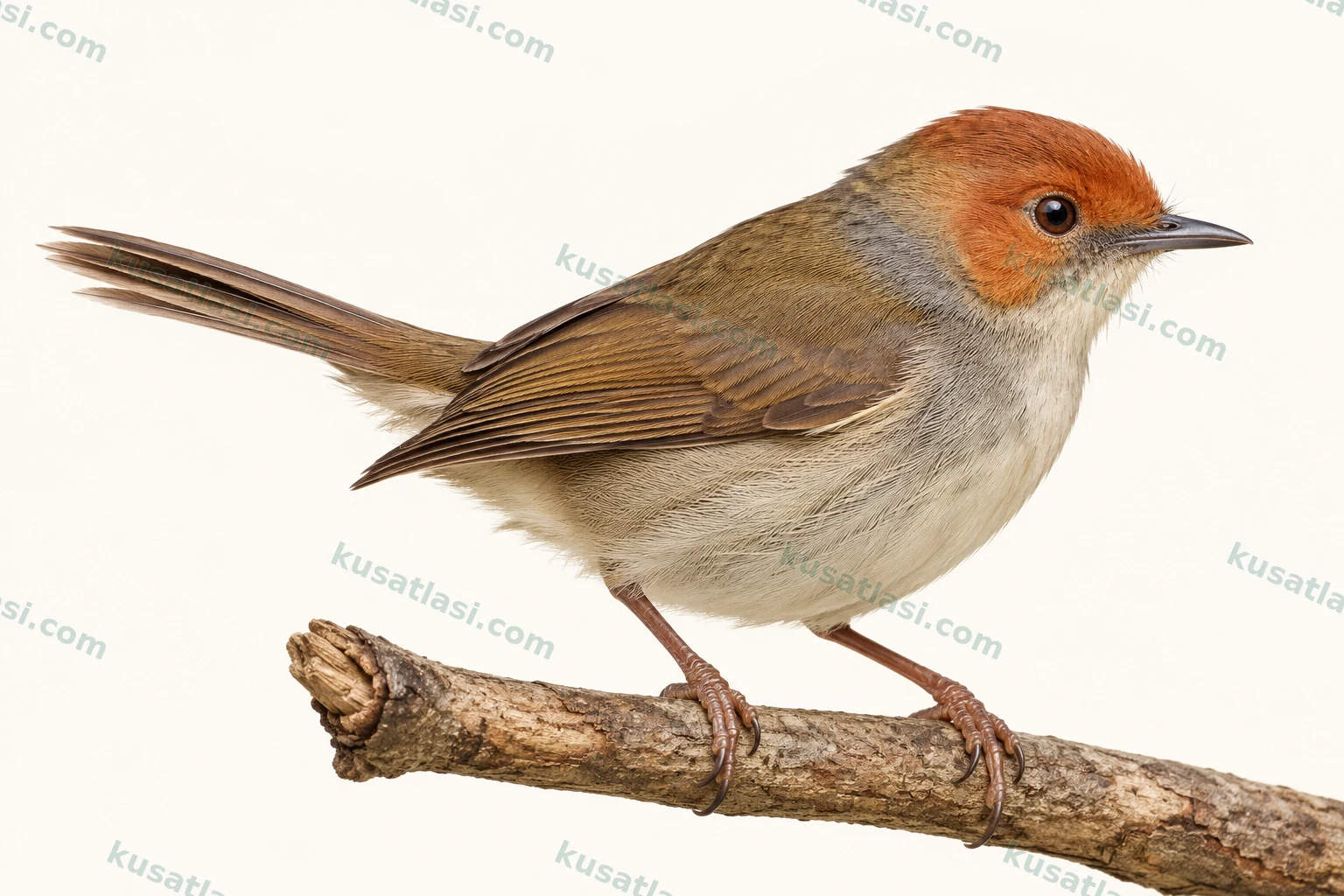
Rusty-red head, white throat, greyish breast, long slender bill and short tail; a small songbird of East Africa’s moist mountain forests.
Biometrics
Length
Male10 cm
Female10 cm
Shared species value
Wing length
Male4.67 cm
Female4.67 cm
Shared species value
Weight
Male7–9.5 g
Female9–10 g
Red-capped Forest Warbler
Mountain forests of eastern Tanzania and northwestern MozambiqueObservation guide in its natural range
Look for three features together
Do not rely on a single featureWatch the boundary between the rusty-red head and white throat.
Assess the short tail and conspicuous slender bill together.
Mountain forests of Tanzania and northwestern Mozambique; do not confuse it with Asian tailorbirds.
Compare male and female
 FemaleMale
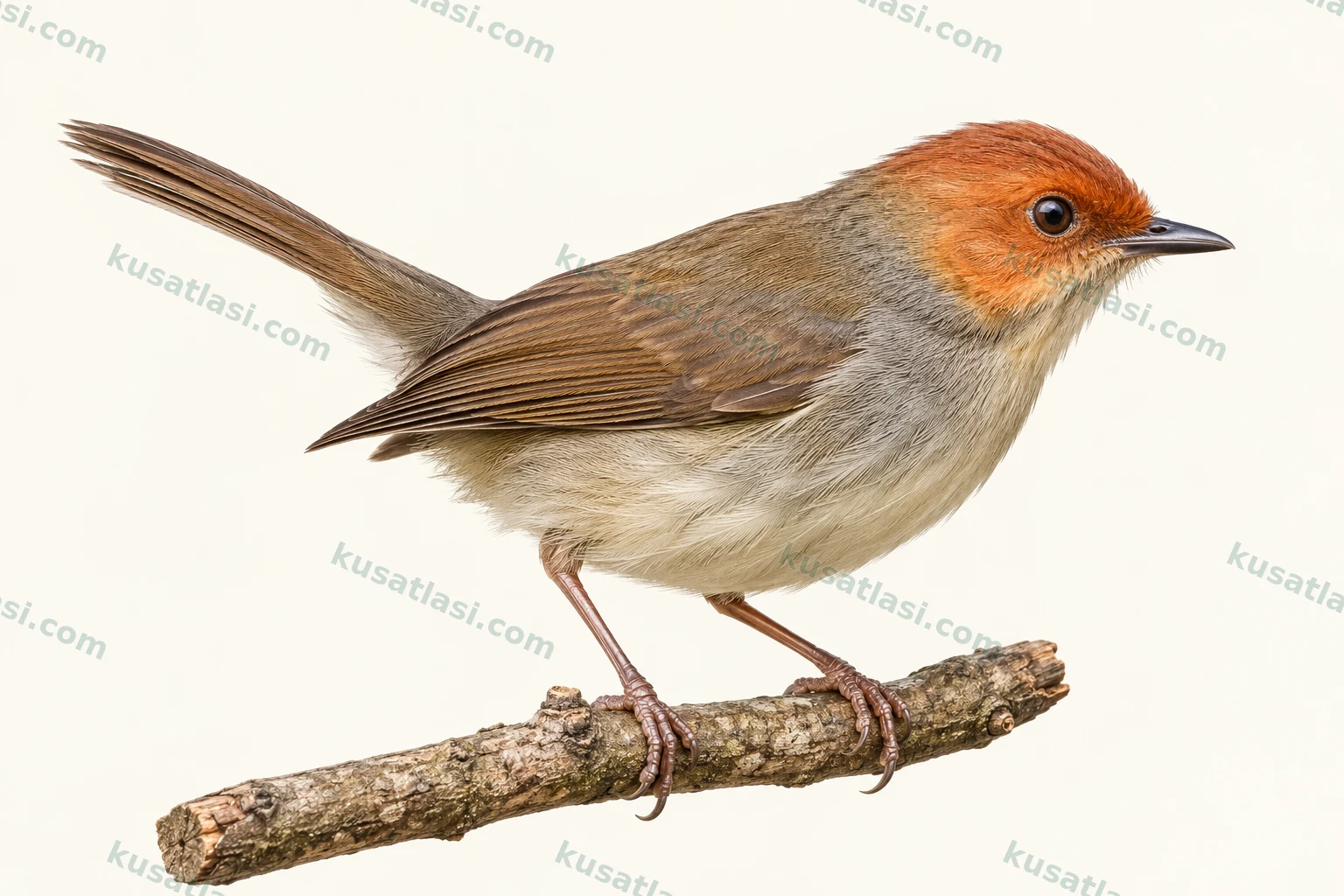
No reliable appearance-based key for separating males, females and young has been verified; geographical head tone is not a sex difference.
Where to look in its natural range?
Watch dense undergrowth, forest edges and small openings.
The species is resident. No verified egg-laying or young-development months covering the entire range were found for this account.
All months: Resident; an annual migration route has not been verified. No verified regional date specific to this month was provided; this does not mean local absence.
January
February
March
April
May
June
July
August
September
October
November
December
Nest, egg and incubation
A nest arrangement joining leaves is reported. East Usambara research records egg markings spread across the whole surface. A typical clutch size, incubation period and time to first flight have not been verified for this account.
Repeated strong, prolonged sounds have a shorter, rising accompaniment; pairs may defend their territory in duet.
Do not play recordings to attract birds; observe quietly, especially near nests.
Species information
Quick Identification
Red-capped Forest Warbler Artisornis metopias is a small songbird of the mountain forests of Tanzania and northwestern Mozambique. The rusty-red head, white throat, greyish breast, slender conspicuous bill and short tail are assessed together. A reddish crown glimpsed among leaves is not enough on its own: other small songbirds occur in the same habitat. Seeing the transition from head to breast, bill proportions, tail and vegetation layer together strengthens identification.
The English name used by AviList is Red-capped Forest Warbler; older and some current specialist accounts also use African Tailorbird. Both refer to the same taxon on this page. The earlier combination Orthotomus metopias does not designate another bird. Asian Orthotomus species, however, are not populations of this species on other continents. Similar nest-building behaviour does not establish that they are one species or share every breeding duration.
General Appearance and Posture
The bill looks long in front of the small body; together with the short tail, this draws attention to the head and bill. The boundary between the reddish head and white throat stands apart from the greyer breast. These areas may not all be visible at once in a bird moving through vegetation. Rather than basing identification on one frame, it helps to wait for the bird to change direction naturally. The white throat may approach grey in shade; a difference created by light is not a new plumage mark.
The altus population of the Uluguru Mountains is described by specialists as darker and more chestnut-toned. This geographical feature does not mean that every dark bird is male or every pale bird female. The appearance of the metopias population in other mountains should also be compared under the same light and viewing angle. Subspecies cannot be established solely from a photograph's warm tone; locality matters.
Males, Females and Young Birds
No key that reliably separates adult males and females by plumage colour alone has been verified for this account. Both members of a pair calling together does not automatically prove that the first caller is male. Nor is a bolder approach by one bird a sexing character. The method used to determine sex in a scientific field study and a colour difference seen by a distant observer do not provide the same level of evidence.
Nor has a reliable, species-specific plumage criterion separating young from adults been established here. A paler-looking head alone should not be treated as evidence of youth. Changing forest light, a partly concealed head and a photograph's colour settings may produce the same effect. Uncertain age does not necessarily invalidate species identification; taxon, age and sex are separate questions.
Adult male and female plates can be used to study the shared identification features expected to be visible. A slight colour difference in a plate is not evidence of a sex difference unverified in scientific sources. The tasks of birds around a nest should also be observed separately. The presence of a food-carrying individual does not reveal the entire care system without recording observation duration and the other bird's behaviour.
Appearance in Flight
The short tail and small body may help assess the silhouette of a bird passing through vegetation. However, this account has no verified colour key for the upperwing or underwing. A pattern is not added to an unseen wing surface. A momentary glimpse of the reddish head in flight does not conclusively rule out close relatives or other small forest birds.
The Njesi field survey recorded the birds in the forest understorey, especially at edges and openings. This direct local finding does not prove that the bird never moves higher throughout its life. Movement among leaves and long-distance travel are also different events. Wing shape does not justify drawing a migration route between islands or along mountain ranges. Instead of trying to flush the bird from dense cover to see it fly, observe its natural behaviour.
Voice and Behaviour
The specialist description mentions a repeated, strong and prolonged sound, accompanied by a shorter, quivering and rising sound. Reciprocal calling by a pair may sound like a duet. Written imitation does not replace a real recording; pitch, sequence, repetition and other birds nearby need to be considered together. Echoes or distance in the forest may alter the sound of a call.
In the November 2016 Njesi survey, both members of the pair participated in territorial defence, duetting and approaching in response to their own species' sounds. The same response was not recorded to the other species' sounds tested. This is the result of a particular field study, not evidence that all individuals respond identically in every season. Continually playing sounds to watch the bird can unnecessarily trigger territorial defence. Waiting for natural calling is more appropriate both for understanding behaviour and for avoiding disturbance.
Similar Species
Artisornis moreaui is a close relative that may share habitat in the East Usambara Mountains. The two species' nests may resemble one another; a nest made from leaves alone cannot establish the identity of the bird inside. The bird's appearance, voice and locality are needed together. A 2024 nest study reports a difference in the distribution of egg markings; this is not a reason to search for nests or approach eggs.
The altus birds of Uluguru may look darker than the metopias population. The two geographical populations on this page are not presented as separate sexes or automatically separate species merely because their head tones differ. Mountain locality and a reliable taxonomic record are used together.
Asian tailorbirds in the genus Orthotomus may become confused in source research because of similar names and nest-building behaviour. African Tailorbird's natural range does not include Asia. The word “tailorbird” alone on a web page does not justify transferring its colours, clutch size or incubation period to this species.
Global Distribution
The species has a patchy distribution from the mountain forests of eastern Tanzania to the Njesi highlands of northwestern Mozambique. The altus population is recognized in the Uluguru Mountains, and metopias in the other accepted parts of the range. This does not imply continuous occurrence on every intervening slope. Suitable moist forest patches in the mountains and the lower areas with different vegetation between them are not the same habitat. A line between two map records does not mean that all the intervening land is occupied.
Status Within Its Natural Range
The current global assessment is Least Concern. This does not mean that removing a limited mountain forest has no effect on the bird. The Njesi study recorded the species on the Njesi Plateau and at Chitagal, but not at Sanga. The result should be read with the survey period and methods: failure to find it in one investigation does not prove that the mountain could never have been used in the past or be used in future. Preserving suitable forest cover is central to understanding local observations.
Migration
The species is treated as resident; no regular intercontinental migration route has been verified. Daily movements within mountain forest should not be confused with long-distance migration. Presence in different mountains does not establish that birds fly between them in the same order each year. The map presents verified record samples and available geographical evidence; unknown breeding or wintering areas are not drawn. November sound recordings support presence at that date only and do not by themselves complete a year-round breeding calendar.
Breeding Habitat
Dense understorey, forest edges and small openings in moist mountain forest are important. The Njesi study found the species in the understorey of both streamside and evergreen forests. This does not show dependence on a single tree species. Forest cover, dense vegetation and local moisture conditions are assessed together; an open mountain slope is not suitable habitat merely because it lies at the same elevation.
Nest Site
Scientific studies discuss the leaf-joining nest arrangement of Artisornis birds. The 2024 study in the East Usambaras reports egg markings distributed over the whole surface in African Tailorbird, but concentrated at the broad end in its close relative. The verified evidence in this account is insufficient to give a species-specific typical clutch size or reliable incubation or first-flight duration. Durations are not borrowed from Asian tailorbirds or Artisornis moreaui; missing fields are left open.
Daily Space Use
Pairs or small groups may forage among dense plants. Two individuals calling near one another may be a pair defending the area jointly; repeated observation is required to confirm this. Rather than opening a possible nest plant clump or pulling leaves apart, observe from an existing path. Leaving cover in its natural state gives a more accurate understanding of the space the bird uses.
What Does It Eat?
Small invertebrates are the main foods; the field account describes the species as an insectivore feeding in the forest understorey. The sources used do not supply a detailed dietary sample giving the proportion of each prey group for this page. A single insect being eaten should therefore not be presented as the majority of the whole diet, nor should obligatory dependence on a particular prey species be claimed. If the prey cannot be identified, “small invertebrate” is the more reliable level of description.
How Does It Obtain Food?
While foraging in dense undergrowth, it uses its bill to reach small prey around leaves and thin branches. A brief movement seen on the ground or a higher branch does not mean that all feeding takes place in that layer. The Njesi study's understorey records are direct evidence for particular mountains and the survey period. Placing food around a foraging bird or using sound to draw it to a particular branch may alter natural space use. Bird height, vegetation and the prey taken, if visible, should be recorded separately.
Similar Nests Do Not Mean a Single Line of Relationship
Joining leaves to build a nest is the striking basis of the name “tailorbird”. African Artisornis and Asian Orthotomus birds do not, however, belong to the same close group. Molecular studies have shown that nest resemblance alone cannot be a criterion of close relationship. Similar behaviour may arise in the history of different lineages; its precise evolutionary path is studied separately. The bird's name does not supply a ready-made shared package of clutch size and incubation duration either.
The Vegetation Layers of Two Neighbours Need More Than a Simple Explanation
In the Mozambique study, African Tailorbird was recorded in the understorey while its long-billed relative fed higher. The researchers found that the relative also remained in the upper layer at Sanga, where African Tailorbird was absent. This observation suggests that explaining the layer difference only as “one pushed the other upwards” is inadequate. The result does not reject all competitive effects; it shows that this particular explanation is insufficient on its own.
A Pair's Voices Express Joint Behaviour
The Njesi pairs called and approached together in territorial defence. A duet is not just an attractive sequence of sounds, but two individuals' behaviour in the same context. Yet the sex of the bird starting first or coming closer is not automatically apparent from that behaviour. Recording sound sequence separately from individual identity makes the observation more useful.
Similar-looking Nests Do Not Confirm the Species
The 2024 research reports that the nests of African Tailorbird and its close relative may be difficult to separate. The bird's appearance and natural voice provide better evidence for identification from a distance. A scientific finding from egg examination does not require a visitor to approach a nest. Leaving nests in place and covered also protects the natural breeding behaviour we want to understand.