

World Birds IUCN statusLC · Least ConcernGlobal IUCN category. BirdLife v10 (2025); taxon matching: AviList 2026 / IOC 15.2; checked: 29.10.2026. The list year is not the species assessment date. Source and method · BirdLife OrderPasseriformesPasserines FamilySylviidaeSylviidae
African Desert Warbler
Curruca deserti
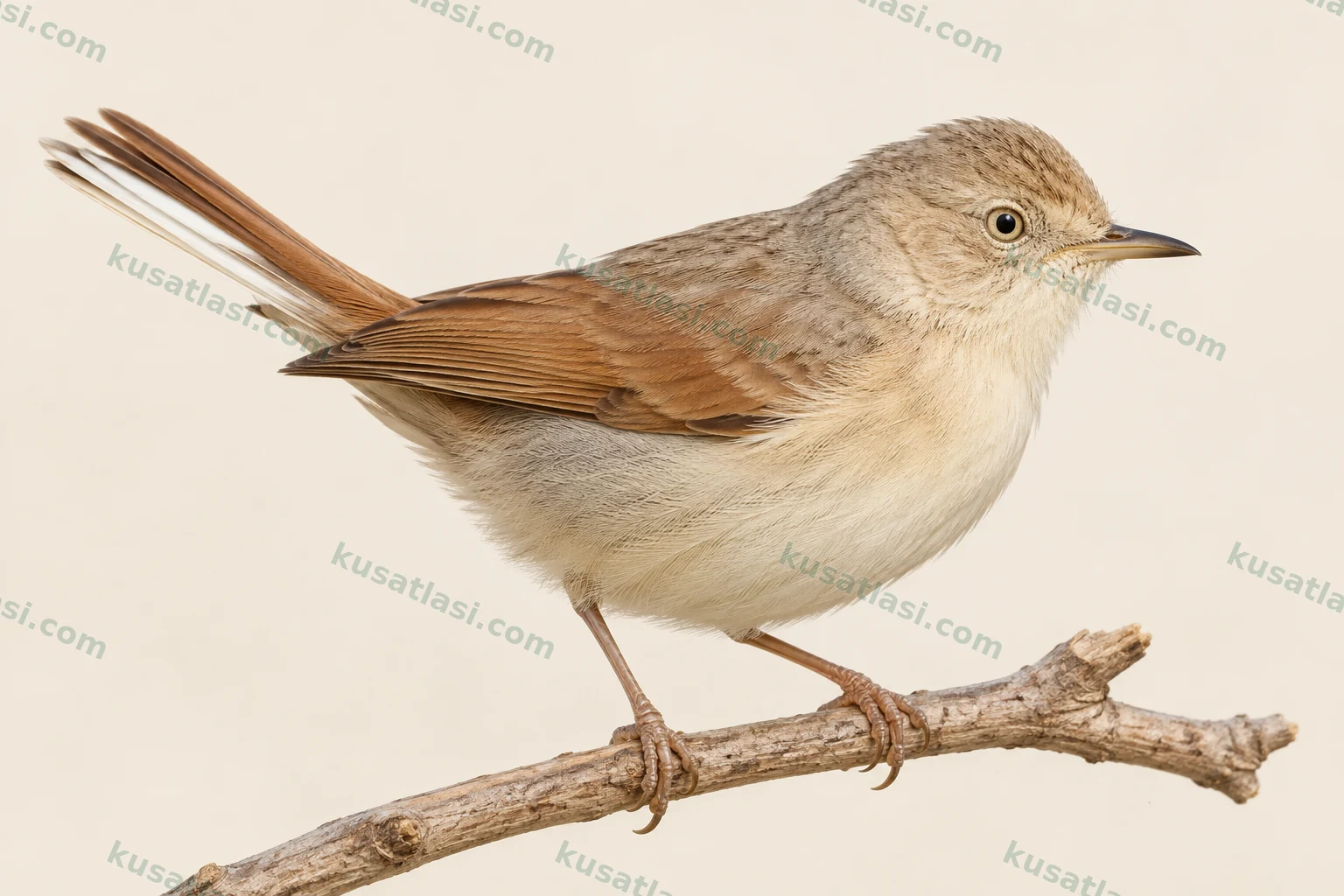
A small songbird of northwestern African deserts; assess warm sandy-rufous upperparts and white underparts together. The old broad Asian–African species concept is not used.
Biometrics
Length
Male11.5 cm
Female11.5 cm
Shared species value
Wingspan
Male14.5–18 cm
Female14.5–18 cm
Shared species value
Weight
Male9–10 g
Female9–10 g
Shared species value
African Desert Warbler
Desert scrub of northwestern Africa, with Libya to the eastObservation guide in its natural range
Look for three features together
Do not rely on a single featureAssess the sandy-rufous head and back together with the less grey appearance.
Dark centres of the inner wing and central tail feathers are less conspicuous than in the related Asian species.
Distinguish the former shared species concept with Curruca nana.
Compare male and female
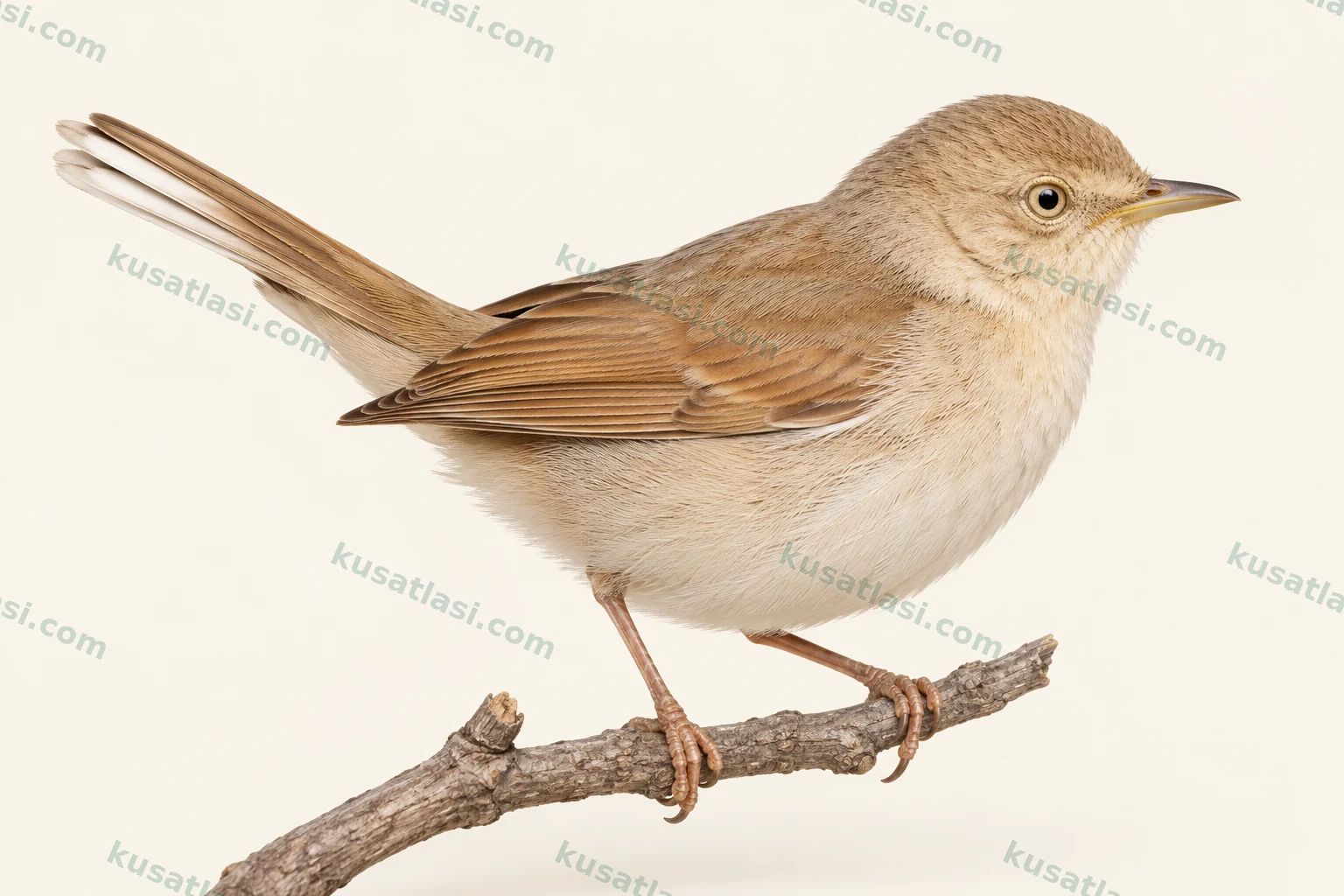 FemaleMale
A reliable appearance-based sex key was not verified in this work. The incubating female’s behaviour and newly hatched chicks’ features belong to different contexts.
Where to look in its natural range?
Watch sparse shrubs on sandy plains and in dry valleys from a distance.
April–May nesting observations around Merzouga, Morocco, are a regional example; definitive breeding months for the entire natural range are not given.
January
Resident within its natural range; rare out-of-range records are not a regular route. No verified regional date specific to this month was provided; this does not mean local absence.
February
Resident within its natural range; rare out-of-range records are not a regular route. No verified regional date specific to this month was provided; this does not mean local absence.
March
Resident within its natural range; rare out-of-range records are not a regular route. No verified regional date specific to this month was provided; this does not mean local absence.
April
Resident within its natural range; rare out-of-range records are not a regular route. Around Merzouga, Morocco, field observations in 1994 and 1999 documented nests, eggs, incubation and newly hatched chicks.
May
Resident within its natural range; rare out-of-range records are not a regular route. Around Merzouga, Morocco, field observations in 1994 and 1999 documented nests, eggs, incubation and newly hatched chicks.
June
Resident within its natural range; rare out-of-range records are not a regular route. No verified regional date specific to this month was provided; this does not mean local absence.
July
Resident within its natural range; rare out-of-range records are not a regular route. No verified regional date specific to this month was provided; this does not mean local absence.
August
Resident within its natural range; rare out-of-range records are not a regular route. No verified regional date specific to this month was provided; this does not mean local absence.
September
Resident within its natural range; rare out-of-range records are not a regular route. No verified regional date specific to this month was provided; this does not mean local absence.
October
Resident within its natural range; rare out-of-range records are not a regular route. No verified regional date specific to this month was provided; this does not mean local absence.
November
Resident within its natural range; rare out-of-range records are not a regular route. No verified regional date specific to this month was provided; this does not mean local absence.
December
Resident within its natural range; rare out-of-range records are not a regular route. No verified regional date specific to this month was provided; this does not mean local absence.
Nest, egg and incubation
Nests were in shrubs about 0.6–1 m above ground, with two–three eggs in a few Moroccan records and 12 days incubation from the last egg. This regional duration is not the day of first flight.
Singing was recorded around nests; an easy, definitive vocal distinction from the Asian species was not verified by independent review.
Do not play recordings to attract birds; observe quietly, especially near nests.
Species information
Quick Identification
The African Desert Warbler, Curruca deserti, is a small songbird of deserts and sparsely shrubby dry habitats in northwestern Africa. Warm sandy-rufous upperparts and whiter underparts are assessed together. The Asian Desert Warbler, Curruca nana, was formerly included in the same species; the current African taxon does not inherit all its range, migration and measurement information. The old name Sylvia deserti is an earlier genus placement of the same African bird.
The sandy-rufous crown and back are useful together with the less conspicuous dark feather centres in wings and tail. Do not rely only on a photograph’s warm colour setting. Light reflected from sand can make other pale birds look rufous too. Follow different poses to distinguish the bird’s own plumage colour from reflected surroundings. During brief views inside a shrub, pale underparts, slender bill and the combined head-and-back appearance should be seen on the same individual.
General Appearance and Posture
This is a small desert warbler with a slender bill. The upperparts from crown to back are sandier-rufous and less grey than those of the related Asian species. The underparts are whiter. The long inner feathers of the folded wing and central tail feathers do not show blackish centres as broad as in the Asian species. These differences are not individually absolute rules; wear, shade and viewing angle may hide the pattern. An unseen dark area is not assumed absent when the relevant feather surface is covered.
It may stay partly hidden in sparse shrubs. Moroccan nesting observations recorded singing by birds thought to be males in low parts of bushes and around nests; this does not mean every individual uses the same height. Feeding at a bush’s base must not be confused with nest entry. Returning to the same branch does not prove that eggs lie beneath it. The observer must not surround the bird in order to watch natural movements.
Males, Females and Young Birds
No plumage key specific to the current African taxon that reliably distinguishes males and females externally was verified for this work. In Moroccan breeding notes, incubation behaviour provides the context for a bird recorded as female; it does not identify another pale bird as female. Darker, warmer or whiter individuals should not be assigned definite sex labels. Light, feather wear and viewing angle can produce those differences.
A primary observation describes newly hatched chicks as naked and pink-skinned. The mouth interior was recorded as yellowish-orange, with two dark elongated marks on the tongue and pale yellow gape edges. These belong to a very early developmental stage within the nest; they are not identification marks separating flying juveniles from adults. A source giving nestling colours does not mean every stage of juvenile plumage change is known.
Age in days cannot be calculated from one photograph of a bird that has left the nest. Following a food-carrying adult may provide information about family care, but a full bill alone does not show which nest it is visiting. Unverified details between juvenile and adult plumage are not added to fill gaps. A bird falling silent or waiting in a bush when approached may also be responding to the observer.
Appearance in Flight
The current taxonomic comparison describes the African species’ wing as slightly shorter than the Asian species’. Examining the dark centres of the inner wing feathers and central tail feathers may help in sharp images taken at a suitable angle; a single blurred flight frame does not establish the species boundary.
Short flights between shrubs are part of daily space use. Residence in its natural range does not mean each individual stays in the same bush throughout life. Residency concerns the absence of regular long seasonal migration. Rare records outside the range are assessed separately; one location does not reveal the route taken to reach it. The map does not create a directional flight arrow or unverified monthly migration areas.
Voice and Behaviour
Singing around nests was recorded in Moroccan breeding observations. Hearing song is supporting evidence of presence, but does not alone indicate eggs, chicks or the incubation stage. Visual and acoustic context must establish whether the sound comes from an individual in another bush. Repeated songs from the same point are not counted as a different bird each time.
The old claim that African and Asian desert warbler voices differ greatly was not clearly confirmed in an independent analysis of available recordings. The possibility of low-level differentiation is not a definitive, easy vocal key. A short phrase sounding slightly different therefore does not establish identification alone. Taxon name, geographical scope, plumage pattern and behaviour are considered together. A recording’s scientific taxon label also needs its own verification context.
Similar Species
1. Curruca nana is the most important former taxonomic comparison. The African bird differs in warmer sandy-rufous head and back, whiter underparts and less conspicuous dark centres in the inner wing and central tail feathers. Bill and wing proportions differ in measurement studies too, but identification in the field is not made solely on millimetric differences. Countries and migration calendars under the old broad species heading are not transferred to the current African species.
2. Curruca deserticola may be confused in records because of name similarity. Deserti and deserticola are not the same scientific name. The complete head and body pattern, habitat and geographical context should be observed together. Similarity between words for desert and Atlas in Turkish or other languages is not taxonomic evidence. If the view is inadequate, this page’s sandy-colour description must not force another small songbird into this species.
Global Distribution
African Desert Warbler belongs to the deserts and desert margins of northwestern Africa. The current taxonomic list gives a range from those dry African areas to eastern Libya. Primary breeding observations in Morocco took place on sandy plains, shrubby valleys and suitable sparse vegetation. Northwestern Africa does not mean every coastal city or high mountain forest is habitat; suitable small environments are selected within the range.
Status Within Its Native Range
Resident occurrence in Libya and direct nesting records in Morocco are documented in specialist publications. The current taxonomic list gives Least Concern status. This label does not say that sparsely shrubby desert environments are undisturbed or every local population is growing. Shrub density and local water flow form environmental context that can influence use of open ground; singing in one bush does not represent the whole region’s density.
Migration
The basic interpretation within the natural range is resident occurrence; extensive migration information for the related Asian species does not apply here. Rare out-of-range records are listed separately in specialist regional checklists. A single distant observation is neither a regular annual route nor a new breeding population. The general mapped area is compared with the taxon’s natural geography, while observation cells show approximate locations of dated records. April–May nesting observations in Morocco do not prove one shared breeding calendar throughout northwestern Africa all year.
Breeding Habitat
Primary Moroccan observations show use of sparse but locally denser shrub cover in sandy open valleys and plains. Some nests were in thorny bushes along lower desert watercourses. These channels do not necessarily carry permanent flowing water at the time of observation. Cover and support supplied by bushes within open ground matter; the vastness of the desert or colour of the sand alone does not identify a nesting site.
Nest Site
Direct observations recorded nests within shrubs about 0.6–1 m above ground. These heights describe a few Moroccan nests, not fixed limits for the entire species. Observations near Merzouga established two–three eggs and an incubation period of 12 days from the last egg, a regional field record for African Desert Warbler. An incubating female was observed, but the minute-by-minute equality of all sex roles was not measured. The three–five eggs in a foreign compilation are not from the same sample as these particular observations.
Daily Space Use
Movement inside bushes and feeding on open ground around them may be observed alongside behaviour near nests. Opening bushes to reach a nest or calling the bird out with sound changes natural behaviour. Visitors need not repeat the methods of an old study. Wait at a safe distance and follow the bird’s own movement. If an approach is understood to have caused it to leave incubation, do not continue approaching. The exact nest location is not published on a general observation map.
What Does It Eat?
AVONET’s current taxon entry classifies the species as a small bird feeding on invertebrates. This describes the basic dietary tendency, not exact proportions of each insect group or fruit. Detailed stomach contents or seasonal dietary percentages for the current African taxon were not verified for this work. The related Asian species’ food list is not reused under a different species name. A visible food item forms a separate record when it can be identified from its image or other direct evidence.
How Does It Obtain Food?
The dataset associates the foraging lifestyle with the ground. Open desert surfaces and areas around low plants are suitable places to watch this behaviour, but not every peck means successful prey capture. A small object in the bill must not become a named insect species without a sharp view. If a bird disappears inside a bush, its activity is not described definitively unless continuously visible.
Food or shaken bushes are unnecessary for watching natural foraging. Such interventions change the place used and the food taken. If a food-carrying adult is seen during nesting, prey capture and delivery to a chick are recorded separately; they are not the same observation evidence. One feeding event in a sparsely vegetated valley does not show equal feeding success across every dry surface.
An Older Genus Name for the Same Species
The names Sylvia deserti and Curruca deserti do not signify two different African birds. The current genus placement has changed. By contrast, the old broad desert warbler concept could include the Asian C. nana as well. Genus reassignment and species separation are different processes; transferring measurements and distribution without understanding which birds a source combined produces mistakes.
The Context of Twelve Days
Moroccan nesting notes established 12 days of incubation from the last egg. The starting point matters: a visit sequence beginning when the first egg was seen is not the same interval. A few nests dated in April and May directly document regional breeding. The day count should not be read as a fixed duration for every African nest or total development from hatching to first flight.
A Nestling Does Not Look Like a Flying Juvenile
Primary notes describe the newly hatched chick’s naked pink skin and colour marks inside the mouth. They do not form a colour key for a feathered juvenile perched outside. Transferring a nestling feature to an adult plate without stating the developmental stage is wrong. No exact first-flight day is given on this page because it has not been verified.
Distinguishing Evidence About Voice
Older texts claimed that the voices of African and Asian species were very different. An independent recording review could not confirm that strong separation. This does not prove that every sound of the two taxa is identical either; it says definitive separation was not demonstrated with the available recordings. Voice, plumage and geography are considered together in the field. Keeping a scientific hypothesis open is not a deficiency in the account, but an accurate statement of the evidence level.