

World Birds IUCN statusLC · Least ConcernGlobal IUCN. BirdLife v10 (2025); taxon matching AviList 2026 / IOC 15.2; checked: 29.10.2026. The list year is not the species’ assessment date. Source and method · BirdLife OrderPasseriformesPasserines FamilyParadoxornithidaeParadoxornithidae
White-breasted Parrotbill
Paradoxornis ruficeps
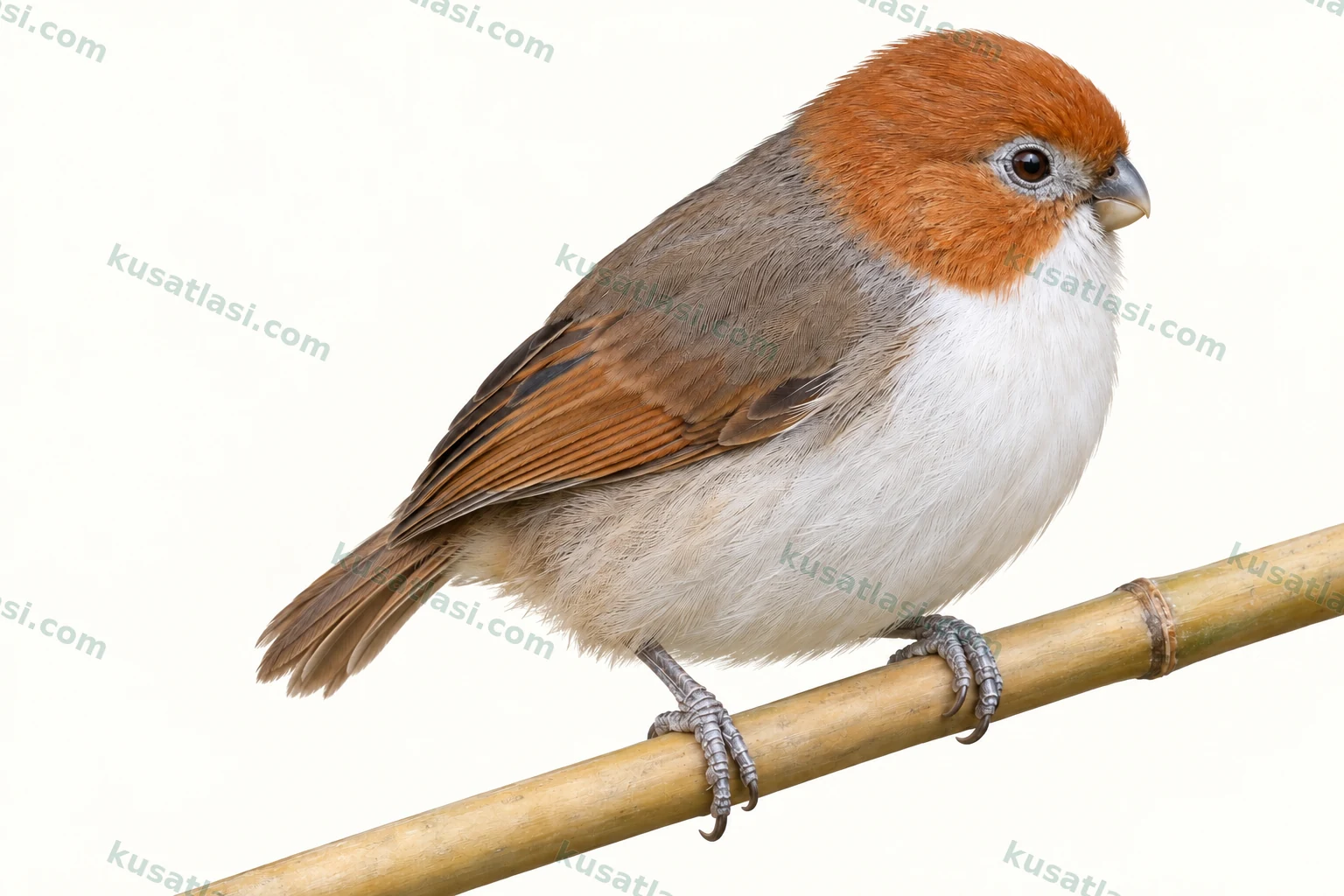
Rufous-headed, white-breasted parrotbill of the eastern Himalayas, with a powerful bill.
Biometrics
Length
Male19–20 cm
Female19–20 cm
Shared species value
Wing length
Male8.503 cm
Female8.503 cm
Shared species value
Weight
Male30–32 g
Female32–34 g
White-breasted Parrotbill
Eastern HimalayasObservation guide in its natural range
Look for three features together
Do not rely on a single featureRufous head and cheeks; white throat and breast.
Deep and strong, dark above and pale below.
Usually descending sequence of clear whistles.
Compare male and female
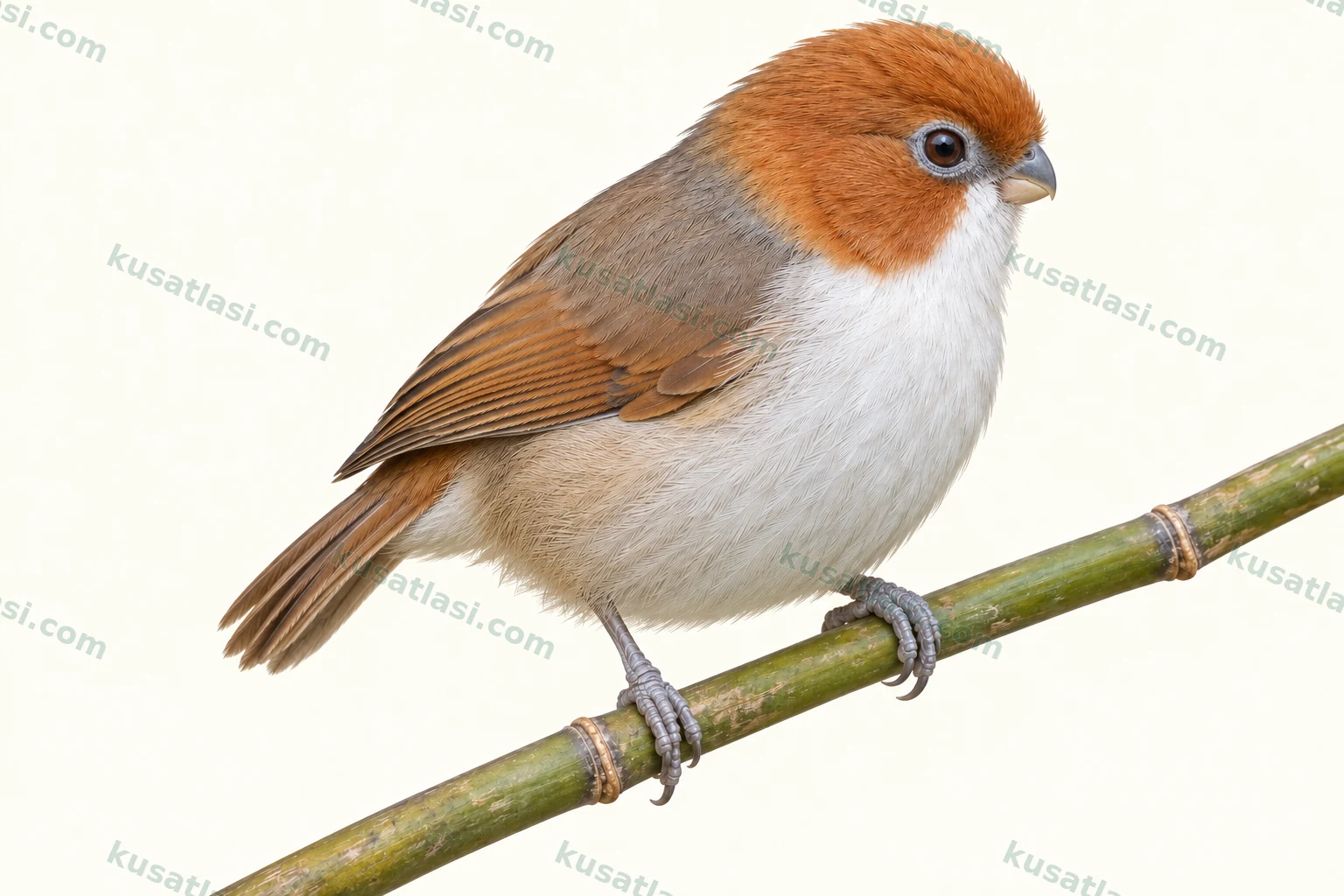 FemaleMale
No reliable detailed field key for sex and young birds was found.
Where to look in its natural range?
Bamboo forests of Nepal–Bhutan and the verified northeastern Himalayan surroundings.
Resident; historical Sikkim nest recorded in May. Complete breeding months across the range unverified.
January
Data unavailable
February
Data unavailable
March
Data unavailable
April
Data unavailable
May
Sikkim, India: Historical bamboo nest with three well-incubated eggs.
June
Data unavailable
July
Data unavailable
August
Data unavailable
September
Data unavailable
October
Data unavailable
November
Data unavailable
December
Data unavailable
Nest, egg and incubation
Deep cup attached to slender bamboo branches; three eggs in the Sikkim observation. Incubation and fledging periods unverified.
Usually descending 4–6 clear whistles; also harsher calls.
Do not play recordings to attract birds; observe quietly, especially near nests.
Species information
Quick identification
White-breasted Parrotbill Paradoxornis ruficeps is a large, thick-billed passerine of the eastern Himalayan region. Look for a rufous head and cheeks, olive-brown upperparts and conspicuous white throat and breast together. Its bill is deep and powerful enough to recall a parrot's, but it is not a true parrot. The current English name is White-breasted Parrotbill.
General appearance and posture
Crown, cheeks, ear area and nape are rufous, joining the same warm colour on the neck sides. The back is plainer olive-brown, wings darker with slight rufous tones. The white underparts may show light buff-brown along the neck and flanks; the entire breast is not expected to be strongly warm brown. The historical description gives a horn-brown upper bill, pale yellowish lower bill, lead-grey feet, reddish-brown iris and pale blue bare skin around the eye.
Males, females and young birds
The sources examined did not provide a reliable detailed field key for males, females and young. Head redness or slight yellowish breast tone does not give certain sex or age. White appearing grey in a photograph's shade is not evidence of a female either. Do not confuse its appearance with Paradoxornis bakeri, treated as its subspecies in older sources.
Appearance in flight
No separate underwing identification pattern was verified. A moving bird showing the thick bill, rufous head and white breast combination supports identification; a brief wing view alone does not decide. No species-specific record of long flights by migrating flocks in open country was found.
Voice and behaviour
The song is described as usually descending sequences of 4–6 similar clear whistles. In Bhutan recordings the second note may sometimes be near the first in pitch or slightly higher. Harsher calls and metallic rattles also occur; song and call are distinguished.
Historical Sikkim field observations report feeding with Gampsorhynchus rufulus, particularly in winter. This does not make every flock the same two-species group. The current taxonomic study also records birds observed in flocks; a flock is not interpreted as just one male–female pair.
Similar species
Paradoxornis bakeri is the main comparison. Its underparts are more strongly warm buff-brown, whereas this species' throat and breast are whiter. Song structure differs too. Myanmar or Vietnamese birds under ruficeps in old books may not represent today's narrowly defined species.
In comparisons with Paradoxornis atrosuperciliaris, white breast and bill appearance matter; similarly named rufous-headed birds are not all one species. The feeding associate Gampsorhynchus rufulus also has a rufous head, but its slimmer bill differs from the parrotbill's deep powerful one.
World distribution
Current AviList defines an eastern Himalayan belt from Nepal to Bhutan, northern Assam, northwestern Yunnan in China and southeastern Tibet. Southeast Asian records published under the older broad ruficeps concept are not all added. Paradoxornis bakeri is a separate species today.
Status within its natural range
It is currently monotypic and globally Least Concern. This does not show abundance in every valley. Bhutan and Mishmi Hills sound recordings in the taxonomic research are direct field examples with evaluated identity. One Mishmi record indicated that one river might not adequately define the species boundary; all boundary details remain unresolved.
Movements
It is classified as resident. No regular long-distance route was verified. Winter mixed feeding flocks are local behavioural evidence, not proof of migration between countries. The map shows records consistent with its natural area; older broad-taxon records are not certain range without matching the current species.
Breeding habitat
It inhabits forest and bamboo cover of the eastern Himalayas. A historical Sikkim record documents May breeding in bamboo at about 610 m. This one nest's month and elevation are not a complete breeding calendar for the whole range.
Nest site
In Gammie's direct observation published by Hume, the nest was a deep firm cup attached to slender branches high in bamboo. Outer materials included strips from coarse grass stems and some spider web; fine bamboo fibres lined it. Three eggs with incubation well advanced were recorded. Eggs had a white ground with dirty yellowish-brown and paler purple-grey markings, especially at the broad end. Incubation and time to fledging were not verified.
Daily use of space
It may associate with other small forest birds while feeding in bamboo and scrub. Feeding together implies neither a shared nest site nor one permanent year-round flock. No measured species-specific daily ranging-area value was found.
What does it eat?
Historical sources contain different plant and animal food observations. Jerdon and Tickell reported grain and other seeds, while Gammie, examining Sikkim birds, found various insects in his specimens. These were described as insects that might occur around bamboo and buckwheat flowers. This direct finding cautions against assuming an exclusively seed diet from a thick bill. Annual food percentages were not verified.
How does it forage?
Feeding movements in cover and occasional associations with other birds were recorded. Gammie's examination shows foods eaten, not detailed measurements of where and how every prey item was caught. It is therefore not said to specialise in an insect, always descend to the ground or damage fields. Seed and insect records retain their separate observation contexts.
One old name can cover two current species
Paradoxornis ruficeps long included a broader group. Vocal and plumage comparisons supported separating the white-breasted Himalayan bird and warmer-coloured bakeri. The current scientific and English name pairing follows that narrow scope. Adding Myanmar, Laos or Vietnamese information from old book headings alone can invent a false range.
A deep bill does not mean seeds alone
Insects in the Sikkim observer's examined birds give concrete evidence against determining food from bill shape alone. Other observers' plant-food records are also retained. Without adequate season and sample details, no food group is presented as one hundred per cent of the year-round diet.
The nest's small building materials
Bamboo fibres inside and coarser grass strips outside are distinctive details of the historical nest account. Three well-incubated eggs document breeding directly, but incubation length cannot be calculated without knowing the laying start.